
Balanced Turkish Breakfast Plate
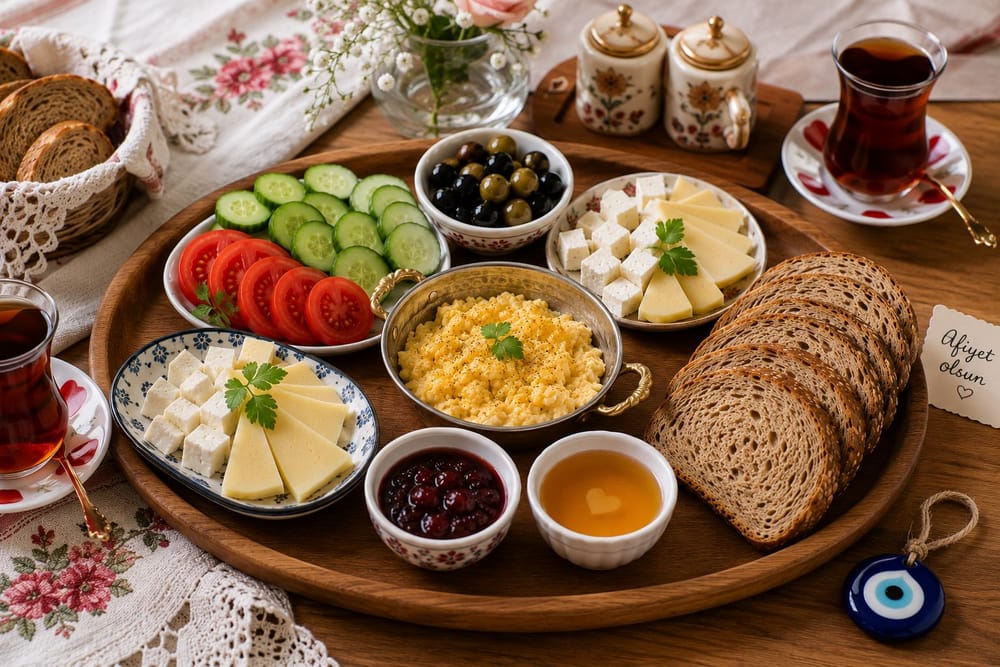
Turkish breakfast, or kahvaltı, is already one of the most balanced morning meals among the world's culinary traditions: a mosaic of small plates featuring varied cheeses, olives, fresh vegetables, eggs, honey, jam, and bread, shared slowly with family or friends. Unlike many Western dishes that need a deep overhaul to become balanced, this breakfast starts from an already base; the work here is less about rethinking problematic ingredients and more about intelligently optimizing portions and choices among an abundance of components, so the whole stays satisfying without becoming excessive in calories or sugar.
The principle guiding this recipe therefore differs slightly from the one applied to richer Western desserts: it's not about rescuing an identity-problematic dish, but about intelligently organizing an already healthy abundance so it stays within reasonable proportions. Traditional kahvaltı, served as a generous spread, can easily exceed 700 calories if cheese, jam, and white bread portions multiply without limit; this version keeps the spirit of sharing and variety while measuring each component for a complete but reasonable meal.
Cheeses, kahvaltı's inseparable identifying element, stay multiple and varied: beyaz peynir (Turkish feta) and kaşar (a pressed-curd cheese) each provide a distinct texture and flavor that no single cheese could reproduce. Their amount, however, is carefully measured rather than served unlimited, which keeps the platter's authentic taste experience without letting cheese dominate the caloric load.
Bread, traditionally white and soft, is replaced with a whole-grain version that adds more fiber while keeping the soft texture needed to accompany the cheeses and jams. Fresh vegetables, already generous in Turkish tradition, stay in significant quantity, adding volume and freshness at essentially no caloric cost. Honey and jam, traditional sweet elements, are served in small measured amounts rather than from open jars, which naturally helps control portions without feeling restrictive.
Success with this platter depends mainly on ingredient freshness, since each component is simple and therefore needs to be good quality, and on careful presentation organization that invites slow sharing rather than a rushed meal.
One serving is a complete assortment for one person, including all components in measured amounts. It's a hearty, satisfying breakfast particularly well suited to a shared, unhurried moment.
Recipe Information
| Prep Time | 20 minutes |
| Cook Time | 8 minutes |
| Resting | None |
| Total Time | About 30 minutes |
| Servings | 2 platters |
| Difficulty | Easy |
| Calories | About 480 kcal each* |
Quick Highlights
- ✅ A smart choice that optimizes rather than transforms
- ✅ Measured cheeses without losing authenticity
- ✅ Whole-grain bread rather than refined white
- ✅ Intelligently portioned sweet elements
Ingredients







Step-by-Step Instructions
Prepare the fresh vegetables
Wash and slice the tomatoes and cucumber, keeping pieces generously sized rather than too thin, for an appetizing visual look and a satisfying texture in the mouth.
Salting the tomatoes and cucumbers briefly draws out excess water and concentrates their flavor before serving.

Cut the cheeses
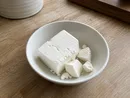
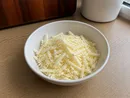
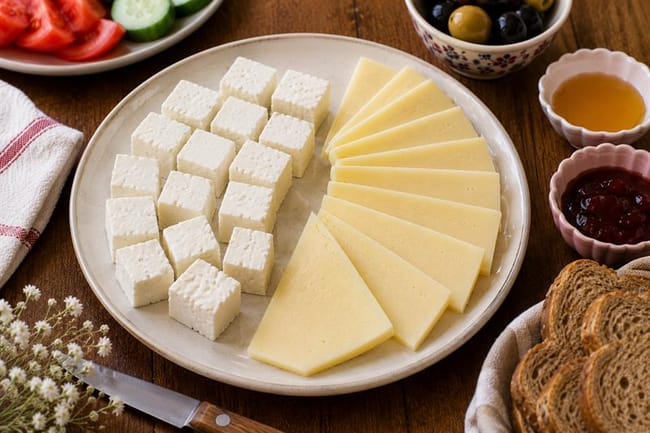
Cut the beyaz peynir into even cubes and the kaşar into thin slices, respecting the measured amounts for each individual serving.
Cutting the cheeses into small, even pieces makes them easy to combine in a single bite with bread and jam.
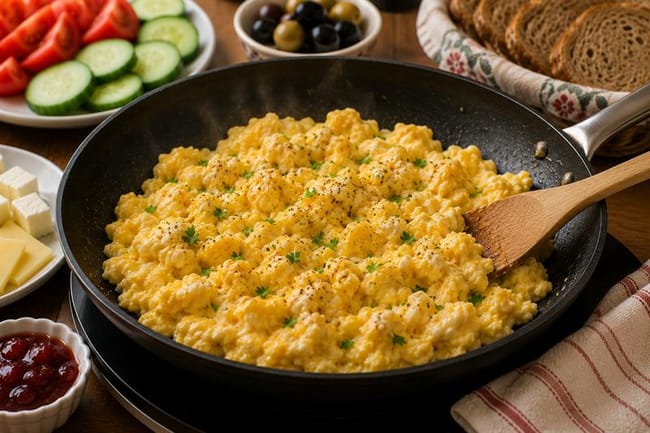
Cook the eggs
Heat a lightly oiled nonstick pan over medium heat. Crack the eggs and gently scramble them or cook a simple omelet, according to preference, until just set.
Cook gently so the eggs stay soft rather than turning rubbery, matching the traditional style of this dish.
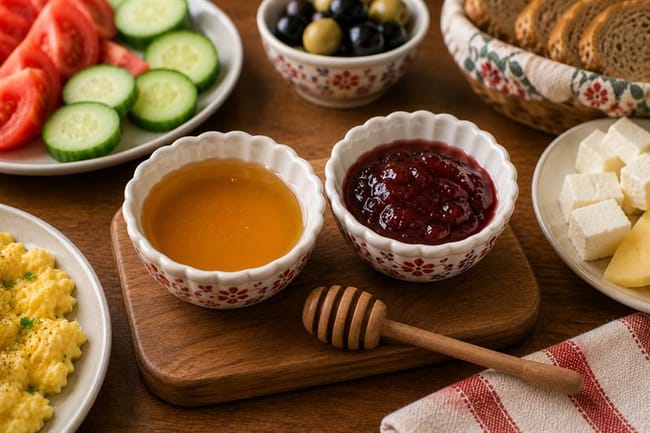
Measure the honey and jam
Pour the honey and jam into separate small individual dishes, respecting the measured amounts rather than serving directly from the jars.
Portioning the honey and jam into small bowls lets each person control how much sweetness they add.
Arrange the olives
Distribute the black and green olives into a separate small dish, in a measured amount for each serving.
Arranging the olives separately keeps their brine from seeping into the other components on the platter.

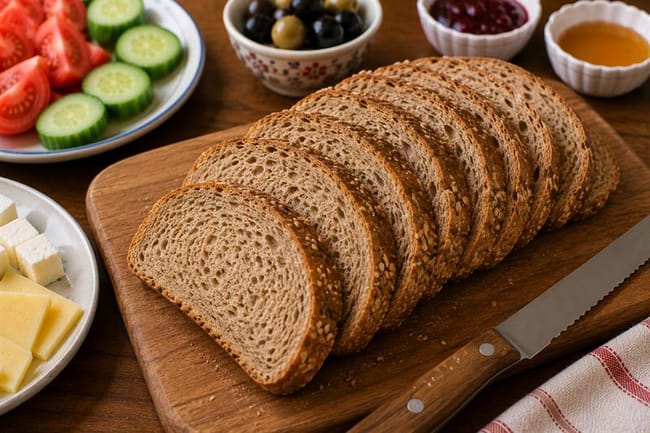
Slice the bread
Cut the whole-grain bread into thin slices, right before serving to keep its full freshness and texture.
A firm, whole-grain bread holds up best as the base for the cheeses and jam.
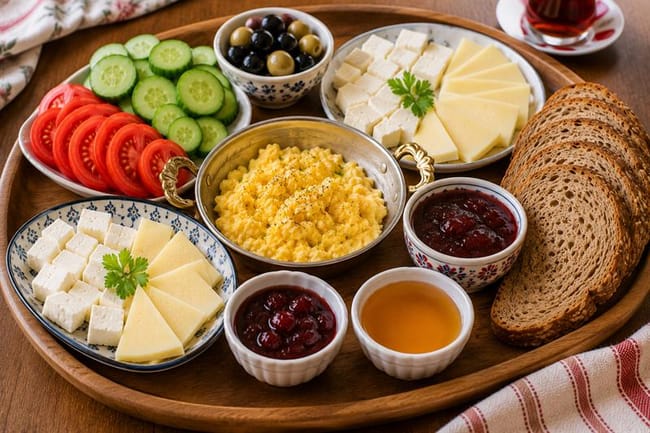
Assemble the platter
Arrange all components on a large tray or in several small plates according to tradition, ensuring harmonious spacing that highlights the diversity of colors and textures.
Group similar items together on the platter so the spread is easy to serve and share.
Serve immediately
Serve the platter with traditional black tea if desired, inviting a slow, shared moment rather than a rushed meal.
Serve while the eggs and bread are still warm for the best contrast against the cool cheeses and vegetables.

Chef's Tips
Common Mistakes
Why This Recipe Was Designed This Way
This recipe illustrates a different approach to intelligent ingredient choice: rather than rethinking a problematic dish, it intelligently optimizes portions of an already generally balanced meal, so it stays satisfying without becoming excessive.
Measured cheeses without losing authenticity
The diversity between beyaz peynir and kaşar stays intact, but their amounts are carefully measured rather than served unlimited, which keeps the traditional taste experience while controlling caloric intake.
Whole-grain bread rather than refined white
Replacing traditionally white bread with a whole-grain version adds fiber without significantly changing bread's role in the meal.
Intelligently portioned sweet elements
Honey and jam, served in small measured dishes rather than open jars, naturally help control the portion while preserving their traditional place on the platter.
Ingredient Swaps
Need to adapt the recipe? These substitutions maintain the character of the dish.
| Instead of... | Try... |
|---|---|
| Beyaz peynir | Any fresh, mild feta-style cheese |
| Kaşar | A mild, semi-hard cheese such as young gouda |
| Honey | Fig jam or a low-sugar fruit preserve |
| Whole-grain bread | Sourdough or another whole-grain loaf with a firm crumb |
What Research Says
A spread-style breakfast built around eggs, cheese, vegetables, and whole grains rather than a single sweet item reflects patterns nutrition research associates with steadier energy and fewer mid-morning cravings, since it combines protein, fat, fiber, and slower-digesting carbohydrates in one sitting instead of sugar alone.
Estimated Nutrition
Per serving
Values estimate one of two complete platters, with all their components. Cheese brands, vegetable ripeness, and the exact amount of honey and jam eaten meaningfully change the result.
Storage & Reheating
Store the components separately in the refrigerator in distinct airtight containers for up to two days; sliced fresh vegetables keep less well and are best prepared the same day. Never mix the components before serving.
Reheating
Only the eggs potentially need reheating; gently warm them in a pan over very low heat or in the microwave in short 10-second bursts to avoid toughening them. All other components are enjoyed cold or at room temperature.
Freezing
This platter isn't suited to freezing, as most of its components are fresh products that lose their signature texture once frozen and thawed; always prepare it fresh.
Meal Prep Tips
The cheeses can be cut the night before and kept refrigerated in separate airtight containers. Honey and jam can be measured ahead into their small dishes. The vegetables, on the other hand, are best sliced right before serving to keep their maximum freshness.
Serving Suggestions
Serve family-style on a large board or platter with small bowls for the honey and jam, so everyone can build their own bite of cheese, vegetable, bread, and a touch of sweetness — the traditional way this meal is enjoyed.
Frequently Asked Questions
Is kahvaltı traditionally served with white bread?
Yes, white bread, often called simit or a flatbread, is traditionally the most common in kahvaltı service. This recipe keeps bread's role as a base for the cheeses and jams but opts for a whole-grain version, making it a smart adaptation rather than the only possible version.
Can I add other traditional components to the platter?
Yes, elements like sucuk (spiced sausage), menemen (eggs with tomatoes and peppers), or pastries like simit can enrich the platter; adjust the other components' portions accordingly to keep the overall balance.
Can I reduce the cheese amount even further?
A further reduction risks losing kahvaltı's characteristic taste diversity; the stated amount already represents a good balance between authenticity and measured caloric intake.
Can I make a dairy-free version?
Replace the traditional cheeses with cashew- or almond-based plant alternatives, though the authentic flavor and texture of beyaz peynir and kaşar are hard to reproduce exactly.
How do I keep vegetables fresh longer if preparing ahead?
Keep the tomatoes and cucumbers whole and unsliced until serving time; once cut, they quickly lose their crisp texture and freshness.
Can I replace the honey with a sweetener?
You can, but it changes kahvaltı's traditional taste experience; honey remains an identifying element that's hard to replace without losing authenticity.
How long can this platter stay on the table?
Traditional kahvaltı is designed for extended sharing, potentially an hour or more; just keep the eggs at a reasonable temperature and avoid leaving components too long at room temperature in hot weather.
Is this recipe appropriate for kids?
The dish generally works very well, watching the wheat, milk, and egg allergens present in the recipe, and adjusting the honey and jam portions by age.
Can I make this platter for more than two people?
Yes, simply multiply all quantities proportionally to the number of guests, keeping in mind that sharing at a large table is the very spirit of traditional kahvaltı.
Does this recipe guarantee weight loss?
No. It remains a complete meal containing cheeses, honey, and jam; results depend on overall diet, activity, and individual factors. Anyone pursuing a specific health goal should seek personalized professional guidance.
Related Recipes
If you enjoyed this Balanced Turkish Breakfast Plate, you may also like these recipes from our 🍳 Breakfast collection.

🧇 Balanced Belgian Protein Waffles
The authentic Belgian waffle, or Liège waffle, is recognizable above all others: a rich, buttery yeasted batter studded with pearl sugar…
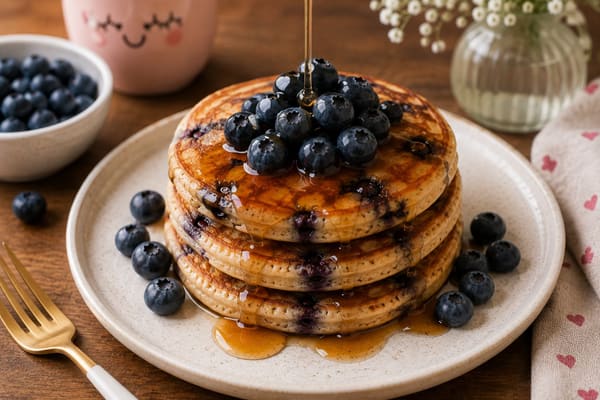
🥞 Balanced Protein Blueberry Pancakes
Pancakes are a pillar of American breakfast: a simple batter of flour, milk, eggs, and sugar, cooked into small golden rounds and stacked…
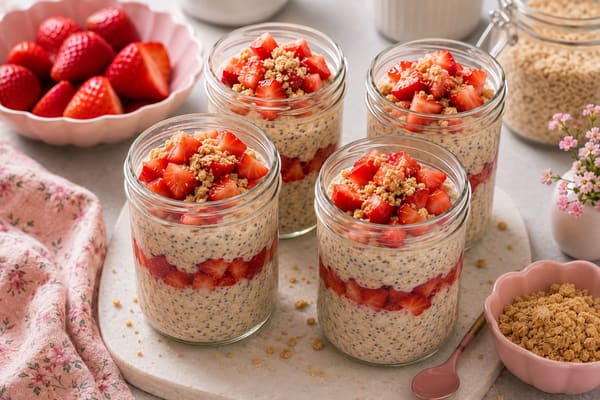
🍓 Balanced Strawberry Cheesecake Overnight Oats
Overnight oats, or oats soaked overnight, are a no-cook breakfast that has become a staple: oats mixed with a liquid and left to sit in the…