🍌 Banana Pudding
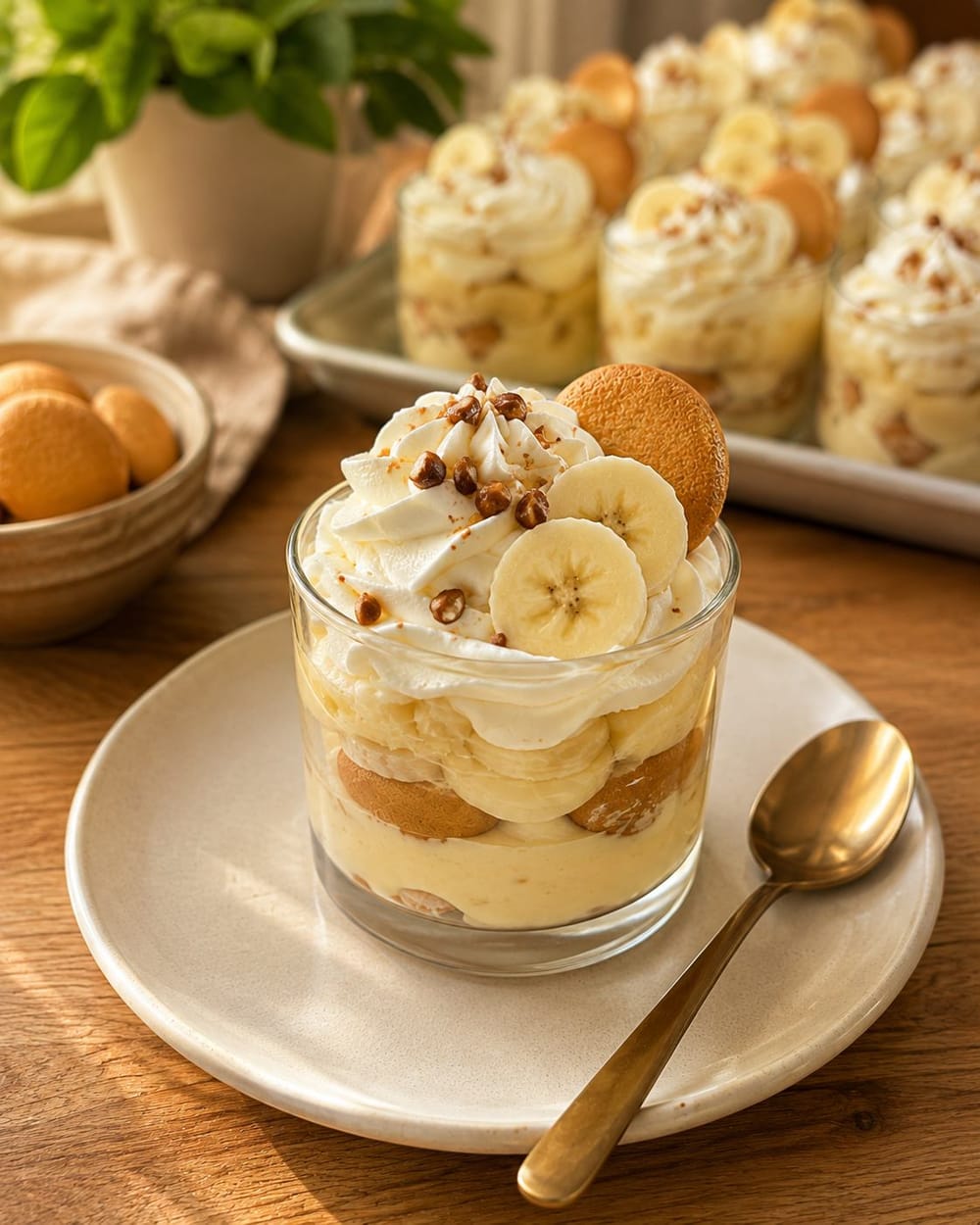
Banana pudding succeeds through contrast, not simply sweetness. The spoon should cross a fluffy cream cap, cool vanilla custard, fresh banana and wafers that have softened at the edges while keeping a little structure in their centres. This recipe preserves that recognisable Southern-style experience and presents it in sixteen transparent cups where every layer is visible.
Instead of relying on instant pudding mix, an oversized tub of whipped topping and an uncounted bag of cookies, the recipe builds each element deliberately. The custard uses milk, eggs, cornstarch and Greek yogurt; the mini wafers combine oat, whole-wheat pastry and almond flours; and a measured amount of real whipping cream provides the luxurious finish people expect.
The result is still dessert. Bananas, dates and maple syrup are not “free sugar,” and homemade biscuits still contribute energy. “Balanced” means that portions, toppings and ingredient roles are transparent, not that one cup treats disease, guarantees weight loss or can replace personalised dietary care.
Recipe Information
| Preparation | 55 minutes |
| Baking the mini wafers | 12–15 minutes per tray |
| Custard cooling | about 90 minutes |
| Final chilling after assembly | at least 6 hours |
| Total time | about 8 hours 30 minutes |
| Difficulty | Intermediate |
| Equipment | saucepan, whisk, mixer, baking trays and 16 × 180 ml cups |
| Estimated energy | about 285 kcal per complete cup |
Ingredients
Makes 16 individual cups

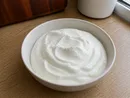





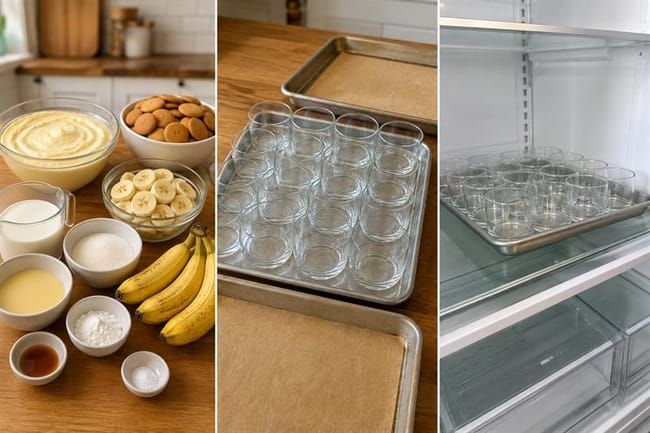
Step-by-Step Instructions
Organise the three components
Read the entire formula and divide milk, vanilla and salt between custard and wafers before heating anything. Set out sixteen clean 180 ml glasses. Line two baking trays, preheat the oven to 175°C and clear a level refrigerator shelf large enough for the completed tray.
The project has three timed components: custard must become cold, wafers must become completely cool and banana must be sliced only near assembly. Weighing and sequencing prevent warm custard from melting cream or fresh fruit from browning while cookies bake.
Cook and cool the banana-vanilla custard
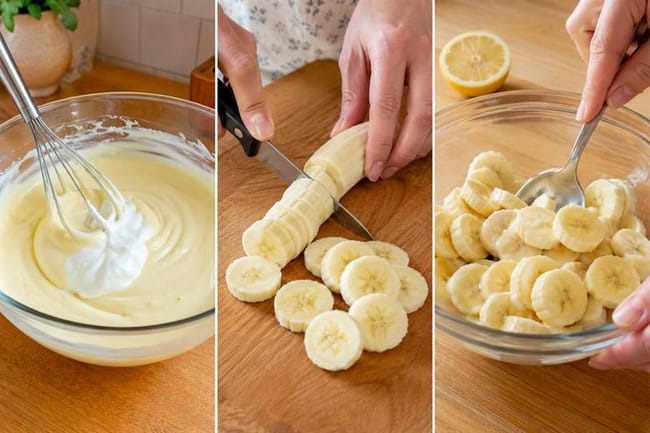
Blend one peeled banana with date paste and 150 ml of the measured milk until perfectly smooth. In a saucepan, whisk eggs, cornstarch, maple syrup and 500 ml milk while cold. Add the banana-date mixture, then cook over medium heat, whisking constantly into every corner.
When broad bubbles break the surface, reduce heat and cook one controlled minute while whisking. The custard should coat the whisk without tasting starchy; aim for at least 74°C for egg safety according to applicable guidance. Remove from heat, add the custard share of vanilla and salt, and press clean film directly onto the surface. Cool briefly, then refrigerate.

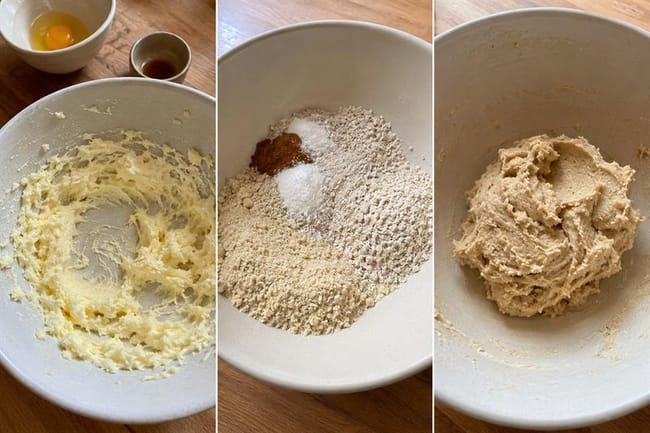
Mix the mini vanilla-wafer dough
Cream softened butter until smooth. Beat in the separate wafer egg and the wafer share of vanilla. In another bowl whisk oat flour, whole-wheat pastry flour, almond flour, baking powder, cinnamon and the wafer share of salt.
Add dry ingredients in two additions with the remaining 100 ml milk, stopping as soon as a soft scoopable dough forms. Do not add flour casually if it feels sticky; oat flour hydrates during a ten-minute rest. A heavily worked dough produces hard wafers that never become pleasantly cake-like in pudding.
Shape exactly forty-eight mini wafers
After the rest, divide dough into exactly forty-eight equal 12–13 g portions. Roll gently, place well apart and flatten into small discs about 4 cm across and 6 mm thick. Matching thickness is more important than perfect circles.
Forty-eight is the planned number: three wafers belong to each of sixteen cups. If the count is short, redistribute before baking rather than creating different portions later. Lightly damp fingers if necessary, but do not introduce enough water to make the edges slick.

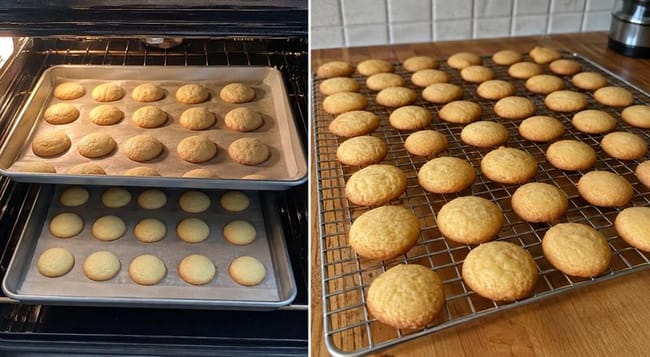
Bake and cool the wafers
Bake 12–15 minutes, rotating trays once, until edges are golden and centres look set. They will feel soft when hot and firm as they cool. Transfer after five minutes to a rack and cool completely.
Do not trap warm wafers in a container; steam makes them gummy before assembly. Set aside sixteen attractive pieces for the upper layers and allow minor imperfect pieces to go lower where they will soften in custard. Do not sample beyond the count required for sixteen servings.
Prepare the bananas at the right moment
When the custard is genuinely cold, whisk it smooth and fold in Greek yogurt. Peel the remaining seven bananas only now. Cut uniform 5–6 mm rounds and toss very gently with lemon juice, using just enough to coat rather than soak.
Reserve thirty-two attractive rounds for the visible top—two per cup. Divide the rest mentally into sixteen sets. Very soft ends may be folded into the lower custard, but keep the overall 900 g peeled-banana target so the cups match the nutritional estimate.
Whip the measured cream
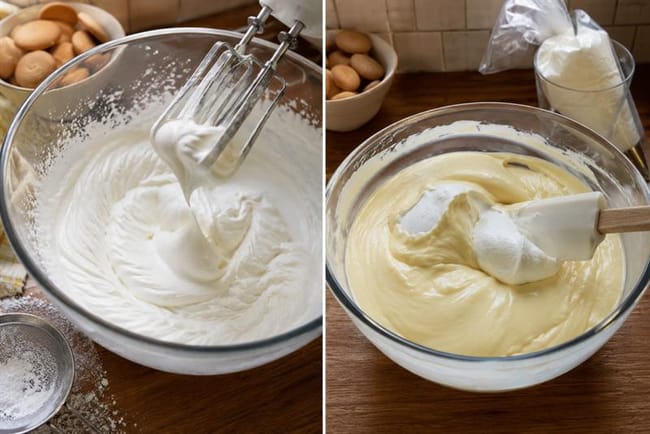
Pour cold whipping cream into a cold bowl and beat at medium speed until trails appear. Sift in icing sugar and continue just to medium peaks that hold a curl but still look smooth. Overwhipped grainy cream cannot be repaired reliably by the pudding.
Transfer roughly two thirds to a piping bag for the final crown. Fold the remaining third into the cold custard with broad strokes, creating a lighter filling without erasing the custard’s body. Keep both mixtures cold during assembly.
Assemble sixteen identical layered cups
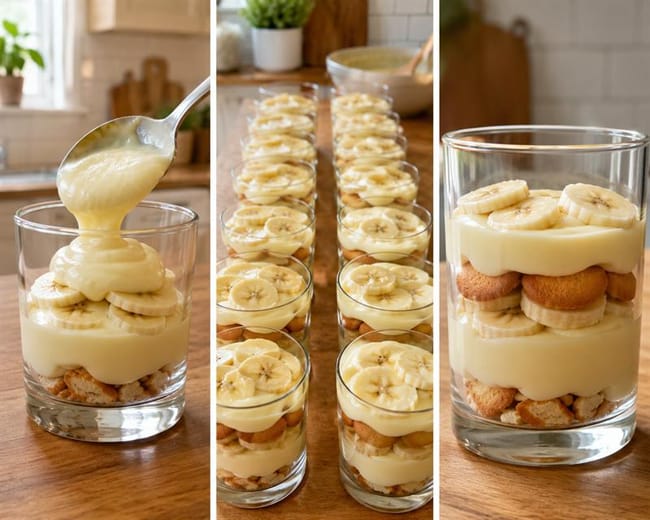
Place half a wafer, a spoon of custard and banana rounds into every glass. Add a second wafer, more custard and more banana, then finish with custard while leaving room for the cream. Repeat across all sixteen cups assembly-line style.
Each cup receives three wafers in total: broken pieces may form the lower layers, while one more visible wafer is reserved for the finish after chilling. Distribute all banana and custard evenly. Wipe glass interiors above the layers so the photograph shows clean, distinct stripes.
Chill until the wafers soften correctly
Cover the cups without touching the filling and refrigerate at least six hours, ideally overnight. During this time the wafers absorb controlled moisture and become tender like cake while the starch, egg proteins and chilled dairy support the layers.
Two hours is generally too short for the intended texture; beyond twenty-four hours the banana darkens and biscuits lose more identity. Keep the tray at 4°C or below and avoid the refrigerator door, where temperature shifts encourage weeping.

Garnish, photograph and serve
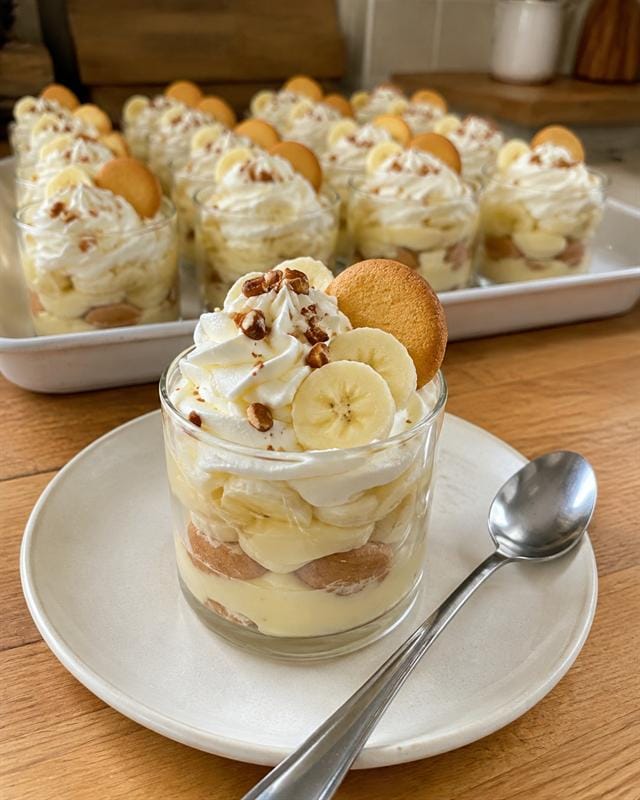
Shortly before serving, pipe an equal cream swirl on each cup. Add the third wafer, two reserved banana rounds and one sixteenth of the measured pecans. Photograph all sixteen together while the garnish is fresh and the count is visible.
Serve cold with long spoons that can reach every layer. Return unused cups promptly to refrigeration. The top banana will slowly oxidise even with lemon, so decorate for the moment of service rather than promising impossible all-day brightness.
Common Mistakes
Why This Recipe Was Designed This Way
The dessert keeps the visual grammar of classic banana pudding: pale custard, obvious banana rounds, softened vanilla wafers and a white crown. Removing every traditional cue would create a different banana parfait, not a convincing remake.
Balance comes from redistributing richness. Greek yogurt supports the custard, three measured mini wafers create the cake-like layers, and 250 ml cream is shared across sixteen cups. Real butter, egg and cream remain where their culinary functions are most visible.
Homemade wafers allow whole-grain and almond flours without asking readers to find a specialty branded product. They also make the cookie count honest. The recipe never implies that homemade automatically means low-calorie.
Individual cups protect the planned yield, photograph cleanly and reduce repeated contact with a communal dish. The family-pan alternative remains available for tradition, but serving lines should be marked before presentation.
Estimated Nutrition
Per serving
Storage & Reheating
Cover and refrigerate at 4°C or below. The ideal serving window is 6–24 hours after assembly; consume within three days if ingredients and local guidance allow.
Keep cups out of room temperature no more than two cumulative hours, or one hour in very hot conditions. Return unused servings promptly and discard uncertain ones.
Banana darkening is a quality issue, but sour odour, gas, mould, prolonged warmth or uncertain handling are discard signals. Do not taste food to test safety.
Freezing
Freezing the fully assembled pudding is not recommended. Banana can become watery, custard may separate and softened wafers turn pasty after thawing.
The unassembled baked wafers can be frozen airtight for up to two months and thawed at room temperature while still wrapped. Make custard and slice fruit fresh.
Make-Ahead Tips
Two days ahead, bake and cool the forty-eight wafers, then store airtight. One day ahead, cook and cool the custard.
Six to twenty-four hours before serving, fold in yogurt and cream, slice banana and assemble. Add top banana, final wafer and pecans shortly before presentation.
Frequently Asked Questions
1. Can I use instant pudding mix?
You can make a different shortcut dessert, but the ingredient list, sweetness, sodium, texture and nutrition will no longer match this recipe.
2. Why sixteen cups?
Sixteen creates an abundant party tray while keeping each serving at a clear 180 ml. It also divides forty-eight wafers into three per cup.
3. Can I use overripe bananas?
Use one very ripe banana in the blended custard. For layers, choose firmer fruit so slices do not collapse or release excess liquid.
4. How do I stop browning?
Slice close to assembly, coat lightly with lemon, cover and chill. No home method keeps cut banana perfectly pale indefinitely.
5. Can I skip homemade wafers?
Yes, with exactly forty-eight small commercial vanilla wafers. Recalculate nutrition and inspect allergens from the chosen label.
6. Can I make it without eggs?
The custard requires a separately tested egg-free formula with adjusted starch and richness. Simply omitting four eggs will not work.
7. Can I reduce maple syrup?
A small reduction is possible if bananas are very ripe, but sweetness and custard body change. Test a half batch.
8. Is it suitable for toddlers?
A caregiver should assess texture, portion, choking risk from nuts, added sugar and allergies. Omit nuts and never use honey for children under one.
9. Is it gluten-free?
Not as written because it contains wheat flour. A certified recipe test and verified ingredients are needed before making that claim.
10. Why must it rest six hours?
Rest allows wafer moisture migration and full cold setting. Serving earlier gives separate crunchy cookies rather than classic pudding texture.
11. Can I make one large dish?
Yes, use a deep 23 × 33 cm dish and preserve the layer order. Mark sixteen equal servings before guests begin.
12. How long can it travel?
Use a cold insulated container with ice packs, keep cups upright and minimise time outside refrigeration. Decorate at destination.
13. Can I use frozen bananas?
Not for visible layers. Thawed banana releases water and becomes soft; use it in smoothies instead.
14. Why is my custard lumpy after chilling?
Cold starch gel is naturally firm. Whisk it smooth before adding yogurt; do not blend assembled pudding.
15. What does balanced mean?
It means a faithful dessert with deliberate amounts, whole-food ingredients in useful roles and an honest serving count—not a medical or low-calorie guarantee.
Related Recipes
If you enjoyed this 🍌 Banana Pudding, you may also like these recipes.