🍮 Chocolate Mousse
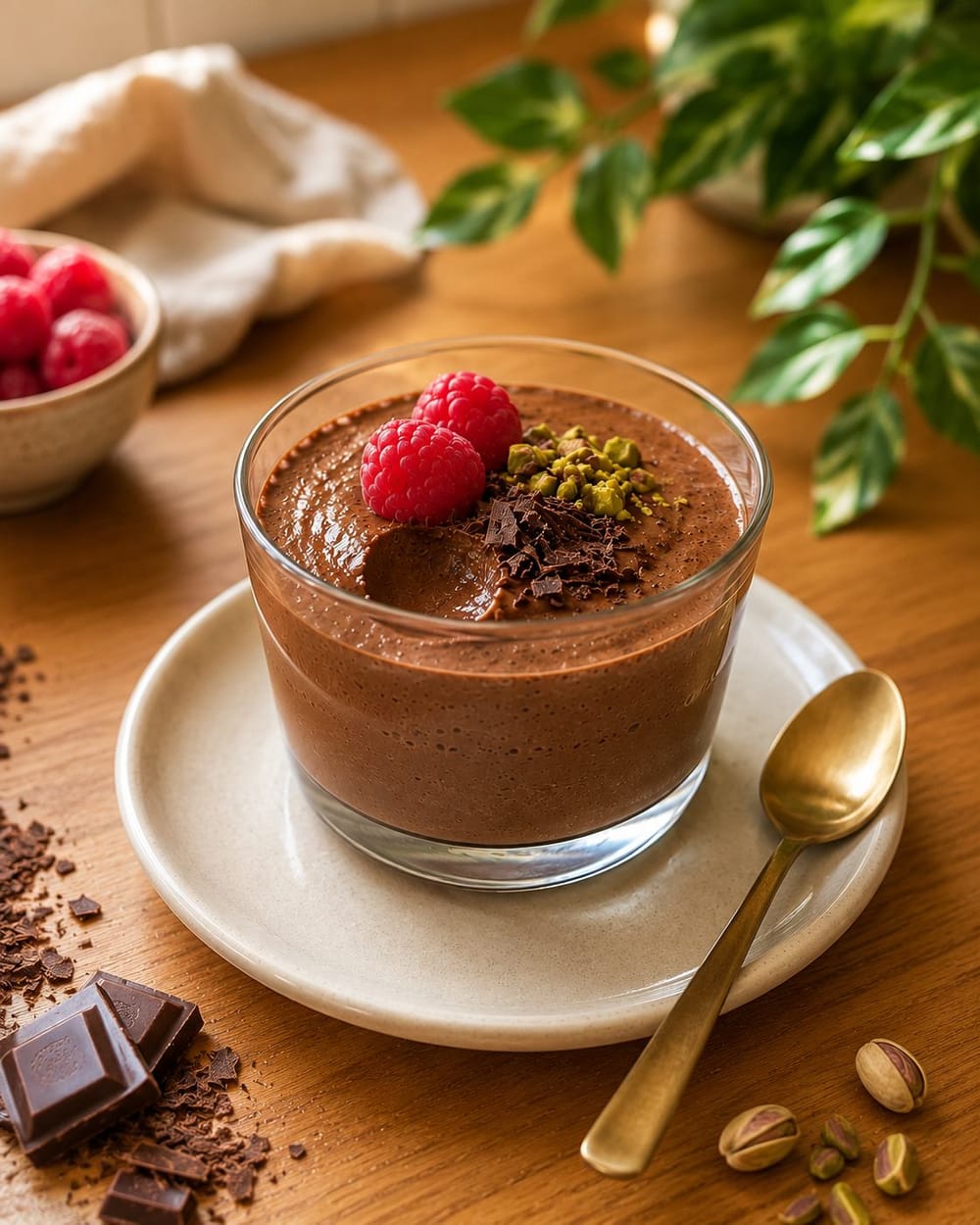
A memorable chocolate mousse should feel luxurious before the spoon reaches the mouth: a satin surface, soft ridges that hold, tiny bubbles inside and a clean dark-chocolate finish. This version keeps those signals. It does not disguise banana or avocado as classic mousse; it uses real dark chocolate, cocoa and carefully folded foam, then balances their richness with silken tofu and thick Greek yogurt.
The recipe is deliberately built in two parts. A smooth chocolate base provides flavour and body, while whipped aquafaba supplies lift without raw egg. Date paste and a modest amount of maple syrup round the bitterness rather than making the dessert aggressively sweet. Espresso, vanilla, orange zest and salt work in small quantities, each sharpening chocolate without announcing itself as a separate flavour.
Ten 150 ml cups make the portion visible and photograph beautifully as a complete tray. “Balanced” describes the ingredient architecture, fibre-containing additions and transparent serving size. It does not mean calorie-free, suitable for every medical condition or capable of producing a health outcome on its own.
Recipe Information
| Preparation | 35 minutes |
| Chilling | at least 4 hours |
| Total time | about 4 hours 35 minutes |
| Difficulty | Intermediate |
| Equipment | blender, heatproof bowl, electric mixer and 10 × 150 ml cups |
| Serve at | 4–7°C, chilled but not frozen |
| Estimated energy | about 240 kcal per cup |
Ingredients
Makes 10 individual cups


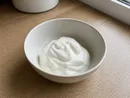
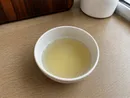
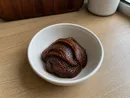
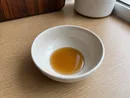

Step-by-Step Instructions
Prepare and chill the equipment
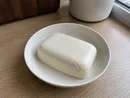
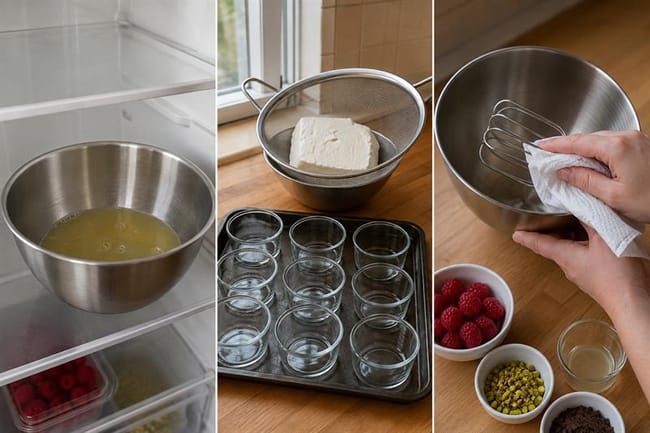
Place aquafaba and the mixer bowl in the refrigerator for at least 30 minutes. Drain tofu, weigh all sixteen ingredients and set ten identical 150 ml cups on a tray. Wipe the whipping bowl and beaters with a little vinegar, then dry; grease residue can prevent a stable foam.
Food safety and organisation matter because this mousse is not baked after assembly. Wash hands, use clean equipment, check date labels and keep yogurt, tofu and aquafaba cold until needed. Reserve the measured raspberries, pistachios and 25 g chocolate garnish rather than casually adding extras.
Melt the chocolate gently
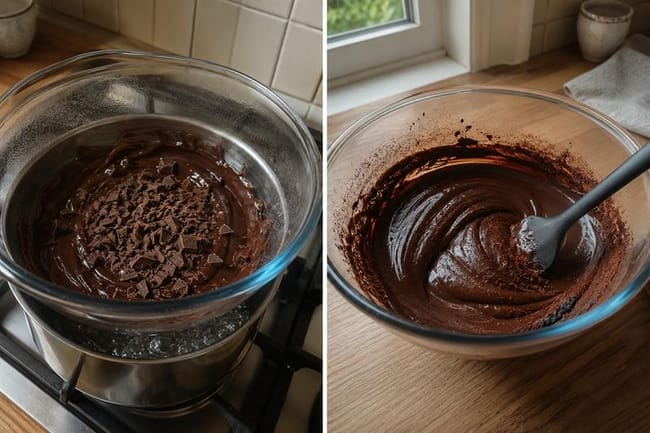
Put the 180 g chopped chocolate in a dry heatproof bowl. Set it over barely simmering water without letting the bowl touch the water, or microwave in 15-second bursts. Stir often and remove while a few small pieces remain; residual heat should finish the melt.
Water droplets and aggressive heat can make chocolate seize or scorch. The finished chocolate should be fluid and glossy, not steaming. Sift in cocoa and espresso, stir until smooth, then leave the bowl somewhere warm while the remaining base is blended.
Blend the chocolate base until satin-smooth
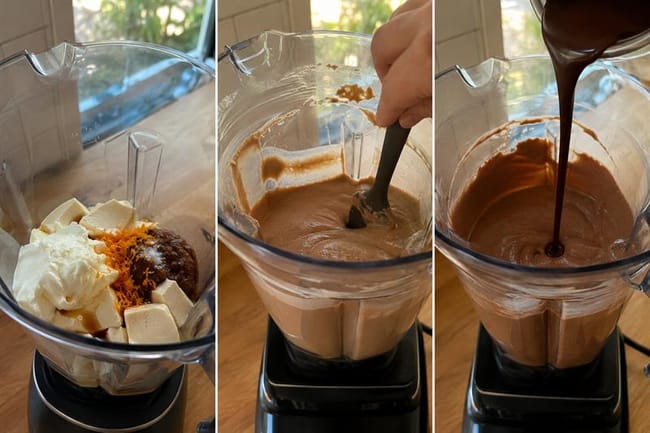
Blend drained tofu, yogurt, date paste, maple syrup, milk, vanilla, orange zest and salt for 60–90 seconds. Stop, scrape the sides and blend again until the mixture looks completely uniform with no date skins or tofu flecks.
With the blender on low, pour in the melted chocolate and process only until emulsified and satin-like. Scrape the bottom corners carefully. Taste with a clean spoon now—before aquafaba is added—and adjust only by selecting a sweeter chocolate next time, not by pouring unmeasured syrup into this batch.
Cool the base to the correct temperature
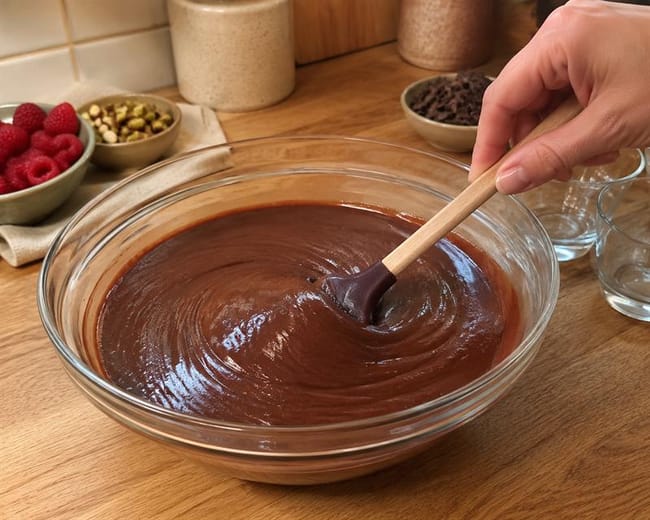
Transfer the chocolate base to a broad bowl and let it cool to approximately 28–30°C. If there is no thermometer, it should feel close to room temperature and remain fluid: neither warm enough to collapse foam nor cold enough to set in lumps.
Stir every few minutes so the edges do not harden. Do not refrigerate to hurry this stage. Correct temperature is the bridge between a smooth emulsion and retained bubbles, and it is more useful than following a fixed waiting time in kitchens of different temperatures.
Whip the aquafaba to firm glossy peaks
Begin beating the cold aquafaba at medium speed until foamy, then add cream of tartar. Increase to high and beat 7–12 minutes, depending on the mixer, until the foam is bright, dense and forms peaks whose tips barely bend.
Stop once or twice to check rather than relying on the clock. Proper foam should stay in an inverted spoon for a moment and show fine bubbles. If it remains loose after extended beating, the liquid may be too dilute; reducing it before chilling is a future-batch fix, not something to do after whipping.

Lighten the chocolate base
Whisk one quarter of the aquafaba foam into the cooled chocolate base. This first addition is intentionally mixed more firmly: its job is to loosen the dense base so the remaining foam can be folded with less pressure.
The colour will lighten and the base should become supple. If small chocolate grains appear, the base was probably too cool; warm only the outside of the bowl briefly over lukewarm water and stir gently, never heating the foam directly.
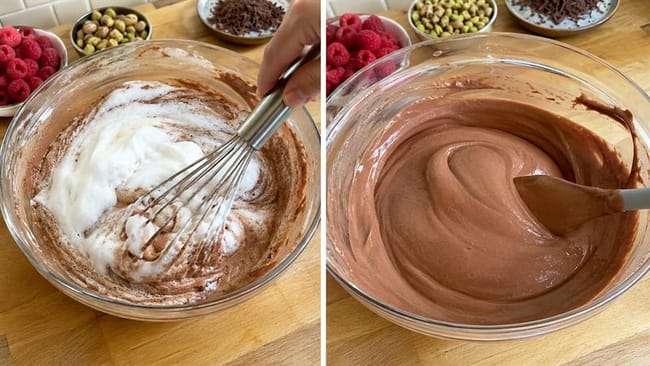
Fold without losing the air
Add half of the remaining foam. Use a broad spatula to cut through the centre, sweep along the bottom and fold over the top while turning the bowl. Repeat with the final foam only until no large white streaks remain.
A few tiny pale lines are safer than fifty extra strokes. Scrape the dense chocolate from the bottom because hidden streaks there create uneven cups. Do not whisk at this stage: the mousse needs the air already trapped, not new large unstable bubbles.

Fill exactly ten dessert cups
Divide the mousse among ten cups, about 135–145 g in each depending on aeration. A piping bag creates clean sides and high swirls; a spoon gives a softer homemade finish. Tap the tray only once, very gently, to settle large cavities.
Count all ten cups before licking or discarding residue so the published yield remains honest. Cover without touching the surfaces. Place the tray immediately in the coldest stable refrigerator zone, not in the warm door and not beside strongly scented food.
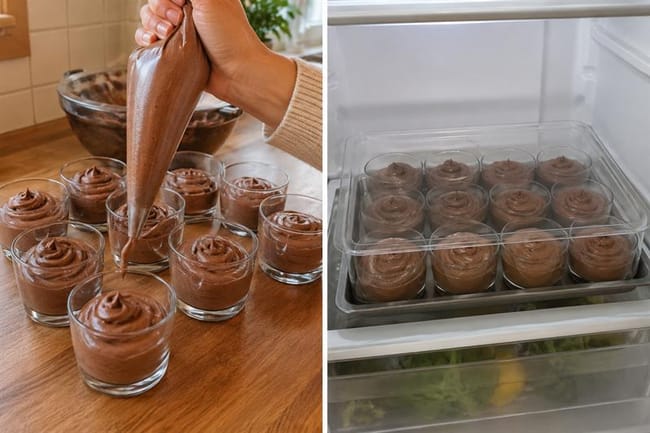
Chill, garnish and serve
Chill at least four hours, preferably six. The mousse should hold a spoon mark while remaining creamy. Shortly before serving, make curls from the reserved chocolate and top every cup with two raspberries, a pinch of pistachio and an equal share of curls.
Serve cold but allow five minutes outside the refrigerator for fuller aroma. Present all ten cups together for the marketing photograph, then return unused portions promptly to refrigeration. The garnish belongs to the stated recipe and nutritional estimate, so do not double it invisibly.
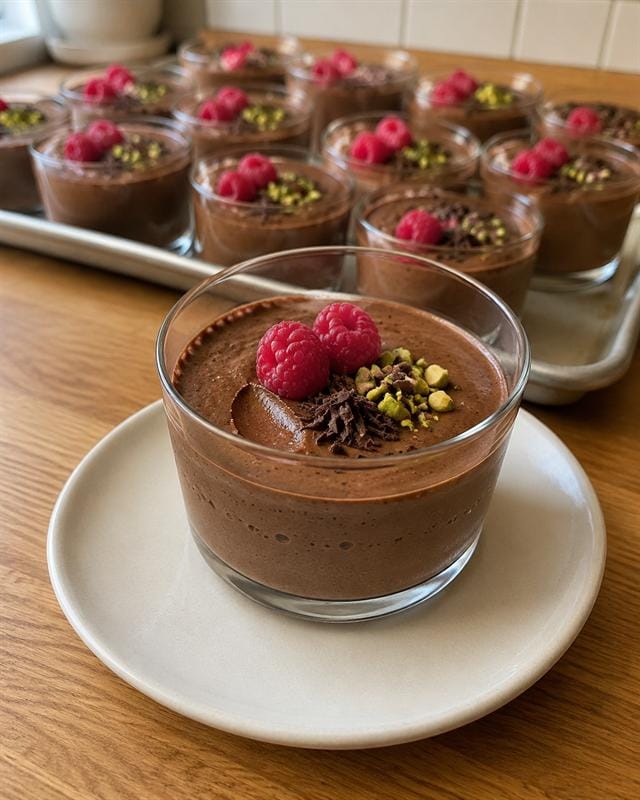
Common Mistakes
Why This Recipe Was Designed This Way
Classic mousse often obtains richness from a large quantity of cream and lift from eggs. This recipe separates those functions: dark chocolate supplies authentic flavour and cocoa-butter set; tofu and yogurt create creaminess; aquafaba supplies air. No single ingredient is advertised as a miracle replacement.
Real chocolate and a controlled amount of sweetener remain because indulgent appearance and flavour are central to the concept. Balance comes from measured portions and complementary ingredients, not from pretending chocolate dessert is nutritionally equivalent to a main meal.
The ten-cup yield was chosen for visual generosity and practical hosting. Every garnish is counted, and the nutrition refers to one complete decorated cup. This prevents the common mismatch between a minimalist calculation and a heavily topped photograph.
The recipe also avoids raw egg, simplifying service for many households. That does not make it sterile or risk-free: chilled ingredients, clean equipment, allergen disclosure and prompt refrigeration still matter.
Estimated Nutrition
Per serving
Storage & Reheating
Cover and refrigerate at 4°C or below. For best texture, serve within 48 hours; a carefully handled batch may remain acceptable up to three days, but local guidance and product dates take priority.
Keep garnishes separate until serving when possible. Never leave the tray at room temperature for more than two hours in total, or one hour in very hot conditions. Discard portions with uncertain temperature history.
Mousse is served cold and should not be reheated. Once a guest has eaten directly from a cup, do not return that cup to a communal tray for later service.
Freezing
Freezing is possible for texture experimentation, but thawed mousse may lose some of its fine aeration and release moisture. Freeze undecorated cups, tightly covered, for up to one month.
Thaw overnight in the refrigerator, never on the counter. Stirring after thawing destroys the presentation, so serve only cups that remain smooth and discard any with an unpleasant odour or uncertain handling.
Make-Ahead Tips
One day ahead, prepare and pipe all ten cups, cover and chill. Keep washed, thoroughly dried raspberries, chopped pistachios and the chocolate block in separate closed containers.
On serving day, inspect the set, make fresh curls and decorate 10–20 minutes before presentation. This schedule protects crisp garnish, clean colour and a calm service without pretending the mousse improves indefinitely.
Frequently Asked Questions
1. Does the mousse taste like tofu?
Not when the tofu is fresh, silken and blended completely with assertive dark chocolate. A noticeable bean flavour usually indicates the wrong tofu style or an old product.
2. Can I use chickpea liquid from a can?
Yes, provided it is unsalted or low in sodium, tastes neutral, is strained and is well chilled. Liquid from home-cooked chickpeas varies more and may need reduction before chilling.
3. Why is there no raw egg?
Aquafaba supplies foam, so raw egg is unnecessary. This choice changes neither the need for hygiene nor the requirement to refrigerate dairy and tofu promptly.
4. Can I make only five cups?
Yes. Halve every ingredient by weight, including garnish. Use the same temperatures and visual cues; whipping time may be slightly shorter in a small bowl.
5. Can I double the recipe?
It is safer to make two batches. A very large bowl makes even folding difficult and can leave dense base at the bottom while the top becomes overmixed.
6. Is this mousse vegan?
Not as written because it contains Greek yogurt and the chocolate may contain milk. Use an equally thick soy yogurt and verify every chocolate label for a vegan version.
7. Is it gluten-free?
The ingredient list contains no intentional wheat, but chocolate, cocoa and other packaged products may have cross-contact. Only verified labels can answer for a particular guest.
8. Can it be served to children?
A caregiver can decide an appropriate portion. Omit espresso, consider caffeine naturally present in chocolate and verify soy, milk, nut and other allergy concerns.
9. Why did my mousse become firm?
Chocolate with a very high cocoa percentage, a cold refrigerator or over-measured chocolate can create a firmer set. Let the cup stand five to ten minutes before serving.
10. Why did my mousse stay soft?
Warm base, weak aquafaba, watery yogurt, extra liquid or inaccurate division are common causes. Give it six hours before judging, but chilling cannot repair completely collapsed foam.
11. Can I reduce the sweetener?
You may reduce maple syrup slightly, but date paste and chocolate also affect body and bitterness. Test a half batch; do not promise the same taste and set after major reductions.
12. Can I add protein powder?
Not casually. Powders absorb water, introduce flavour and can make the mousse chalky. A specifically tested reformulation would be needed.
13. How do I obtain clean chocolate curls?
Let a chocolate block sit briefly at cool room temperature and pull a vegetable peeler along its edge. If it crumbles, warm it in your hands for a few seconds.
14. Can I transport the cups?
Chill them fully, cover individually, pack upright in an insulated cooler with ice packs and minimise time outside refrigeration. Add garnish at destination.
15. What does “balanced” mean here?
It means real dessert flavour, deliberate ingredient roles, a declared ten-cup yield and transparent estimates. It is not a regulated medical claim or permission to ignore personal needs.
Related Recipes
If you enjoyed this 🍮 Chocolate Mousse, you may also like these recipes.