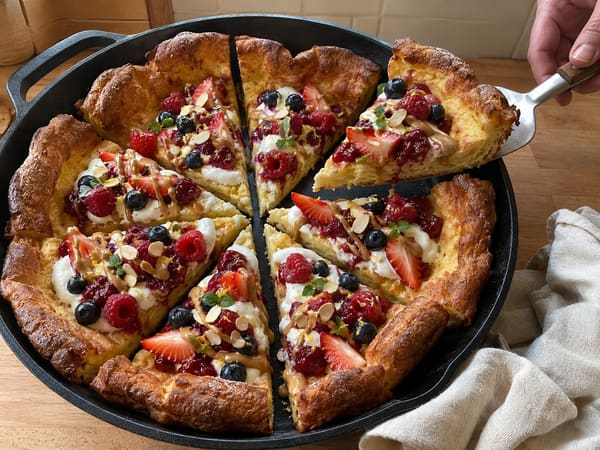
🧇 Croffle
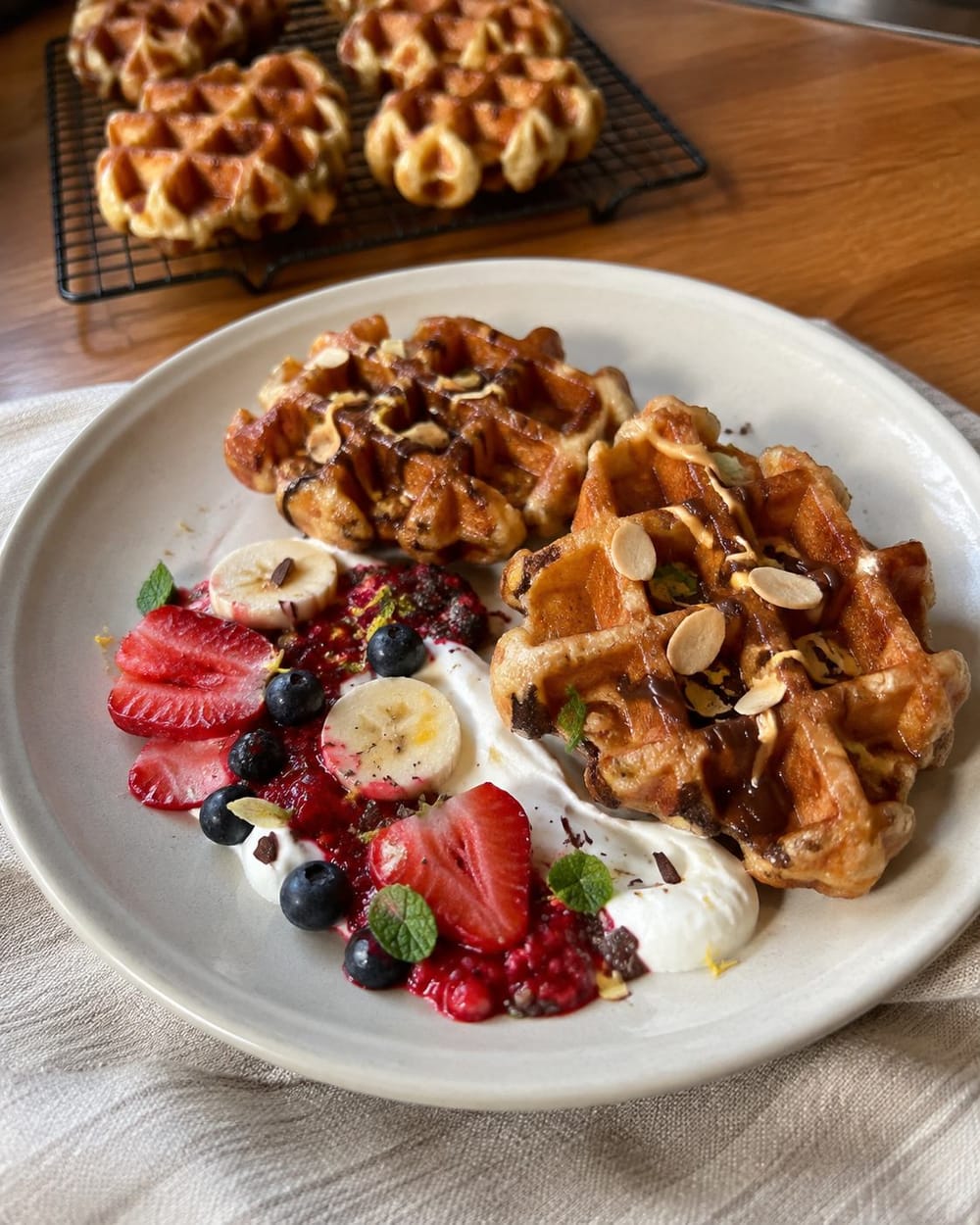
“Everything people love about a café croffle—the laminated layers, crisp waffle ridges, caramelized edges, buttery center, creamy topping, glossy berries, chocolate ribbon, and dramatic plated height—thoughtfully rebuilt with a partially whole-grain dough, measured butter and maple syrup, Greek-yogurt cream, chia berry compote, fresh fruit, and restrained nut and dark-chocolate finishes.”
A croffle is a croissant-style dough cooked in a waffle iron. Pressure brings the laminated layers into direct contact with hot patterned plates, creating a crisp geometric shell while the interior remains layered and tender. It should not taste like ordinary waffle batter or a bread roll pressed into a waffle shape. The dough, chilling, folds, proofing, and controlled heat all matter.
Many café croffles begin with a large commercial croissant, are rolled in sugar, pressed in butter, and finished with ice cream, whipped cream, sauces, cookies, or candy. The result can be delicious and extremely energy-dense. This version preserves the recognizable pastry structure and indulgent appearance while using a more deliberate design. Whole-wheat pastry flour supplies part of the grain base, strong flour supports elasticity, and a smaller but still functional butter layer produces visible lamination.
Greek yogurt appears in both dough and topping. In the dough, it provides acidity, moisture, and tenderness. In the topping, it creates a thick vanilla-lemon cream without a tower of whipped cream. Maple syrup is measured across dough, compote, and topping. Fresh berries and banana create abundant color, while chia thickens the cooked fruit. Dark chocolate, almond butter, and toasted almonds remain visible in small, intentional quantities.
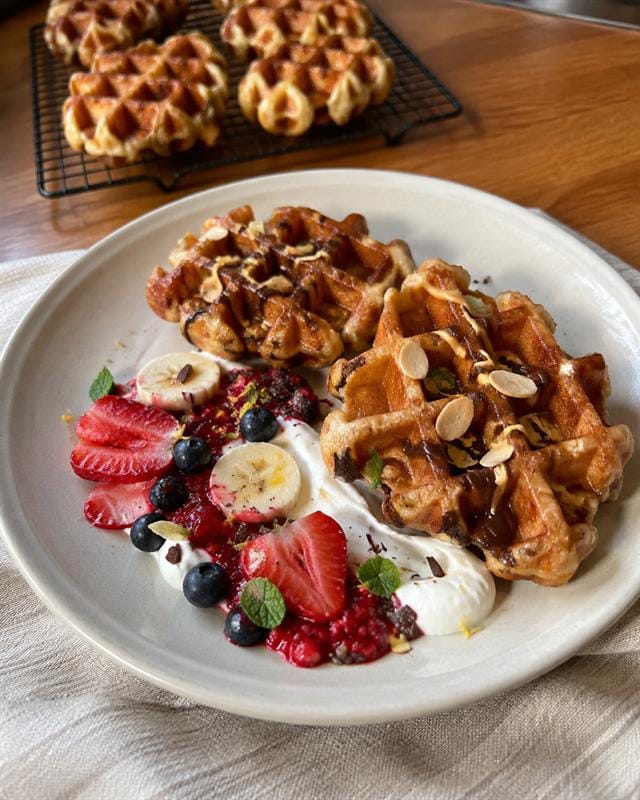
The final plate should look unmistakably café-worthy: two tall croffles with crisp square ridges, flaky golden edges, pale yogurt swirls, ruby strawberries, blueberries, banana fans, glossy berry compote, fine dark-chocolate threads, almond-butter ribbons, toasted flakes, lemon zest, and mint. A better-balanced recipe does not need to look sparse.
This recipe does not promise weight loss, blood-sugar control, muscle gain, heart protection, hormonal balance, or any medical outcome. “Better-balanced” describes ingredient and portion design, not a treatment claim. Croffles remain rich pastries containing butter, wheat, gluten, dairy, egg, added sugar, nuts, and chocolate.
Recipe Information
| Active Prep Time | 50 minutes |
| First Rise | 1 hour |
| Chilling and Folding Time | 2 hours 30 minutes |
| Final Proof | 45 minutes |
| Cooking and Finishing Time | 35 minutes |
| Total Time | Approximately 5 hours 40 minutes |
| Servings | 4 generous brunch portions |
| Yield | 8 croffles with approximately 48 visible fruit pieces |
| Difficulty | Advanced |
| Estimated Calories | ~720 kcal per serving* |
Ingredients
Makes 4 generous brunch portions
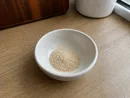






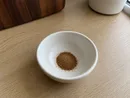


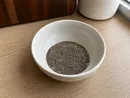
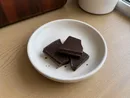



Step-by-Step Instructions
Prepare a Clean, Cool Work Area
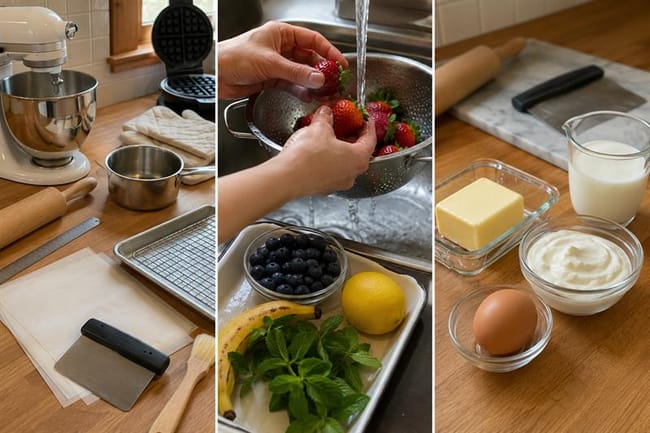
Wash your hands and clean the counter. Prepare a stand mixer or large bowl, rolling pin, ruler, parchment, bench scraper, pastry brush, trays, plastic-free reusable cover or wrap, saucepan, bowls, cooling rack, waffle iron, heat-safe tongs, and oven mitts.
Wash lemon, strawberries, blueberries, banana skin, and mint. Dry berries and mint carefully. Keep dairy, egg, and butter refrigerated until needed.
The room should not be excessively hot. If the butter begins to shine, smear, or leak during lamination, stop and chill the dough rather than forcing the next fold.
Mix and Develop the Yeasted Dough
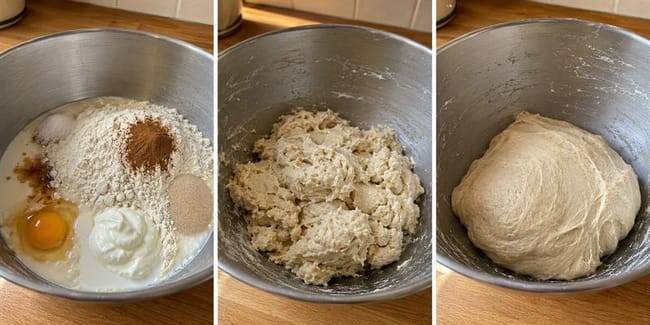
Combine milk, 80 g Greek yogurt, egg, 1 tablespoon maple syrup, 1 teaspoon vanilla, yeast, bread flour, whole-wheat pastry flour, cinnamon, and salt. Place salt on the flour away from concentrated yeast before mixing.
Mix until a shaggy dough forms, then knead for approximately 6 to 8 minutes by mixer or 8 to 10 minutes by hand. The dough should become smooth, elastic, and slightly tacky, not wet enough to flow.
If it is extremely dry, add milk one teaspoon at a time. If sticky, continue kneading before adding flour; excessive extra flour produces dense croffles.
Complete the First Rise and Chill
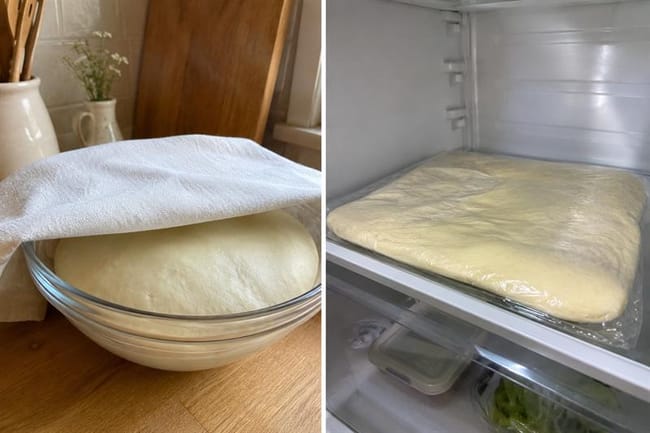
Shape the dough into a ball and place it in a clean covered bowl. Let rise in a comfortably warm, draft-free place for about 1 hour, or until visibly expanded but not necessarily doubled.
Press gently to release very large gas pockets and shape into a flat rectangle. Cover and refrigerate for at least 45 minutes.
Cold dough and cold butter are essential for distinct layers. Chilling also relaxes gluten, making the rectangle easier to roll without springing back.
Lock In the Butter and Make Three Folds
Place the 70 g cold butter between parchment and tap or roll it into a thin 12 cm square. It should bend without cracking and remain cool.
Roll the chilled dough into a square large enough to enclose the butter diagonally. Place the butter in the center, fold dough corners over it, and pinch seams closed so butter cannot escape.
Roll gently into a long rectangle, maintaining straight edges. Fold the top third down and bottom third up like a letter. Chill 30 minutes. Rotate 90 degrees and repeat the roll, letter fold, and chill twice more, completing three folds. If butter softens at any point, chill before continuing.
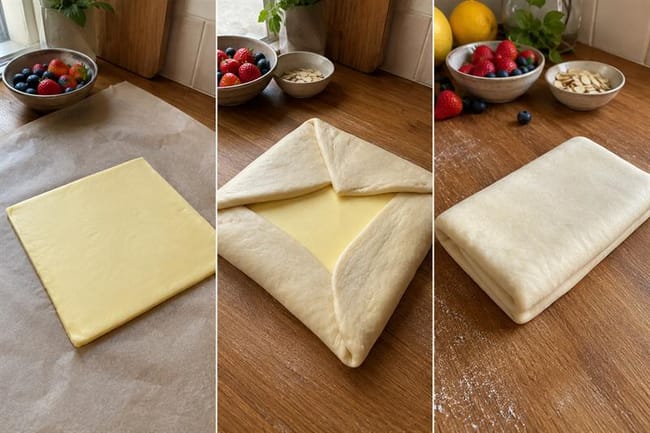
Shape Eight Croffles and Proof
After the final chill, roll the laminated dough into a rectangle approximately 28 x 36 cm. Trim only very uneven edges; excessive trimming wastes layers.
Cut into eight equal long triangles or strips, depending on the chosen spiral shape. Roll each piece loosely from the wider end so the layers have room to expand. Tuck the tip underneath.
Place on parchment, cover lightly, and proof for approximately 45 minutes in a mild room. They should look puffy and delicate but remain cool enough that butter does not leak. Refrigerate for 10 minutes before cooking if they become too soft.
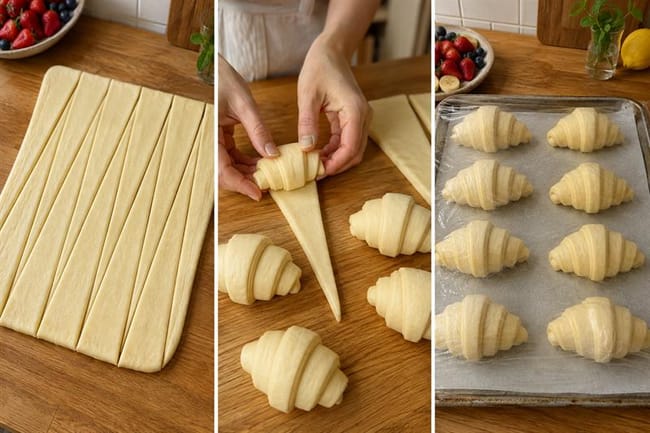
Prepare the Fruit, Yogurt Cream, and Finishes
Cook approximately one third of the strawberries and half the blueberries with 1 teaspoon maple syrup, 1 tablespoon lemon juice, and 2 tablespoons water for 4 to 6 minutes. Crush lightly, remove from heat, stir in chia, and rest 10 minutes.
Mix 240 g Greek yogurt with remaining vanilla, remaining maple syrup, and lemon zest. Keep thick and cold.
Melt dark chocolate gently. Warm almond butter and thin with 1 teaspoon warm water only if necessary. Toast sliced almonds in a dry pan. Slice remaining strawberries and banana close to serving.
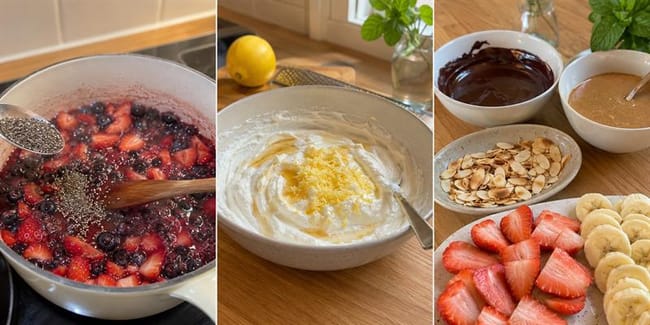
Cook the Croffles in Batches
Preheat the waffle iron thoroughly on medium or medium-high according to its manufacturer. A light removable-plate brushing may be used only if the appliance requires it; the laminated dough already contains butter.
Place one or two proofed pieces on the plates without overcrowding. Close gently; do not force the lid completely during the first seconds if expansion is strong.
Cook for approximately 4 to 7 minutes, depending on size and equipment, until deeply golden, crisp, and cooked through. Steam is extremely hot. Remove with heat-safe tongs and cool on a rack, never directly on a flat plate where trapped steam softens the base. Repeat for all 8 croffles.
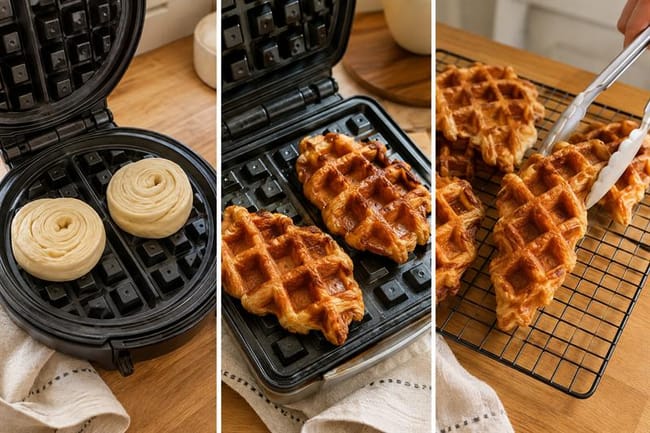
Plate, Finish, and Serve Safely
Serve two croffles per generous brunch portion. Arrange yogurt in a controlled swoosh beside or partially over each pastry, leaving most ridges exposed.
Add berry-chia compote, fresh strawberries, blueberries, banana, fine chocolate and almond-butter ribbons, toasted almonds, lemon zest, and mint. Across the complete recipe, arrange approximately 48 clearly visible berry pieces and strawberry slices.
Serve while the exterior is crisp and the interior tender. Refrigerate perishable toppings promptly and unplug the waffle iron once cooking is complete and the manufacturer’s cooling instructions can be followed.
Common Mistakes
Why This Recipe Was Designed This Way
This croffle keeps the laminated pastry, crisp waffle geometry, buttery aroma, creamy topping, fruit gloss, chocolate, and café drama while adjusting the grain, butter, added sugar, dairy, fruit, seed, and nut proportions.
It is still a substantial pastry brunch, not a medical food or everyday requirement. Its better-balanced design does not erase calories, saturated fat, added sugar, gluten, or allergens.
🌾 Bread Flour and Whole-Wheat Pastry Flour
Bread flour supplies the elastic structure needed for fermentation and lamination. Whole-wheat pastry flour adds fiber, B vitamins, minerals, and more grain components while staying relatively tender. The recipe contains wheat and gluten. Whole-grain ingredients do not make an unlimited pastry portion appropriate.
🥣 Greek Yogurt, Milk, and Egg
These ingredients contribute protein, calcium, moisture, emulsification, color, and tenderness. Yogurt also supplies the thick topping. They support structure and estimated protein, but one meal does not guarantee muscle gain, fullness, or improved health.
🧈 Laminating Butter
Butter separates dough sheets, generates steam, creates crispness, and contributes the characteristic flavor. It also provides saturated fat and energy. Reducing it too aggressively would remove the defining laminated texture. Measuring it and keeping it functional is more transparent than pretending a croffle contains none.
🍓 Berries and Banana
Fruit contributes fiber, vitamin C, potassium, water, natural sugars, color, acidity, and texture. Fresh and cooked fruit reduce the need for an enormous decorative sauce portion. Fruit does not make the pastry detoxifying, sugar-free, or capable of preventing disease.
🌱 Chia Seeds
Hydrated chia thickens the compote and contributes fiber, plant omega-3 fat, protein, and minerals. Its role remains culinary and nutritional, not medicinal. People unused to concentrated fiber may prefer a smaller quantity and adequate fluid across the day.
🍫 Dark Chocolate, Almond Butter, and Almonds
These toppings add bitterness, richness, unsaturated fat, protein, vitamin E, magnesium, crunch, and energy. Dark chocolate still may contain sugar and saturated fat. Almond products are tree-nut allergens. Measured fine lines create the desired look without heavy coverage.
🧩 Flexible Brunch Portions
Two croffles with toppings make a generous serving. One croffle with yogurt and fruit may suit a smaller appetite, while another person may require a different meal. Nutrition estimates may draw on references such as USDA FoodData Central, but flour absorption, butter leakage, waffle-iron size, brands, substitutions, and actual intake are more specific.
Estimated Nutrition
Per serving
Storage & Reheating
Croffles are best within minutes of cooking. Store plain, fully cooled croffles in an airtight container in the refrigerator for up to 2 days. Store yogurt, compote, fresh fruit, chocolate, and nuts separately.
Reheat plain croffles in a preheated waffle iron for 1 to 2 minutes or in a 180°C / 350°F oven or air fryer for 4 to 6 minutes. Reheating equipment and pastry become hot; follow appliance guidance.
Add cold toppings only after reheating. Microwaving softens the crisp layers and is not preferred when texture matters.
Freezing
Freeze shaped, proofed raw dough pieces or cooked plain croffles separately, not the completed topped dish.
For cooked croffles, cool fully, wrap individually, and freeze for up to 1 month for best quality. Reheat from frozen in the oven or waffle iron until appropriately hot and crisp.
Raw laminated dough requires controlled thawing and proofing in the refrigerator according to a tested schedule. Do not leave egg-and-dairy dough at room temperature for an extended uncertain period.
Make-Ahead Tips
Mix dough the evening before.
Complete folds and refrigerate the laminated block overnight.
Shape croffles in the morning and proof before cooking.
Make berry-chia compote up to 2 days ahead.
Mix yogurt cream up to 1 day ahead.
Toast almonds up to 3 days ahead.
Wash and dry berries in advance; slice strawberries and banana near serving.
Melt chocolate and warm almond butter while croffles cook.
Preheat the waffle iron before the proofed pieces are ready.
Frequently Asked Questions
Can I use store-bought croissant dough?
Yes, but ingredients, butter, sodium, sugar, size, proofing, and nutrition will differ. Follow the product’s instructions and appliance safety guidance.
Why did butter leak from my dough?
The butter may have become too warm, the seams may have opened, or the waffle iron may have started too cool. Chill the dough and preheat fully.
Why are my croffles dense?
Common causes include inactive yeast, insufficient proofing, excessive added flour, compressed shaping, or a cool waffle iron.
Can I use only whole-wheat flour?
It is possible, but the layers may become denser and less elastic. This formula intentionally combines two flours.
Can I make it gluten-free?
Use a specifically tested gluten-free laminated-dough recipe. A one-to-one flour swap will not reliably reproduce structure.
Can I make it dairy-free?
Use tested butter, milk, yogurt, and dough alternatives appropriate for lamination. Flavor, protein, calcium, handling, and rise will change.
Can I omit almonds?
Yes. Omit almond butter and almonds or use a verified seed alternative. Nutrition and allergens change.
Can I use frozen berries?
Yes for compote. For garnish, use fresh fruit or thawed fruit that has been drained extremely well.
Can I cook them in advance?
Yes, but the texture is best immediately. Cool on a rack and reheat without toppings.
Is 23 g protein suitable for everyone?
It is an estimate, not a universal target. Needs and preferred portion sizes vary.
Is this a weight-loss breakfast?
It is not prescribed for weight loss. It is a substantial pastry brunch with flexible portions.
Can children eat croffles?
Age-appropriate portions may be served when allergens, choking risks, hot equipment, sugar, and total meal balance are managed by a responsible adult.
Related Recipes
If you enjoyed this 🧇 Croffle, you may also like these recipes.