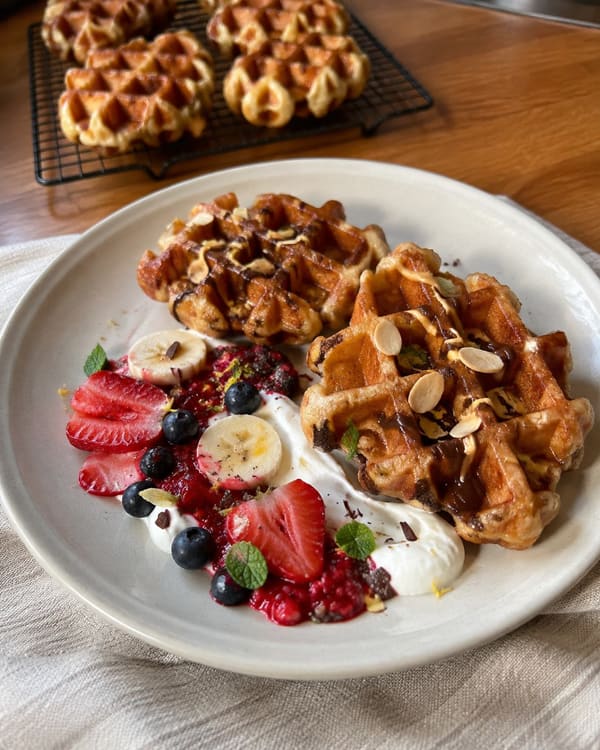
🥞 Dutch Baby Pancake
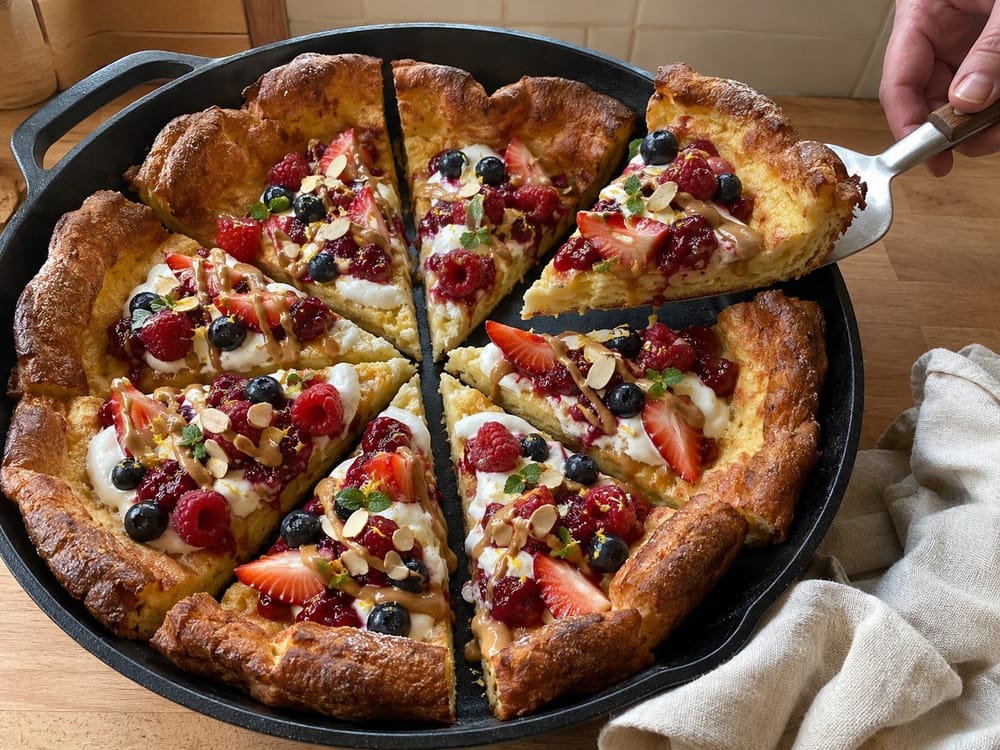
Makes one spectacular 30 cm / 12-inch Dutch baby, cut into 8 dramatic golden wedges, with approximately 48 visible berries and strawberry slices.
“Everything people love about a café Dutch baby—the towering crisp rim, custardy center, buttery aroma, powdered-looking finish, glossy fruit, creamy topping, and theatrical skillet presentation—thoughtfully rebuilt with whole-wheat pastry flour, oat flour, cottage cheese, Greek yogurt, measured butter and maple syrup, seeds, nuts, and abundant berries.”
A Dutch baby is neither a standard pancake nor a cake. Its thin, egg-rich batter goes into a thoroughly preheated skillet, where steam and egg structure push the edges upward. The center remains tender and slightly custardy while the rim becomes bronzed and crisp. The rise looks extravagant even though the batter contains no yeast and, in this version, no chemical leavening.
Many restaurant versions use refined flour, a generous amount of butter, heavy sweet toppings, powdered sugar, syrup, whipped cream, and relatively little fruit. This recipe keeps the golden skillet, dramatic architecture, creamy finish, berry gloss, and brunch-table excitement while changing the proportions. Whole-wheat pastry flour and oat flour provide the base. Cottage cheese and yogurt contribute body and protein. A measured amount of butter remains because it supports flavor, browning, and release from the skillet.
The berries are used in two ways. Part becomes a quick chia-thickened compote, while the rest stays fresh for color and texture. The topping combines Greek yogurt, lemon, vanilla, and a controlled amount of maple syrup. Almond butter and sliced almonds provide a café-style drizzle and crunch without covering the entire pancake in a heavy sauce.
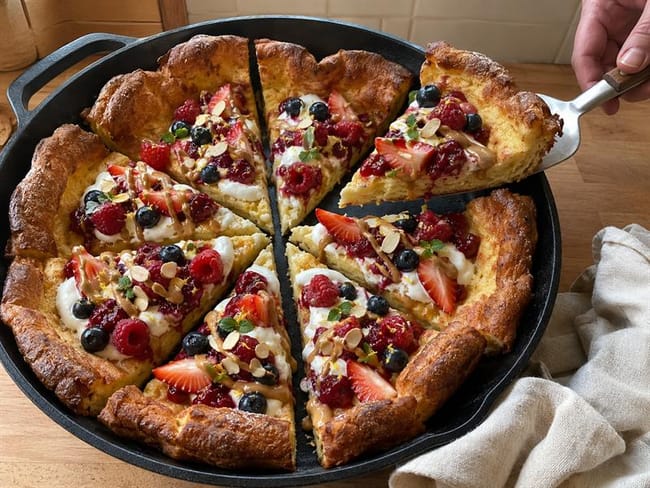
The final dish should look indulgent, not apologetic: a deeply golden raised rim, a soft center, white yogurt clouds, ruby strawberry fans, dark blueberries, raspberries, glossy compote, almond ribbons, lemon zest, and tiny mint leaves. The pancake naturally deflates after leaving the oven; that is normal and should not be hidden with false expectations.
This recipe does not promise weight loss, blood-sugar control, muscle gain, hormonal balance, improved cholesterol, or any medical result. “Better-balanced” describes the recipe design, not a treatment claim. Portion size, dairy, eggs, gluten, nuts, added sugar, and total dietary context remain individual considerations.
Recipe Information
| Prep Time | 35 minutes |
| Batter Resting Time | 15 minutes |
| Cook Time | 20 minutes |
| Cooling and Finishing Time | 15 minutes |
| Total Time | 1 hour 25 minutes |
| Servings | 4 generous brunch portions |
| Yield | 1 large Dutch baby, 8 wedges, and approximately 48 visible fruit pieces |
| Difficulty | Intermediate |
| Estimated Calories | ~620 kcal per serving* |
Ingredients
Makes 4 generous brunch portions














Step-by-Step Instructions
Prepare the Equipment and Ingredients
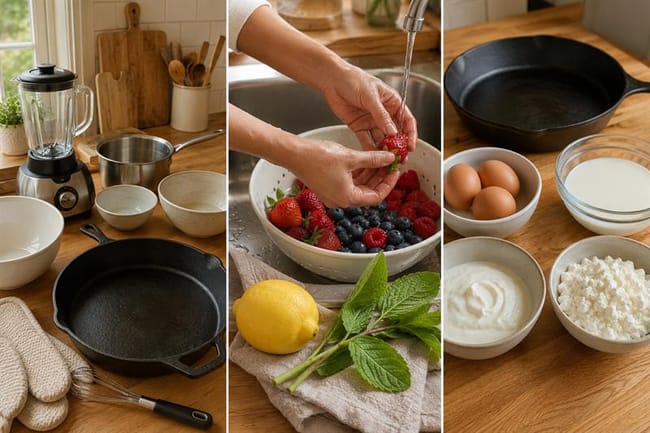
Wash your hands and clean the work surface. Prepare a 30 cm / 12-inch oven-safe cast-iron or heavy metal skillet, blender, small saucepan, bowls, whisk, flexible spatula, oven mitts, cooling rack, and a sharp serving knife.
Wash lemon, strawberries, blueberries, raspberries, and mint. Dry the fruit carefully. Bring eggs, milk, yogurt, and cottage cheese toward room temperature for approximately 20 to 30 minutes without leaving perishable foods out longer than safe local guidance.
Position an oven rack in the lower-middle section so the rising rim has space. Confirm that the skillet handle and all equipment are oven-safe.
Blend and Rest the Batter
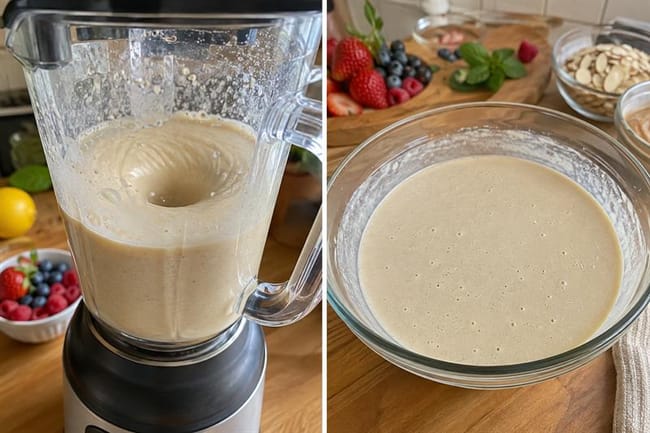
Add eggs, milk, 100 g Greek yogurt, cottage cheese, 1 tablespoon maple syrup, 1 teaspoon vanilla, half the lemon zest, flour, oat flour, cinnamon, nutmeg, and salt to a blender.
Blend for 20 to 30 seconds until completely smooth. Scrape down once if flour clings to the sides, then pulse briefly. Avoid blending for several minutes, which can create unnecessary foam and overwork the wheat proteins.
Rest the batter for 15 minutes. The flour hydrates, large bubbles settle, and the batter becomes more uniform. It should remain pourable, closer to crêpe batter than conventional pancake batter.
Make the Quick Berry-Chia Compote
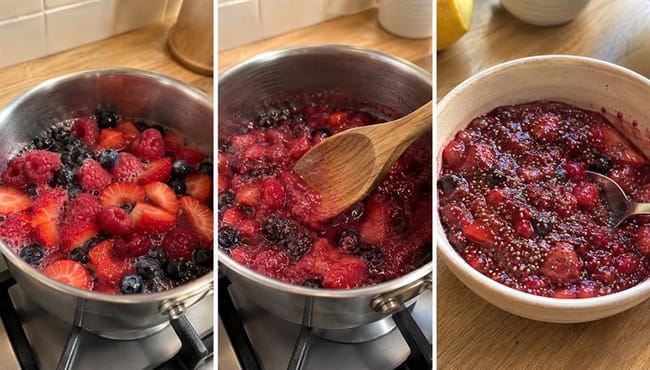
Place approximately one third of the strawberries, half the raspberries, and half the blueberries in a small saucepan. Add 1 tablespoon maple syrup, 1 tablespoon lemon juice, and 2 tablespoons water.
Cook over medium-low heat for 4 to 6 minutes, stirring and gently crushing some fruit, until juicy but not reduced to jam. Remove from heat and stir in chia seeds.
Rest for at least 10 minutes so the chia hydrates and thickens the liquid. Add a teaspoon of water if it becomes too firm. The compote should spoon in glossy ribbons rather than run across the skillet.
Preheat the Oven and Skillet Thoroughly
Preheat the oven to 220°C / 425°F. Place the empty skillet inside for at least 10 minutes after the oven reaches temperature.
This preheating is essential. A lukewarm pan produces a flat, pale pancake because steam generation begins too slowly. Use dry oven mitts and announce the hot handle to anyone nearby.
While the skillet heats, pulse the rested batter for 3 to 5 seconds only to recombine anything that settled. Do not add baking powder; the intended rise comes from steam and eggs.

Butter the Skillet and Bake Immediately
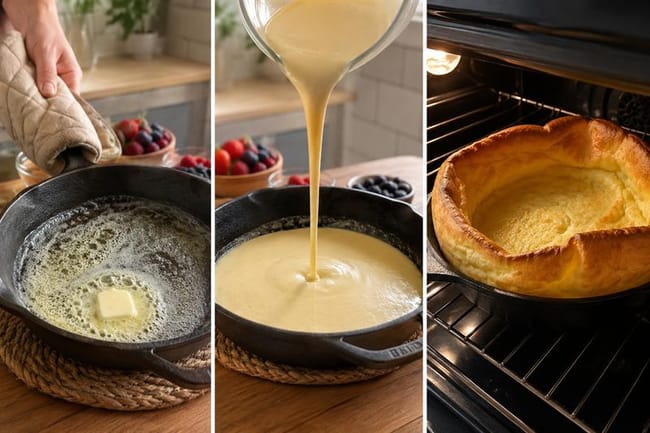
Carefully remove the skillet and set it on a heat-safe surface. Add the measured butter and swirl until melted, foamy, and coating the bottom and lower sides. Do not touch the handle.
Pour the batter into the center in one smooth motion. Return the pan to the oven immediately and close the door gently.
Bake for 17 to 20 minutes without opening the oven during the first 15 minutes. The Dutch baby is ready when the rim is dramatically puffed and deeply golden, while the center is set but still tender.
Make the Lemon-Vanilla Yogurt and Almond Drizzle
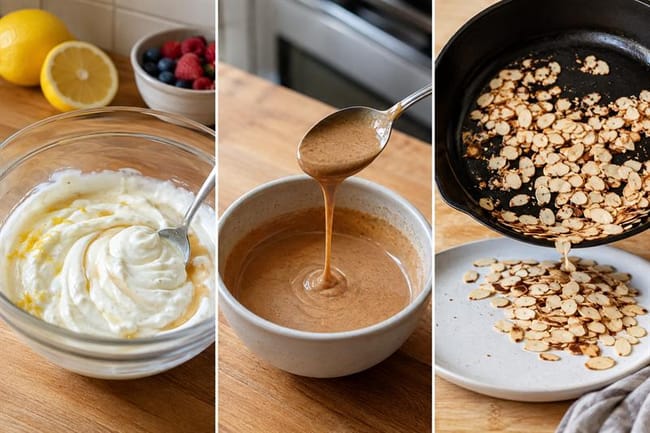
Stir the remaining 200 g Greek yogurt with 1 teaspoon vanilla, 1 to 2 teaspoons lemon juice, and 1 tablespoon maple syrup. Keep it thick and refrigerate until serving.
Warm almond butter for a few seconds using a safe method, then stir in 1 to 2 teaspoons warm water until drizzleable. Do not over-dilute it.
Toast sliced almonds in a dry pan over medium-low heat, stirring continuously, until lightly golden and fragrant. Transfer immediately to a cool plate so they do not burn.
Finish the Pancake While It Is Dramatic
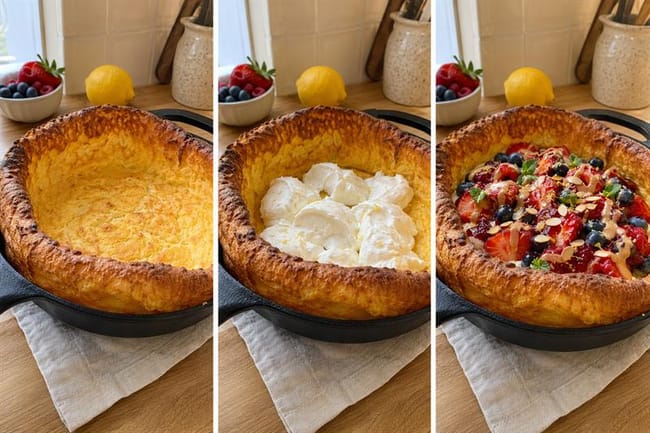
Remove the skillet with oven mitts and place it on a heat-safe surface. Photograph the fully risen pancake immediately if desired; it will begin to settle within minutes, which is normal.
Allow it to rest for 3 to 5 minutes. Spoon yogurt in controlled clouds through the center, add fresh strawberries, blueberries, and raspberries, then ribbon the berry compote and almond butter across the surface.
Finish with toasted almonds, remaining lemon zest, and restrained mint leaves. Arrange approximately 48 clearly visible berry pieces and strawberry slices across the top without burying the golden rim.
Slice, Serve, and Store Safely
Cut the Dutch baby into 8 wedges and serve two wedges per generous brunch portion. Use a heat-safe server and keep the hot skillet handle protected and visible.
Serve promptly for the strongest contrast between crisp rim and custardy center. Offer extra yogurt or compote separately rather than flooding the pancake.
Refrigerate perishable leftovers within a safe time. Yogurt, cottage cheese, milk, eggs, and cut fruit should not remain at room temperature for an extended uncertain period.
Common Mistakes
Why This Recipe Was Designed This Way
This Dutch baby retains the theatrical rise, golden butter aroma, custardy center, creamy topping, fruit gloss, and café-style finish while adjusting the flour, dairy, added sugar, fat, fruit, seed, and nut proportions.
It can form a substantial brunch, but it is not a medical meal or automatically appropriate for every person. The serving remains energy-dense and contains wheat, gluten, eggs, milk, and almonds.
🥚 Eggs, Greek Yogurt, and Cottage Cheese
Eggs provide complete protein, choline, vitamin B12, selenium, fat, and structure. Greek yogurt and cottage cheese add protein, calcium, moisture, and tang. Together they support the texture and estimated protein, but one brunch does not guarantee muscle gain, fullness, weight loss, or improved health.
🌾 Whole-Wheat Pastry Flour and Oat Flour
Whole-wheat pastry flour contributes fiber, B vitamins, minerals, and enough wheat structure for the rim. Oat flour adds soluble fiber and softness. The recipe still contains gluten because of the wheat flour. “Whole grain” does not make unlimited portions appropriate for everyone.
🍓 Strawberries, Blueberries, and Raspberries
Berries provide fiber, vitamin C, water, natural sugars, color, acidity, and naturally occurring plant compounds. Fresh and cooked forms create different textures. They support variety but should not be described as detoxifying, fat-burning, or capable of preventing disease.
🌱 Chia Seeds
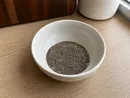
Hydrated chia thickens the compote and contributes fiber, plant omega-3 fat, protein, and minerals. Its role is culinary and nutritional, not medicinal. People unaccustomed to concentrated fiber may prefer a smaller amount and adequate fluid across the day.
🥜 Almond Butter and Almonds
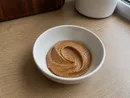
Almonds contribute unsaturated fat, protein, vitamin E, magnesium, crunch, and energy. Measuring them preserves the premium café finish without allowing the topping to dominate the complete serving. Almonds are a tree-nut allergen and require substitution or omission when necessary.
🍁 Maple Syrup and Butter
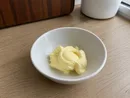
Maple syrup is measured added sugar. Butter contributes flavor, browning, saturated fat, and energy. Neither becomes unlimited because the remaining ingredients are nutrient-rich. Keeping them present in deliberate quantities helps the dish taste like a real Dutch baby rather than a compromised imitation.
🧩 Flexible Portions
Two wedges are a generous starting serving. Some adults may prefer one wedge with additional yogurt and fruit; others may need a different meal composition based on appetite, activity, and health. Nutrition can be estimated from references such as USDA FoodData Central, but product labels, skillet retention, substitutions, fruit size, and actual intake are more specific.
Estimated Nutrition
Per serving
Storage & Reheating
For best quality, serve immediately. Refrigerate leftover pancake, compote, yogurt topping, fruit, and almond components separately in airtight containers for up to 2 days.
Reheat plain pancake wedges in a 180°C / 350°F oven or air fryer until appropriately hot and edges revive, generally 4 to 7 minutes. Add cold toppings after reheating.
Microwaving softens the rim but is possible when texture is not the priority. Do not repeatedly reheat and cool the same portion.
Freezing
Freeze only plain, fully cooled pancake wedges. Wrap individually and freeze for up to 1 month for best quality.
Do not freeze the complete topped skillet. Yogurt, fresh berries, mint, and chia compote may lose desirable texture or release liquid.
Reheat frozen wedges directly in the oven until hot, then add freshly prepared or safely refrigerated toppings.
Make-Ahead Tips
Measure dry flours and spices the evening before.
Blend cottage cheese until smooth in advance.
Make berry-chia compote up to 2 days ahead.
Mix lemon-vanilla yogurt up to 1 day ahead.
Wash and thoroughly dry berries in advance, but slice strawberries close to serving.
Toast almonds up to 3 days ahead and keep airtight.
Blend batter shortly before baking and rest it for 15 minutes.
Preheat the skillet only when ready to bake.
Arrange garnishes while the Dutch baby cooks so finishing is fast.
Frequently Asked Questions
Why did my Dutch baby not rise?
The skillet or oven may not have been hot enough, the batter ingredients may have been very cold, the oven door may have opened early, or the pan may have been too large.
Why did it deflate?
Deflation is normal as steam escapes. A well-made Dutch baby retains a sculpted golden rim even after settling.
Can I use regular whole-wheat flour?
Yes, but the center may be denser. Whole-wheat pastry flour is milled for a more tender result.
Can I use all-purpose flour?
Yes. Fiber and nutrition will change, and the texture may become lighter.
Can I make it gluten-free?
Use a tested gluten-free Dutch baby formula rather than a direct one-to-one substitution. Structure and rise can change substantially. Verify oat certification and all packaged ingredients.
Can I make it dairy-free?
Use suitable fortified milk, yogurt, cottage-cheese, and butter alternatives. Protein, calcium, fat, flavor, and rise will change.
Can I omit nuts?
Yes. Omit almond butter and almonds or use a verified seed butter and toasted seeds. Nutrition and allergen information will change.
Can I use frozen berries?
Frozen berries work well for the compote. Use fresh or thoroughly drained thawed berries for garnish to avoid excess water.
Can I reduce the maple syrup?
Yes. The dish will be more tart. Keep fruit and vanilla prominent rather than replacing the removed syrup with an unmeasured sweetener.
Is 26 g protein suitable for everyone?
It is an estimate, not a target. Individual requirements and preferred serving sizes vary.
Can I bake it in a glass dish?
Heavy metal or cast iron provides more reliable heat and rise. Glass has different heating and thermal-shock considerations; follow manufacturer guidance and a tested method.
Is this a weight-loss breakfast?
It is not prescribed for weight loss. It is a substantial brunch with flexible portions. Individual goals require a complete personalized approach.
Can children eat it?
The ingredients may be served in age-appropriate portions when allergens, choking risks, sugar, dairy, eggs, nuts, and hot-pan safety are addressed by a responsible adult.
Related Recipes
If you enjoyed this 🥞 Dutch Baby Pancake, you may also like these recipes.