
Balanced & Satisfying Greek Moussaka
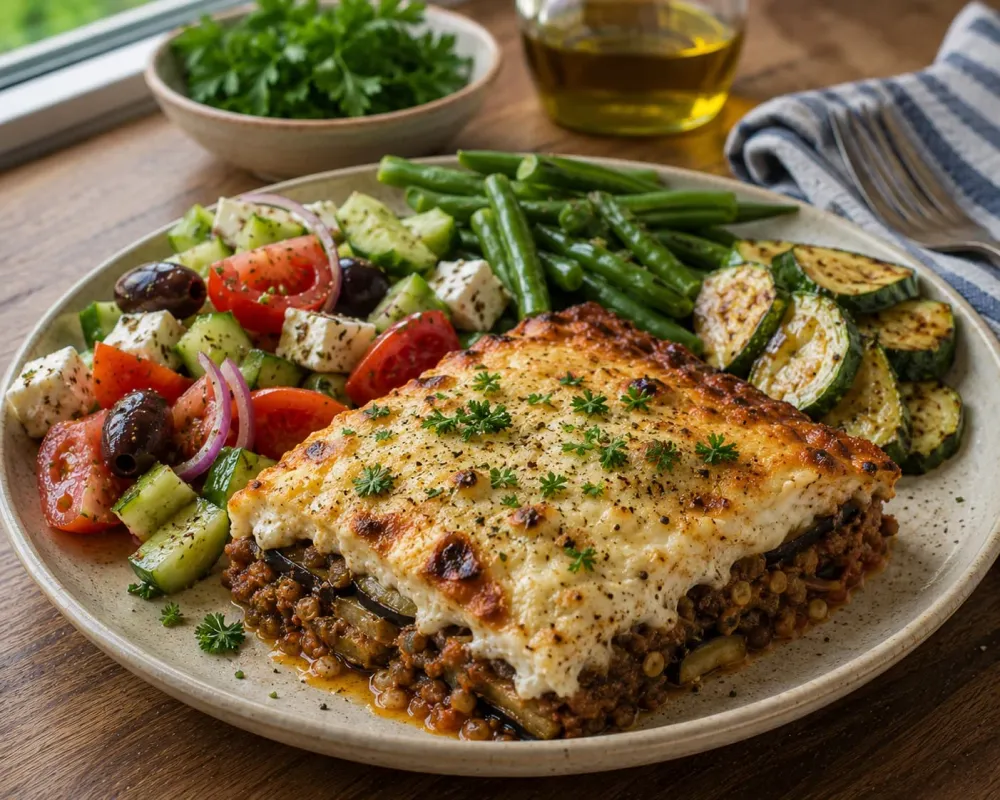
Everything people love about traditional Greek Moussaka — silky roasted eggplant, rich spiced meat sauce, creamy golden topping, beautifully defined layers, and deeply comforting Mediterranean flavor — thoughtfully reimagined with lean ground beef, roasted vegetables, lentils, Greek yogurt, reduced-fat cheese, and wholesome ingredients that naturally provide high-quality protein, dietary fiber, calcium, iron, and satisfying volume as part of a balanced eating pattern.
Moussaka is one of the most recognizable dishes in Greek cuisine. Famous for its layers of tender eggplant, rich tomato-based meat sauce, fragrant spices, and creamy baked topping, it combines rustic Mediterranean flavors with the elegance of a beautifully structured casserole.
Its appeal comes from contrast. The eggplant becomes soft and silky, the meat sauce develops deep savory flavor, and the top bakes into a smooth golden layer that makes every slice feel indulgent and complete.
Traditional Moussaka, however, often relies on fried eggplant, fattier meat, generous amounts of oil, full-fat béchamel, butter, and large quantities of cheese. While delicious, these ingredients can make the dish significantly heavier and more calorie-dense.
This Balanced & Satisfying Greek Moussaka preserves everything that makes the original unforgettable while thoughtfully rebuilding each layer with ingredients that emphasize protein, fiber, vegetables, and balanced portions. The eggplant is roasted rather than fried, lean ground beef is combined with lentils and mushrooms to create a more voluminous filling, and a creamy Greek yogurt topping replaces much of the traditional butter-based béchamel.
Recipe Information
| Prep Time | 35 minutes |
| Cook Time | 55 minutes |
| Total Time | 1 hour 45 minutes |
| Servings | 6 |
| Difficulty | Intermediate |
| Calories | ~445 kcal per serving |
Quick Highlights
Ingredients
Makes one 9 × 13-inch baking dish of Balanced & Satisfying Greek Moussaka (6 generous servings).

















Step-by-Step Instructions
Roast the Eggplant
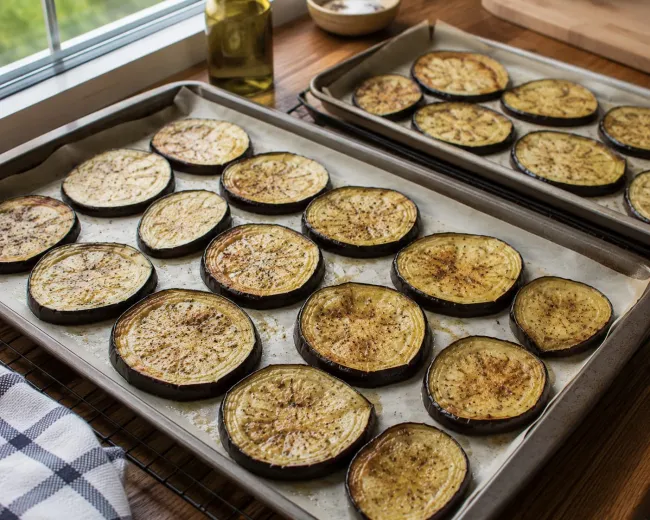
Preheat the oven to 220°C (425°F) and line two large baking sheets with parchment paper. Arrange the eggplant slices in a single layer and brush both sides lightly with the extra-virgin olive oil. Season lightly with a small pinch of sea salt and black pepper. Roast for 18–22 minutes, flipping halfway through, until the eggplant becomes tender and lightly golden. Remove from the oven and allow the slices to cool slightly — the roasted eggplant should be soft and silky while still holding its shape for layering.
Prepare the Meat Sauce
Heat a large non-stick skillet or Dutch oven over medium heat. Add the diced onion and cook for 4–5 minutes until softened, then add the garlic and cook for 30 seconds until fragrant. Add the ground beef and cook for 6–8 minutes, breaking it into small crumbles until browned. Stir in the chopped mushrooms and cook for another 5 minutes, allowing most of their moisture to evaporate. Add the cooked lentils, tomato paste, crushed tomatoes, cinnamon, oregano, and remaining salt and pepper, then bring to a gentle simmer and cook uncovered for 12–15 minutes, stirring occasionally, until the sauce thickens. Finally, stir in half of the chopped parsley.

Prepare the Creamy Topping
In a large mixing bowl, combine the Greek yogurt, egg, grated Parmesan, and half of the crumbled feta. Whisk until smooth and creamy — the topping should be thick enough to spread evenly while remaining silky. Set aside until ready to assemble.

Assemble the Moussaka
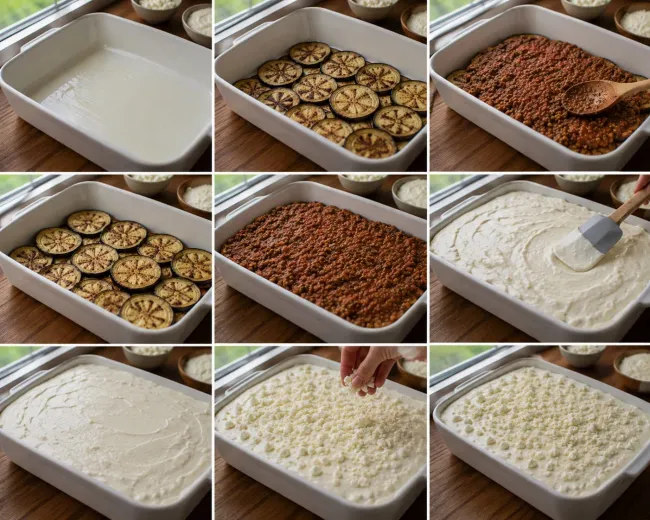
Reduce the oven temperature to 190°C (375°F) and lightly coat a 9 × 13-inch baking dish with cooking spray. Arrange half of the roasted eggplant slices in an even layer and spread half of the meat sauce over the eggplant. Repeat with the remaining eggplant and meat sauce. Spread the creamy yogurt topping evenly over the surface using a spatula, then sprinkle the remaining crumbled feta evenly over the top.
Bake Until Golden
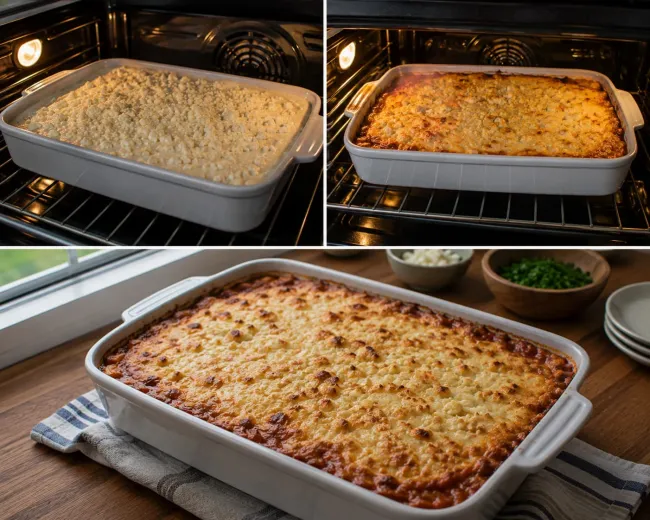
Place the assembled Moussaka on the center oven rack. Bake at 190°C (375°F) for 35–40 minutes, or until the topping is lightly golden and the edges are bubbling. If needed, switch to the broiler for the final 2–3 minutes to achieve a deeper golden color, watching carefully to prevent burning. The finished topping should be lightly browned while remaining creamy underneath.
Rest Before Slicing
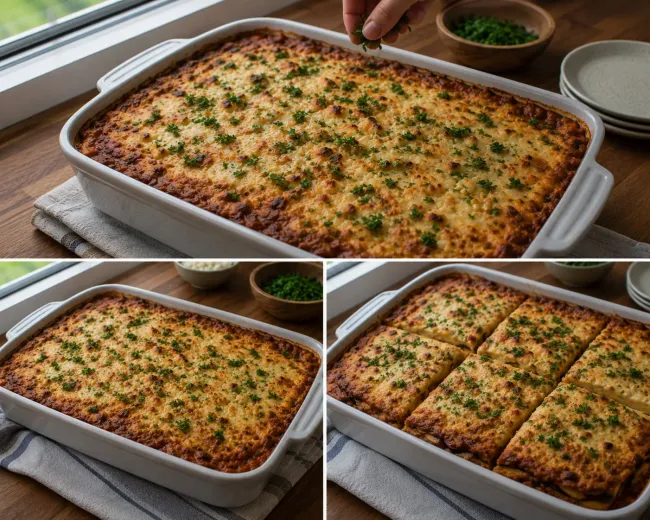
Remove the baking dish from the oven and sprinkle the remaining fresh parsley over the top. Allow the Moussaka to rest for 15 minutes before cutting — this resting period helps the layers firm up, making each serving easier to slice while allowing the flavors to fully develop. Using a sharp knife, cut the casserole into 6 equal portions.
Serve Mediterranean Style
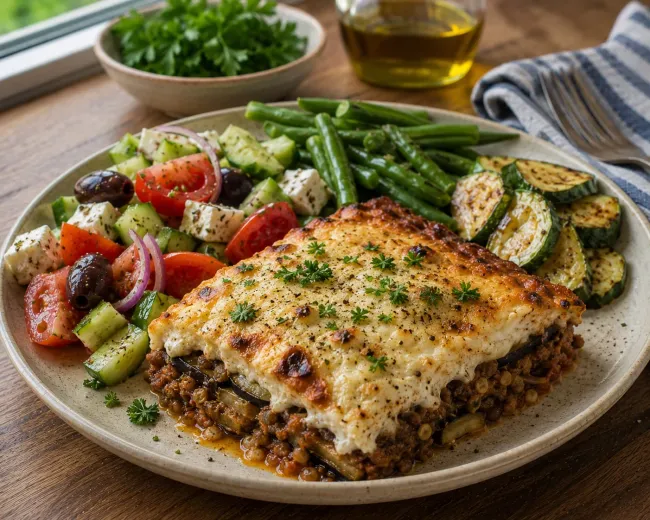
Carefully lift each portion onto a warm dinner plate using a wide spatula. Serve with a crisp Greek salad, steamed green beans, roasted zucchini, or a simple cucumber and tomato salad. Finish with a light sprinkle of black pepper and a few fresh parsley leaves. Every bite should combine silky roasted eggplant, rich tomato-beef filling, creamy yogurt topping, aromatic herbs, and delicate hints of cinnamon and oregano.
Chef's Tips
Common Mistakes
Why This Recipe Was Designed This Way
This Balanced & Satisfying Greek Moussaka transforms one of the Mediterranean's most beloved comfort foods into a balanced, protein-rich meal while preserving everything people love about the original — silky roasted eggplant, rich tomato-beef filling, creamy baked topping, aromatic herbs, and beautifully defined layers. Instead of relying on fried eggplant, butter-rich béchamel, higher-fat meat, and generous amounts of cheese, this version combines lean ground beef, roasted eggplant, brown lentils, mushrooms, Greek yogurt, reduced-fat feta, Parmesan, tomatoes, and extra-virgin olive oil. The result is a satisfying dish naturally rich in complete protein, dietary fiber, calcium, iron, potassium, vitamin B12, and antioxidant compounds. No single recipe can cause weight loss or guarantee fullness for everyone; however, meals that combine high-quality protein, fiber-rich vegetables, legumes, and moderate portions of fats may help promote satiety and support weight management as part of a balanced dietary pattern and healthy lifestyle.
Here's the science behind each major ingredient.
🥩 Lean Ground Beef
Provides high-quality complete protein that contributes to the maintenance of muscle mass. Also naturally supplies highly bioavailable iron, zinc, selenium, phosphorus, niacin, vitamin B6, and vitamin B12. Protein-rich foods are generally more satisfying than foods lower in protein when consumed as part of a balanced meal.
🍆 Eggplant
Naturally low in calories while providing dietary fiber, potassium, manganese, and antioxidant compounds such as nasunin, found in the purple skin. Roasting the eggplant instead of frying reduces the amount of added fat while preserving its soft, creamy texture.
🌱 Brown Lentils
Increase the volume of the filling while naturally providing plant protein, dietary fiber, folate, iron, magnesium, and potassium. Foods containing both protein and fiber may help increase feelings of fullness compared with lower-fiber alternatives.
🍄 Cremini Mushrooms
Naturally provide selenium, copper, potassium, riboflavin, niacin, and antioxidant compounds. Their natural umami flavor increases the richness of the meat sauce while adding volume with relatively few calories.
🥣 Greek Yogurt
Replaces much of the traditional butter-based béchamel, naturally providing complete protein, calcium, phosphorus, and beneficial live cultures in many varieties while creating a creamy topping with less saturated fat.
🍅 Tomatoes
Crushed tomatoes and tomato paste naturally provide vitamin C, potassium, and lycopene, a carotenoid responsible for their rich red color. They add depth of flavor while helping balance the richness of the meat and dairy.
🫒 Extra-Virgin Olive Oil
Provides predominantly monounsaturated fats together with naturally occurring polyphenol compounds, one of the key components of Mediterranean-style dietary patterns, which have been extensively studied in relation to long-term health.
🧀 Reduced-Fat Feta & Parmesan
Using moderate amounts of flavorful cheeses allows the dish to retain its authentic Greek character while reducing saturated fat compared with more traditional recipes. Both cheeses naturally provide calcium and protein.
🌿 Fresh Herbs & Aromatic Spices
Parsley, oregano, garlic, and cinnamon contribute aromatic plant compounds that deepen flavor naturally, reducing the need for excessive salt while giving the Moussaka its distinctive Mediterranean profile.
Ingredient Swaps
Need to adapt the recipe? These substitutions maintain the character of the dish.
| Instead of... | Try... |
|---|---|
| Ground beef | Lean ground turkey, chicken, or lamb |
| Brown lentils | Green or red lentils |
| Reduced-fat feta | Standard feta, used sparingly |
| Eggplant | Zucchini slices (shorter roasting time) |
What Research Says
Using lean ground meat and a lighter béchamel built partly with Greek yogurt keeps this layered dish’s saturated fat more moderate while the eggplant layers still provide fiber and the dish’s traditional texture.
Estimated Nutrition
Per serving
Includes naturally occurring sugars from eggplant, onions, tomatoes, mushrooms, lentils, and dairy products; added sugars are 0 g. Nutrition values are estimates calculated from standard ingredient databases. Actual values will vary depending on ingredient brands, beef leanness, cheese selection, and portion sizes.
Storage & Reheating
Allow the Moussaka to cool for approximately 30 minutes before storing. Cover the baking dish tightly or transfer individual portions to airtight containers and refrigerate for up to 4 days. Reheat individual servings in a 180°C (350°F) oven for 15–20 minutes, or microwave until thoroughly heated. The flavors often become even richer after resting overnight.
Refrigerating
Freezing
Moussaka freezes very well. Allow it to cool completely, then wrap the entire casserole tightly or freeze individual portions in airtight freezer-safe containers for up to 3 months. Thaw overnight in the refrigerator before reheating, and warm in the oven until heated through for the best texture.
Reheating
Meal Prep Tips
Roast the eggplant one day ahead to save preparation time. Prepare the meat filling in advance and refrigerate until ready to assemble. Assemble the casserole the night before baking for an easy dinner. Portion leftovers into individual containers for convenient lunches, serve with a fresh cucumber and tomato salad to add extra volume to the meal, and garnish with fresh parsley immediately before serving for maximum freshness.
Serving Suggestions
Let it rest for 10 to 15 minutes after baking before slicing, which helps the layers hold together cleanly when served.
Frequently Asked Questions
Why roast the eggplant instead of frying it?
Roasting produces the same tender texture while using much less oil than traditional frying.
Why add lentils to the meat sauce?
Brown lentils blend naturally into the filling while increasing protein, dietary fiber, and overall volume without changing the classic appearance of the dish.
Can I prepare Moussaka ahead of time?
Yes. Moussaka is an excellent make-ahead casserole and often tastes even better the following day as the flavors continue to develop.
Can I substitute the beef?
Certainly. Lean ground turkey, chicken, or lamb can be used, although each will produce a slightly different flavor profile.
Is this recipe suitable for weight management?
No single recipe causes weight loss. However, this version combines lean protein, legumes, vegetables, and moderate portions of healthy fats, which may help promote satiety as part of an overall balanced eating pattern and active lifestyle.
What side dishes pair well with Moussaka?
A Greek salad, roasted vegetables, steamed green beans, grilled zucchini, or lemon-herb broccoli all complement the rich flavors of the casserole.
Related Recipes

🌮 Balanced Chicken Tacos
A lean, protein-packed weeknight favorite loaded with fresh vegetables and vibrant flavor.

🍝 Baked Spaghetti Bolognese
Italy's ultimate family favorite reimagined with whole grains and a rich, veggie-packed meat sauce.
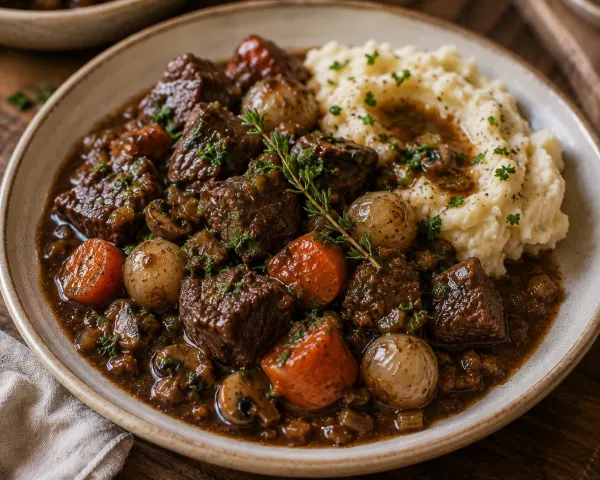
🥩 Everyday Beef Bourguignon
France's most iconic comfort stew reimagined with lean beef and a rich, velvety red wine sauce.