
🥐 Breakfast Croissant Sandwich

A breakfast croissant sandwich earns its appeal through contrast: crisp flaky layers, tender egg, melted cheese, savoury turkey, creamy sauce and fresh vegetables. This recipe protects that experience instead of replacing the croissant with an unrelated “diet” bread. The balance comes from a measured pastry, a substantial protein filling and vegetables prepared so they add flavour without making the layers soggy. Each sandwich contains one medium bakery-style croissant, part of a soft egg-and-white mixture, lean roast turkey, Swiss cheese, mushrooms, pepper, spinach, tomato, avocado and a bright Dijon-yogurt spread. It looks abundant when cut, but the quantities remain honest: four sandwiches are four servings, not eight portions created by calling half a sandwich a meal. Balanced describes the construction of this particular meal. It does not mean calorie-free, suitable for every condition or guaranteed to change health or weight. The nutrition panel is an estimate, and people with individual medical, allergy, sodium or energy requirements should adapt food with qualified guidance.
Recipe Information
| Prep time | 35 minutes |
| Vegetable cooking | 18 minutes |
| Egg cooking | 10 minutes |
| Assembly and warming | 17 minutes |
| Total time | about 1 hour 20 minutes |
| Difficulty | Intermediate |
| Estimated energy | about 700 kcal per serving |
Ingredients
Makes 4 sandwiches




















Step-by-Step Instructions
Prepare a clean workstation
Wash hands and surfaces and heat the oven to 180°C. Clean and thoroughly dry produce. Slice mushrooms and pepper, deseed and slice tomato, grate or portion cheese, chop chives, and prepare lemon. Measure spices. Keep eggs, egg whites, turkey, cheese and yogurt refrigerated. Use clean utensils for ready-to-eat foods and keep deli-meat packaging away from vegetables.

Cook dry, deeply flavoured vegetables
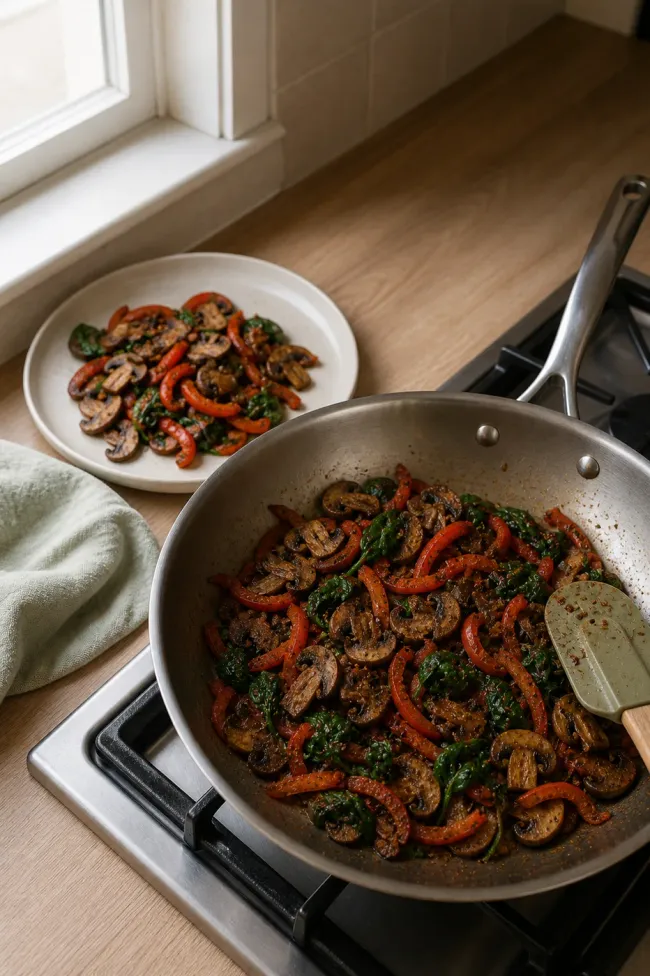
Heat a wide skillet over medium-high heat with two teaspoons oil. Add mushrooms in a broad layer and leave briefly before stirring. Once their water has evaporated, add pepper, paprika, garlic, thyme and black pepper. Cook 7–9 minutes until browned and tender. Add spinach in two batches and cook until wilted and dry. Transfer to a plate and spread out so steam escapes.
Make soft folded eggs
Whisk six eggs with 200 g egg whites, half the chives and pepper. Reduce heat to medium-low and add the remaining teaspoon oil. Pour in eggs and slowly draw a silicone spatula from the edges towards the centre, creating broad curds. Stop when safely set but still glossy. Move immediately to a plate; leaving them in the skillet makes them dry.

Prepare sauce and cold layers
Combine yogurt, Dijon, lemon zest and enough juice to taste. Mash or slice avocado and coat lightly with lemon. Pat tomato and arugula completely dry. Divide turkey into four 60 g portions, cheese into four 20 g portions, and every other component into quarters before opening the pastries. This prevents uneven sandwiches.

Open and lightly toast the croissants
Slice each croissant horizontally with a serrated knife, keeping a hinge when possible. Arrange cut sides upward on a tray and warm 3–4 minutes at 180°C. The interior should become lightly crisp while the outer layers remain delicate. Do not flatten, toast darkly or walk away; buttery pastry changes quickly.

Build four stable sandwiches
Spread one quarter of the yogurt mixture over each lower half. Layer turkey, one quarter of the vegetable mixture, egg and cheese, keeping ingredients inside the curved boundary. Place upper halves nearby rather than pressing them down. Use the same order for all four so the marketing yield, photographs and nutrition correspond.

Melt the cheese without ruining fresh layers
Return the open sandwiches to the oven for 3–5 minutes, just until cheese softens and turkey is hot. Meanwhile prepare four equal portions of tomato, avocado and arugula. Remove the tray carefully. Add these cool layers only now, preventing cooked tomato water, wilted arugula and overheated avocado.

Close, rest, cut and serve
Add remaining chives and a little pepper. Set the croissant tops gently over the filling without compressing the flaky crown. Rest two minutes, then secure if necessary and cut one display sandwich with a clean serrated knife. Serve one complete sandwich per person. Refrigerate perishable leftovers promptly and do not leave egg, turkey, cheese or yogurt at room temperature for extended periods.

Common Mistakes
Why This Recipe Was Designed This Way
The pastry remains because it defines the recipe. Rather than claiming a croissant is “guilt-free,” this version acknowledges its richness and surrounds it with a measured, protein-forward filling and several vegetables.
Whole eggs contribute flavour, while egg whites create extra tender volume. Turkey and cheese make the sandwich familiar; yogurt replaces a thick mayonnaise dressing without pretending the two taste identical.
The visual promise is reproducible: four medium croissants become four complete sandwiches. One serving is not secretly half a sandwich.
Ingredient Swaps
- Cooked chicken breast may replace turkey gram for gram. Check seasoning and safe storage.
- A mature reduced-fat cheddar can replace Swiss. It melts differently and may contain more sodium.
- Roasted zucchini may replace mushrooms only after its moisture is thoroughly cooked away.
- For gluten-free needs, choose an appropriate certified pastry and verify every label; nutrition and structure will change.
Estimated Nutrition
Per serving
Storage & Reheating
Refrigerate assembled leftovers within two hours, sooner in hot conditions, in a closed container for up to two days. For better texture, store tomato, avocado, arugula and sauce separately from warm components whenever possible.
Reheat the croissant with turkey, egg, vegetables and cheese at 170°C until the centre is hot. Add cold layers afterward. Microwave reheating is faster but softens the pastry; short intervals followed by a few oven minutes improve it.
Freezing
Freeze only croissant bases filled with cooled egg, turkey, cooked vegetables and cheese, individually wrapped, for up to one month. Do not freeze tomato, arugula, yogurt spread or avocado inside.
Thaw overnight under refrigeration and reheat until hot throughout, then add freshly prepared cold ingredients. Label every package with its contents and date.
Make-Ahead Tips
Cook vegetables and prepare spread one day ahead. Refrigerate separately. Eggs are best cooked the morning of service, although they may be prepared one day earlier when cooled and stored safely.
Portion turkey and cheese in advance. Cut and toast croissants only near assembly to protect their fragile structure. Prepare avocado last.
Frequently Asked Questions
Can I use mini croissants?
Yes, but the yield, assembly and nutrition change. Use eight minis for a platter and recalculate the serving.
Can I omit turkey?
Yes. Add cooked beans or firm tofu for a meatless variation, while recognizing that texture and values differ.
How do I keep the pastry crisp?
Control vegetable water, spread sauce thinly, add fresh tomato after heating and serve promptly.
Can children eat it?
Offer an age-appropriate portion, cook eggs safely, reduce mustard if needed and check egg, milk, wheat and other allergens.
Is this a weight-loss recipe?
No. It is a substantial breakfast with transparent portions, not a prescribed weight-loss meal.
Are 700 calories exact?
No. Croissant size and brands vary greatly. The figure is an estimate based on the listed 240 g total.
Can I serve it cold?
Yes if every component has been safely cooled and refrigerated, though the cheese will not be melted and the pastry will feel softer.
Why remove tomato seeds?
The seed gel releases liquid directly into the cut crumb. Removing it preserves structure without eliminating tomato flavour.
Related Recipes
If you enjoyed this 🥐 Breakfast Croissant Sandwich, you may also like these recipes.