
Artisan Bagels
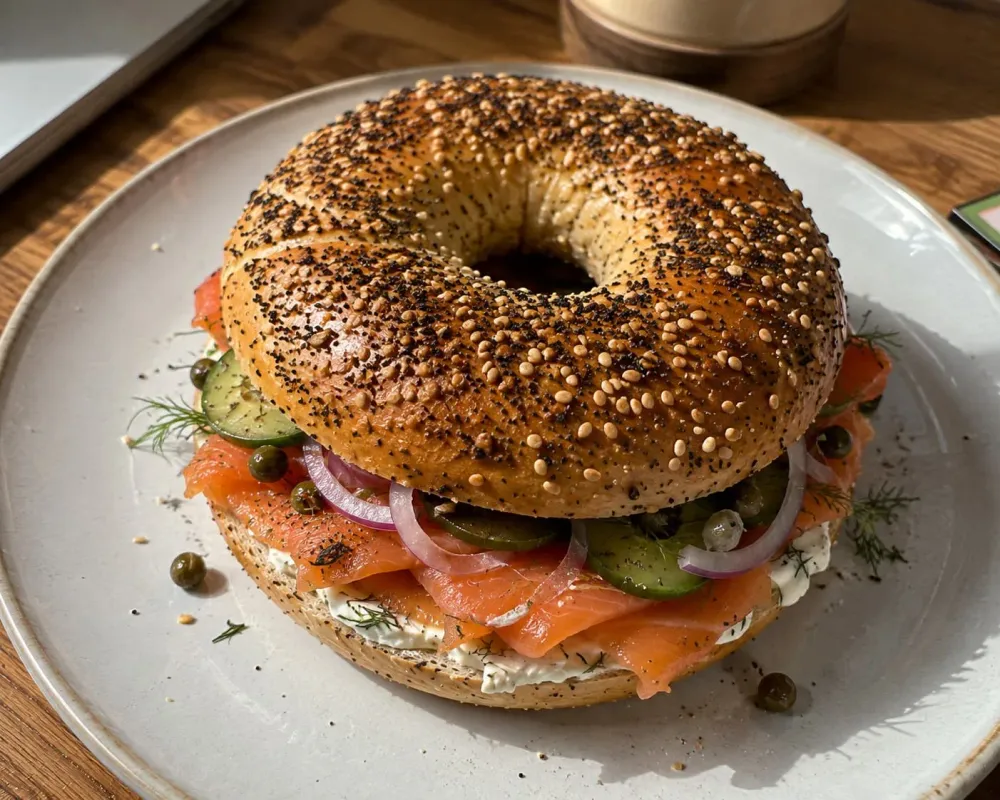
Freshly baked bagels are famous for their distinctive chewy texture, crisp golden crust, and satisfying flavor. Traditionally boiled before baking, they have become a breakfast favorite around the world and pair beautifully with both sweet and savory toppings.
This recipe preserves everything that makes artisan bagels so enjoyable while introducing a few thoughtful ingredient choices that create a more balanced loaf. A blend of bread flour and whole wheat flour increases the fiber content without sacrificing the characteristic chewiness, while Greek yogurt contributes moisture, tenderness, and additional protein. The dough uses only a modest amount of honey to support fermentation and provide subtle sweetness, allowing the natural flavor of the wheat to shine.
The result is a bakery-style bagel with a beautifully glossy crust, dense yet tender crumb, and authentic texture that holds up perfectly to toppings like smoked salmon, avocado, fresh vegetables, nut butter, or fruit spreads.
Whether enjoyed fresh from the oven for breakfast, packed into a lunchbox, or toasted for a quick afternoon snack, these healthy artisan bagels deliver the timeless appeal of a classic bakery favorite while incorporating carefully selected wholesome ingredients.
Recipe Information
| Prep Time | 30 minutes (plus proofing) |
| Cook Time | 22 minutes |
| Total Time | Approximately 2 hours 45 minutes |
| Servings | 8 bagels |
| Difficulty | Intermediate |
| Calories | ~290 kcal per bagel |
Quick Highlights
- ✅ Classic boiled-and-baked bagels
- ✅ Chewy artisan texture
- ✅ Made with bread flour and whole wheat flour
- ✅ Higher in protein with Greek yogurt
- ✅ Reduced added sugar
- ✅ Excellent for meal prep
- ✅ Perfect for sweet or savory toppings
Ingredients
Makes 8 Bagels









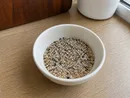

Step-by-Step Instructions
Prepare the Dough
Authentic bagels begin with a firm, well-developed dough. The combination of bread flour and whole wheat flour creates the strength needed for their signature chewy texture while the Greek yogurt adds moisture and tenderness.
In a large mixing bowl, combine:
3 cups bread flour
1 cup whole wheat flour
2¼ teaspoons instant yeast
1½ teaspoons sea salt
In a separate bowl, whisk together:
1 cup warm water
½ cup Greek yogurt
2 tablespoons honey
1 tablespoon extra virgin olive oil
1 large egg
Gradually add the wet ingredients to the flour mixture.
Mix until a rough dough forms.
Transfer to a lightly floured surface and knead for 10–12 minutes, until the dough becomes smooth, firm, and elastic.
Place the dough in a lightly oiled bowl, cover, and allow it to rise for 60–90 minutes, or until nearly doubled in size.

Divide and Shape the Bagels
Once the dough has finished rising, gently press it down to release excess air.
Transfer it to a lightly floured work surface.
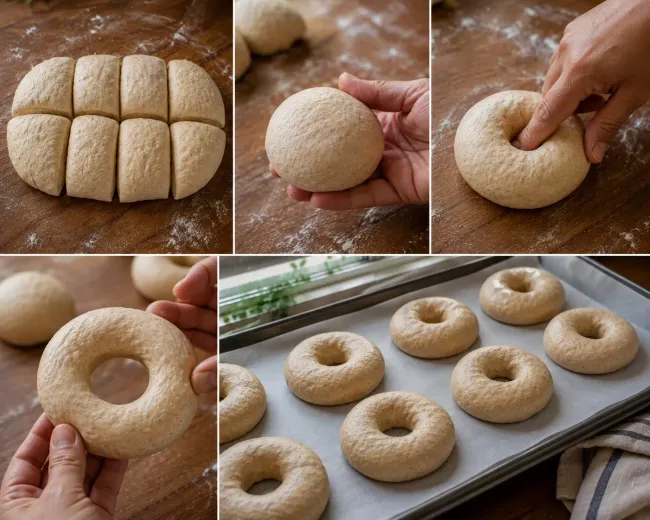
Using a bench scraper or sharp knife, divide the dough into 8 equal portions.
Roll each piece into a smooth ball.
To shape each bagel:
Press your thumb through the center of the dough ball.
Gently stretch the opening until it measures about 1½–2 inches (4–5 cm) in diameter.
Rotate the dough while stretching to keep the ring even.
Arrange the shaped bagels on a parchment-lined baking sheet, leaving space between each one.
Cover loosely with a clean kitchen towel and let them rest for 20–30 minutes.
Prepare the Boiling Water
While the bagels complete their final rest, prepare the boiling bath.
Fill a large pot with approximately 3 quarts (3 liters) of water.
Bring the water to a gentle boil.
Stir in:
1 tablespoon baking soda
The baking soda slightly raises the water's alkalinity, encouraging the glossy crust and deep golden color that are characteristic of traditional bagels.
Reduce the heat to maintain a gentle simmer rather than a vigorous boil.

Boil the Bagels
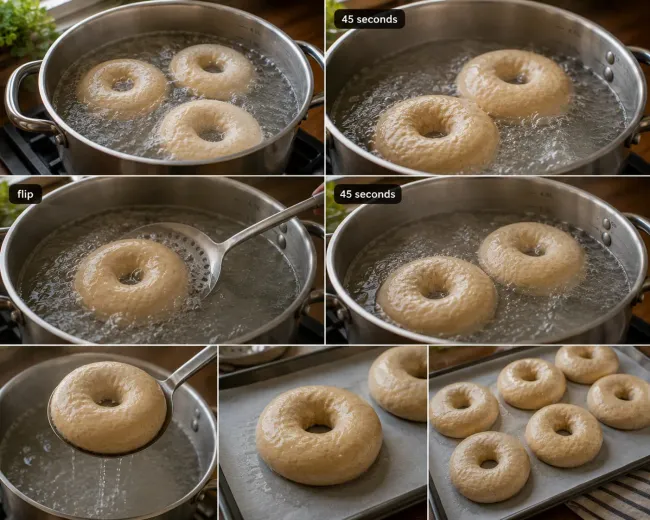
Carefully lower 2–3 bagels into the simmering water.
Boil each bagel for:
45 seconds on the first side.
Flip carefully.
Boil for another 45 seconds on the opposite side.
Using a slotted spoon, lift each bagel from the water and allow any excess water to drain.
Return them to the parchment-lined baking tray.
Repeat with the remaining bagels.
Boiling gelatinizes the starches on the surface of the dough, creating the chewy crust that makes authentic bagels unique.
Add the Toppings
Preheat the oven to 425°F (220°C).
In a small bowl, whisk together:
1 egg
1 tablespoon milk
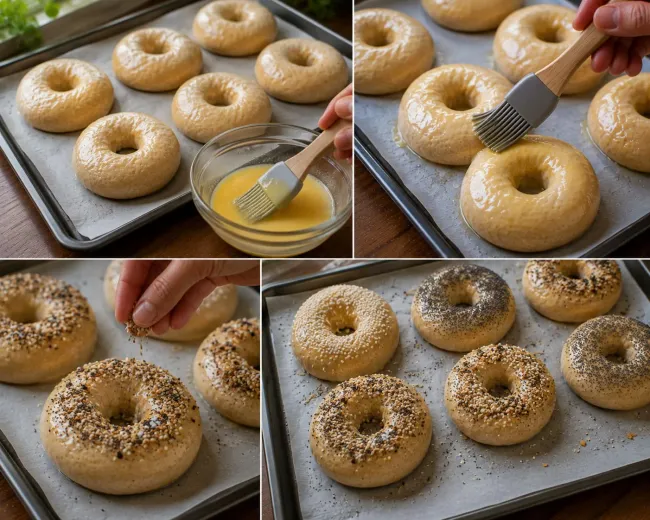
Brush each boiled bagel with a thin, even layer of egg wash.
Immediately sprinkle with your preferred toppings, such as:
Sesame seeds
Poppy seeds
Everything bagel seasoning
Press the toppings very gently with your fingertips if necessary to help them adhere.
The egg wash creates the glossy bakery finish while helping the seeds remain attached throughout baking.
Bake the Bagels
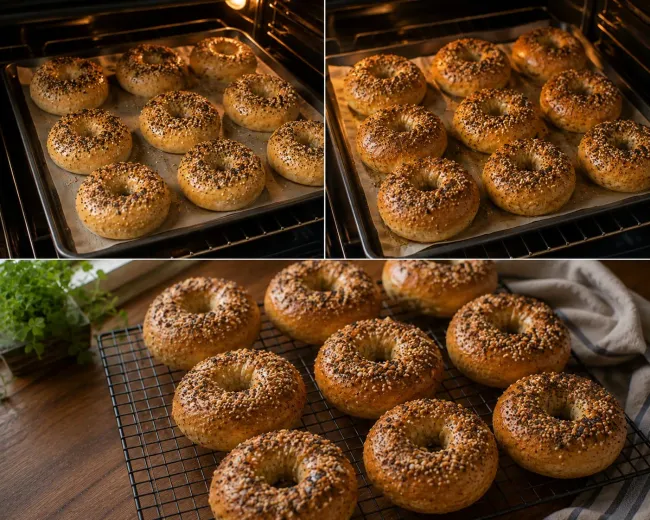
Place the baking tray in the preheated oven.
Bake for 20–22 minutes, or until the bagels are:
Deep golden brown
Firm to the touch
Glossy on the outside
Rotate the baking tray halfway through baking to encourage even browning.
Once baked, transfer the bagels to a wire rack.
Allow them to cool for 15–20 minutes before slicing.
Cooling briefly allows the crumb to finish setting while preserving the chewy texture.
Slice and Fill
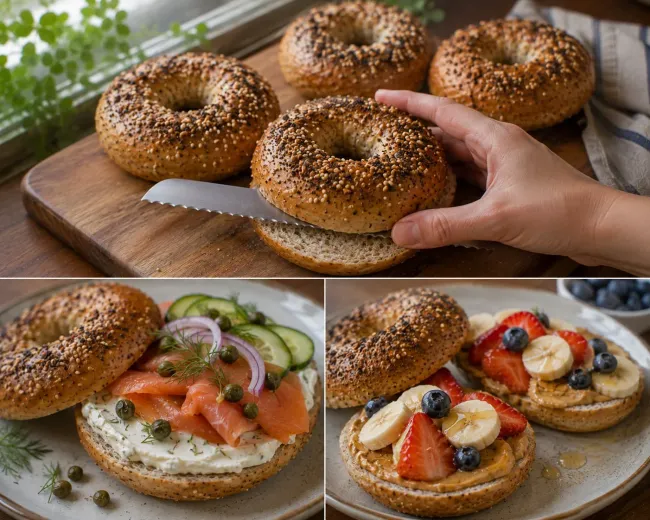
Using a serrated bread knife, slice each cooled bagel in half.
Serve with your favorite toppings.
For a balanced savory option, layer with:
Greek yogurt cream cheese
Smoked salmon
Avocado slices
Thin cucumber slices
Red onion
Capers
Fresh dill
For a naturally sweet variation, try:
Almond butter
Fresh banana slices
Strawberries
Blueberries
A light drizzle of honey
The dense yet tender crumb makes these bagels perfect for both hearty and lighter toppings.
Serve
Arrange the freshly prepared bagels on a serving platter.
Serve alongside:
Fresh seasonal berries
Greek yogurt
Sliced avocado
Fresh fruit salad
Freshly brewed coffee or tea
These bagels are delicious warm from the oven but remain equally enjoyable lightly toasted over the next several days.
The combination of their chewy texture, crisp crust, and wholesome ingredients makes them suitable for breakfast, brunch, lunch, or a satisfying snack.

Chef's Tips
Common Mistakes
Why This Recipe Was Designed This Way
Bagels have remained one of the world's most beloved bakery staples because of their distinctive chewy texture, glossy crust, and versatility. Rather than transforming them into a completely different product, this recipe focuses on preserving their authentic artisan qualities while making thoughtful ingredient choices that create a more balanced nutritional profile.
Instead of eliminating traditional techniques or relying on highly processed substitutes, this version incorporates whole grains, cultured dairy, and heart-conscious fats while maintaining the classic boiling-and-baking process that gives bagels their unmistakable character.
Here's why each ingredient was selected.
🌾 Bread Flour
Bread flour provides the strong gluten structure that gives authentic bagels their signature chew. Its naturally higher protein content supports: Strong gluten development Excellent dough elasticity Dense yet tender crumb Superior oven spring Without bread flour, achieving the classic artisan texture becomes much more difficult.
🌾 Whole Wheat Flour
Replacing only part of the refined flour with whole wheat flour increases the nutritional value while preserving the traditional texture. Whole wheat flour contributes: Dietary fiber B vitamins Magnesium Naturally occurring plant compounds Keeping the proportion moderate ensures the bagels remain pleasantly chewy rather than heavy.
🥣 Greek Yogurt
Greek yogurt enriches the dough with moisture while contributing extra protein and a subtle tang that complements the wheat. Its creamy texture also helps produce a softer interior without sacrificing the dense structure expected from artisan bagels.
🍯 Honey
Only a modest amount of honey is used. Its primary functions are to: Feed the yeast during fermentation Add gentle sweetness Encourage beautiful browning during baking This allows the recipe to rely less on refined sugar while maintaining classic bakery flavor.
🫒 Extra Virgin Olive Oil
A small quantity of extra virgin olive oil helps improve dough elasticity and tenderness while contributing predominantly monounsaturated fats. Because the amount is minimal, it supports the dough without changing the traditional texture.
🥚 Eggs
Eggs strengthen the dough while contributing high-quality protein and helping create a softer crumb. The egg wash also produces the glossy golden finish associated with artisan bakery bagels.
🌱 Seeds & Everything Seasoning
Sesame seeds, poppy seeds, and everything seasoning add much more than visual appeal. They contribute: Healthy unsaturated fats Plant protein Minerals Rich toasted flavor Additional texture These toppings enhance the eating experience without relying on heavier processed additions.
Ingredient Swaps
Need to customize these Healthy Artisan Bagels? These substitutions preserve the classic chewy texture while accommodating different preferences.
| Instead of... | Try... |
|---|---|
| Bread flour | Strong all-purpose flour |
| Whole wheat flour | White whole wheat flour |
| Greek yogurt | Plain skyr |
| Whole milk | Low-fat milk |
| Honey | Pure maple syrup |
| Extra virgin olive oil | Avocado oil |
| Sesame seeds | Hemp seeds |
| Poppy seeds | Black sesame seeds |
| Everything seasoning | Sesame and dried onion mixture |
| Smoked salmon filling | Grilled chicken breast or turkey slices |
What Research Says
The ingredients in these artisan bagels were selected because they combine traditional bread-making techniques with wholesome ingredients commonly found in balanced dietary patterns. Whole grains, cultured dairy, healthy fats, and seeds each contribute valuable nutrients while preserving the authentic character of the recipe. The information below summarizes current nutrition research and is intended for educational purposes only.
🌾 Whole Wheat Flour
Replacing part of the refined flour with whole wheat flour increases dietary fiber and naturally occurring vitamins and minerals while maintaining the classic chewy texture.
- Higher in dietary fiber than refined flour.
- Naturally provides magnesium and B vitamins.
- Supports greater whole-grain intake.
🥣 Greek Yogurt
Greek yogurt enriches the dough while providing additional protein and calcium.
- Excellent source of protein.
- Naturally rich in calcium.
- Helps create a tender crumb in baked goods.
🍯 Honey
Honey provides natural sweetness while supporting yeast fermentation and promoting attractive browning during baking.
- Helps activate yeast fermentation.
- Naturally sweet flavor.
- Can reduce reliance on larger amounts of refined sugar.
🌱 Sesame & Poppy Seeds
These classic toppings contribute healthy unsaturated fats together with minerals such as calcium, iron, magnesium, copper, and zinc.
- Rich in healthy fats.
- Provide plant-based minerals.
- Add texture and flavor with minimal added ingredients.
🫒 Extra Virgin Olive Oil
A small amount of extra virgin olive oil contributes predominantly monounsaturated fats while improving dough texture and flavor.
- Rich in monounsaturated fats.
- Contains naturally occurring polyphenols.
- Common ingredient in Mediterranean dietary patterns.
🌾 Bread Flour
Bread flour provides the protein necessary for strong gluten development, allowing the bagels to maintain their classic dense yet chewy structure.
- Higher protein content than standard flour.
- Supports excellent gluten formation.
- Produces superior bread structure.
Estimated Nutrition
Per serving
Estimated values may vary depending on ingredient brands and toppings used.
Storage & Reheating
Freshly baked bagels are at their best on the day they are made, when the crust is lightly crisp and the interior remains pleasantly chewy. Fortunately, they also store exceptionally well for meal prep.
Refrigerating
Store completely cooled bagels in an airtight container or reusable food bag for up to 5 days.
For the best texture, toast lightly before serving.
Avoid refrigerating warm bagels, as condensation may soften the crust.
Freezing
Bagels freeze extremely well.
Allow them to cool completely before placing them in freezer-safe bags.
Freeze whole or pre-sliced for up to 3 months.
Thaw overnight in the refrigerator or toast directly from frozen.
Reheating
Toaster (Recommended): Toast sliced bagels for 2–4 minutes until lightly crisp outside while remaining chewy inside.
Oven: Preheat the oven to 325°F (160°C). Bake whole bagels for 5–7 minutes until warmed through.
Air Fryer: Warm at 320°F (160°C) for 3–4 minutes for a crisp bakery-style finish.
Microwave: Heat for 15–20 seconds if desired, although this produces a softer crust than toasting.
Meal Prep Tips
These bagels are excellent for weekly meal prep.
For easy breakfasts:
Prepare a double batch and freeze extras.
Slice each bagel before freezing for quick toasting.
Prepare Greek yogurt cream cheese several days ahead.
Wash and slice fresh vegetables in advance.
Store smoked salmon, turkey, or grilled chicken separately until serving.
Assemble sandwiches immediately before eating for the freshest texture.
Having homemade bagels ready makes nutritious breakfasts and lunches both convenient and satisfying.
Serving Suggestions
Healthy artisan bagels pair beautifully with a variety of wholesome toppings.
Smoked Salmon & Avocado: A classic combination featuring Greek yogurt cream cheese, smoked salmon, avocado, cucumber, red onion, capers, and fresh dill.
Turkey & Spinach: Lean turkey breast with baby spinach, tomato, cucumber, and whole-grain mustard creates a protein-rich lunch.
Almond Butter & Banana: Natural almond butter topped with sliced banana and a sprinkle of cinnamon offers a naturally sweet breakfast.
Cottage Cheese & Berries: High-protein cottage cheese paired with fresh blueberries, strawberries, and raspberries makes a refreshing morning meal.
Fresh Fruit & Coffee: Serve toasted bagels alongside seasonal fruit and freshly brewed coffee or tea for a balanced breakfast.
Frequently Asked Questions
Can I prepare the dough the night before?
Yes. Refrigerating the dough overnight develops deeper flavor and makes shaping easier.
Why are bagels boiled before baking?
Boiling gelatinizes the outer starches, creating the signature chewy crust and glossy finish that distinguish authentic bagels from regular bread.
Can I skip the whole wheat flour?
Yes. Using only bread flour will produce a more traditional artisan bagel with a slightly lighter texture.
Can I make mini bagels?
Absolutely. Divide the dough into 12 smaller portions and reduce the baking time to approximately 15–18 minutes.
Can I make cinnamon raisin bagels?
Yes. Fold raisins and ground cinnamon into the dough after kneading for a naturally sweet variation.
Can I freeze the dough?
Yes. Shape the bagels first, then freeze before the final proof. Thaw overnight, proof, boil, and bake as directed.
Why is my bagel dense?
Dense bagels are often caused by under-kneading, insufficient proofing, or adding too much flour during mixing.
Can children help make these?
Yes. Children can help shape the bagels, brush on the egg wash, and sprinkle toppings while an adult handles boiling and baking.
Are these good for sandwiches?
Absolutely. Their sturdy structure makes them ideal for breakfast sandwiches, smoked salmon, grilled chicken, turkey, vegetables, or nut butters.
Can I make everything bagels?
Yes. Everything bagel seasoning is one of the most popular topping choices and pairs perfectly with this recipe.
Related Recipes
If you enjoyed these Healthy Artisan Bagels, you may also like these recipes from our Bakery collection.
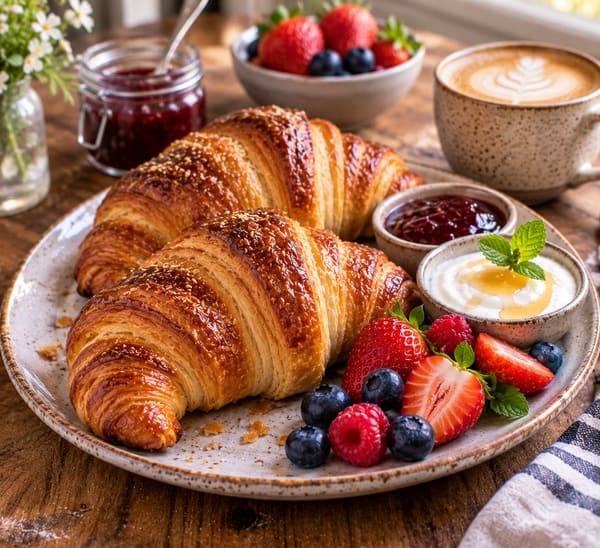
🥐 Healthy Buttery Croissants
Flaky, golden croissants made with a blend of bread flour, whole wheat flour, premium butter, and Greek yogurt for an authentic French bakery experience.
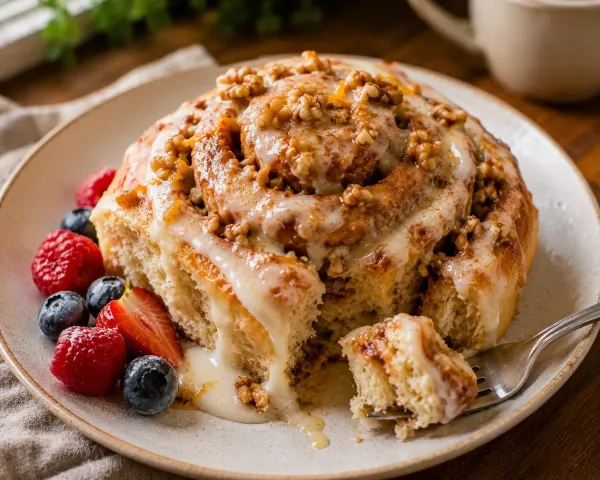
🍞 Healthy Cinnamon Rolls
Soft cinnamon rolls featuring a reduced-sugar filling and a creamy Greek yogurt cream cheese glaze.