
Balanced Affogato
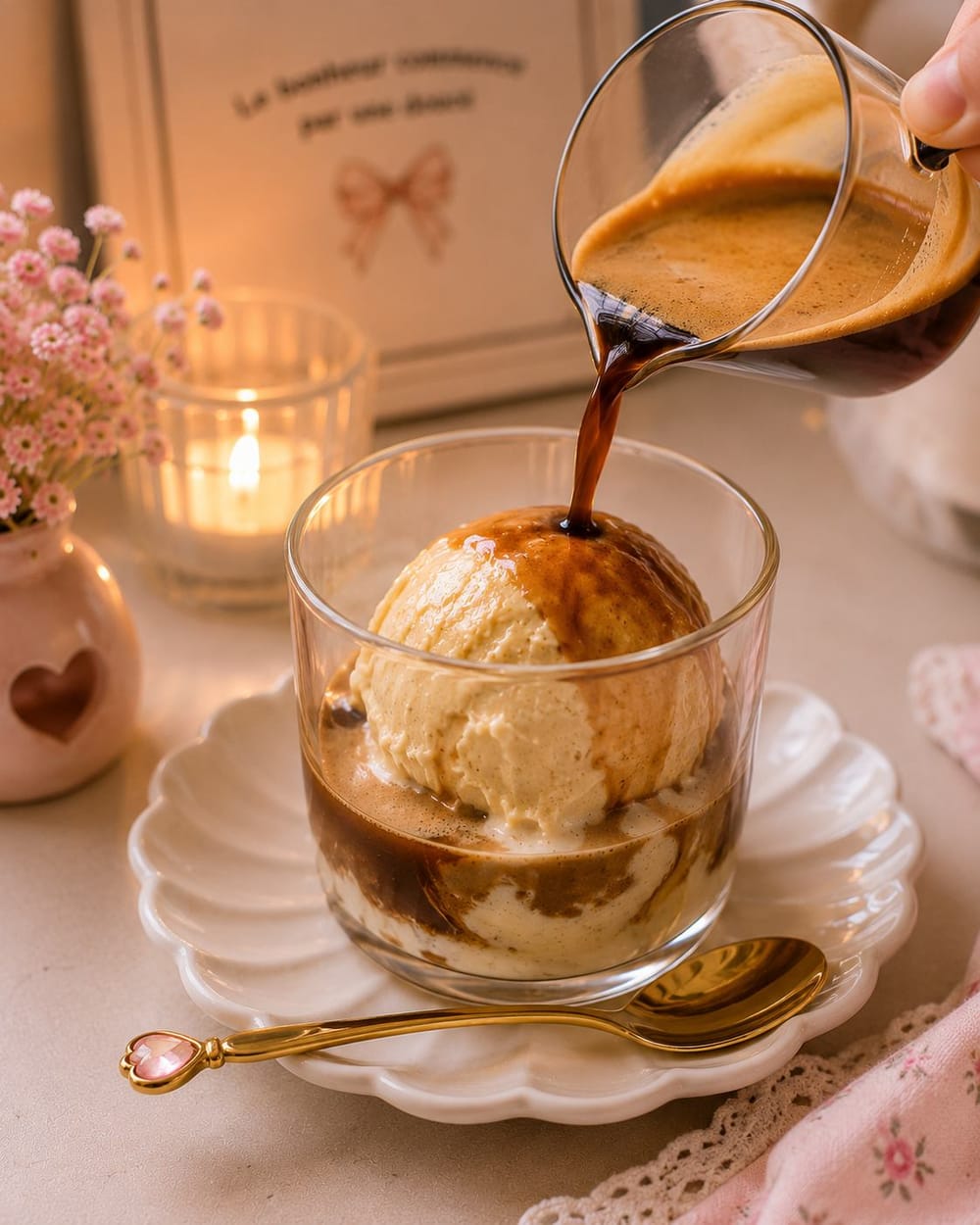
Affogato is an Italian dessert of radical simplicity: a scoop of vanilla gelato, literally "drowned" under a freshly made hot espresso, poured directly over it right at serving time. Its very simplicity makes intelligent ingredient choice particularly clear: with only two main components, it's easy to see which one is untouchable and which can be rethought. A traditional serving with full-fat gelato often exceeds 280 calories for a generous scoop, almost entirely because of the gelato's own fat and sugar, with the espresso contributing virtually no calories at all.
The principle guiding this recipe is remarkably clear: espresso, the dessert's namesake second component, is an absolute identifying element that tolerates no compromise. A lungo, a flat decaf, or a drip coffee substitute would fundamentally change the affogato experience, whose contrast depends precisely on the intensity and temperature of classic Italian espresso. This recipe therefore keeps the espresso exactly as tradition demands: freshly pulled, short, intense, and served immediately hot.
It's the gelato, and only the gelato, that offers this recipe's opportunity for lightening. Traditional vanilla gelato, rich in heavy cream and egg yolks, gives way to a homemade version built on a blend of whole milk and a small amount of light cream, with a reduced number of yolks and moderate sugar, real vanilla compensating for this reduction with its naturally perceived sweetness. This gelato keeps a creamy texture and real body in the mouth, essential to briefly resist the hot coffee before slowly melting, which is precisely what makes this dessert so enjoyable.
Success with this recipe depends on two distinct but equally important elements: the espresso's quality, which must be freshly pulled with good crema, and the gelato's texture, which must be firm enough out of the freezer to not melt instantly, while staying creamy to eat.
One serving is one scoop of gelato topped with a single espresso. It's a short, intense dessert, meant to be enjoyed immediately after assembly, needing no additional accompaniment to feel satisfying.
Recipe Information
| Prep Time | 20 minutes |
| Cook Time | 15 minutes |
| Resting | 4 hours minimum |
| Total Time | About 4 hours 35 minutes |
| Servings | 6 servings |
| Difficulty | Intermediate |
| Calories | About 160 kcal each* |
Quick Highlights
- ✅ A remarkably clear smart choice
- ✅ A gelato rethought with half the egg yolks
- ✅ A milk-cream base rather than pure cream
- ✅ Reduced sugar thanks to real vanilla
Ingredients


Step-by-Step Instructions
Infuse the milk and cream with vanilla
Pour the milk and light cream into a saucepan, add the split vanilla bean with its scraped seeds, and bring to a simmer over medium heat without boiling. Remove from heat and let infuse, covered, for 15 minutes.
Warming the milk and cream with the vanilla first lets the flavor infuse fully before the eggs are added.

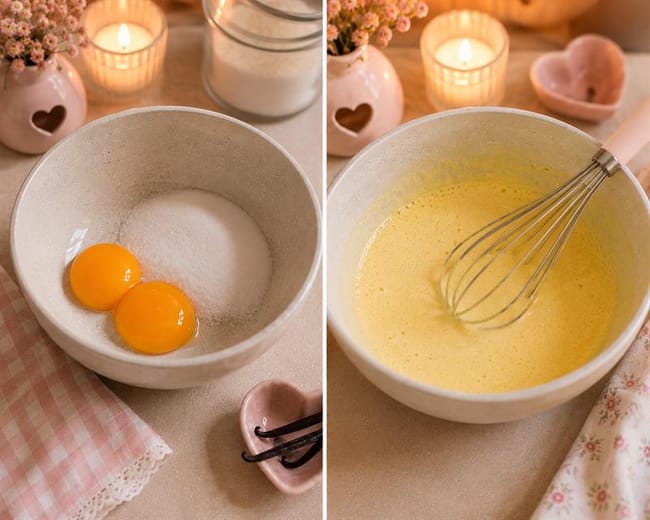
Whisk the yolks and sugar
In a bowl, whisk the egg yolks with the sugar until the mixture lightens slightly and becomes foamy.
Whisk until the mixture lightens in color, which shows the sugar has begun dissolving into the yolks.
Gradually incorporate the hot milk
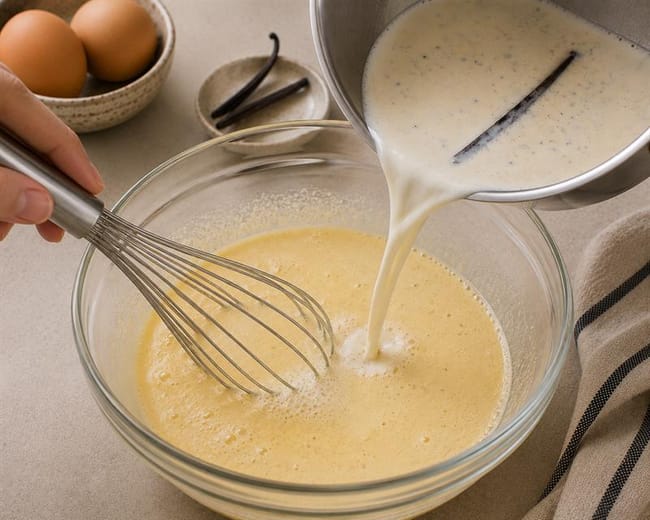
Remove the vanilla bean from the infused milk. Pour the hot milk very gradually onto the yolk mixture while whisking constantly, to temper the eggs without cooking them.
Add the hot milk slowly while whisking constantly to temper the eggs and prevent them from scrambling.
Cook the custard base
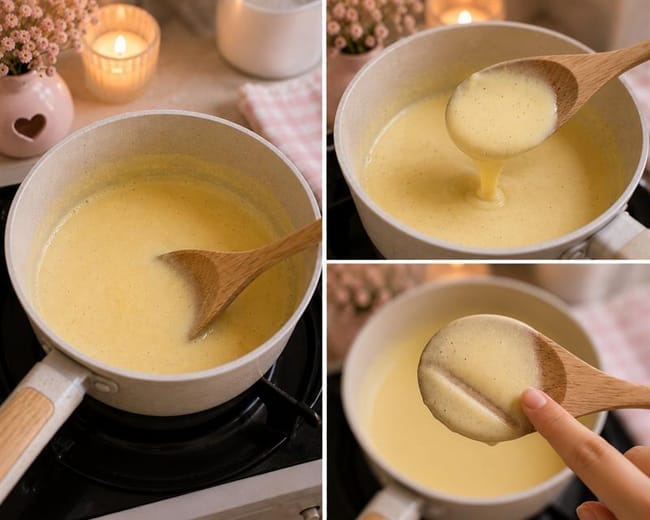
Return the mixture to the saucepan over low heat and cook, stirring constantly with a wooden spoon, until the mixture lightly coats the back of the spoon, about 5 to 7 minutes, never letting it boil.
Cook over low heat, stirring constantly, until the mixture coats the back of a spoon — this is the custard base.
Cool the base
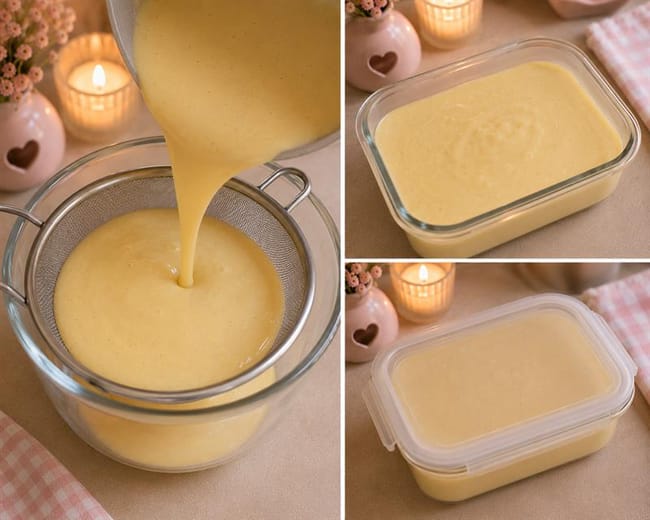
Immediately pour the custard into a clean container through a fine sieve, then let cool at room temperature before covering and refrigerating for at least 3 hours, ideally overnight.
Cooling fully before churning is essential; a warm base won’t freeze into a smooth, scoopable texture.
Churn the gelato
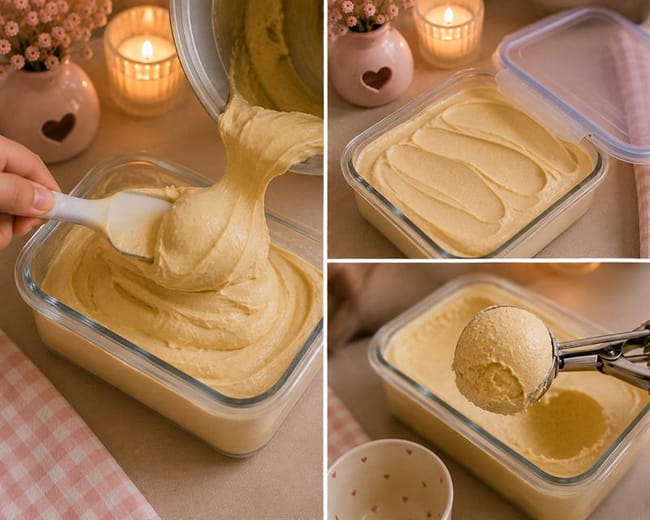
Pour the well-chilled base into an ice cream maker and churn according to the appliance's instructions, generally 20 to 25 minutes, until you get a creamy, thick texture.
Churn according to your machine’s instructions until it reaches a soft-serve consistency.

Freeze the gelato
Transfer the gelato to an airtight container and freeze for at least one more hour so it firms up enough before serving.
A few hours in the freezer firms the base to a proper scoopable texture.
Pull the espresso and assemble
Right before serving, pull a fresh, hot espresso for each serving. Place a scoop of gelato in a small glass or cup, and immediately pour the hot espresso over it.
Pour the hot espresso over the scoop right at the table so it begins melting immediately, which is the whole point of the dish.

Chef's Tips
Common Mistakes
Why This Recipe Was Designed This Way
This recipe illustrates the principle of intelligent ingredient choice in its simplest form: with only two main components, the espresso stays absolutely unchanged as inseparable from the dessert's identity, while all the room for lightening concentrates on the gelato.
A gelato rethought with half the egg yolks
Reducing to two yolks rather than four to six noticeably lowers the dessert's cholesterol and saturated fat, without compromising the signature creamy texture of Italian-style gelato.
A milk-cream base rather than pure cream
Replacing most of the traditional heavy cream with whole milk sharply cuts the gelato's total caloric load while keeping enough fat for the sought-after texture.
Reduced sugar thanks to real vanilla
The sugar amount in the gelato is lowered compared to the sweetest versions, with real vanilla compensating for this reduction without losing perceived sweetness.
Ingredient Swaps
Need to adapt the recipe? These substitutions maintain the character of the dish.
| Instead of... | Try... |
|---|---|
| Light cream, 15% | Additional whole milk for a lighter, less rich base |
| Granulated sugar | A natural low-glycemic sweetener, adjusted to taste |
| Real vanilla bean | 1 extra teaspoon of pure vanilla extract if unavailable |
| Espresso coffee beans | A strong stovetop-brewed coffee if espresso isn’t available |
What Research Says
Because affogato is portion-controlled by design — a single small scoop rather than a full bowl of ice cream — it naturally fits the kind of moderation nutrition guidance around added sugar typically recommends, while still delivering a genuine dessert experience built on real eggs, milk, and coffee rather than commercial stabilizers and syrups.
Estimated Nutrition
Per serving
Values estimate one scoop of gelato with one single espresso, out of a total of six servings. The exact fat content of the milk and cream used slightly changes the result.
Storage & Reheating
Store the gelato in an airtight container in the freezer for up to two weeks, pressing a piece of plastic wrap directly onto the surface before closing the lid to limit ice crystal formation.
Reheating
Affogato isn't reheated; it's a dessert meant to be assembled and enjoyed immediately, with the espresso always freshly made right at serving time.
Freezing
Homemade gelato freezes by nature for up to two weeks in an airtight container; beyond that, its texture gradually becomes grainier due to ice crystal formation, even well covered.
Meal Prep Tips
The gelato can and should be made ahead, ideally the night before, its resting time in the freezer being an integral part of the recipe. The espresso, on the other hand, is never made ahead and must always be freshly pulled at final assembly.
Serving Suggestions
Serve immediately in small glasses or espresso cups so guests can pour the hot espresso over the frozen base themselves at the table — part of the appeal is watching it melt in real time.
Frequently Asked Questions
Is affogato traditionally made with store-bought ice cream?
Both versions exist, with homemade artisanal gelato and store-bought ice cream both common in Italy depending on the café. This recipe offers a homemade version lightened in cream and sugar, making it a smart adaptation rather than the only possible version.
Can I use store-bought ice cream instead of the homemade recipe?
Yes, but most store-bought ice creams contain more sugar and fat than this homemade version; the stated nutrition values won't apply then. Choose a lighter store-bought ice cream to get closer to this recipe's nutritional profile.
Can I reduce the egg yolks even further?
A further reduction risks giving a less creamy gelato, closer to a milky sorbet than true Italian-style gelato; two yolks already represent a good balance between lightening and texture.
Why is my custard grainy?
The hot milk was likely poured too quickly onto the yolks, or the final cooking was done over too high heat; start again, pouring gradually and always cooking over low heat.
Can I make a dairy-free version?
Replace the milk and light cream with thick plant-based equivalents, like a creamy oat drink; the texture and flavor will differ but the dessert stays achievable.
Can I make affogato without an ice cream maker?
Yes, pour the chilled custard into a shallow container and stir vigorously every 30 minutes for about 3 hours in the freezer to break up ice crystals; the texture will be slightly less smooth than with an ice cream maker.
Can I use decaf coffee?
You can for personal reasons, but it changes the traditional affogato experience, which relies on the full aromatic intensity of a classic espresso rather than just the liquid's heat.
Is this recipe appropriate for kids?
Because of the caffeine in the espresso, this dessert generally isn't recommended for young children; it suits adults or older teenagers better.
How long do I have to enjoy the affogato once assembled?
Ideally within two to three minutes of pouring the espresso, before the gelato has completely melted and the texture contrast disappears.
Does this recipe guarantee weight loss?
No. It remains a dessert containing sugar and fat, even when intelligently rethought compared to the traditional version; results depend on overall diet, activity, and individual factors. Anyone pursuing a specific health goal should seek personalized professional guidance.
Related Recipes
If you enjoyed this Balanced Affogato, you may also like these recipes from our 🍮 World Dessert Icons collection.
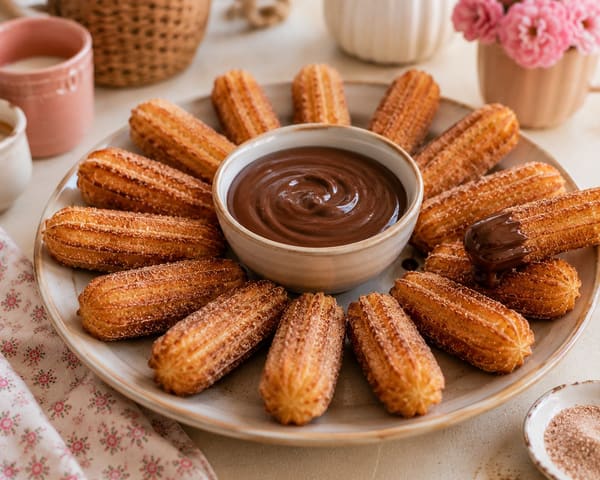
🍩 Balanced Oven-Baked Churros
Churros are an iconic Spanish treat: a simple dough of water, flour, and butter, piped into long ridged sticks, plunged into a deep fryer,…
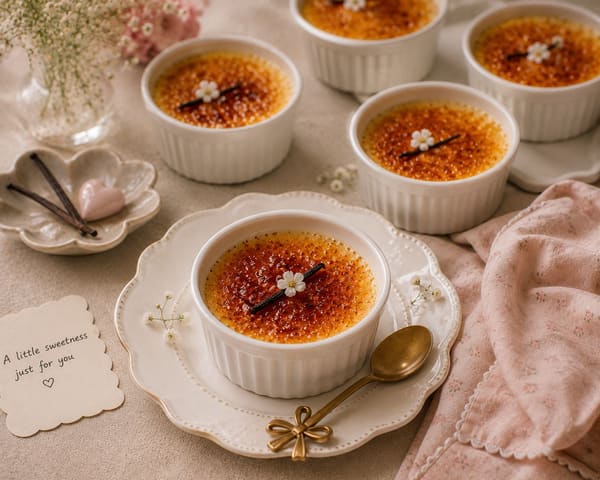
🍮 Balanced Crème Brûlée
Crème brûlée is an iconic French pastry dessert: a silky vanilla custard, typically made with pure heavy cream and many egg yolks, topped…
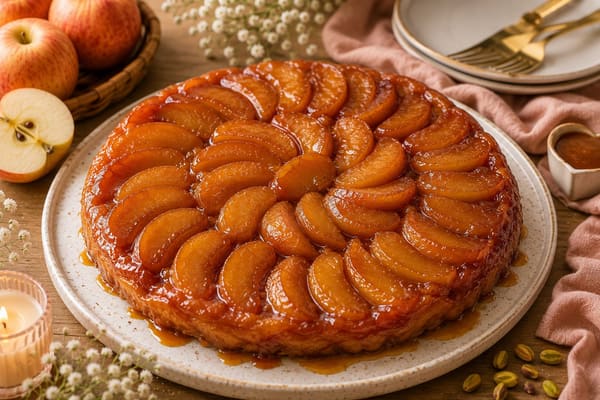
🥧 Balanced Tarte Tatin
Tarte Tatin is an iconic French dessert: apples caramelized in a generous amount of butter and sugar, topped with an all-butter puff pastry…