
Balanced Crème Brûlée
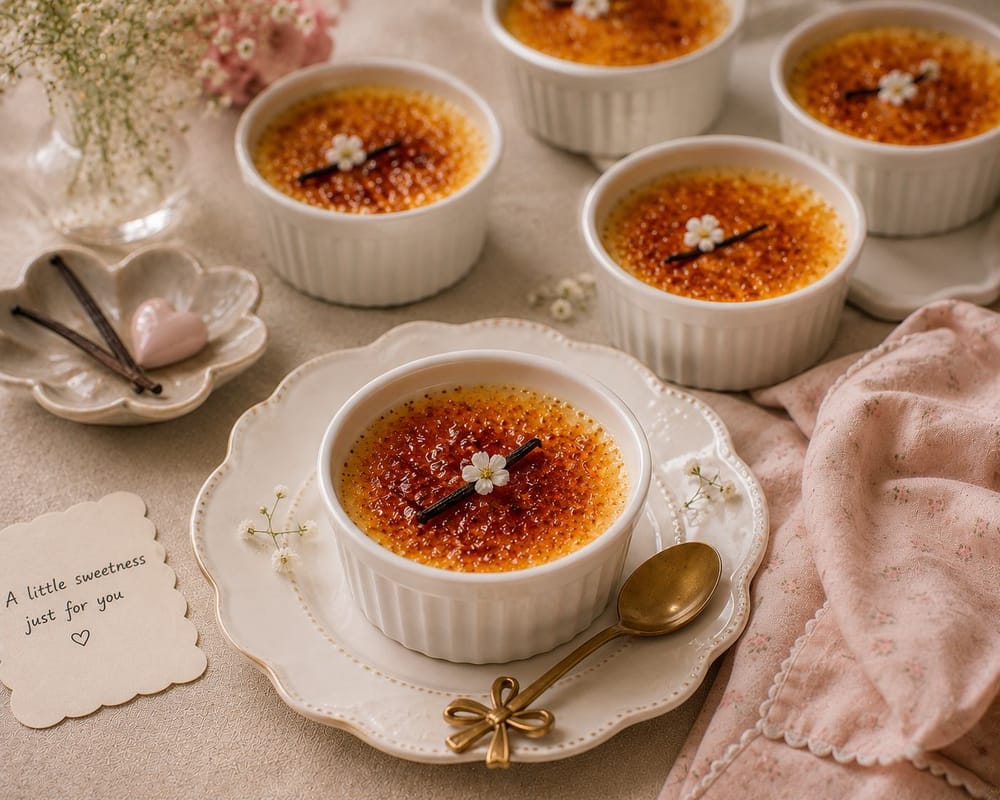
Crème brûlée is an iconic French pastry dessert: a silky vanilla custard, typically made with pure heavy cream and many egg yolks, topped with a thin layer of caramelized sugar torched to a crackling finish. A traditional serving frequently exceeds 450 calories and 30 g of fat, almost entirely saturated, for a modestly sized ramekin. This version keeps the signature silky texture and the iconic crackling crust, but intelligently rethinks the base to sharply cut saturated fat and cholesterol without ever compromising the dessert's identity.
The principle guiding this recipe isn't removing ingredients at random, but intelligently choosing which to replace and which to leave untouched. The caramelized sugar crust, the absolute identifying element of crème brûlée, is still prepared exactly as in the traditional version: it needs sugar, a torch, and a thin even layer, with no possible compromise without losing the signature crack. The creamy base, on the other hand, which accounts for most of the dessert's caloric and fat load, can be intelligently rethought without the final result feeling any less authentic.
Traditional pure heavy cream, rich in saturated fat, gives way to an even mix of whole milk and light cream. This choice keeps enough fat for the custard to set properly during baking and stay silky in the mouth, while noticeably cutting total saturated fat compared to a 30%-plus heavy cream used alone across the whole volume. The egg ratio also changes deliberately: rather than six egg yolks alone as in many traditional recipes, this version combines two whole eggs and two yolks, which lowers cholesterol and fat while adding protein through the whites, without compromising the set or the silky texture of the water-bath-baked custard.
Sugar in the base itself is also reduced, with perceived sweetness reinforced by a real vanilla bean rather than an artificial flavoring, which allows the sugar amount to drop without the dessert tasting any less sweet. This approach perfectly illustrates the concept of intelligent ingredient choice: it isn't about turning a dessert into a diet dish, but about precisely identifying where fat and sugar serve an indispensable technical function, and where they can be reduced without a perceptible loss.
Low-temperature water-bath baking remains absolutely non-negotiable, as it's what guarantees a silky rather than grainy texture, independent of the base's exact composition. The final torched caramelization, done right before serving, must happen on a well-chilled custard to create the sharp contrast between the hot crackling crust and the cold creamy custard, a contrast that defines this dessert's very experience.
One serving is one individual ramekin with its caramelized crust. It's a mouthful-generous but measured portion, needing no whipped cream or extra cookie to feel satisfying.
Recipe Information
| Prep Time | 20 minutes |
| Cook Time | 45 minutes |
| Resting | 4 hours minimum |
| Total Time | About 5 hours 30 minutes |
| Servings | 6 ramekins |
| Difficulty | Intermediate |
| Calories | About 290 kcal each* |
Quick Highlights
- ✅ Smart choices rather than blunt removal
- ✅ Saturated fat notably reduced without losing texture
- ✅ An egg ratio rethought for more protein and less cholesterol
- ✅ Real vanilla to cut sugar without losing perceived sweetness
Ingredients




Step-by-Step Instructions
Infuse the milk and cream with vanilla
Pour the milk and light cream into a saucepan, add the split vanilla bean with its scraped seeds, and bring to a simmer over medium heat without boiling. Remove from heat and let infuse, covered, for 15 minutes to fully develop the aroma.
Warm gently without letting it boil, which would risk curdling the eggs once combined.

Preheat the oven and prepare the water bath
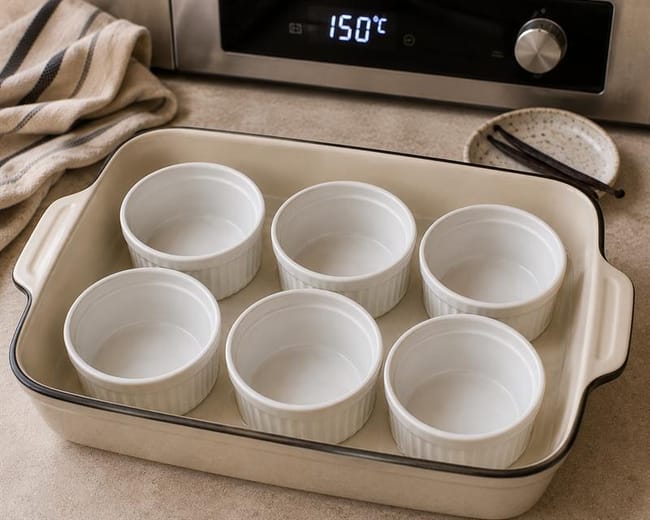
Preheat the oven to 150°C (300°F). Arrange six ramekins in a large baking dish, ready to receive the hot water once the custard is poured.
A properly preheated oven and a ready water bath keep the custard cooking gently and evenly from the start.
Whisk the eggs and sugar
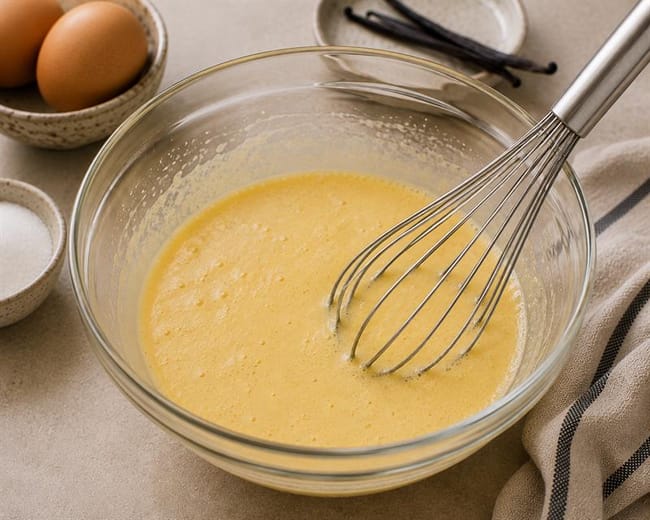
In a large bowl, whisk the whole eggs, yolks, and sugar until the mixture lightens slightly, without incorporating too much air to avoid surface foam.
Whisk just until combined — overbeating introduces air bubbles that show up on the baked surface.
Gradually incorporate the hot milk
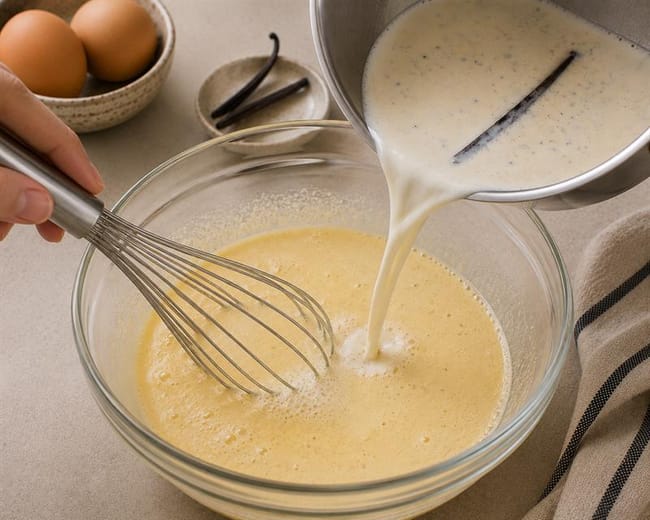
Remove the vanilla bean from the infused milk. Pour the hot milk very gradually onto the egg mixture while whisking constantly, to temper the eggs without cooking them.
Pour the hot milk in slowly while whisking to temper the eggs gradually, preventing them from scrambling.
Strain and divide into the ramekins
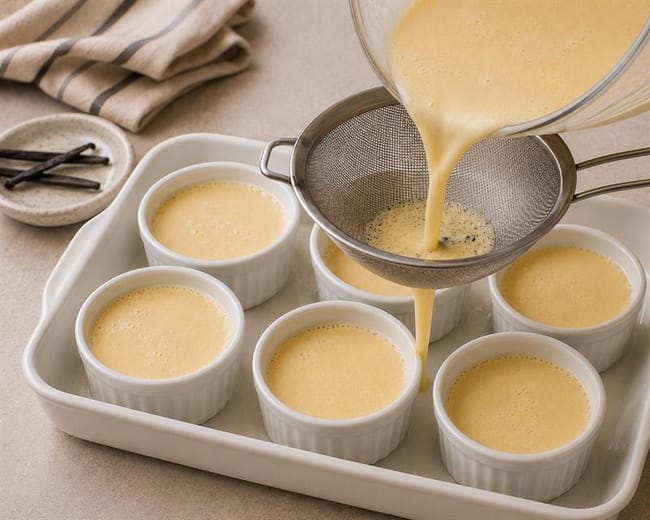
Strain the mixture through a fine sieve to remove any lumps or bean fragments, then divide it evenly among the six ramekins.
Straining removes any small lumps for a perfectly silky finish once baked.
Bake in the water bath
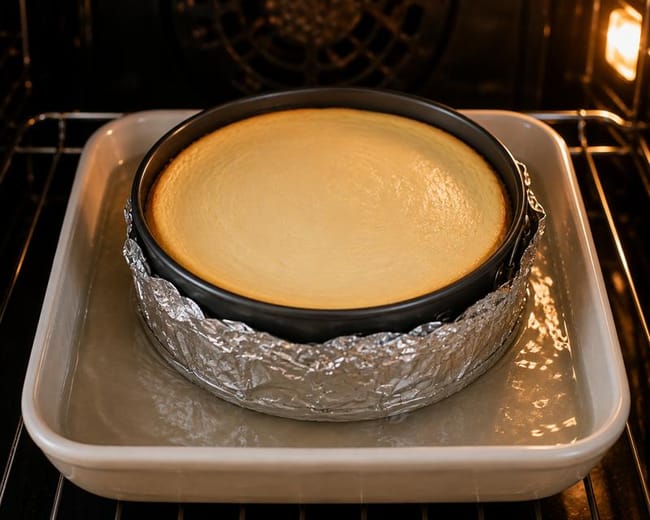
Pour hot water into the dish to reach halfway up the sides of the ramekins, without splashing into the custards. Bake for 40 to 45 minutes, until the edges are set but the center still jiggles slightly.
The water bath insulates the ramekins so the custard sets gently instead of overcooking at the edges.
Cool then refrigerate
Remove the ramekins from the water bath and let them cool at room temperature for 30 minutes, then cover and refrigerate for at least 4 hours, ideally overnight, so the texture fully sets.
A full chill, ideally several hours, is what lets the custard set to its signature silky texture.

Caramelize with a torch
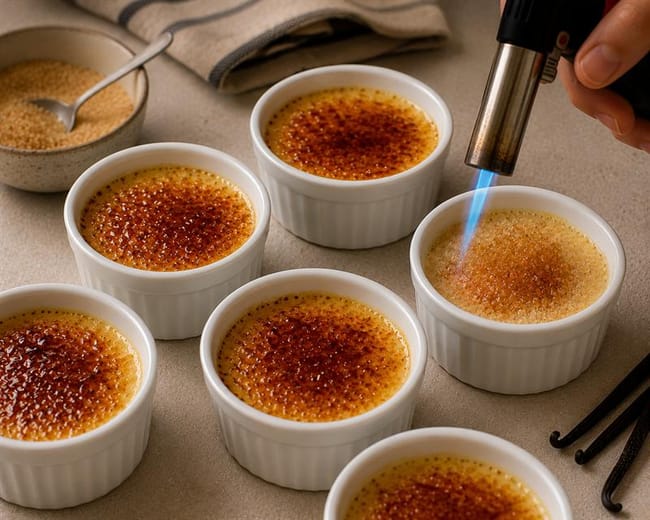
Right before serving, sprinkle each chilled custard with a thin even layer of brown sugar and caramelize with a torch using steady circular motions, until a golden crackling crust forms.
Move the torch continuously for an even, deep amber crust without burning any one spot.
Chef's Tips
Common Mistakes
Why This Recipe Was Designed This Way
This recipe illustrates the core principle of an intelligently rethought dessert: the caramelized crust, a non-negotiable identifying element, stays unchanged, while the creamy base, where fat and sugar serve a less critical function in quantity, is targeted for lightening.
Saturated fat notably reduced without losing texture
The equal-parts mix of whole milk and light cream keeps just enough fat for a perfect set in the water bath, while noticeably cutting saturated fat compared to pure heavy cream used alone.
An egg ratio rethought for more protein and less cholesterol
Combining two whole eggs and two yolks, rather than four to six yolks alone, adds protein through the whites while lowering the dessert's total cholesterol.
Real vanilla to cut sugar without losing perceived sweetness
The complex aroma of a real vanilla bean allows sugar in the base to drop without the dessert tasting any less sweet.
Ingredient Swaps
Need to adapt the recipe? These substitutions maintain the character of the dish.
| Instead of... | Try... |
|---|---|
| Light cream, 15% | Additional whole milk for a lighter custard |
| Granulated sugar for the base | A natural low-glycemic sweetener suited for baking, adjusted to taste |
| Real vanilla bean | 1 extra teaspoon of pure vanilla extract if unavailable |
| Brown sugar for the crust | Granulated sugar, which also caramelizes well under a torch |
What Research Says
Portioning crème brûlée into individual ramekins, as this recipe does, naturally builds in serving-size control — a factor nutrition guidance often highlights as more practical for managing added sugar and saturated fat intake than trying to limit servings from one large dish.
Estimated Nutrition
Per serving
Values estimate one of six ramekins, with its caramelized crust. The exact fat content of the milk and cream used, along with the amount of sugar for the crust, slightly change the result. Any additional side is excluded from the calculation.
Storage & Reheating
Refrigerate the uncaramelized custards, each individually covered with plastic wrap pressed against the surface, at 4°C/40°F or below, for up to three days. Never caramelize ahead of time: keep the sugar separate and add it only right before serving.
Reheating
Crème brûlée is served cold and isn't reheated; it's a dessert meant to be enjoyed straight from the refrigerator, with the crust caramelized at the very last minute before serving.
Freezing
The custard's delicate texture doesn't hold up well to freezing, which causes water separation and a grainy texture on thawing. It's better to prepare the custard two to three days ahead and keep it refrigerated rather than freezing it.
Meal Prep Tips
The baked custards can be made up to two days ahead and kept refrigerated, ideally spreading out the work before a meal or gathering. The sugar for the crust can be measured ahead into small individual dishes, ready to sprinkle right before serving.
Serving Suggestions
Torch the sugar just before serving so the crust stays crisp, and add a few fresh berries on the side for color, freshness, and a touch of natural acidity that balances the custard’s richness.
Frequently Asked Questions
Is crème brûlée traditionally made with pure heavy cream?
Yes, most traditional recipes use 30%-plus heavy cream across the whole volume, giving a very rich texture but also a high saturated fat load. This recipe keeps the dessert's creamy spirit but combines whole milk and light cream in equal parts, making it a smart adaptation rather than the only possible version.
Can I use only egg yolks as in the traditional recipe?
You can, but it noticeably raises the dessert's cholesterol and saturated fat; the whole-egg-and-yolk combination proposed here is a deliberate choice to keep the richness while lightening the nutritional profile.
Why is my custard grainy rather than smooth?
The hot milk was likely poured too quickly onto the eggs, partly cooking them before full incorporation; always pour in a thin stream while whisking without pause.
Can I make a dairy-free version?
Replace the milk and light cream with thick plant-based equivalents, like a light coconut cream combined with an oat drink; the texture and flavor will differ but the dessert stays achievable.
How do I know when the custard is baked enough?
Gently shake the dish: the edges should be firm while the center still jiggles slightly, like firm gelatin; the custard continues to set slightly as it cools.
Can I caramelize under the oven broiler instead of with a torch?
The oven broiler can work in a pinch, but its less targeted heat risks warming the custard through before the sugar caramelizes, compromising the dessert's signature hot-cold contrast.
Can I reduce the crust sugar even further?
A further reduction prevents a layer thick enough to crack satisfyingly from forming; the stated amount already represents the minimum needed for the sought-after effect.
Is this recipe appropriate for kids?
The dish generally works for a special occasion, watching the milk and egg allergens present in the recipe, and accounting for the sugar despite the reduction made in the base.
Can I make the custard without a real vanilla bean?
A good-quality pure vanilla extract can replace the bean, but with a less complex aroma; it will then be harder to reduce sugar without a perceptible loss of sweetness.
Does this recipe guarantee weight loss?
No. It remains a full dessert containing sugar and fat, even when intelligently rethought compared to the traditional version; results depend on overall diet, activity, and individual factors. Anyone pursuing a specific health goal should seek personalized professional guidance.
Related Recipes
If you enjoyed this Balanced Crème Brûlée, you may also like these recipes from our 🍮 World Dessert Icons collection.
🍮 Balanced Profiteroles
Profiteroles are an unshakeable classic of French pastry: small light choux buns filled with whipped cream or ice cream, topped with a rich…
🥧 Balanced Tarte Tatin
Tarte Tatin is an iconic French dessert: apples caramelized in a generous amount of butter and sugar, topped with an all-butter puff pastry…
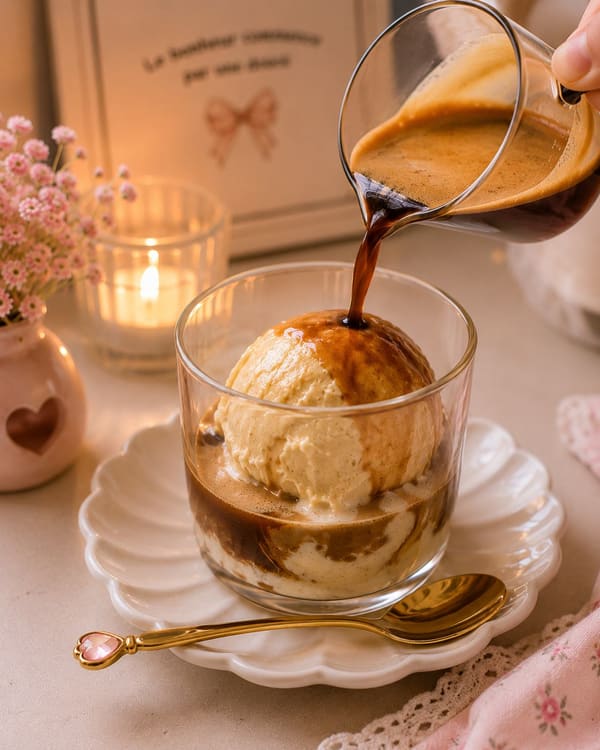
☕ Balanced Affogato
Affogato is an Italian dessert of radical simplicity: a scoop of vanilla gelato, literally "drowned" under a freshly made hot espresso,…