
🥩 Oven-Baked Chicken Fried Steak
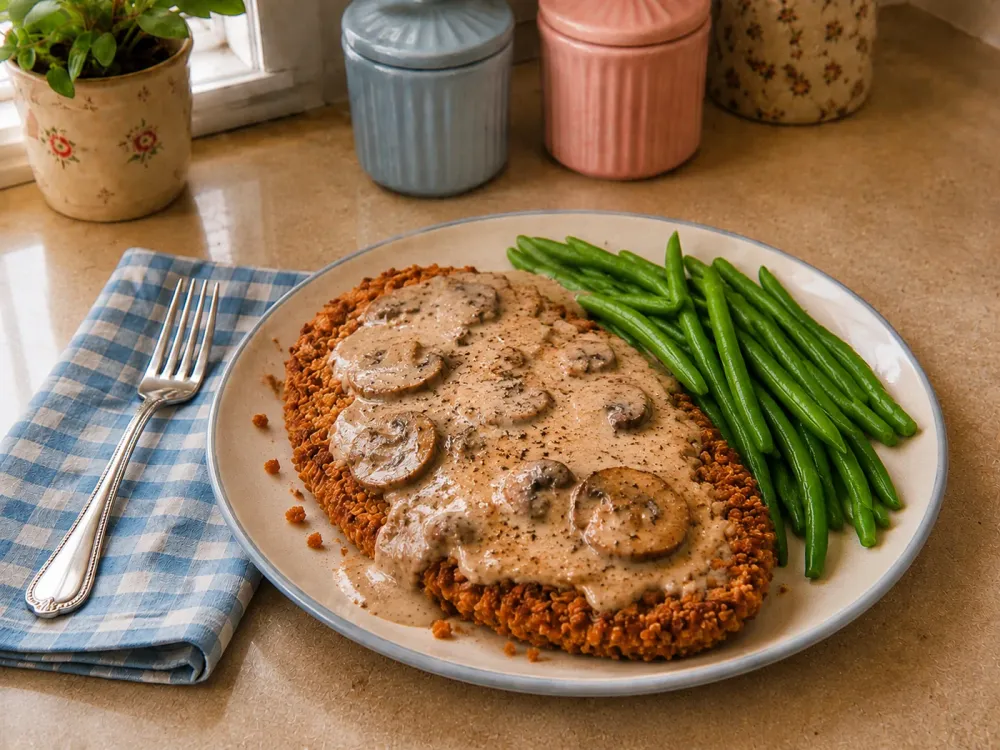
Chicken fried steak is a pillar of Southern American cooking: a thin cut of beef, breaded and fried like a piece of chicken, then buried under a white pepper gravy made with bacon drippings and butter. Served alongside a generously buttered mashed potato, the traditional plate often exceeds 800 calories. This version keeps the golden, crackling crust and the creamy pepper gravy, but entirely swaps the deep fryer for a hot oven and rebuilds the gravy around milk instead of rendered animal fat.
This balanced version keeps the defining crackling crust rather than replacing it with a plain pan-seared cutlet. The meat is still breaded using the classic three-step method — flour, egg, breadcrumbs — but every component is rethought: whole-grain breadcrumbs for fiber, egg whites instead of whole egg to cut fat, and high-heat oven baking with a simple oil spray instead of a frying oil bath. The gravy drops the bacon fat and butter in favor of dry-sautéed mushrooms for umami and lower-fat milk for creaminess.
Success depends on two main factors: how dry the breading is before cooking, and patience while building the gravy. One serving is one whole breaded steak topped with gravy, served alongside steamed green beans — a generous but measured meal, without unlimited buttered mashed potatoes.
Recipe Information
| Prep Time | 25 minutes |
| Cook Time | 25 minutes |
| Total Time | About 50 minutes |
| Servings | 4 steaks |
| Difficulty | Intermediate |
| Calories | About 410 kcal each |
Quick Highlights
- ✅ Baked, never fried — sharply less total fat
- ✅ Whole-grain breadcrumbs and flour add fiber
- ✅ Egg whites replace whole egg in the breading
- ✅ Gravy built from mushrooms and milk, no bacon fat or butter
- ✅ Steamed green beans replace unlimited buttered mashed potatoes
- ✅ One full breaded steak with gravy per serving
Ingredients
Makes 4 breaded steaks with gravy and side











Step-by-Step Instructions
Prepare the Meat and Breading Stations
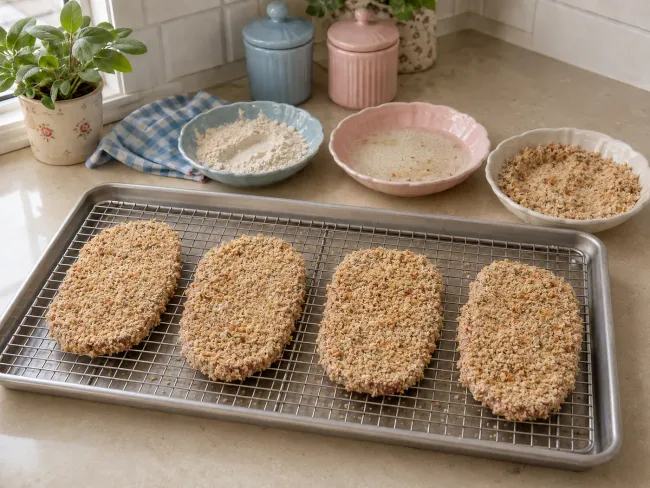
Preheat the oven to 220°C (425°F) with a wire rack set over a baking sheet, lightly sprayed with oil. Pound each steak between two sheets of parchment to about 1 cm thick using a meat mallet. Set up three shallow dishes: flour alone in the first, beaten egg whites in the second, and breadcrumbs mixed with paprika, garlic and onion powder, salt, and pepper in the third.

Bread Each Steak
Pass each steak first through the flour, tapping off excess, then through the egg white, letting excess drip off, and finally through the seasoned breadcrumbs, pressing firmly on both sides to help it adhere. Place each breaded steak on the rack as you go, without stacking.
Bake the Steaks
Lightly spray the breaded steaks with oil on both visible sides and bake for 12 minutes. Gently flip each steak with a thin spatula, spray again with oil, then continue baking for 10 to 13 minutes, until the breading is golden and clearly crisp across the whole surface.

Build the Gravy Base
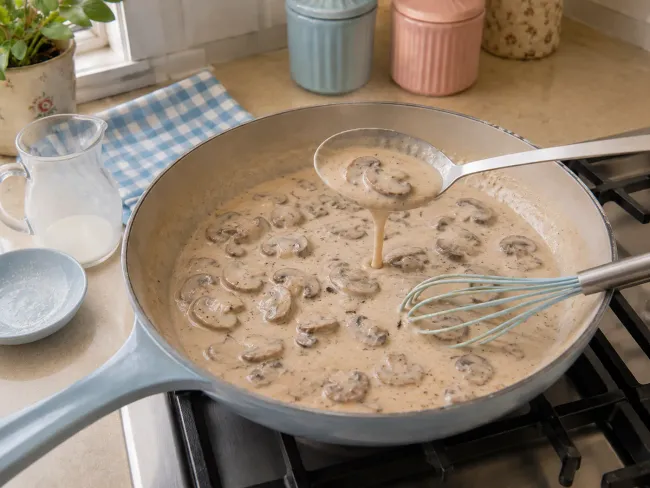
While the steaks bake, dry-sauté the sliced mushrooms in a pan over medium heat for 3 minutes until they release their water and start to lightly brown. Add the whole-wheat flour and stir continuously for 1 minute to cook off the raw flour taste without letting it stick.

Add the Milk and Thicken
Pour in the milk very gradually, in a thin stream, whisking constantly to avoid lumps. Continue cooking over low heat for 6 to 8 minutes, stirring regularly, until the gravy coats the back of a spoon. Season generously with salt and pepper at the end.
Steam the Green Beans
While the gravy thickens, steam the green beans for 5 to 6 minutes, until they remain slightly crisp and keep a vibrant color.

Plate and Serve
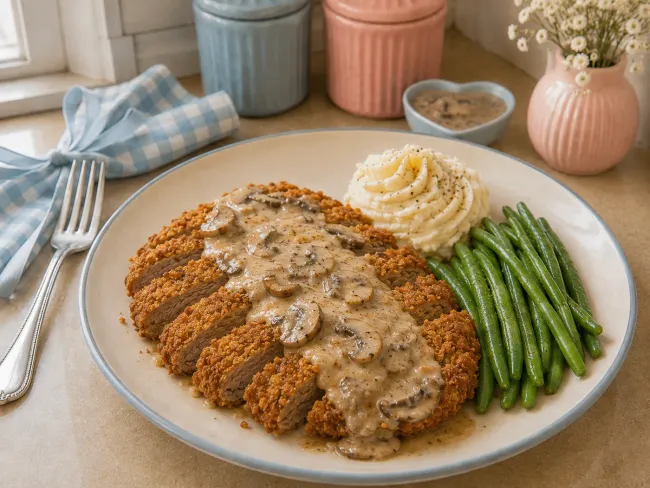
Arrange each breaded steak on a warm plate, generously top it with hot pepper gravy, and place the steamed green beans alongside. Serve immediately while the breading is at its crispest.
Chef's Tips
Common Mistakes
Why This Recipe Was Designed This Way
This recipe is not medical treatment and cannot promise weight loss. It is a balanced adaptation of a beloved Southern diner classic that keeps its recognizable crackling crust while rebuilding the gravy on lighter foundations.
🍳 Cooking Entirely Without Frying
Unlike the traditional version, consistently deep-fried in a generous oil bath, this recipe cooks exclusively in the oven with minimal oil spray, sharply reducing the dish's total fat.
🍄 A Gravy Rebuilt Without Bacon Fat or Butter
Mushrooms provide the umami depth usually supplied by animal fat, while milk replaces heavy cream, for a creamy gravy built on much lighter foundations.
🌾 Breading Enriched With Fiber
Whole-grain breadcrumbs and flour add fiber to a dish traditionally made almost entirely of refined white flour, without changing the expected visual result.
🫛 A Generous Vegetable Side
Steamed green beans replace the unlimited buttered mashed potatoes typical of the traditional plate, adding volume, fiber, and vitamins without extra fat.
Ingredient Swaps
Need to customize this Balanced Chicken Fried Steak? These substitutions preserve the dish's identity while adapting it to different preferences.
| Instead of... | Try... |
|---|---|
| Lean tenderized round steak | Pounded chicken cutlet, adjusting oven time to thickness |
| Whole-wheat panko breadcrumbs and flours | Certified gluten-free breadcrumbs and flour blends |
| Lower-fat milk | Thick, unsweetened plant milk such as soy |
| Cremini mushrooms | White button mushrooms, similar quantity |
What Research Says
The ingredients in this recipe were selected because they reflect common principles in balanced Southern comfort food that combine lean protein, fiber-rich breading, and a lightened dairy-based sauce. The information below summarizes current nutrition research and is intended for educational purposes only.
🥩 Lean Beef
Lean round steak supplies complete protein, iron, and zinc with notably less saturated fat than a marbled cut.
- Beef is a source of complete, high-quality protein.
- Provides heme iron, which is more readily absorbed than plant-based iron.
- Zinc supports immune function and wound healing.
🍄 Mushrooms
Cremini mushrooms contribute umami depth along with potassium and B vitamins, in place of bacon fat.
- Mushrooms are naturally low in calories and sodium.
- Good source of B vitamins including riboflavin and niacin.
- Contribute potassium, which supports normal muscle and nerve function.
🫛 Green Vegetables
Green beans contribute fiber, vitamin C, vitamin K, and folate to round out the plate.
- Green beans are a source of dietary fiber and vitamin K.
- Contribute vitamin C, which supports immune function.
- Add volume to a meal for relatively few calories.
Estimated Nutrition
Per serving
*Values estimate one of four steaks, topped with gravy and served with the stated green beans. Breadcrumb brand, exact meat thickness, and gravy portion served change the result.
Storage & Reheating
Refrigerate the components separately — steak, gravy, green beans — within two hours of cooking, in airtight containers at 4°C (40°F) or below, and eat within three days.
Refrigerating
Store the steak, gravy, and green beans in separate airtight containers for up to 3 days. Never leave the gravy at prolonged room temperature, especially given its dairy base.
Freezing
The breading holds up poorly to freezing once cooked. It's better to freeze the raw breaded steaks, uncooked, laid flat on a tray then transferred to an airtight container, for up to two months, and cook them straight from frozen.
Reheating
Reheat the steak in the oven at 180°C (350°F) for 8 to 10 minutes to preserve the breading's crispness; strictly avoid the microwave. Reheat the gravy separately over low heat, adding a little milk if it has thickened too much.:
Meal Prep Tips
The steaks can be breaded up to four hours ahead and kept refrigerated, uncovered, on a rack to stay dry until cooking. The mushrooms can be sliced the night before and kept refrigerated in an airtight container.
Serving Suggestions
This Balanced Chicken Fried Steak pairs well with light, simple sides.
Steamed Green Beans: Already part of the plate, extra steamed green beans add more volume without extra fat.
Simple Coleslaw: A light coleslaw adds crunch and acidity that balances the creamy gravy.
Buttermilk Biscuit: A single whole-grain biscuit rounds out the Southern-diner feel without excess.
Sweet Tea or Iced Tea: An unsweetened iced tea is a classic Southern pairing that refreshes the palate.
Frequently Asked Questions
Is chicken fried steak traditionally made with chicken?
No, despite its name. It's historically beef, prepared using the same breading and frying method as fried chicken, which gave it its name. This recipe keeps the beef but sharply cuts fat by removing the frying step.
Can I use chicken instead of beef?
Yes, a pounded chicken cutlet works well and lowers saturated fat slightly further; adjust the oven time to the exact thickness of the piece used.
Why does my breading fall off during cooking?
The meat was likely still damp when breaded, or one of the three flour-egg-breadcrumb steps was skipped. Dry the meat thoroughly and press the breadcrumbs firmly across the whole surface.
Why is my gravy lumpy?
The milk was likely poured too quickly or without whisking continuously. Start again, pouring very gradually in a thin stream while whisking without pause until fully incorporated.
Can I make a gluten-free version?
Replace the breadcrumbs and both flours with certified gluten-free equivalents; the crust and gravy texture may vary slightly.
Can I make the gravy dairy-free?
Replace the milk with a thick, unsweetened plant milk like soy; the flavor will be slightly different but the gravy's texture stays quite good.
How do I keep the breading crisp if not serving immediately?
Always use a wire rack instead of a solid sheet so air circulates under the meat, and keep the gravy separate until serving.
Can I bread the steaks ahead of time?
Yes, bread the steaks up to four hours before cooking and keep them refrigerated, uncovered, on a rack so they stay dry and ready to cook.
Is this recipe appropriate for kids?
The dish generally works, watching the pepper level in the gravy and the wheat, milk, and egg allergens present in the recipe.
Does this recipe guarantee weight loss?
No. It remains a full, calorie-containing meal, even lightened compared to the traditional version; results depend on overall diet, activity, and individual factors.
Related Recipes
If you enjoyed this Balanced Chicken Fried Steak, you may also like these reworked classics from our American Comfort Food collection.
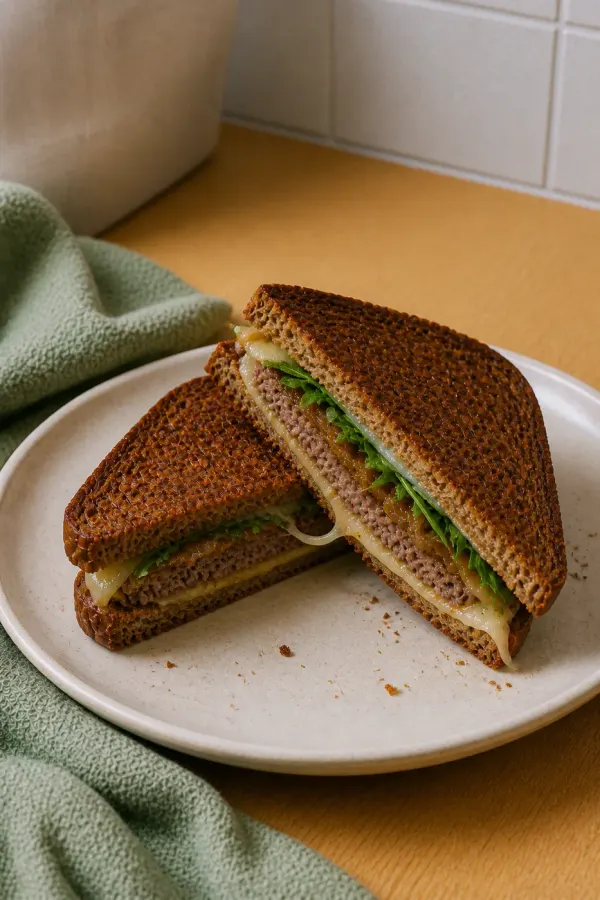
🍔 Balanced Patty Melt on Toasted Whole Grain Rye
A griddled diner classic with leaner beef, caramelized onions, and measured butter.
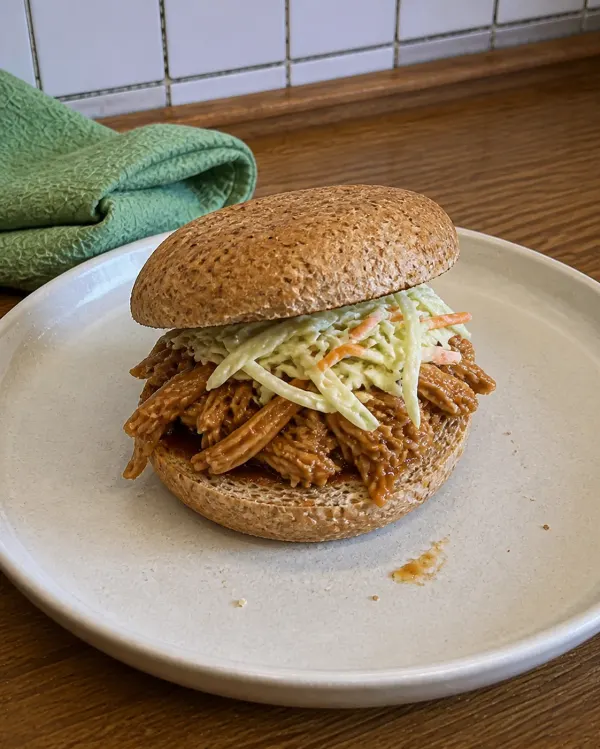
🥪 Lightened-Up Pulled Pork Sandwich
Slow-cooked lean pork, homemade barbecue sauce, and a Greek yogurt coleslaw.