
Balanced Patty Melt on Toasted Whole Grain Rye
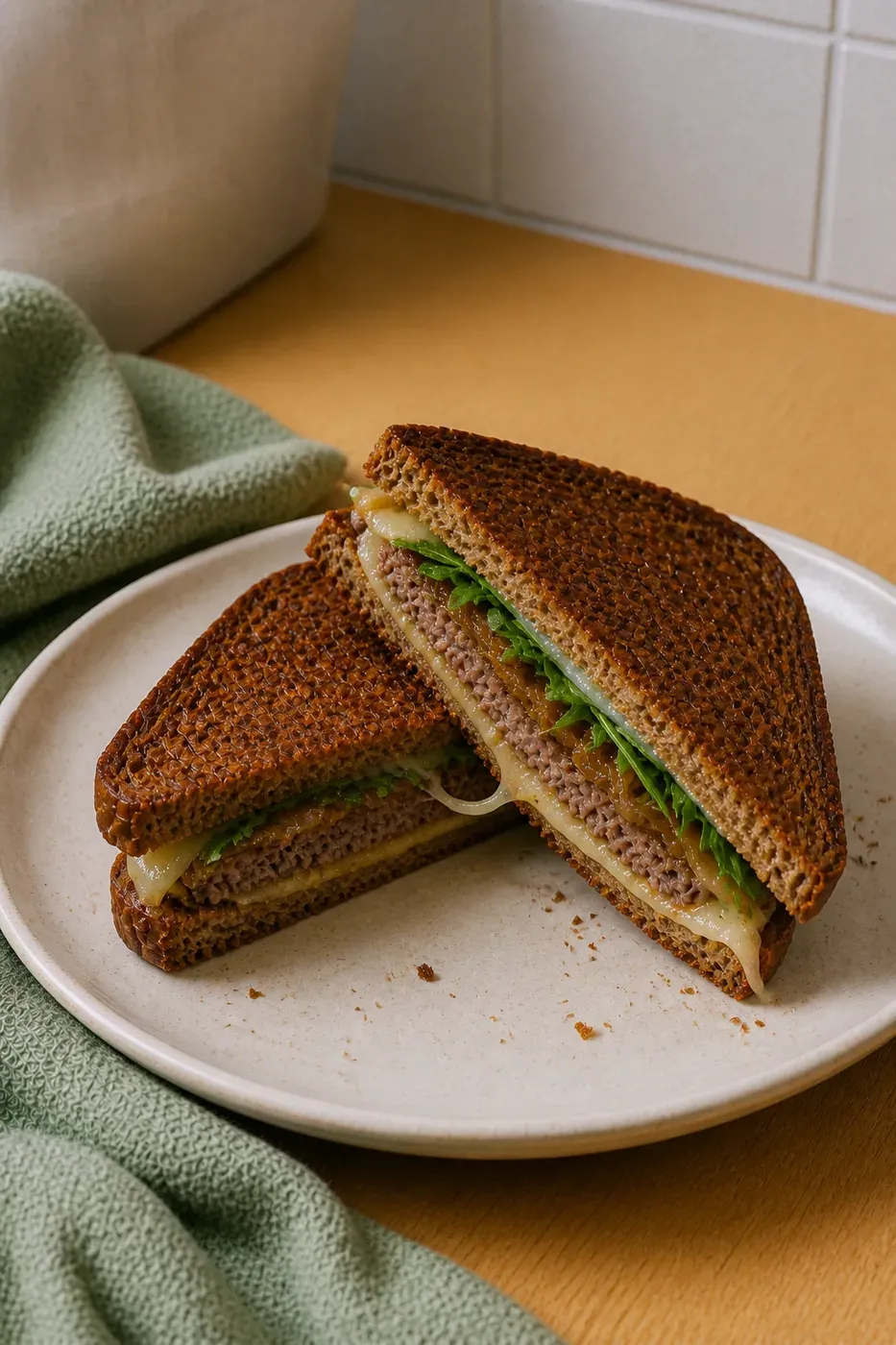
The patty melt is an American diner classic: a griddled beef patty, onions caramelized in a generous amount of butter, and melted cheese, all pressed between two slices of rye bread abundantly buttered and toasted golden in the pan. Served as-is in most diners, it frequently exceeds 700 calories, largely due to butter used three separate times in the preparation — for the onions, inside the bread, and outside for the final toasting. This version keeps the gooey cheese and the crisp golden bread but cuts the butter at every stage and lightens the meat.
This balanced version keeps the sandwich's recognizable structure rather than simplifying it to the point of losing its identity. The beef remains griddled the classic way, but its fat content is reduced to 93% lean, compared to often 80% or less in the traditional version. The onions are still slowly caramelized to develop their natural sweetness, but with a measured drizzle of oil rather than a generous pat of butter. The bread used is a whole grain rye rather than refined white rye, adding fiber without changing the texture or the characteristic rye flavor.
Success depends mainly on patience during the onion caramelization, which needs about twenty minutes over low heat to develop real sweetness without burning, and on managing heat during final assembly. One serving is one whole sandwich, assembled with a measured amount of each ingredient — a hearty, satisfying meal with no extra fatty side needed.
Recipe Information
| Prep Time | 25 minutes |
| Cook Time | 30 minutes |
| Total Time | About 55 minutes |
| Servings | 4 sandwiches |
| Difficulty | Easy |
| Calories | About 480 kcal each |
Quick Highlights
- ✅ 93% lean ground beef for notably less saturated fat
- ✅ Butter replaced with a measured oil spray at every stage
- ✅ Reduced-fat Swiss cheese keeps the signature stretchy melt
- ✅ Whole grain rye bread adds fiber, same characteristic flavor
- ✅ Fresh arugula adds crunch and freshness
- ✅ One full sandwich per serving, clearly measured
Ingredients
Makes 4 whole sandwiches








Step-by-Step Instructions
Caramelize the Onions
Heat a lightly oiled pan over low heat. Add the sliced onions and cook for 20 to 25 minutes, stirring regularly to prevent sticking, until golden, soft, and developing a pronounced sweetness. Set aside in a covered bowl to retain warmth.

Prepare and Cook the Beef Patties
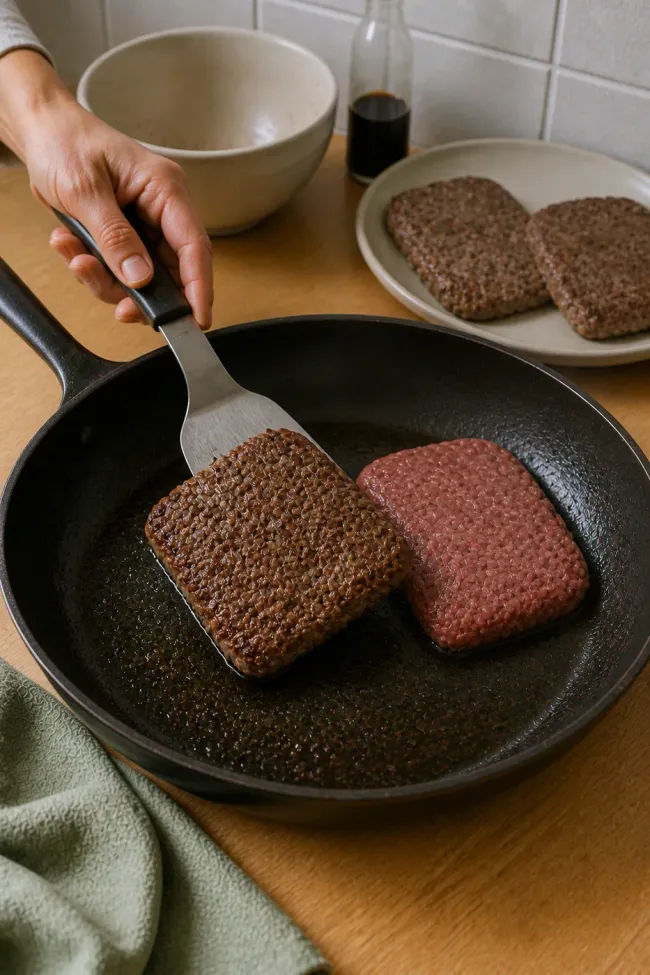
Mix the ground beef with the Worcestershire sauce, salt, and pepper in a bowl, without overworking the meat. Shape 4 thin, wide patties the exact size of the bread. Cook for 3 to 4 minutes per side in a hot, lightly oiled pan, to desired doneness.
Prepare the Bread and Mustard
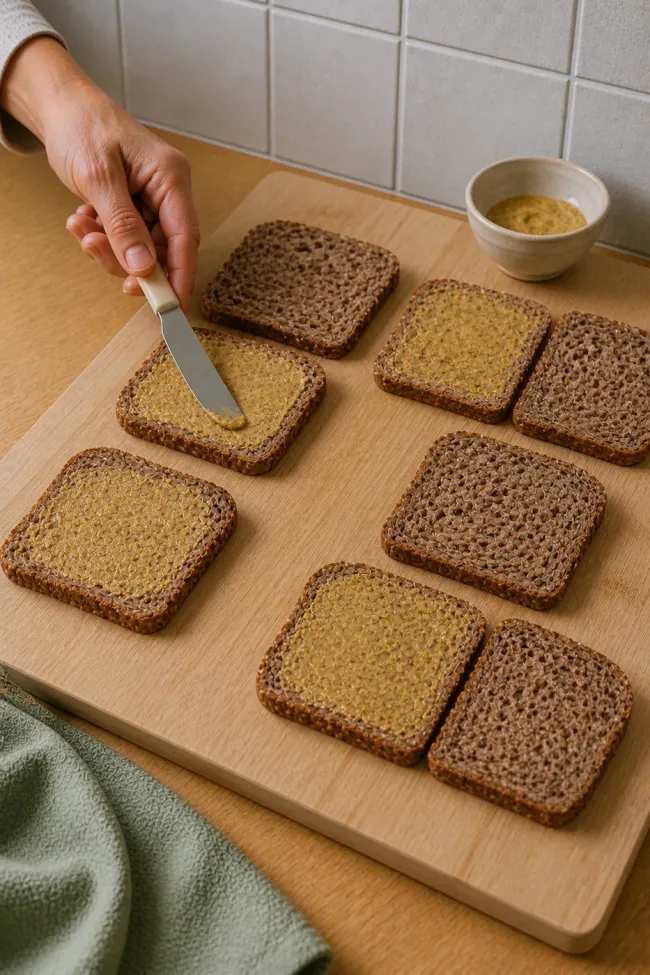
While the meat cooks, spread a thin layer of mustard on the inside of 4 of the 8 bread slices, the ones that will form the base of each sandwich.
Assemble the Sandwiches
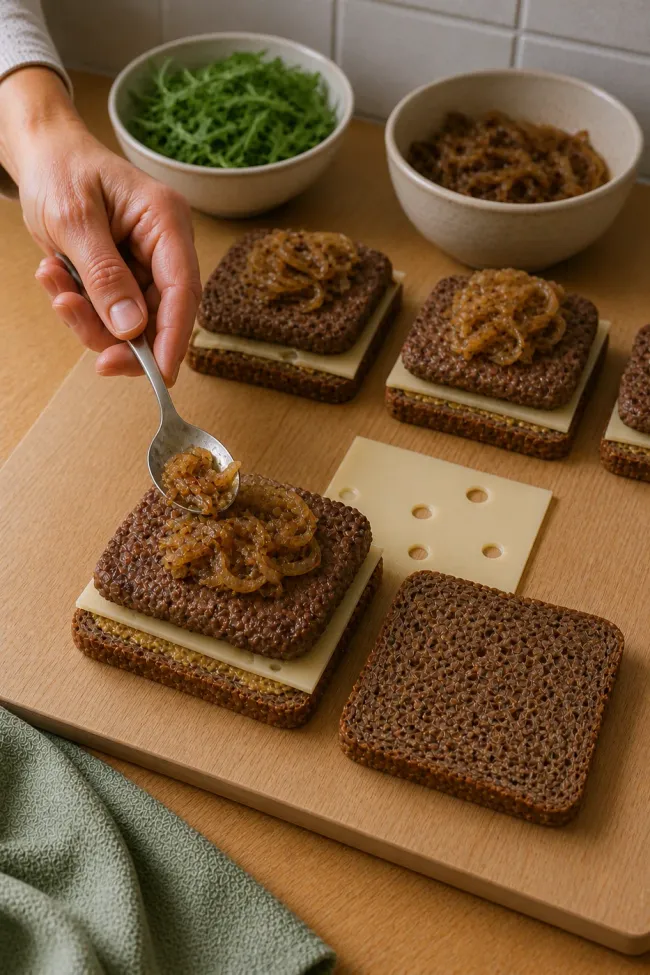
Assemble each sandwich in this order: mustard-spread bread, a slice of cheese, the beef patty, a portion of caramelized onions, a handful of arugula, a second slice of cheese, then the plain bread to close.
Griddle the Sandwiches Golden
Spray the outside of the sandwiches with oil on both sides and griddle over medium heat for 3 to 4 minutes per side, pressing lightly with a spatula, until the bread is crisp and golden and the cheese is fully melted inside.

Cut and Serve
Cut each sandwich in half diagonally and serve immediately, while the cheese is still stretchy and the bread crisp.

Common Mistakes
Why This Recipe Was Designed This Way
This recipe is not medical treatment and cannot promise weight loss. It is a balanced adaptation of a beloved American diner classic that keeps its recognizable structure while measuring every source of fat.
🥩 Notably Leaner Beef
Switching to 93% lean ground beef meaningfully lowers the dish's total saturated fat compared to standard ground beef, without changing the cooking method or the visual result.
🧈 A Targeted Butter Reduction at Every Step
The butter traditionally used three times in the recipe — onions, inside, outside — is largely replaced with a measured oil spray, sharply cutting caloric intake without sacrificing the sought-after browning.
🧀 A Lighter Cheese That's Still Satisfying
Switching to a reduced-fat Swiss cheese keeps the signature stretchy melt while lowering saturated fat, unlike a complete removal that would change the dish's identity.
🥬 Added Freshness Without Changing the Sandwich's Identity
Arugula adds volume, vitamins, and a texture contrast to a sandwich traditionally made entirely of soft, griddled elements, without changing its recognizable structure.
Ingredient Swaps
Need to customize this Balanced Patty Melt? These substitutions preserve the sandwich's identity while adapting it to different preferences.
| Instead of... | Try... |
|---|---|
| 93% lean ground beef | 93% lean ground turkey, plus a touch more Worcestershire sauce |
| Whole grain rye bread | Certified gluten-free rye bread |
| Reduced-fat Swiss cheese | Soy- or oat-based melting cheese alternative |
| Fresh arugula | Baby spinach or crisp lettuce |
What Research Says
The ingredients in this recipe were selected because they reflect common principles in balanced comfort food that combine lean protein, measured fat, and fiber-rich bread. The information below summarizes current nutrition research and is intended for educational purposes only.
🥩 Lean Beef
93% lean ground beef supplies complete protein, iron, and zinc with notably less saturated fat than standard ground beef.
- Beef is a source of complete, high-quality protein.
- Provides heme iron, which is more readily absorbed than plant-based iron.
- Zinc supports immune function and wound healing.
🌾 Whole Grains
Whole grain rye bread contributes fiber and minerals that refined white bread lacks.
- Whole grains are linked to digestion in balanced eating patterns.
- Fiber contributes to satiety and steadier blood sugar response.
- Rye contains B vitamins and minerals such as magnesium.
🥬 Leafy Greens
Arugula contributes vitamin K, folate, and fiber for very little added energy.
- Leafy greens are a well-known source of vitamin K.
- Folate supports normal cell function.
- Contributes volume and crunch without meaningful calories.
Estimated Nutrition
Per serving
*Values estimate one of four whole sandwiches. Cheese brand, exact bread thickness, and the amount of onions distributed change the result.
Storage & Reheating
Refrigerate the components separately — cooked patties, onions, bread — within two hours of cooking, in airtight containers at 4°C (40°F) or below, and eat within three days. Never assemble the sandwiches ahead of time.
Refrigerating
Store cooked patties, caramelized onions, and bread separately in airtight containers for up to 3 days.
Freezing
Raw patties and caramelized onions freeze well separately for up to three months, in separate airtight containers. Thaw in the refrigerator overnight before assembling and cooking fresh sandwiches.
Reheating
Reheat the patty and onions separately in a pan or oven, then reassemble the sandwich and griddle it to restore the bread's crispness; avoid the microwave, which completely softens the bread.:
Meal Prep Tips
The onions can be caramelized up to three days ahead and kept refrigerated, then briefly reheated before assembly. The patties can be shaped the night before and kept raw in the refrigerator, separated by parchment paper.
Serving Suggestions
This Balanced Patty Melt pairs well with simple, light accompaniments.
Simple Green Salad: A green salad with a light vinaigrette rounds out the plate without adding a fatty side.
Dill Pickles: A few pickles add a tangy note that nicely cuts through the richness of the sandwich.
Baked Sweet Potato Fries: Oven-baked sweet potato fries add fiber and a natural sweetness that complements the rye bread.
Tomato Soup: A light tomato soup is a classic diner pairing that echoes the sandwich's savory depth.
Frequently Asked Questions
Is the patty melt traditionally made with rye bread?
Yes, rye bread is the sandwich's identifying element in most American diners, providing a slight tang that balances the cheese and sweet onions. This recipe keeps the rye bread but in whole-grain form and sharply cuts the butter traditionally used.
Can I use ground turkey instead of beef?
Yes, 93% lean ground turkey works well; add a bit more Worcestershire sauce to compensate for its naturally milder flavor compared to beef.
Can I make a gluten-free version?
Use a certified gluten-free rye bread; the texture will be slightly different, notably less elastic, but the sandwich stays balanced in its proportions.
How do I avoid soggy bread?
Don't let the onions or meat sit too hot or wet when assembling, and griddle the sandwich right before serving, never ahead of time.
Can I make a dairy-free version?
Use a soy- or oat-based melting cheese alternative; it may be slightly less stretchy but the overall flavor stays satisfying.
Can I prep the onions ahead of time?
Yes, up to three days ahead, kept refrigerated in an airtight container, then briefly reheated in a pan before final assembly.
How do I know when the patties are cooked enough?
A well-cooked patty shows clear rather than pink juices when pressed lightly, and an internal temperature of about 71°C (160°F) on a thermometer for full doneness.
Is this recipe appropriate for kids?
The dish generally works, watching the wheat and milk allergens present in the recipe, as well as the sodium from the Worcestershire sauce.
Can I substitute the arugula?
Baby spinach or crisp lettuce work as an alternative, with a less peppery flavor profile but a similar texture contrast.
Does this recipe guarantee weight loss?
No. It remains a full, calorie-containing meal, even lightened compared to the traditional version; results depend on overall diet, activity, and individual factors.
Related Recipes
If you enjoyed this Balanced Patty Melt, you may also like these reworked classics from our American Comfort Food collection.
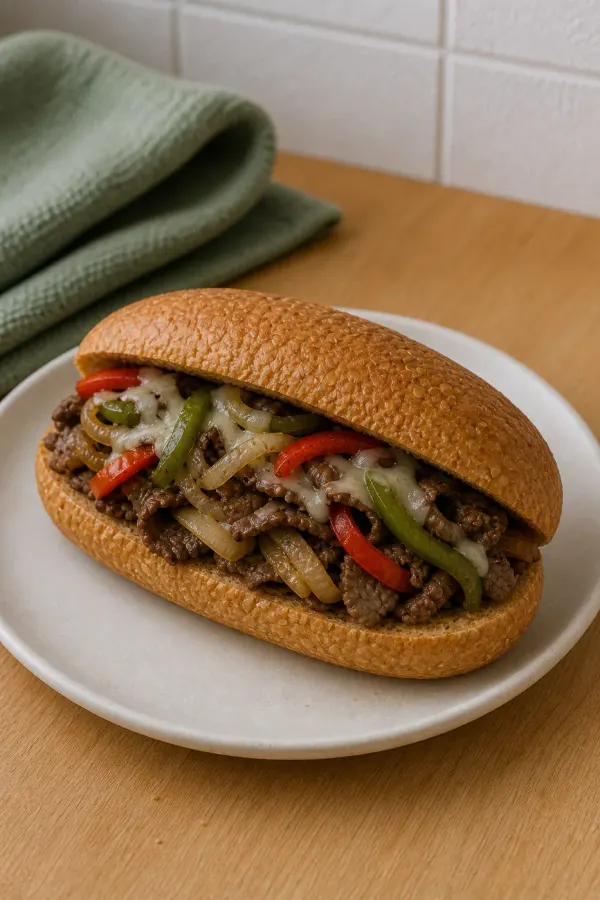
🥪 Lightened-Up Philly Cheesesteak
Another iconic American sandwich, reworked with lean meat and a whole grain roll.
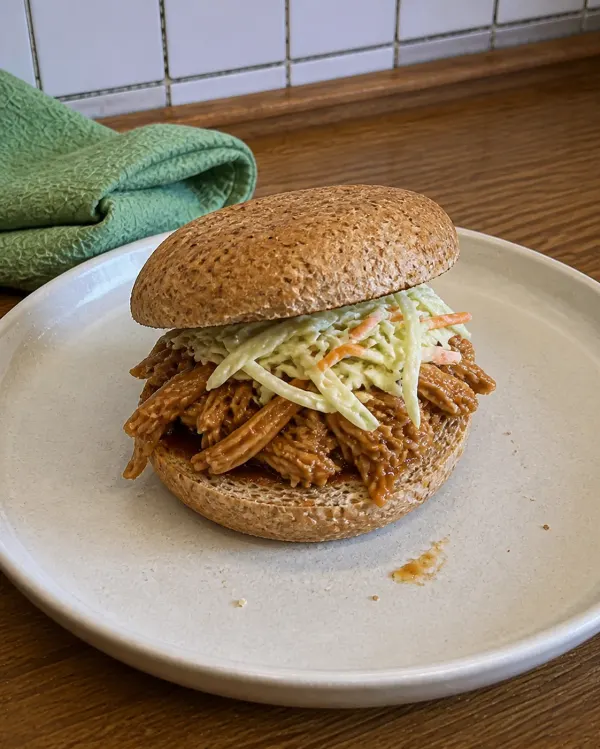
🥪 Lightened-Up Pulled Pork Sandwich
Slow-cooked lean pork, homemade barbecue sauce, and a Greek yogurt coleslaw.