
Balanced & Satisfying Lean Beef Ramen
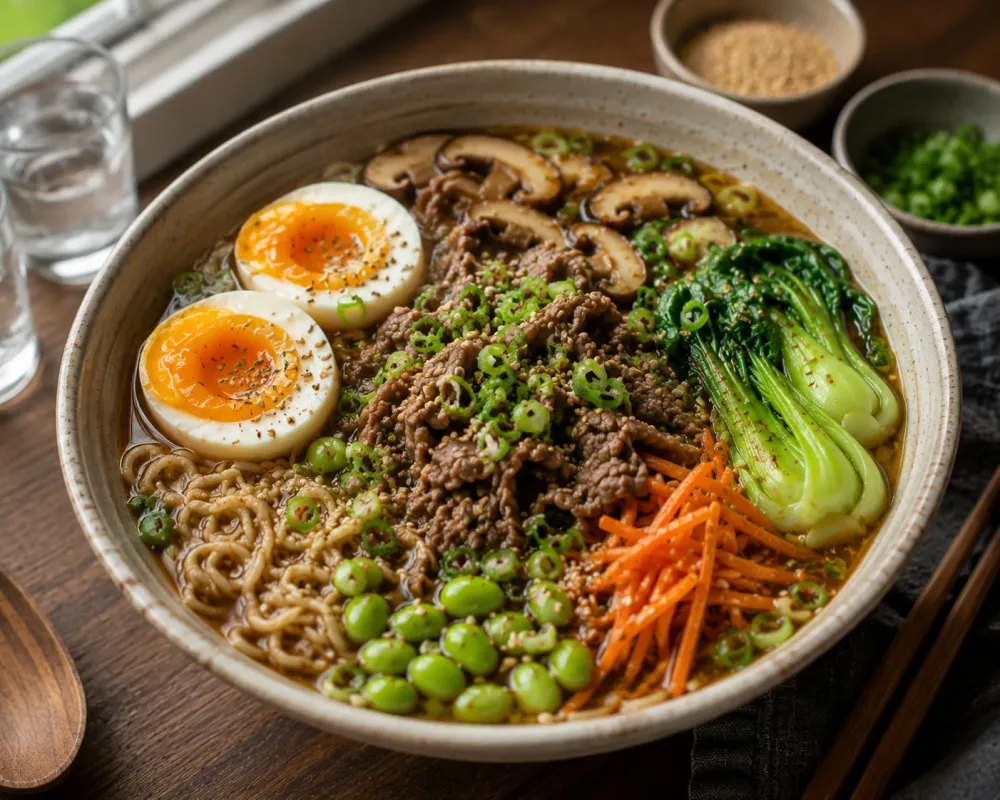
Everything people love about authentic Japanese ramen — rich savory broth, tender slices of beef, springy noodles, soft jammy egg, fresh vegetables, aromatic toppings, and comforting warmth — thoughtfully reimagined with lean beef, high-protein whole-wheat noodles, reduced-sodium broth, plenty of vegetables, edamame, mushrooms, and wholesome ingredients that naturally provide high-quality protein, dietary fiber, iron, vitamin B12, potassium, and satisfying volume as part of a balanced eating pattern.
Ramen has become one of the world's most recognizable comfort foods. Known for its deeply flavorful broth, perfectly cooked noodles, tender meat, soft egg, fresh vegetables, and aromatic toppings, it delivers remarkable balance between richness, freshness, and texture.
Traditional ramen often features rich pork-based broths that simmer for many hours, refined wheat noodles, fatty cuts of meat, and seasoning packets or sauces that can significantly increase sodium content. While these elements contribute to its signature flavor, they can also make the meal heavier and more energy-dense.
This Balanced & Satisfying Lean Beef Ramen preserves everything that makes authentic ramen so satisfying while thoughtfully rebuilding every component with ingredients that emphasize protein, vegetables, fiber, and balanced nutrition. Lean beef replaces fattier cuts, high-protein whole-wheat noodles contribute additional protein and fiber, edamame increases plant protein, mushrooms and bok choy add volume, and reduced-sodium broth creates a deeply savory base without excessive salt.
Recipe Information
| Prep Time | 25 minutes |
| Cook Time | 30 minutes |
| Total Time | 1 hour |
| Servings | 4 |
| Difficulty | Easy |
| Calories | ~455 kcal per serving |
Quick Highlights
Ingredients
Makes 4 large bowls of Balanced & Satisfying Lean Beef Ramen.


















Step-by-Step Instructions
Prepare the Soft-Boiled Eggs
Bring a medium saucepan of water to a gentle boil. Carefully lower the eggs into the boiling water using a spoon and cook for 7 minutes for jammy yolks. Immediately transfer the eggs to a bowl of ice water and allow them to cool for 5 minutes. Peel carefully and set aside. Just before serving, slice each egg in half lengthwise — the whites should be fully set while the yolks remain creamy and slightly soft.

Prepare the Umami Broth
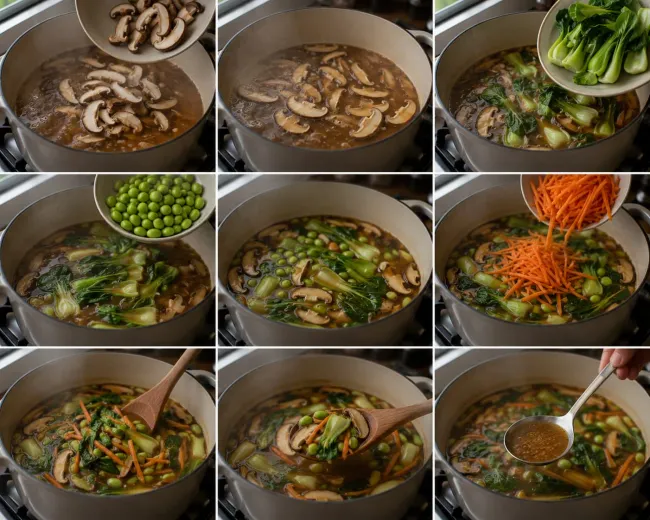
Heat a large soup pot over medium heat and add the sesame oil. Add the minced garlic and grated fresh ginger and cook for 1 minute, stirring constantly until fragrant. Pour in the beef broth and bring to a gentle simmer. Whisk in the white miso paste until fully dissolved, then add the soy sauce and rice vinegar. Allow the broth to simmer gently for 10 minutes — it should become deeply aromatic with a balanced savory flavor.

Cook the Vegetables
Add the sliced shiitake mushrooms to the simmering broth and cook for 5 minutes. Add the bok choy and shelled edamame, and continue cooking for 3–4 minutes, just until the bok choy becomes tender-crisp and the edamame is heated through. Finally, stir in the julienned carrots and cook for 1 additional minute so they remain slightly crisp. Taste the broth and adjust seasoning if needed.
Cook the Noodles & Beef
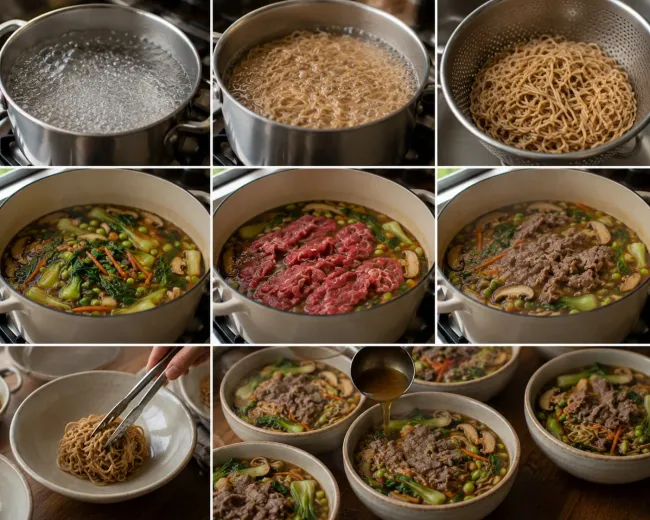
Meanwhile, bring a separate pot of water to a boil and cook the ramen noodles according to the package directions until just al dente. Drain well. While the broth is still gently simmering, add the thinly sliced lean beef directly to the pot and cook for 1–2 minutes, just until the beef is no longer pink and remains tender — avoid overcooking to preserve its delicate texture. Divide the cooked noodles evenly among 4 serving bowls, then ladle the hot broth, beef, and vegetables over the noodles.
Assemble Each Ramen Bowl
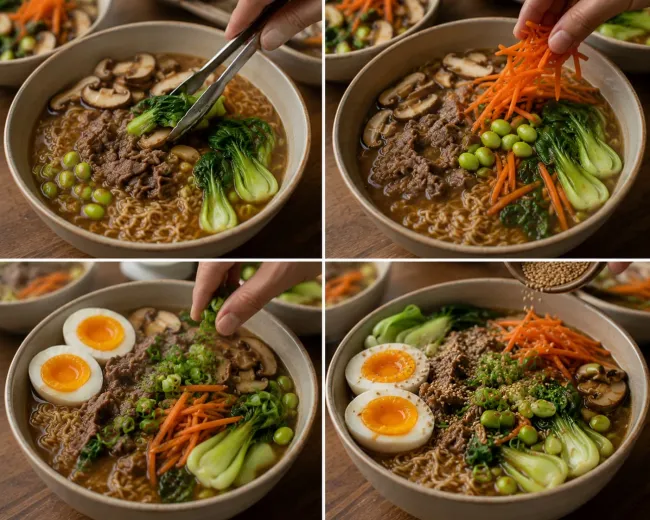
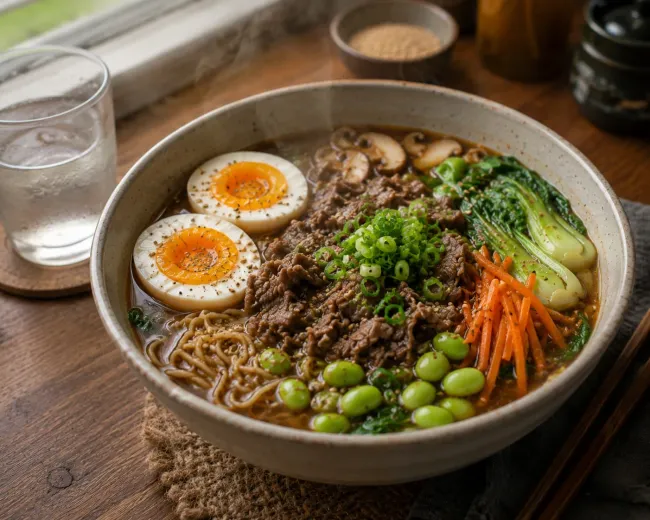
Arrange the toppings neatly over each bowl. Place two halves of one soft-boiled egg on one side, and distribute the bok choy, mushrooms, carrots, and edamame evenly so every bowl has a colorful balance of ingredients. Sprinkle the sliced green onions over the top and finish with the sesame seeds.
Rest Briefly Before Serving
Allow each bowl to rest for 2–3 minutes before serving. This gives the noodles a chance to absorb some of the flavorful broth while remaining pleasantly firm. If desired, add a small splash of hot broth to adjust the consistency before serving — the finished ramen should remain brothy rather than thick, with every ingredient clearly visible.
Serve Immediately
Serve the ramen while piping hot. Every bite should combine tender lean beef, springy noodles, savory umami broth, crisp-tender vegetables, creamy soft-boiled egg, and aromatic toppings. For extra freshness, garnish with additional sliced green onions or a few cilantro leaves if desired.
Chef's Tips
Common Mistakes
Why This Recipe Was Designed This Way
This Balanced & Satisfying Lean Beef Ramen transforms one of Japan's most iconic comfort foods into a balanced, protein-rich meal while preserving everything people love about the original — deep umami broth, tender beef, springy noodles, jammy egg, fresh vegetables, and comforting warmth. Instead of relying on fatty meats, refined instant noodles, seasoning packets high in sodium, and limited vegetables, this version combines lean beef sirloin, high-protein whole-wheat ramen noodles, bok choy, shiitake mushrooms, edamame, carrots, soft-boiled eggs, miso, and reduced-sodium broth. The result is a nourishing bowl naturally rich in complete protein, dietary fiber, iron, vitamin B12, potassium, folate, magnesium, and antioxidant compounds. No single recipe can cause weight loss or guarantee fullness for everyone; however, meals that combine high-quality protein, fiber-rich vegetables, legumes, and broth-based volume may help promote satiety and support weight management as part of a balanced dietary pattern and healthy lifestyle.
Here's the science behind each major ingredient.
🥩 Lean Beef Sirloin
An excellent source of complete protein, helping support the maintenance of muscle mass. Also naturally provides highly bioavailable iron, zinc, selenium, phosphorus, niacin, vitamin B6, and vitamin B12. Protein-rich meals may help increase feelings of fullness compared with meals that contain less protein.
🍜 High-Protein Whole-Wheat Ramen Noodles
Provide complex carbohydrates together with more protein and dietary fiber than traditional refined ramen noodles. The additional fiber contributes to overall dietary quality and can help make meals more satisfying.
🫛 Edamame
Naturally provides plant protein, dietary fiber, folate, magnesium, potassium, iron, and several essential vitamins. Combining animal and plant proteins helps create a balanced, filling meal.
🥬 Bok Choy
Naturally low in calories while providing vitamin C, vitamin K, folate, calcium, potassium, and antioxidant compounds. Its high water content also adds volume to the meal.
🍄 Shiitake Mushrooms
Naturally provide selenium, copper, niacin, riboflavin, and unique umami compounds that enhance flavor without relying on excessive sodium. They also increase the overall volume of the bowl while contributing relatively few calories.
🥚 Eggs
Soft-boiled eggs naturally provide complete protein together with choline, selenium, vitamin D, and vitamin B12. Including eggs increases both nutritional value and satiety.
🥣 White Miso & Reduced-Sodium Broth
White miso contributes authentic Japanese flavor through natural fermentation, while reduced-sodium broth helps control overall sodium intake without sacrificing depth of flavor. Together they create a rich, savory broth that serves as the foundation of the dish.
🌿 Garlic, Ginger & Green Onions
Contribute aromatic compounds that enhance flavor naturally, reducing the need for additional salt while providing freshness and complexity.
🌾 Sesame Seeds
A small sprinkle adds pleasant crunch together with unsaturated fats, calcium, magnesium, and antioxidant plant compounds.
Ingredient Swaps
Need to adapt the recipe? These substitutions maintain the character of the dish.
| Instead of... | Try... |
|---|---|
| Beef sirloin | Chicken breast, turkey breast, shrimp, tofu, or extra edamame |
| Bok choy | Napa cabbage or spinach |
| Shiitake mushrooms | Cremini or button mushrooms |
| White miso | Reduced-sodium soy sauce (slightly less depth) |
What Research Says
Building the broth around a lower-sodium base and lean beef rather than a fattier cut keeps this bowl’s sodium and saturated fat more moderate while still delivering the rich, savory depth ramen is known for.
Estimated Nutrition
Per serving
Includes naturally occurring sugars from vegetables and miso; added sugars are 0 g. Sodium is estimated using reduced-sodium broth and reduced-sodium soy sauce and will vary depending on the specific products used. Nutrition values are estimates calculated from standard ingredient databases. Actual values will vary depending on ingredient brands, noodle selection, and portion sizes.
Storage & Reheating
For the best texture, store the broth and noodles separately. Allow all components to cool for approximately 20–30 minutes before refrigerating. Transfer the broth, beef, and vegetables to an airtight container, and store the cooked noodles in a separate airtight container to prevent them from absorbing too much liquid. Refrigerate for up to 4 days. Reheat the broth gently over medium heat until steaming, then add the noodles just before serving.
Refrigerating
Freezing
The broth, beef, and vegetables freeze well. Allow them to cool completely before transferring to freezer-safe airtight containers and freeze for up to 3 months. For the best texture, prepare fresh noodles and soft-boiled eggs after thawing rather than freezing them. Thaw overnight in the refrigerator and reheat gently on the stovetop.
Reheating
Meal Prep Tips
Cook the broth one day ahead to allow the flavors to deepen. Slice the beef as thinly as possible for quick cooking and maximum tenderness. Prepare the soft-boiled eggs in advance and refrigerate them unpeeled for up to 3 days. Store noodles separately until serving, portion the broth into individual containers for easy lunches, and add the green onions and sesame seeds only just before serving for maximum freshness.
Serving Suggestions
Serve immediately while the broth is hot and the noodles are still al dente, arranging the toppings so each element stays visible.
Frequently Asked Questions
Why cook the noodles separately?
Cooking the noodles separately prevents them from releasing excess starch into the broth and helps preserve their springy texture.
Can I substitute another protein?
Yes. Thinly sliced chicken breast, turkey breast, shrimp, tofu, or extra edamame all work well while maintaining the balanced nature of the recipe.
Why use reduced-sodium broth and soy sauce?
These ingredients help create authentic umami flavor while keeping the overall sodium content lower than many traditional or instant ramen recipes.
Can I prepare the broth ahead of time?
Absolutely. The broth can be prepared 2–3 days in advance and often develops even richer flavor after resting overnight.
Is ramen suitable for weight management?
No single meal causes weight loss. This version emphasizes lean protein, vegetables, legumes, whole grains, and broth-based volume, which may help promote satiety as part of an overall balanced eating pattern and active lifestyle.
What vegetables can I add?
Spinach, napa cabbage, broccoli, snow peas, bean sprouts, baby corn, or zucchini all pair beautifully with this ramen while increasing vegetable intake.
Related Recipes

🍆 Balanced & Satisfying Greek Moussaka
Greece's ultimate layered comfort food reimagined with roasted eggplant, lean beef, and lentils.
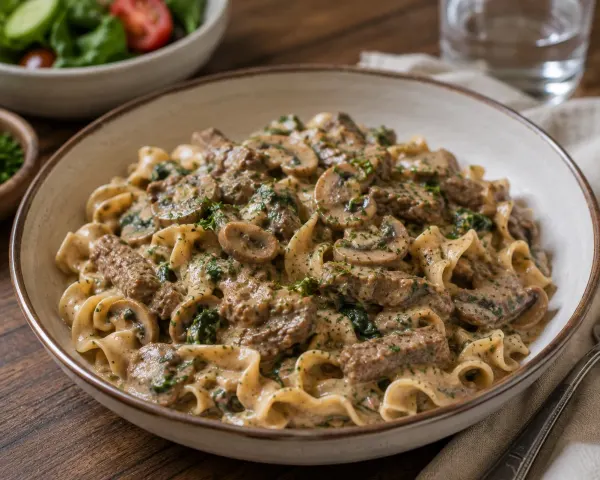
🥩 Everyday Beef Stroganoff
Russia's creamy comfort classic reimagined with lean beef, whole-wheat noodles, and a Greek yogurt mushroom sauce.

🥘 Everyday Seafood Risotto
Italy's creamiest seafood classic reimagined with whole-grain rice, shrimp, scallops, and mussels.