
Onigiri Lunch Box

Onigiri, often called Japanese rice balls, have been enjoyed in Japan for centuries as one of the country's most practical and beloved portable meals. Wrapped in crisp nori and filled with flavorful ingredients, they are simple to prepare, easy to pack, and ideal for lunches, picnics, or quick meals on the go.
This Onigiri Lunch Box combines three savory rice balls with a colorful selection of vegetables, protein-rich tamagoyaki, steamed edamame, fresh fruit, and crisp cucumber salad. Together, these components create a satisfying meal that offers a balance of complex carbohydrates, lean protein, healthy fats, and plenty of vitamins and minerals.
Whether you're preparing lunches for work, school, or weekend adventures, this Japanese-inspired lunch box delivers convenience, nutrition, and beautiful presentation in every bite.
Recipe Information
| Prep Time | 25 minutes |
| Cook Time | 20 minutes |
| Total Time | 45 minutes |
| Servings | 2 Bento Boxes |
| Difficulty | Medium |
| Calories | ~540 kcal per bento |
Quick Highlights
- ✅ Traditional Japanese-inspired lunch
- ✅ Portable and meal-prep friendly
- ✅ Rich in vegetables
- ✅ High in protein
- ✅ Balanced lunch
- ✅ Colorful presentation
- ✅ Great for work or school
Ingredients
Makes 2 Bento Boxes
















Step-by-Step Instructions
Prepare the Tuna Filling
Drain the tuna thoroughly.
In a medium bowl, combine:
Tuna
Greek yogurt
Low-sodium soy sauce
Finely sliced green onions
Sesame seeds
Mix gently until creamy and evenly combined.
Set aside while preparing the rice.

Prepare the Rice
Use freshly cooked short-grain brown rice that has cooled slightly.
The rice should still be warm enough to stick together comfortably.
If desired, lightly season the rice with a pinch of salt.
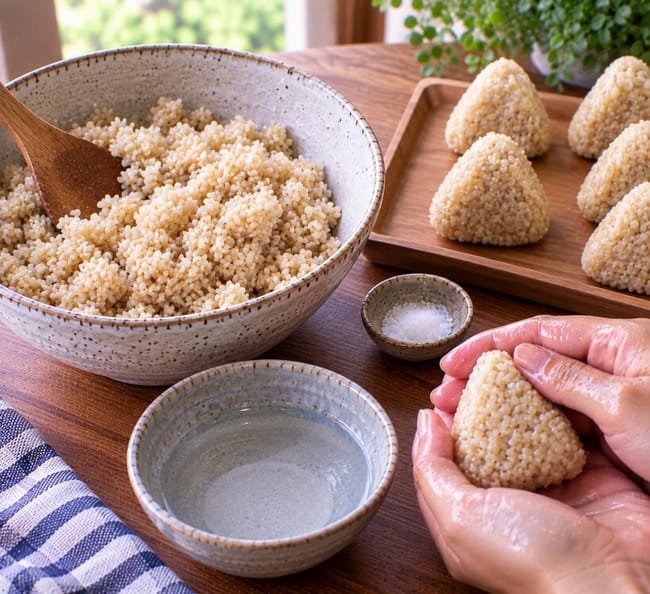
Keep a small bowl of water nearby to moisten your hands while shaping the rice.
Shape the Onigiri
Place a portion of warm rice into one hand.
Create a small indentation in the center.
Add about 1 tablespoon of the tuna filling.
Cover with another small amount of rice.
Gently press and shape into a triangle using both hands.
Repeat until you have 6 onigiri.

Wrap with Nori
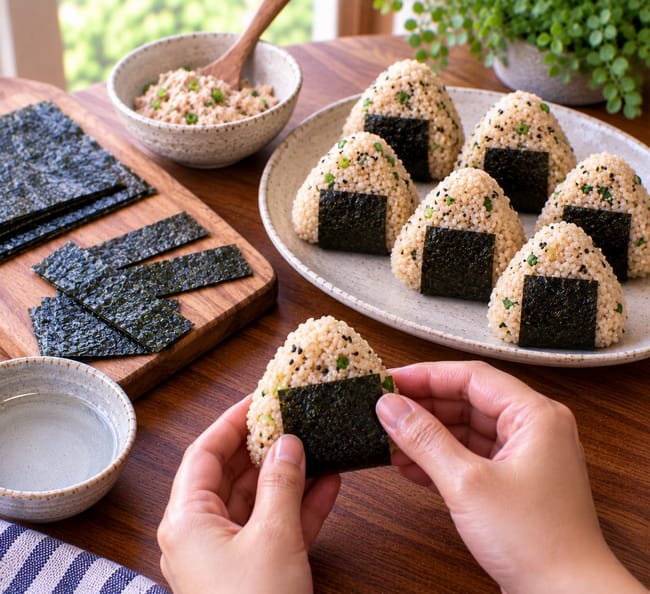
Cut the nori sheets into strips or rectangles.
Wrap one piece around each rice ball.
Press gently so the nori adheres to the warm rice.
If preparing the lunch several hours in advance, pack the nori separately and wrap just before eating to maintain its crisp texture.
Prepare the Side Dishes
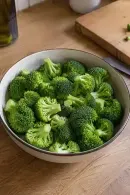
Steam the broccoli until crisp-tender.
Cook the edamame according to the package instructions.
Prepare the tamagoyaki using the eggs.
Slice the cucumber and toss it with:
Rice vinegar
Sesame oil
Wash the cherry tomatoes and prepare the fruit.
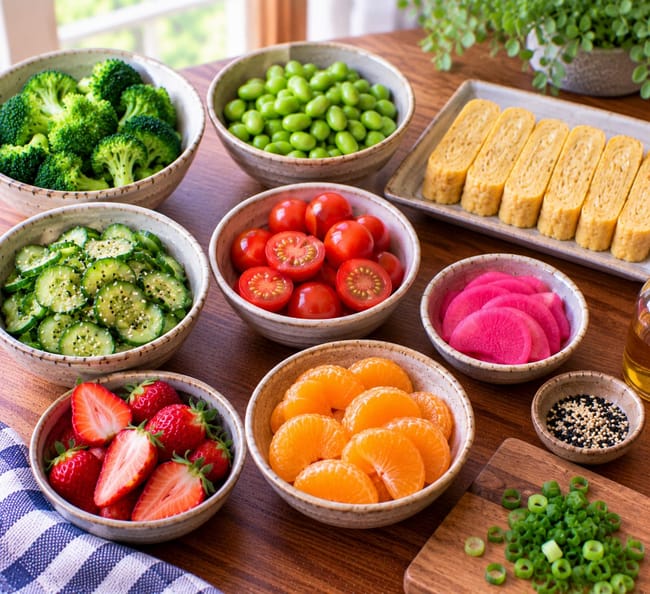
Assemble the Bento
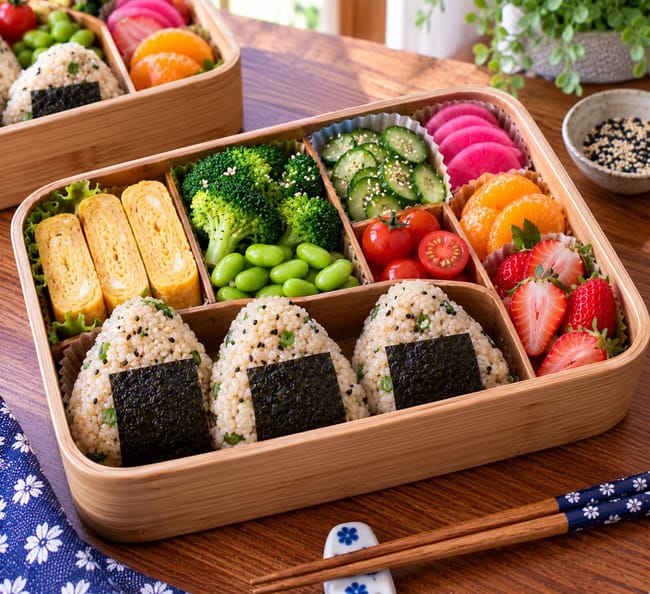
Arrange each lunch box with:
3 onigiri
Tamagoyaki slices
Broccoli
Edamame
Cucumber salad
Cherry tomatoes
Pickled radish
Mandarin segments
Strawberries
Separate each component neatly for an organized presentation.
Add the Final Garnishes
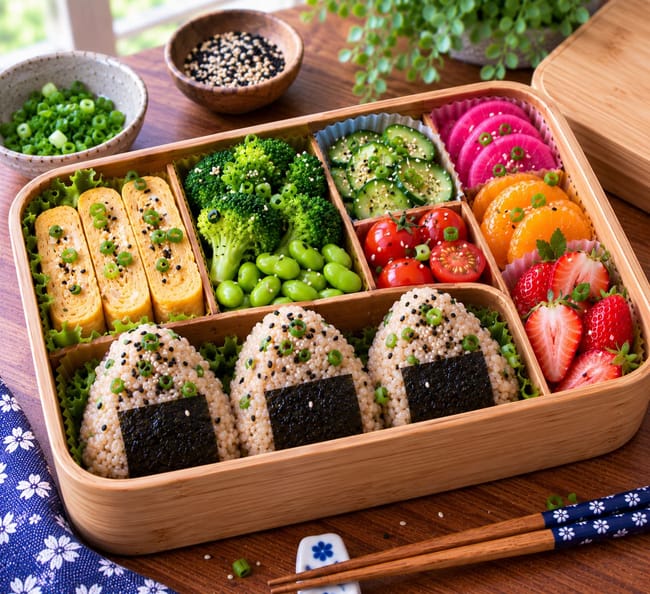
Sprinkle:
Black sesame seeds over the rice balls
Green onions over the tamagoyaki and vegetables if desired
Check that every compartment is neatly arranged before closing the lid.
Pack and Serve
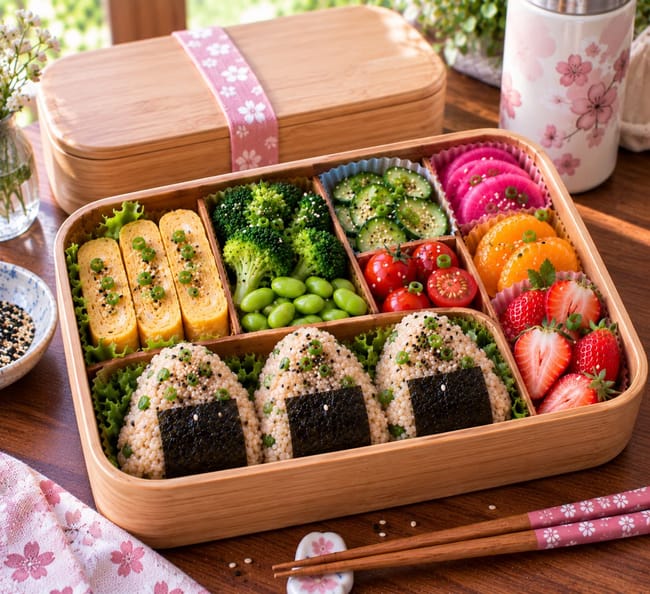
Seal the lunch box once all ingredients have cooled completely.
Enjoy it:
At work
At school
During travel
On a picnic
As a convenient meal-prep lunch
Every bite offers a balanced combination of:
Whole grains
Lean protein
Fresh vegetables
Fruit
Sea vegetables
Healthy fats
This Onigiri Lunch Box delivers authentic Japanese-inspired flavors in a practical, portable meal that's both nourishing and beautifully presented.
Chef's Tips
Common Mistakes
Why This Recipe Was Designed This Way
Onigiri have been a staple of Japanese cuisine for centuries because they are portable, satisfying, and easy to prepare. Traditionally, they combine rice with a flavorful filling and a sheet of nori, creating a compact meal that travels well.
This healthier lunch box builds on that tradition by pairing the onigiri with vegetables, fruit, eggs, and legumes to create a balanced meal containing complex carbohydrates, lean protein, healthy fats, and plenty of colorful produce.
Each ingredient contributes to both nutrition and authentic Japanese-inspired flavor.
🍚 Short-Grain Brown Rice
Short-grain brown rice provides the slightly sticky texture needed for shaping while retaining the bran layer found in whole grains. It contributes: Complex carbohydrates Dietary fiber Magnesium Manganese B vitamins Its slow-digesting carbohydrates help provide sustained energy throughout the day.
🌊 Nori
Nori gives onigiri their unmistakable Japanese character. It naturally provides: Iodine Trace minerals Small amounts of dietary fiber Umami flavor Its crisp texture contrasts beautifully with the tender rice.
🐟 Tuna
Tuna creates a light yet satisfying filling. It contributes: High-quality protein Selenium Vitamin B12 Naturally occurring omega-3 fatty acids Using Greek yogurt instead of mayonnaise keeps the filling creamy while increasing protein.
🥣 Greek Yogurt
Greek yogurt replaces traditional mayonnaise to create a lighter filling. It provides: Complete protein Calcium Creamy texture Pleasant tanginess This simple swap reduces saturated fat while maintaining a rich mouthfeel.
🫛 Edamame
Edamame adds another source of protein while increasing the vegetable content of the lunch. It contributes: Plant protein Dietary fiber Folate Iron Potassium Its bright green color also enhances the visual appeal of the bento.
🥚 Tamagoyaki
The Japanese rolled omelet adds softness and gentle sweetness. It supplies: Complete protein Choline Vitamin B12 Vitamin D Healthy fats Its delicate texture complements the firmer rice balls.
🥦 Broccoli
Steamed broccoli contributes: Vitamin C Vitamin K Folate Dietary fiber Naturally occurring antioxidants Its crisp texture provides contrast throughout the meal.
🍊 Mandarin & Strawberries
Fresh fruit completes the lunch with natural sweetness. Together they provide: Vitamin C Dietary fiber Antioxidants Refreshing flavor Ending the meal with fruit follows the balanced philosophy of many traditional bento lunches.
Ingredient Swaps
Need to customize your Onigiri Lunch Box? These substitutions maintain the balanced Japanese-inspired character while accommodating different preferences.
| Instead of... | Try... |
|---|---|
| Tuna | Baked salmon, shredded chicken, or mashed tofu |
| Greek yogurt | Plain skyr |
| Short-grain brown rice | Short-grain white rice |
| Nori | Roasted seaweed snack sheets |
| Edamame | Green peas |
| Broccoli | Steamed asparagus |
| Mandarin orange | Kiwi or grapes |
| Strawberries | Blueberries |
| Sesame oil | Avocado oil |
| Pickled radish | Pickled cucumber |
What Research Says
The ingredients in this recipe were selected because they are commonly included in balanced dietary patterns that emphasize whole grains, lean protein, vegetables, fruits, and minimally processed foods. The information below summarizes current nutrition research and is intended for educational purposes only. It should not be interpreted as medical advice.
🍚 Short-Grain Brown Rice
Brown rice retains its bran and germ, making it a whole grain that naturally provides dietary fiber, magnesium, manganese, and B vitamins. Its complex carbohydrates provide steady energy, making it an excellent foundation for portable meals like onigiri.
- 100% whole grain.
- Good source of dietary fiber.
- Provides magnesium and manganese.
- Supports sustained energy release.
🌊 Nori
Nori is an edible sea vegetable traditionally used in Japanese cuisine. It naturally provides iodine along with small amounts of dietary fiber and minerals.
- Natural source of iodine.
- Contains trace minerals.
- Low in calories.
- Adds umami flavor without excess sodium.
🐟 Tuna
Tuna provides lean, high-quality protein while naturally supplying selenium, vitamin B12, niacin, and omega-3 fatty acids. Choosing tuna packed in water helps reduce unnecessary added fat.
- Excellent source of lean protein.
- Rich in selenium.
- Provides vitamin B12.
- Naturally contains omega-3 fatty acids.
🥣 Greek Yogurt
Greek yogurt is naturally rich in protein while providing calcium and beneficial dairy nutrients. Replacing mayonnaise with Greek yogurt increases protein while reducing saturated fat.
- High in protein.
- Excellent calcium source.
- Lower in saturated fat than mayonnaise.
- Supports balanced dietary patterns.
🫛 Edamame
Edamame combines plant protein with dietary fiber, folate, magnesium, and iron. Its combination of protein and fiber helps create a satisfying meal.
- Rich in plant protein.
- Provides dietary fiber.
- Good source of folate.
- Naturally contains iron and magnesium.
🍓 Strawberries & 🍊 Mandarin
Fresh fruit adds natural sweetness while contributing vitamin C, fiber, water, and antioxidants. Including fruit helps create nutritional balance within the lunch box.
- Excellent source of vitamin C.
- Naturally rich in antioxidants.
- Provides dietary fiber.
- Contributes hydration due to high water content.
Estimated Nutrition
Per serving
Nutritional values are estimates calculated from standard food composition databases. Actual values may vary depending on ingredient brands, preparation methods, and serving sizes. For the most accurate nutritional analysis, calculate values using the exact ingredients you use.
Storage & Reheating
The Onigiri Lunch Box is ideal for meal prep and can be prepared in advance while maintaining excellent flavor and texture.
Refrigerating
Allow all cooked ingredients to cool completely before assembling.
Store the lunch box in an airtight container in the refrigerator for up to 3 days.
For the best texture, store the nori separately and wrap the onigiri just before eating.
Freezing
The onigiri can be frozen individually for up to 2 months.
Wrap each rice ball tightly in plastic wrap, then place them in a freezer-safe container.
Fresh vegetables, fruit, and cucumber salad should not be frozen.
Reheating
Microwave: Warm only the onigiri (without the nori) for 45–60 seconds until heated through. The vegetables, fruit, and cucumber salad are best enjoyed chilled.
Serving Cold: Onigiri are commonly enjoyed at room temperature, making them ideal for school lunches, office meals, travel, and picnics.
Meal Prep Tips
This lunch box is perfect for preparing several meals ahead.
For the best results:
Cook the rice up to 3–4 days in advance.
Prepare the tuna filling up to 2 days ahead.
Make the tamagoyaki the evening before.
Steam the broccoli slightly until crisp-tender.
Slice the fruit shortly before serving for maximum freshness.
Pack the nori separately whenever possible.
Serving Suggestions
This balanced lunch pairs beautifully with light Japanese-inspired sides and beverages.
Miso Soup: Serve with a warm bowl of miso soup for a comforting and traditional meal.
Green Tea: Unsweetened green tea complements the savory flavors while providing a refreshing drink.
Seaweed Salad: A light seaweed salad adds minerals, texture, and authentic Japanese flavor.
Fresh Fruit: Additional kiwi, grapes, or blueberries make excellent seasonal additions.
Steamed Edamame: A small bowl of extra edamame sprinkled with sea salt provides additional plant protein for heartier appetites.
Frequently Asked Questions
Can I make the onigiri the night before?
Yes. Store them in the refrigerator and wrap the nori separately until ready to eat.
Can I use white rice?
Absolutely. Traditional onigiri are often made with short-grain white rice, though brown rice provides more fiber and whole-grain nutrients.
Why use Greek yogurt instead of mayonnaise?
Greek yogurt creates a creamy filling while increasing protein and reducing saturated fat.
Can I make this vegetarian?
Yes. Replace the tuna with mashed tofu, seasoned edamame, or mashed chickpeas.
Why are my onigiri falling apart?
The rice may be too cool or too dry. Warm, slightly sticky rice is much easier to shape successfully.
Can children enjoy this recipe?
Yes. The mild flavors, bite-sized portions, and balanced ingredients make it an excellent lunch for children and adults alike.
Should I refrigerate the lunch box?
Yes. Because it contains tuna, eggs, and dairy, refrigeration is recommended until serving.
Can I prepare multiple lunch boxes?
Absolutely. This recipe is specifically designed for batch meal preparation and stores well for several days.
Why keep the nori separate?
Keeping the nori dry preserves its signature crisp texture until serving.
Is this a balanced lunch?
Yes. The combination of whole grains, lean protein, vegetables, fruit, and healthy fats creates a well-rounded meal suitable for everyday lunches.
Related Recipes
If you enjoyed this Onigiri Lunch Box, you may also love these recipes from our Bento & Lunch Boxes collection.
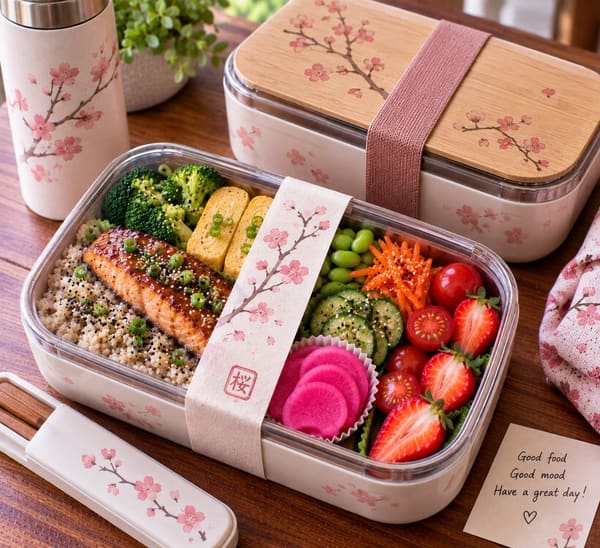
🇯🇵 Japanese Bento
A colorful traditional Japanese lunch featuring teriyaki salmon, brown rice, tamagoyaki, fresh vegetables, and fruit.
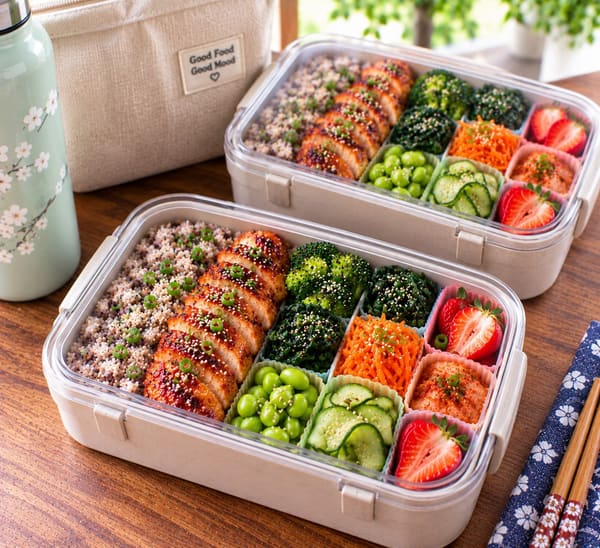
🍗 Korean Chicken Bento
Tender Korean-inspired chicken served with wholesome grains, crisp vegetables, and flavorful side dishes.
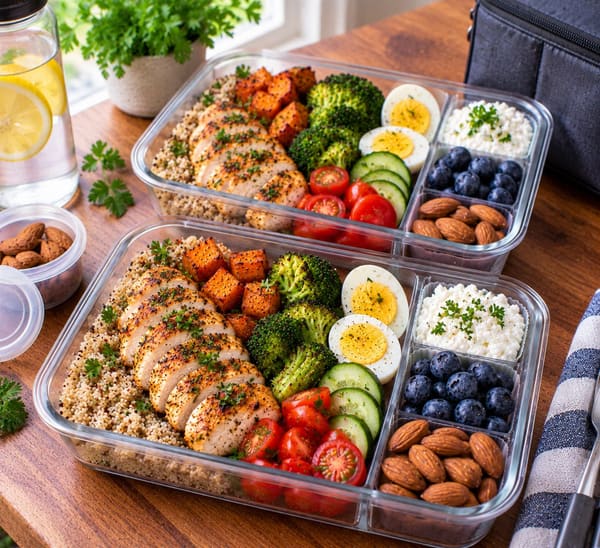
🥪 High-Protein Lunch Box
A protein-packed lunch combining lean meats, eggs, whole grains, and colorful vegetables for lasting energy.