
Balanced Dorayaki with Naturally Sweetened Anko
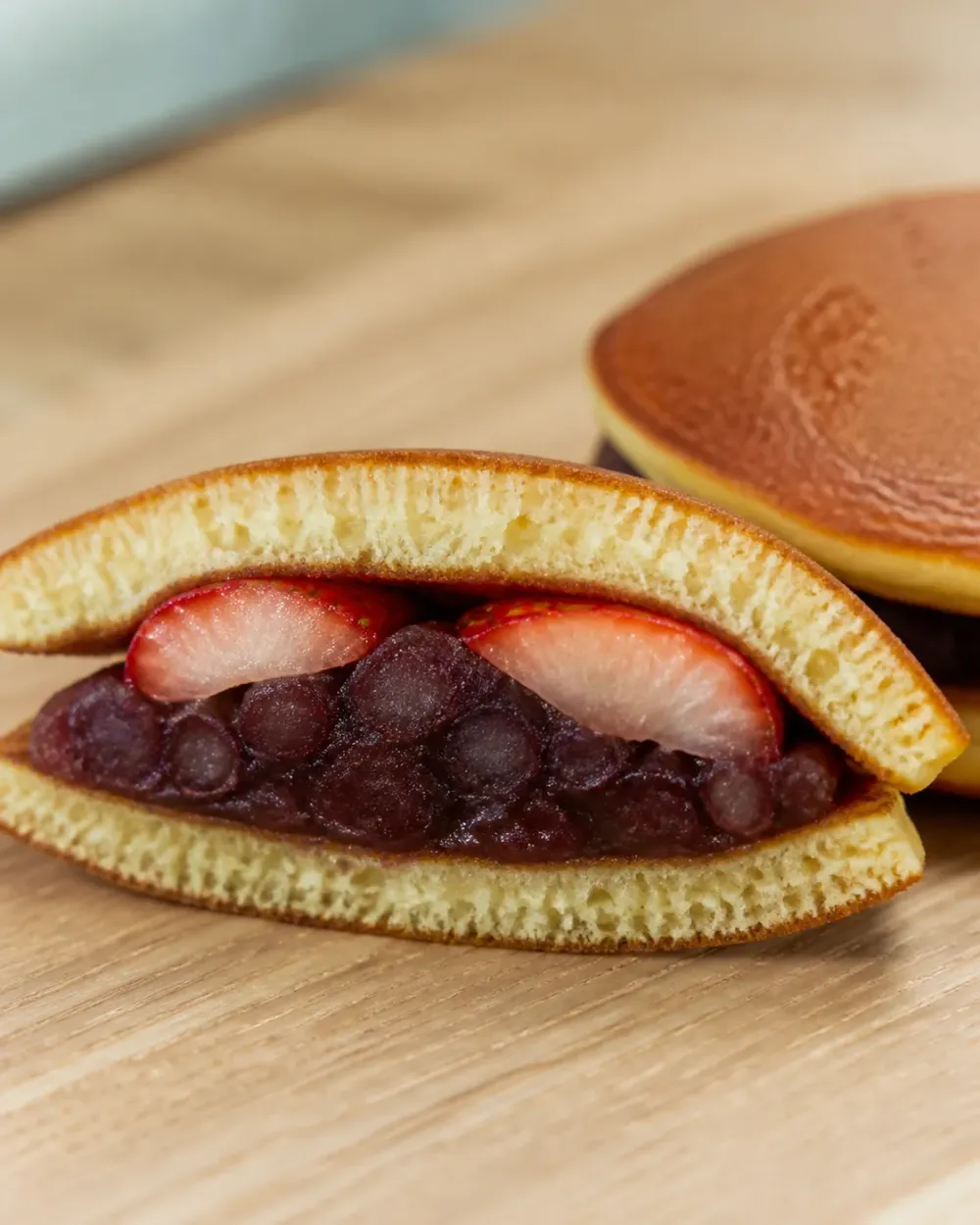
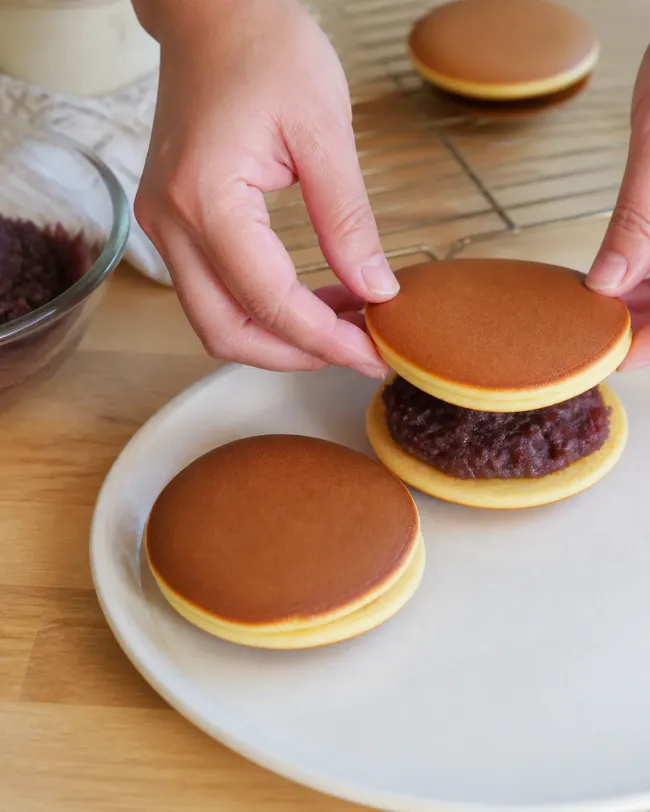
Dorayaki has the reassuring simplicity of a sandwich and the visual appeal of a polished café pastry. Two small, evenly browned pancakes enclose a mound of sweet red-bean paste, giving each bite a soft exterior, creamy center, and gentle roasted-bean flavor. It feels indulgent without requiring frosting, deep-frying, or a complicated plated presentation.
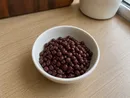
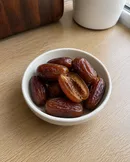
This balanced version keeps the defining anko rather than replacing it with chocolate spread or artificial protein filling. Cooked adzuki beans remain the main ingredient. Soft dates supply part of the sweetness and a caramel note, while a measured amount of sugar gives the paste the familiar gloss and clean finish that dates alone cannot provide.
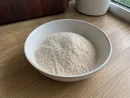
The pancakes combine whole-wheat pastry flour with cake flour, preserving more fiber than an entirely refined batter while keeping the tender flexibility needed to curve around the filling. One serving is one assembled dorayaki, made from two pancakes and about 55 g filling — a genuine café treat with every ingredient carrying a stated job and quantity.
Recipe Information
| Prep Time | 35 minutes |
| Cook Time | 35 minutes |
| Total Time | About 1 hour 55 minutes, including cooling and resting |
| Servings | 8 dorayaki |
| Difficulty | Intermediate |
| Calories | ~245 kcal each |
Quick Highlights
- ✅ Adzuki beans remain the star filling
- ✅ Dates share the sweetening work with real sugar
- ✅ Whole-wheat pastry flour for extra fiber
- ✅ Honey gives pancakes their signature aroma
- ✅ Nearly dry pan for smooth amber sides
- ✅ Eight clearly defined portions
- ✅ Ready in under two hours
Ingredients
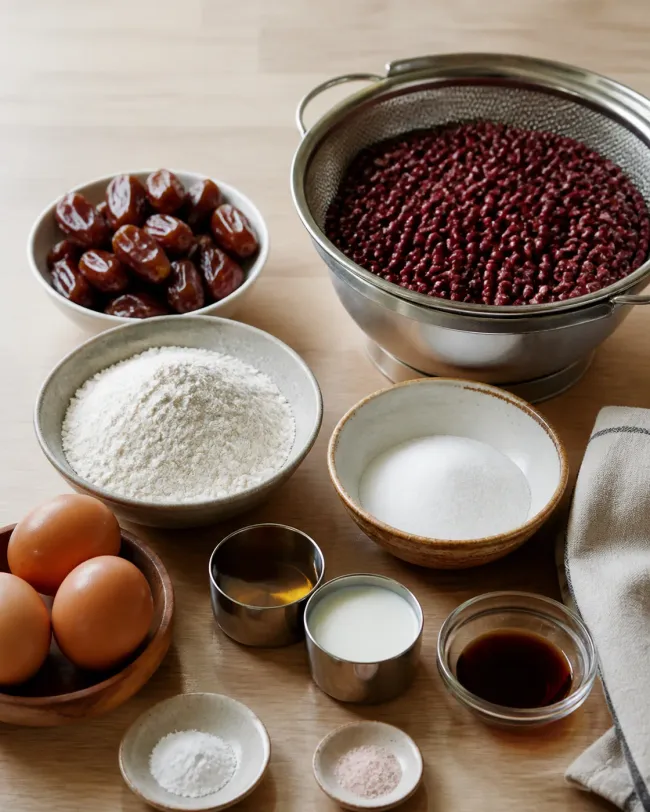
Makes 8 filled dorayaki (16 small pancakes)







Step-by-Step Instructions
Prepare the Beans, Dates, and Measured Components
Drain the cooked adzuki beans, reserving 120 ml cooking liquid or water. Test several beans between your fingers; they should crush without a firm center. Chop the pitted dates finely. Combine both flours, baking powder, and half the salt in a bowl, then sift once. Bring eggs and milk toward room temperature. Slice the strawberries, cover, and refrigerate.
Cook the Reduced-Sugar Date Anko
Place beans, dates, superfine sugar, half the salt, and 60 ml reserved liquid in a wide saucepan. Bring to a gentle simmer over medium-low heat. Mash approximately two-thirds of the beans, leaving some recognizable skins for texture. Cook 12 to 16 minutes, stirring, until a spatula drawn through the paste leaves a path for two seconds.

Cool and Portion the Filling
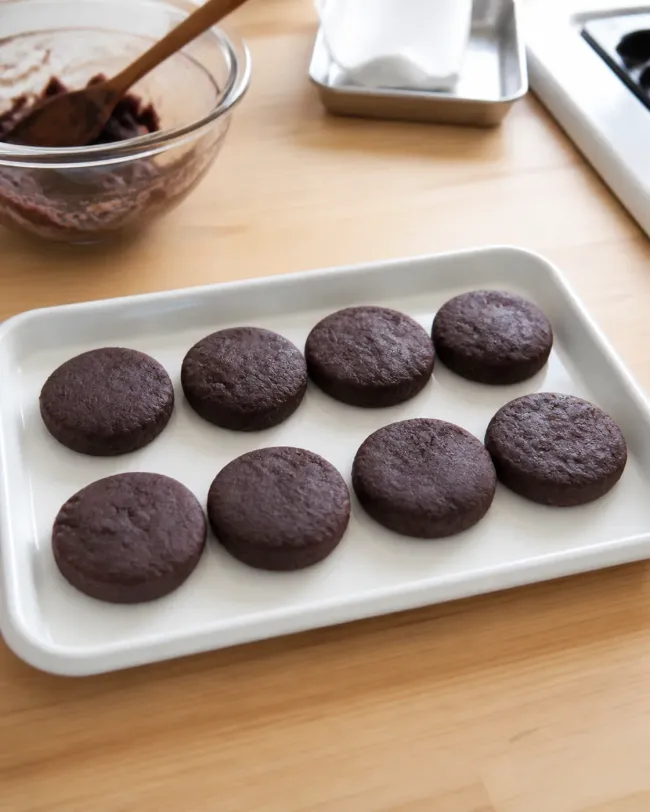
Spread the hot anko in a shallow dish so steam can escape. Press parchment directly onto its surface once steaming slows, then cool 20 minutes at room temperature and refrigerate 15 to 20 minutes. Weigh eight portions of approximately 55 g each and shape them into low disks with a damp spoon.
Whisk the Honey Egg Base
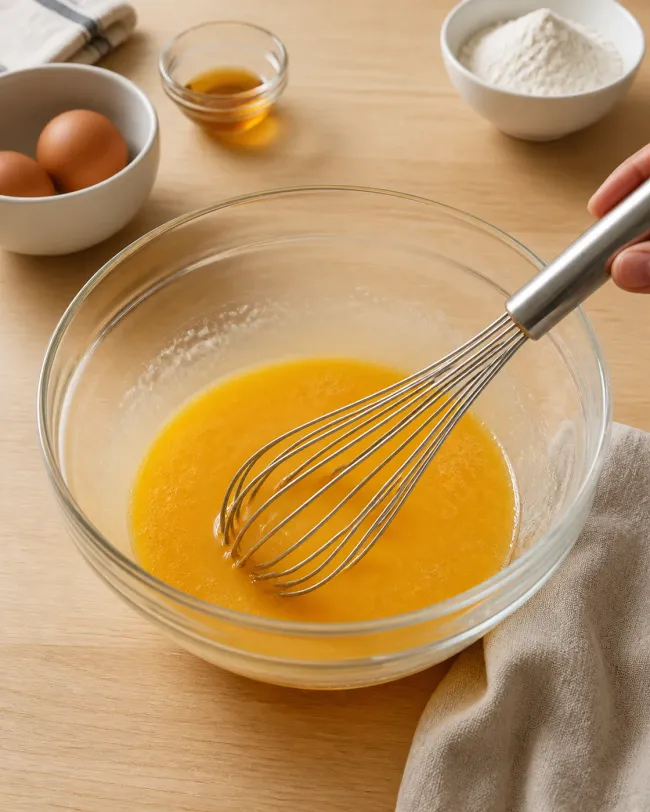
In a medium bowl, whisk eggs for 45 seconds until combined and slightly lighter. Add honey and vanilla, then whisk another minute until the honey dissolves and the mixture falls in a smooth ribbon. Pour in milk and blend gently.
Make, Rest, and Adjust the Batter
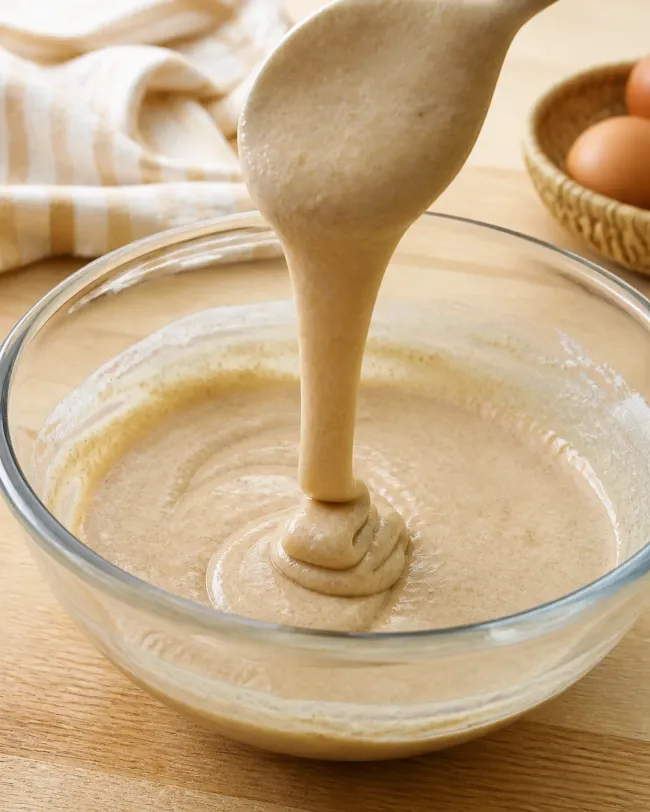
Add the sifted flour mixture to the egg base in two portions, whisking just until no dry patches remain. Cover and rest 15 minutes so whole-grain bran hydrates. Stir in 60 ml water. Lift a spoon: batter should fall in a thick continuous ribbon and spread slowly into a circle.
Cook the Smooth First Sides
Heat a flat nonstick skillet over medium-low for four minutes. Wipe it with oil until almost dry. For each pancake, pour about 35 g batter from one point to form an 8 to 9 cm circle. Cook 70 to 90 seconds, until small bubbles appear and edges look set, then flip once and cook the second side 25 to 35 seconds.

Cool Covered and Match the Pancake Pairs
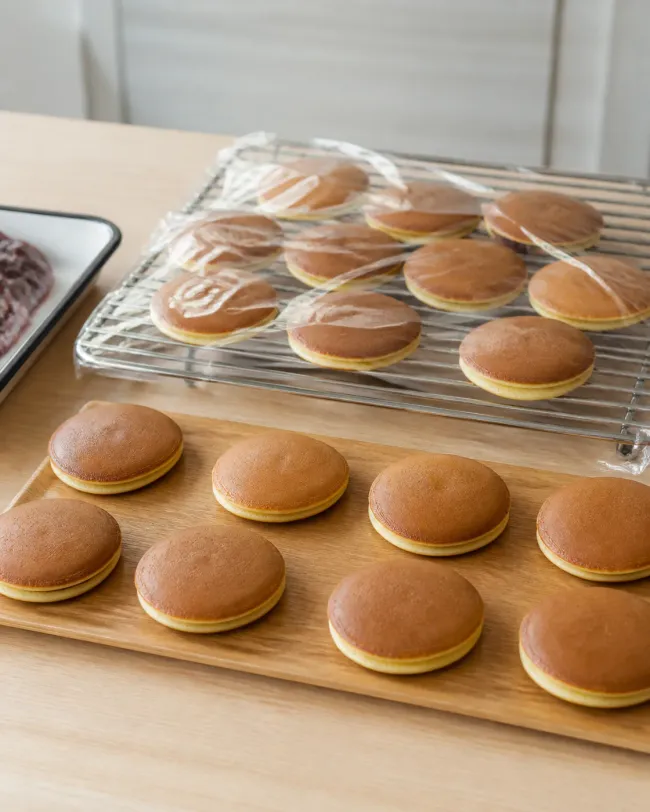
Transfer each pancake to a clean towel with its dark side up, then cover immediately with a second towel or parchment. Once all sixteen rounds are cool, pair similar diameters together, placing the smoother, darker faces outward.
Fill, Seal, Rest Briefly, and Serve
Set one pancake pale-side up. Place a 55 g anko disk in the center. Cover with its partner, dark side outward. Press gently around the rim while rotating. Wrap each dorayaki in parchment and rest 10 minutes. Serve one per person with about 20 g strawberries.
Chef's Tips
Common Mistakes
Why This Recipe Was Designed This Way
This recipe is not medical treatment and cannot promise weight loss or reduced disease risk. It is a portion-conscious version of a beloved Japanese café treat that keeps adzuki beans central while sharing the sweetening work with dates and using whole-wheat pastry flour for extra fiber. Its suitability depends on the complete diet and individual needs.
🫘 Adzuki Beans Remain the Filling
The center is built from beans rather than frosting, contributing plant protein, fiber, folate, iron, and potassium.
🍯 Dates Share the Sweetening Work
Dates bring sweetness, moisture, and caramel flavor along with some fiber, allowing less refined sugar while preserving an enjoyable filling.
🌾 Whole-Grain Flour Used Strategically
Whole-wheat pastry flour makes up most of the flour blend, while cake flour protects the tender, flexible texture needed to fold around the filling.
🍳 Cooking Uses Little Added Fat
Dorayaki is cooked on a nearly dry nonstick surface, not fried, keeping added oil to a measured minimum.
📏 One Complete Unit Defines the Portion
Two pancakes and one measured filling portion form a complete, easy-to-repeat serving.
Ingredient Swaps
Need to customize this Balanced Dorayaki? These substitutions preserve the soft, springy character while adapting the recipe to different preferences.
| Instead of... | Try... |
|---|---|
| Whole-wheat pastry flour | Standard whole-wheat flour (may need more water) |
| Cake flour | All-purpose flour |
| Cooked adzuki beans | No-salt-added canned adzuki, drained and rinsed |
| Soft dates | Date paste or date syrup, adjusted to taste |
| Mild honey | Maple syrup, in a similar quantity |
| Lower-fat milk | Unsweetened soy milk |
| Fresh strawberries | Raspberries, mandarin segments, or sliced pear |
| Neutral oil | Rice-bran or avocado oil |
What Research Says
The ingredients in this recipe were selected because they reflect common principles in balanced dessert patterns that combine legumes, whole grain, and measured sweeteners. The information below summarizes current nutrition research and is intended for educational purposes only.
🫘 Legumes
Adzuki beans contribute plant protein, fiber, folate, and iron, adding nutritional substance to a dessert filling.
- Good source of plant protein and dietary fiber.
- Contributes folate and iron uncommon in most desserts.
- Associated with improved satiety when included in meals.
🌾 Whole Grains
Whole-wheat pastry flour provides more fiber and micronutrients than refined flour when used as a measured base.
- Associated with improved digestive health.
- Contributes to steadier post-meal energy.
- Useful as a moderate-portion carbohydrate base.
🍯 Natural Sweeteners
Dates and honey provide sweetness along with trace minerals and fiber compared to refined sugar alone.
- Dates contribute fiber and potassium alongside natural sugars.
- Honey provides antioxidant compounds in small amounts.
- Both remain forms of added sugar requiring portion awareness.
🥚 Eggs
Eggs provide complete protein, structure, and the springy texture central to dorayaki's characteristic bite.
- Excellent source of complete, high-quality protein.
- Naturally rich in choline.
- Central to the pancake's structure and rise.
Estimated Nutrition
Per serving
*Estimate for one of eight evenly filled dorayaki with the stated strawberries, assuming minimal retained pan oil. Bean brand, date variety, and filling division all change the result.
Storage & Reheating
Cool every component before assembly. Keep filled dorayaki individually wrapped in an airtight container in the refrigerator for up to three days, with parchment between layers.
Refrigerating
Store in an airtight container for up to three days. Store strawberries separately and add them only at serving.
Freezing
Freeze fully cooled, filled dorayaki individually wrapped in a rigid container for up to one month. Thaw overnight in the refrigerator before serving.
Reheating
Microwave: Unwrap one dorayaki and microwave for 8 to 10 seconds at moderate power, then rest one minute since the anko can become hotter than the surface.
Room Temperature: Alternatively, leave the wrapped serving out for 15 minutes. Avoid a toaster, which dries exposed edges and can force filling outward.
Meal Prep Tips
Prepare anko up to three days ahead and refrigerate in a sealed container, or freeze measured portions for one month. Cook pancakes on the serving day for the best aroma and flexibility.
Serving Suggestions
This Balanced Dorayaki pairs beautifully with simple, fresh accompaniments.
Fresh Strawberries: Sliced strawberries add acidity, color, and a juicy contrast to the creamy bean filling.
Unsweetened Green Tea: A warm, unsweetened tea cuts through the sweetness and echoes the dessert's Japanese café origins.
Mandarin Segments: A few segments alongside offer a bright citrus alternative to strawberries.
Light Whipped Greek Yogurt: A small spoonful on the side adds tang without altering the dorayaki itself.
Sparkling Water with Yuzu: A light, citrusy drink refreshes the palate between bites.
Frequently Asked Questions
Is dorayaki traditionally made with red-bean paste?
Yes. The defining filling is commonly anko made from adzuki beans and sugar, enclosed between two small pancakes. This recipe preserves that identity while using dates for part of the sweetness and whole-wheat pastry flour for much of the batter.
Can I use canned adzuki beans?
Yes, provided they are unsweetened and very tender. Drain and rinse them, reserve plain water for adjustment, and check the sodium label.
Why is my anko runny after cooling?
The filling may contain too much liquid or may not have cooked long enough. Return it to a wide pan over low heat and stir until a spatula path remains briefly visible.
Why are my pancakes spotted instead of evenly brown?
Visible oil droplets or excessive heat create mottling. Wipe a neutral oil film until the skillet looks almost dry and use medium-low heat throughout.
Can I make dorayaki without eggs?
Eggs provide substantial structure, spring, and emulsification, so a direct omission is unreliable. Use a dedicated egg-free recipe rather than improvising for someone with an allergy.
Can I remove all added sugar?
Dates can sweeten the filling, but removing all sugar and honey changes anko gloss, pancake browning, and familiar flavor. "Naturally sweetened" does not automatically mean sugar-free.
Can I use another filling?
Sesame paste, chestnut, or custard fillings are possible café variations, but they change storage safety, allergens, and nutrition. Keep anko central for the recognized dorayaki experience.
Will this recipe lower cholesterol or guarantee weight loss?
No single recipe guarantees weight loss, lower blood cholesterol, or improved glucose. Beans, whole grain, and a defined portion can fit a thoughtful eating pattern, but the dessert still contains carbohydrates and added sugar.
Related Recipes
If you enjoyed this Balanced Dorayaki, you may also like these recipes from our Japanese Café Desserts collection.
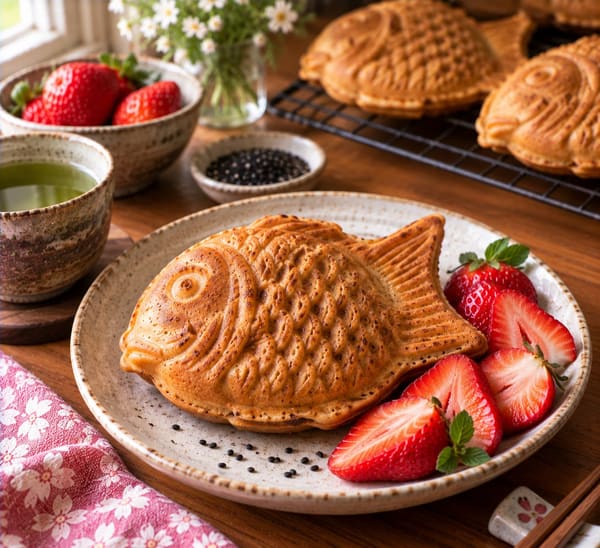
🍡 Balanced Taiyaki with Black Sesame Anko
Crisp-edged fish-shaped cakes with a tender whole-grain batter and the same creamy adzuki filling.
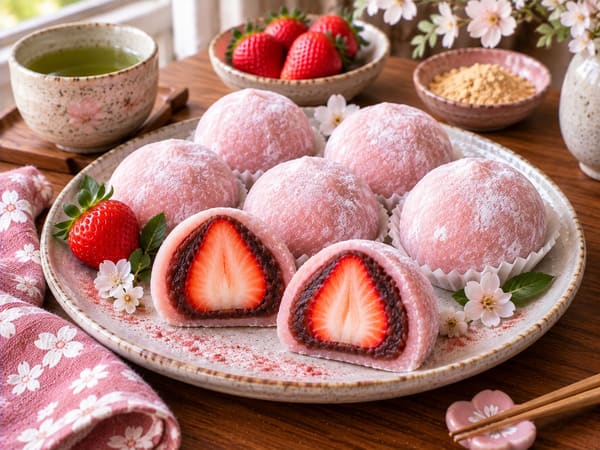
🍓 Balanced Ichigo Daifuku with Date-Sweetened Anko
Juicy whole strawberries wrapped in creamy adzuki paste and a tender pink mochi shell.
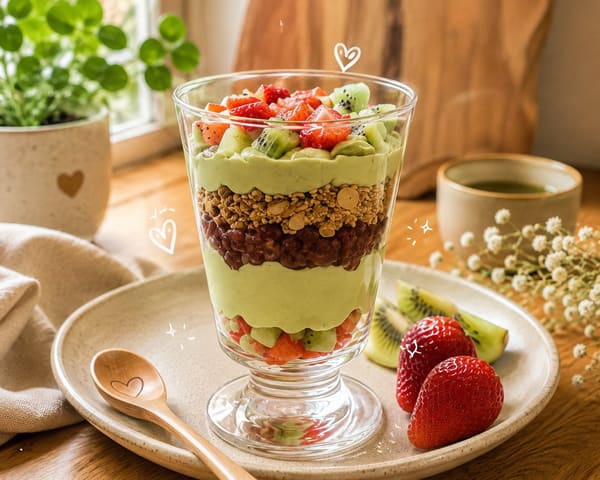
🍵 🍵 Matcha Parfait
A layered café dessert with vivid tea cream, fruit, crisp oat clusters, and soft rice dumplings.