
Balanced Ichigo Daifuku with Date-Sweetened Anko

Ichigo daifuku layers a juicy whole strawberry, creamy red-bean paste, and tender pink mochi, creating vivid contrast in one compact Japanese confection. Classic recipes may use generously sweetened anko and a mochi dough containing enough sugar to stay soft for display.
This version keeps the strawberry, adzuki, and glutinous-rice identity while making the sweetness more deliberate. Very soft dates contribute body and caramel notes to the bean paste, a modest amount of honey rounds its flavor, and only a restrained quantity of superfine sugar enters the mochi. Freeze-dried strawberry powder colors and flavors the dough without adding excess free liquid.
One daifuku provides a complete café-style serving because it contains temperature, texture, acidity, sweetness, and visual drama in a single compact piece. Mochi requires organized hands — once cooked, the dough is extremely sticky and easiest to divide while warm, so plan production near serving time.
Recipe Information
| Prep Time | 45 minutes, plus cooling |
| Cook Time | 20 minutes |
| Total Time | About 1 hour 35 minutes |
| Servings | 8 medium ichigo daifuku |
| Difficulty | Intermediate |
| Calories | ~190 kcal each |
Quick Highlights
- ✅ A whole strawberry forms the center of each piece
- ✅ Adzuki beans remain the main filling
- ✅ Dates and honey share the sweetening work
- ✅ Freeze-dried strawberry powder colors the wrapper naturally
- ✅ Thin, weighed mochi shell for controlled texture
- ✅ Eight clearly defined portions
- ✅ Best assembled the day it is served
Ingredients
Makes 8 medium daifuku













Step-by-Step Instructions
Prepare the Strawberries and Shaping Station
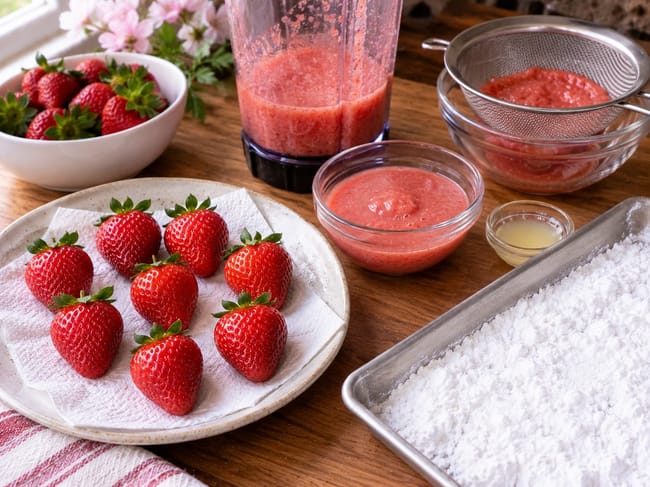
Choose eight similarly sized strawberries for the centers. Wash them, remove leaves without cutting deeply, and pat every surface completely dry. Blend the remaining fruit until smooth and press through a fine sieve. Measure 80 g purée and mix with half the lemon juice. Line a tray with parchment and spread potato starch in a wide shallow tray.
Cook the Date-Sweetened Anko
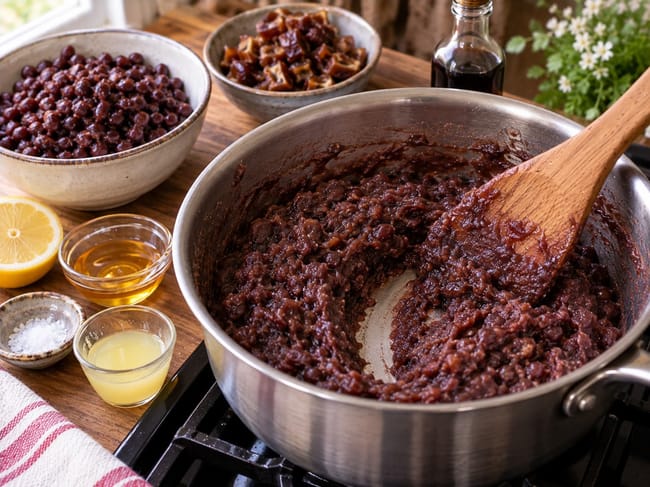
Combine drained adzuki, chopped dates, honey, half the lemon juice, a pinch of salt, and 50 ml water in a medium saucepan. Cook over medium-low heat for 10 to 14 minutes, stirring and pressing frequently, until a spatula dragged across the base leaves a path for about two seconds.
Cool and Portion the Anko
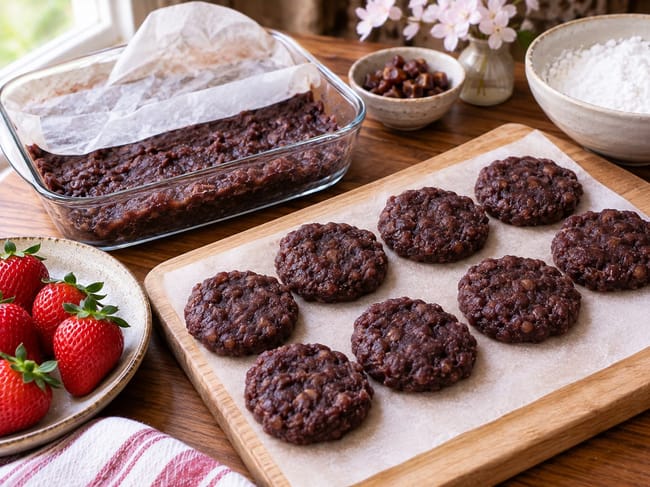
Spread the hot paste in a shallow heat-safe dish so steam escapes quickly. Press parchment against its surface, cool for 20 minutes, then refrigerate until firm, about 30 minutes. Divide into eight portions of about 43 to 45 g and flatten into disks around 8 cm wide.
Enclose the Strawberries in Anko
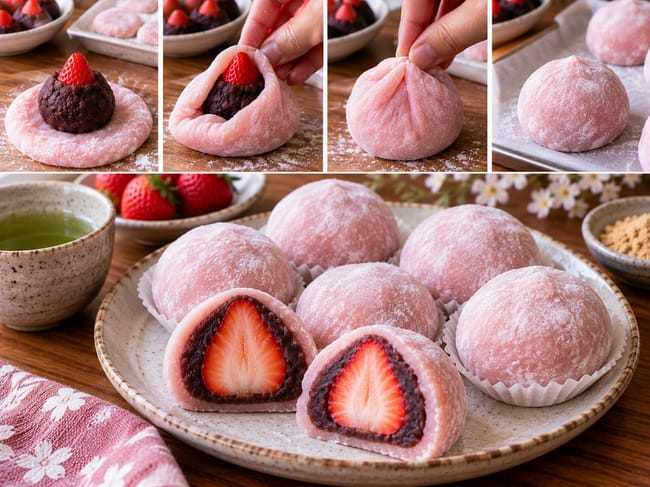
Place one dry strawberry point-down in the center of an anko disk. Bring the bean paste up around the sides while rotating, leaving the red tip visible. Pinch the paste closed across the flat top, then reshape gently into an even package.

Mix the Pink Mochi Batter
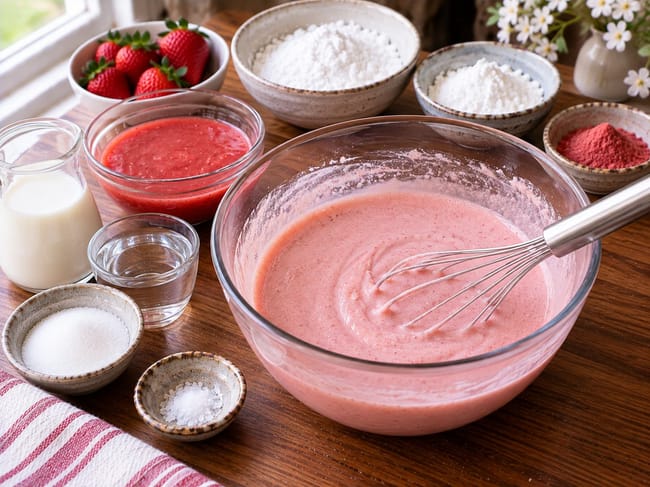
Whisk glutinous rice flour, tapioca starch, superfine sugar, freeze-dried strawberry powder, and remaining salt in a microwave-safe glass bowl. Add the 80 g strawberry purée, water, and milk gradually while whisking from the center until no dry pockets remain.
Cook Until Translucent and Elastic
Microwave at 700 to 800 watts for 90 seconds. Remove with oven gloves and fold the set edges into the wet center using a wet spatula. Cover and microwave 60 seconds, fold again, then cook in 20 to 30 second intervals until uniformly glossy and slightly translucent, usually 3 to 4 minutes total.

Dust, Divide, and Flatten the Wrappers
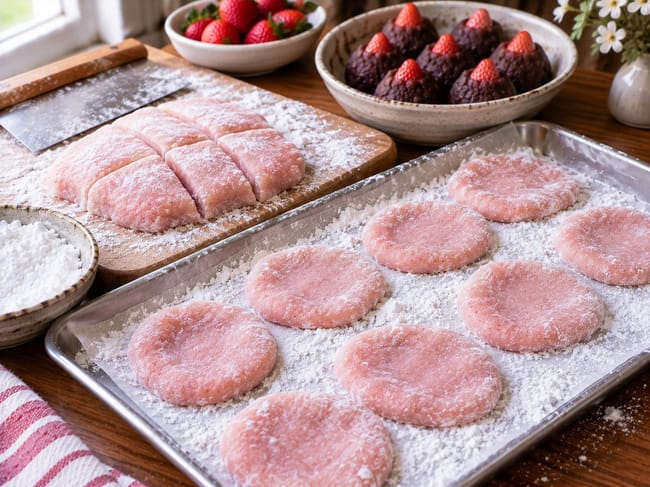
Scrape the hot mochi directly onto the potato-starch tray. Dust the top lightly and let it cool for three minutes. Use the bench scraper to form a rough rectangle and divide into eight portions of approximately 46 to 48 g. Flatten each into a 10 to 11 cm disk with a thicker center.
Wrap, Seal, Rest, and Serve
Place one chilled strawberry-and-anko package point-down on a mochi disk. Lift opposite edges over the flat base and pinch, then gather the remaining sides while rotating. Seal completely and place seam-down on parchment. Rest covered for 10 minutes, then serve at cool room temperature.
Chef's Tips
Common Mistakes
Why This Recipe Was Designed This Way
This recipe is not medical treatment and cannot promise weight loss or reduced disease risk. It is a portion-conscious version of a beloved Japanese confection that keeps a whole strawberry and adzuki beans central while sharing the sweetening work with dates and honey. Its suitability depends on the complete diet and individual needs.
🍓 A Whole Strawberry Forms the Center
The fruit occupies a substantial part of every piece, contributing acidity, water, vitamin C, and the defining fresh contrast of ichigo daifuku.
🫘 Adzuki Remains the Main Filling
Beans provide the expected flavor, fiber, and plant protein, while dates and honey support rather than replace them.
🍡 The Wrapper Is Thin and Controlled
Portioning cooked mochi by weight keeps the shell sufficient for elasticity without making it the majority of every bite.
📏 One Unit Gives a Visible Serving
Each daifuku encloses one berry and one weighed portion of filling and wrapper, offering a clearer starting point than cutting an uncertain section.
🍯 Dates and Honey Share the Sweetening Work
Natural sweeteners round the bean paste's flavor while allowing less refined sugar overall in the finished confection.
Ingredient Swaps
Need to customize this Balanced Ichigo Daifuku? These substitutions preserve the fresh, chewy character while adapting the recipe to different preferences.
| Instead of... | Try... |
|---|---|
| Cooked adzuki beans | No-salt-added canned adzuki, drained and rinsed |
| Soft pitted dates | Date paste, adjusted to taste |
| Mild honey | Maple syrup, in a similar quantity |
| Lower-fat milk | Unsweetened soy beverage or additional water |
| Freeze-dried strawberry powder | Freeze-dried raspberry powder |
| Glutinous rice flour | No direct substitute — do not use regular rice flour |
| Roasted soybean flour (kinako) | Toasted sesame seeds, finely ground |
| Fresh strawberries | Small, similarly sized ripe strawberries only |
What Research Says
The ingredients in this recipe were selected because they reflect common principles in balanced confection patterns that combine fresh fruit, legumes, and measured sweeteners. The information below summarizes current nutrition research and is intended for educational purposes only.
🍓 Fresh Fruit
Strawberries contribute vitamin C, water, folate, and fiber for relatively little energy, forming the fresh core of this confection.
- Excellent source of vitamin C.
- Contributes fiber and folate uncommon in most confections.
- High water content adds volume with modest calories.
🫘 Legumes
Adzuki beans supply plant protein, dietary fiber, folate, iron, and potassium, adding substance to the sweet filling.
- Good source of plant protein and dietary fiber.
- Contributes folate and iron uncommon in most desserts.
- Associated with improved satiety when included in meals.
🍯 Natural Sweeteners
Dates and honey provide sweetness along with trace minerals and fiber compared to refined sugar alone.
- Dates contribute fiber and potassium alongside natural sugars.
- Honey provides antioxidant compounds in small amounts.
- Both remain forms of added sugar requiring portion awareness.
🍚 Glutinous Rice
Sweet rice flour provides the elastic, chewy structure central to mochi, though it is primarily a carbohydrate source.
- Contains no gluten despite its name.
- Provides quickly available carbohydrate energy.
- Functions as the structural base of the wrapper.
Estimated Nutrition
Per serving
*Estimate for one of eight daifuku, including filling, wrapper, center strawberry, and a small amount of adhered dusting. Strawberry size, bean drainage, and final yield all change the result.
Storage & Reheating
Ichigo daifuku is best within several hours of assembly. Keep pieces individually on parchment in a shallow airtight container at cool room temperature for up to six hours if the room is below 21°C/70°F.
Refrigerating
Because fresh fruit and cooked beans are moist, refrigerate for longer holding and consume within 24 hours. Let refrigerated pieces stand 10 minutes before eating.
Freezing
Freezing completed daifuku is not recommended, since whole strawberries release water and mochi may crack after thawing. The anko alone freezes well for up to three months in an airtight package.
Reheating
Room Temperature: Do not reheat assembled daifuku. A firm refrigerated piece should simply stand covered at room temperature for 10 to 15 minutes before eating.
Meal Prep Tips
Cook the anko up to two days ahead and keep it refrigerated. Wash and dry strawberries the same day, but do not wrap them until the filling is cool. Mix and cook mochi only when the station is ready.
Serving Suggestions
This Balanced Ichigo Daifuku pairs beautifully with simple, fresh accompaniments.
Unsweetened Japanese Green Tea: A warm, unsweetened tea cuts through the sweetness and echoes the dessert's Japanese café origins.
A Light Kinako Veil: A very light dusting of roasted soybean flour beside the daifuku adds a toasted, nutty note.
Extra Fresh Strawberries: A few extra whole berries on the side extend the fresh fruit theme without added sugar.
Light Whipped Greek Yogurt: A small spoonful on the side adds tang without altering the daifuku itself.
Sparkling Water with Lemon: A light, citrusy drink refreshes the palate between bites.
Frequently Asked Questions
What does ichigo daifuku mean?
"Ichigo" means strawberry, while "daifuku" refers to a filled mochi confection. A whole strawberry is typically surrounded by bean paste and wrapped in soft mochi.
Is glutinous rice flour the same as regular rice flour?
No. Glutinous or sweet rice flour comes from short-grain sticky rice and develops the elastic structure needed for mochi. Regular rice flour creates a more brittle, paste-like result and cannot be substituted directly.
Can I use canned adzuki beans?
Yes, if they are plain, unsweetened, very tender, rinsed, and thoroughly drained. Weigh 320 g after draining and check the sodium label.
Why is my mochi too sticky to handle?
Freshly cooked mochi is naturally extremely sticky. The shaping tray and top surface need potato starch, and hands must touch only the coated exterior.
Why did the wrapper tear around the strawberry?
The disk may be too small, its center too thin, or the berry too large. Use similar small strawberries, dry them completely, and retain a thicker center when flattening.
Why did liquid appear inside after storage?
Strawberries naturally release moisture, especially after long refrigeration. Dry berries meticulously, assemble near serving, and consume within 24 hours.
Can I make this recipe dairy-free?
Yes. Replace the 60 ml dairy milk with the same amount of unsweetened soy beverage or additional water.
Does balanced ichigo daifuku guarantee weight loss or controlled blood sugar?
No single sweet can guarantee those outcomes. This version contains a whole strawberry, beans, and measured sweeteners, but it still supplies concentrated starch and sugar.
Related Recipes
If you enjoyed this Balanced Ichigo Daifuku, you may also like these recipes from our Japanese Café Desserts collection.
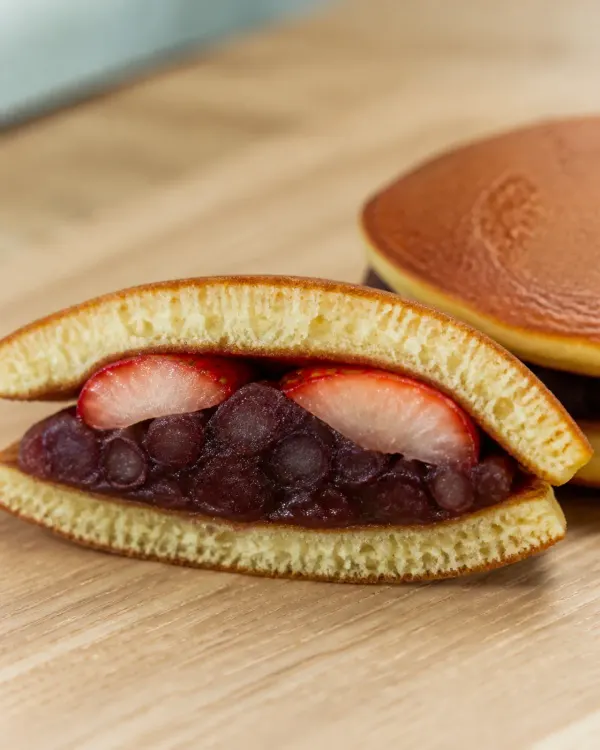
🥮 Balanced Dorayaki with Naturally Sweetened Anko
Soft honey pancakes filled with the same creamy adzuki beans, dates, and restrained sweetness.
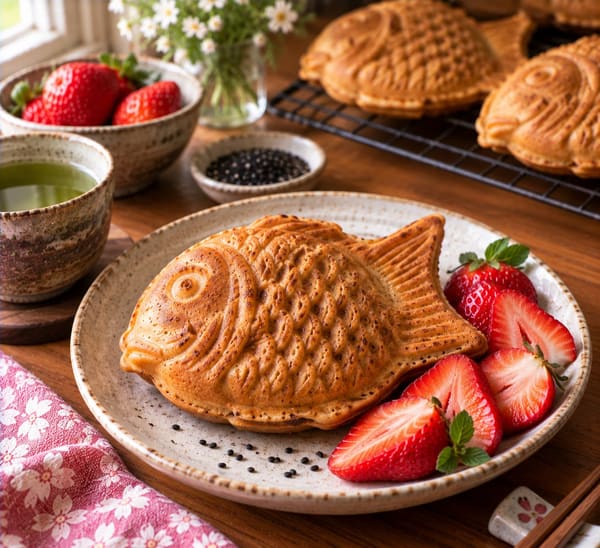
🍡 Balanced Taiyaki with Black Sesame Anko
Crisp-edged fish-shaped cakes with a tender whole-grain batter and a black-sesame adzuki filling.
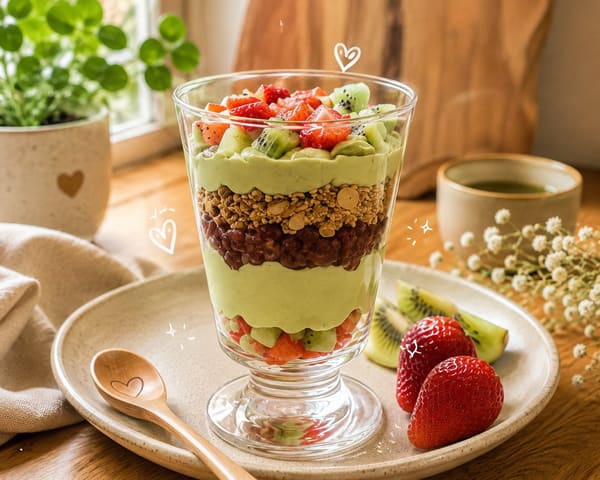
🍵 🍵 Matcha Parfait
A layered café dessert with vivid tea cream, fruit, crisp oat clusters, and soft rice dumplings.