
Balanced Taiyaki with Black Sesame Anko
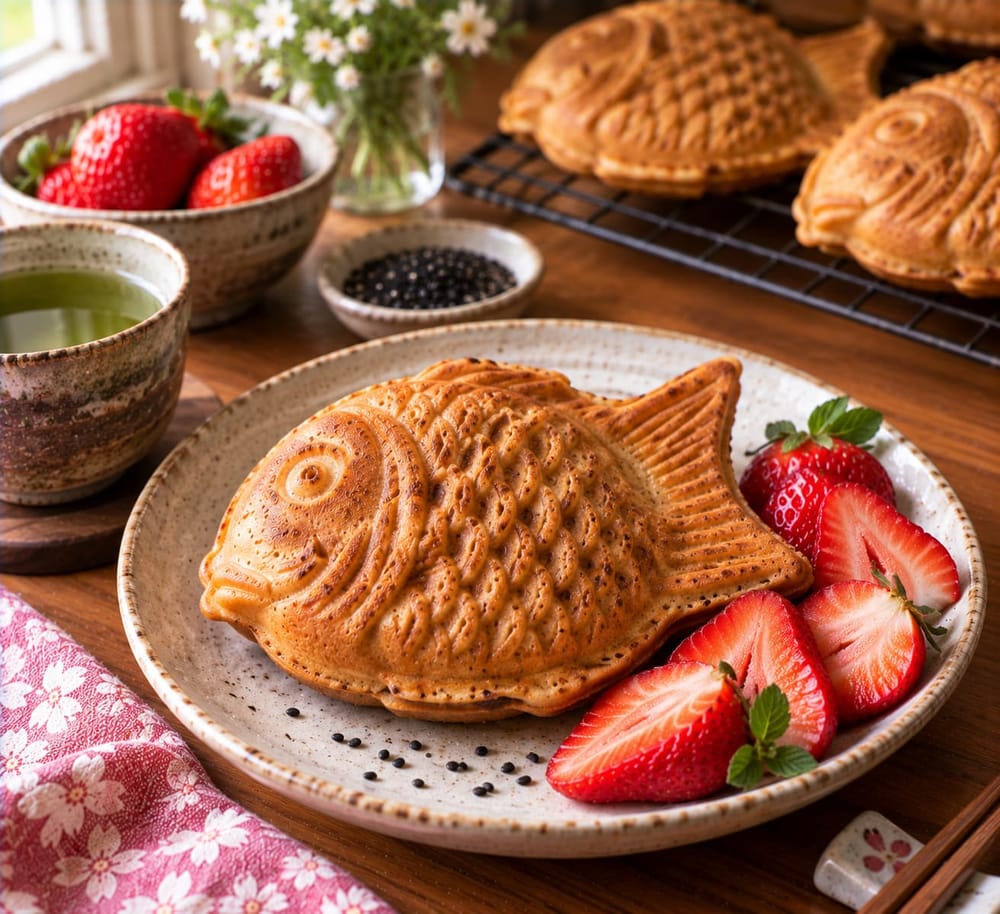
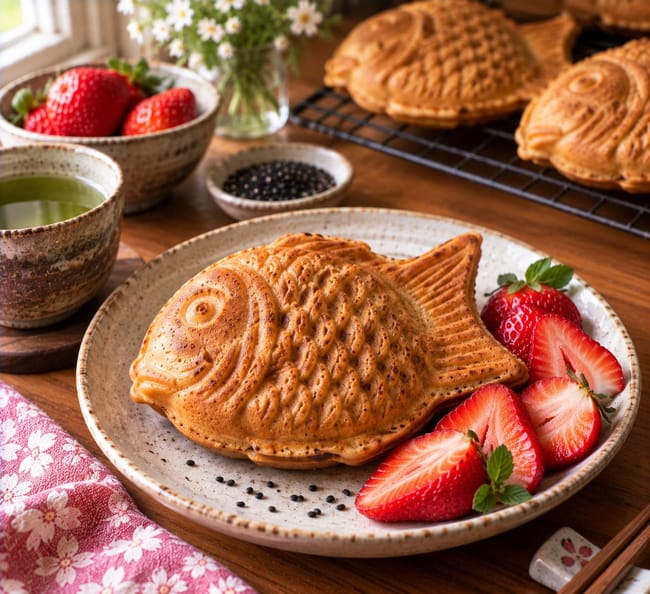
This recipe keeps the features that make taiyaki recognizable: the fish mold, thin golden shell, soft cake beneath it, and adzuki filling running through the body. The changes happen inside that familiar experience. Cooked adzuki beans remain the foundation of the anko, while soft dates and a modest amount of honey provide sweetness without turning the paste into candy.
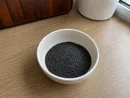
Black sesame deepens the roasted flavor, gives the filling a dramatic burgundy-charcoal tone, and makes the reduced sweetness feel deliberate rather than missing. The batter combines whole-wheat pastry flour with cake flour, bringing more whole grain while remaining flexible enough to reach the narrow tail and fin details of the mold.
Serve one warm taiyaki with sliced strawberries and unsweetened tea. The result should feel like a real Japanese café dessert: attractive, comforting, and genuinely delicious, with a delicate crust, soft interior, and earthy filling that tastes of adzuki and sesame instead of overwhelming sugar.
Recipe Information
| Prep Time | 35 minutes, plus cooling |
| Cook Time | 40-50 minutes, depending on the mold |
| Total Time | About 1 hour 35 minutes |
| Servings | 8 medium taiyaki |
| Difficulty | Intermediate |
| Calories | ~260 kcal each |
Quick Highlights
- ✅ Adzuki beans remain the center of the dessert
- ✅ Dates and honey share the sweetening work
- ✅ Black sesame adds roasted depth and dramatic color
- ✅ Whole-wheat pastry flour for extra fiber
- ✅ Greek yogurt keeps the batter tender
- ✅ Eight clearly defined portions
- ✅ Served with fresh strawberries for brightness
Ingredients
Makes 8 medium taiyaki







Step-by-Step Instructions
Prepare the Equipment and Measured Components
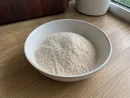
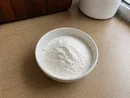
Confirm the taiyaki pan closes evenly. Wash, hull, and slice the strawberries, then refrigerate. Grind the cooled black sesame to a coarse powder. Divide the honey, reserving 20 g for the filling and 10 g for the batter. Whisk both flours, cornstarch, baking powder, and most of the salt together for at least 30 seconds.

Cook the Reduced-Sugar Black Sesame Anko
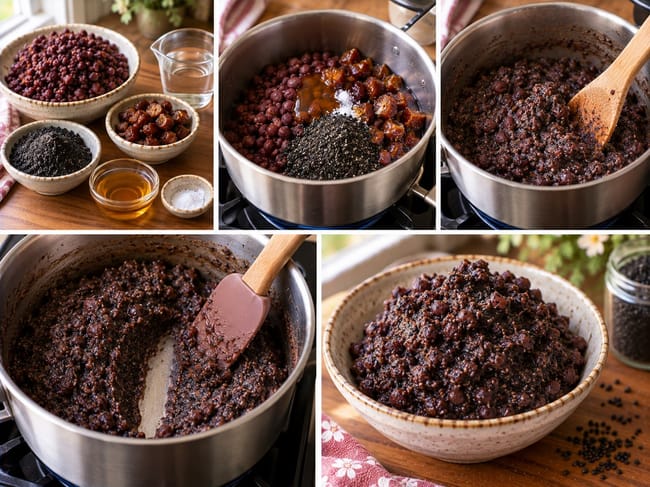
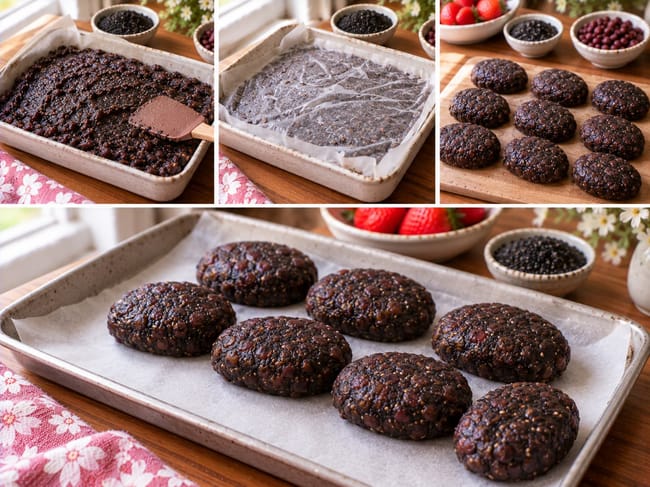
Place the drained adzuki, chopped dates, 20 g honey, ground sesame, a pinch of salt, and 60 ml water in a medium saucepan. Cook over medium-low heat for 10 to 14 minutes, stirring and pressing frequently, until a spatula drawn across the base leaves a path for about two seconds.
Cool and Portion the Filling
Spread the hot anko in a shallow heat-safe dish so steam can escape. Press parchment against the surface and cool 20 minutes, then refrigerate until firm, about 30 minutes. Divide into eight portions of approximately 52 to 55 g and shape into flat ovals.
Whisk the Yogurt Batter Base
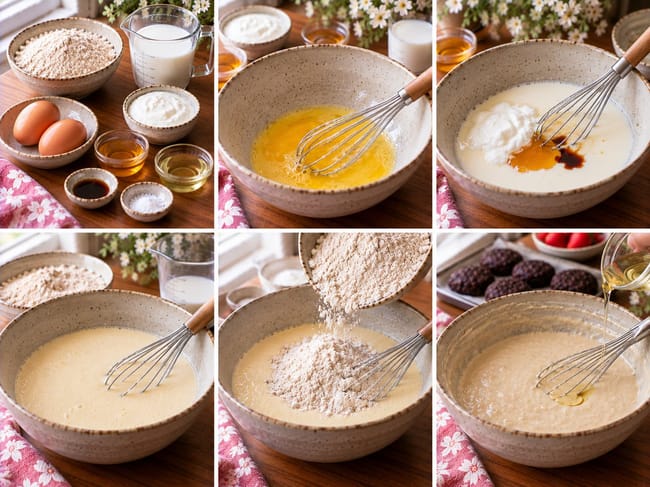
In a large bowl, whisk the eggs until whites and yolks are fully combined but not foamy. Add 10 g honey, Greek yogurt, vanilla, and 260 ml milk. Whisk until smooth. Add the dry mixture in two additions, whisking gently just until no dry flour remains. Stir in one teaspoon of neutral oil.
Rest and Adjust the Batter
Cover the bowl and rest the batter for 15 minutes at room temperature. Stir slowly with a ladle, then lift it about 10 cm — the batter should fall in a broad ribbon, level in several seconds.

Preheat, Oil, and Fill the Taiyaki Mold
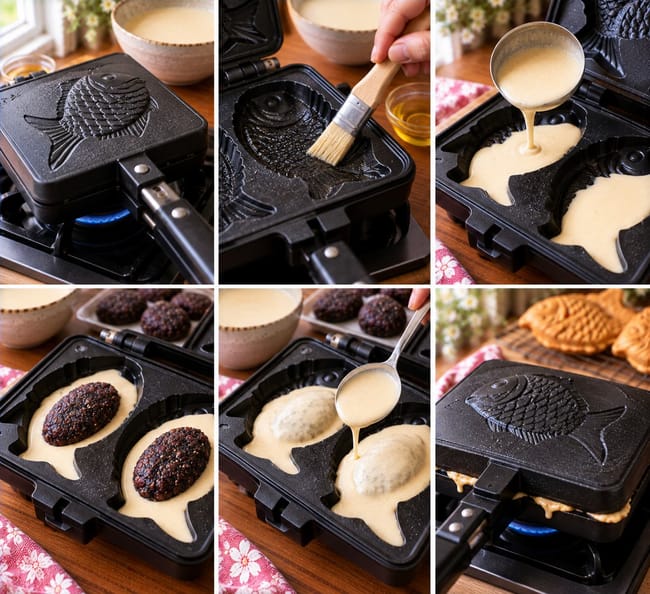
Preheat the closed pan over medium-low heat for 3 to 4 minutes, turning once. Brush every fish cavity with an extremely thin film of oil. Pour batter into one side to cover about two-thirds of the body. Place one chilled anko oval in the center. Spoon a thin layer of batter over the filling and close the pan slowly.
Cook, Turn, and Check the Fish Cakes
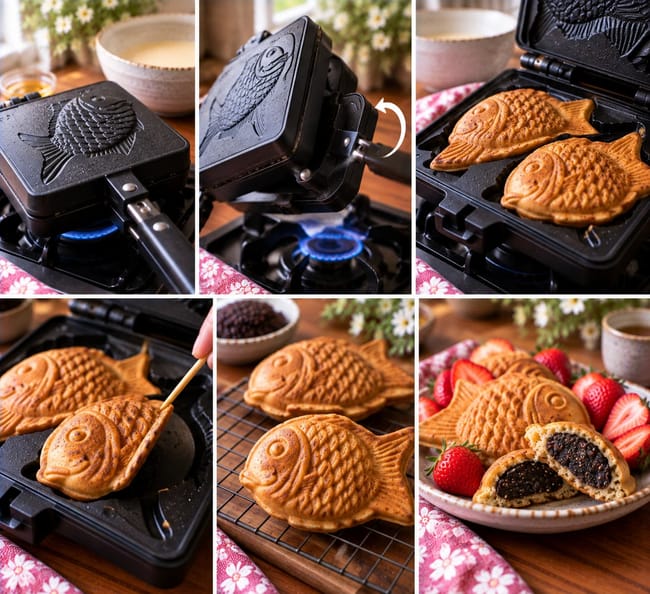
Cook the closed mold over medium-low heat for about 2 minutes, then turn and cook the second side 2 minutes. Continue turning every 60 to 90 seconds until the cake releases cleanly and both faces are evenly golden, usually 5 to 7 minutes total.
Rest Briefly, Plate, and Serve
Transfer each taiyaki to the uncovered section of a rack for one minute so excess steam escapes. Serve one cake warm after a 3 to 5 minute rest. Arrange about 20 g sliced strawberries beside it.
Chef's Tips
Common Mistakes
Why This Recipe Was Designed This Way
This recipe is not medical treatment and cannot promise weight loss or reduced disease risk. It is a portion-conscious version of a beloved Japanese café treat that keeps adzuki beans central while sharing the sweetening work with dates, honey, and black sesame. Its suitability depends on the complete diet and individual needs.
🫘 Adzuki Remains the Center of the Dessert
The filling is built primarily from cooked beans rather than buttercream or sweetened custard, bringing fiber and plant protein along with the expected flavor.
🌑 Black Sesame Adds Roasted Depth
Sesame deepens the flavor and gives the filling a dramatic tone while contributing unsaturated fats and calcium in a small portion.
🌾 Whole-Grain Flour Used Strategically
Whole-wheat pastry flour makes up most of the flour blend, while cake flour protects the flexibility needed to reach the mold's fine details.
🥛 Greek Yogurt Keeps the Batter Tender
Yogurt brings moisture and protein while helping the crumb stay soft with limited added oil.
📏 One Fish Creates a Visible Serving
Taiyaki naturally comes in individual units, making portioning easier than cutting an uncertain wedge from a large cake.
Ingredient Swaps
Need to customize this Balanced Taiyaki? These substitutions preserve the crisp, filled character while adapting the recipe to different preferences.
| Instead of... | Try... |
|---|---|
| Whole-wheat pastry flour | Standard whole-wheat flour (may need more milk) |
| Cake flour | All-purpose flour |
| Cooked adzuki beans | No-salt-added canned adzuki, drained and rinsed |
| Soft dates | Date paste, adjusted to taste |
| Mild honey | Maple syrup, in a similar quantity |
| Plain Greek yogurt | Thick unsweetened soy yogurt |
| Lower-fat milk | Unsweetened fortified soy beverage |
| Toasted black sesame seeds | Toasted white sesame seeds |
What Research Says
The ingredients in this recipe were selected because they reflect common principles in balanced dessert patterns that combine legumes, whole grain, and measured sweeteners. The information below summarizes current nutrition research and is intended for educational purposes only.
🫘 Legumes
Adzuki beans contribute plant protein, fiber, folate, and iron, adding nutritional substance to a filled dessert.
- Good source of plant protein and dietary fiber.
- Contributes folate and iron uncommon in most desserts.
- Associated with improved satiety when included in meals.
🌑 Seeds
Black sesame supplies unsaturated fats, calcium, copper, and lignans, contributing nutrients beyond simple flavor.
- Good source of calcium among plant-based foods.
- Provides unsaturated fats in a concentrated, small portion.
- Contains lignans studied for antioxidant properties.
🌾 Whole Grains
Whole-wheat pastry flour provides more fiber and micronutrients than refined flour when used as a measured base.
- Associated with improved digestive health.
- Contributes to steadier post-meal energy.
- Useful as a moderate-portion carbohydrate base.
🥛 Yogurt and Dairy
Greek yogurt provides protein and calcium while helping baked goods stay moist with less added fat.
- Higher in protein than many standard batter liquids.
- Contributes calcium and, when unsweetened, no added sugar.
- Sodium and fat content vary by brand.
Estimated Nutrition
Per serving
*Estimate for one of eight taiyaki. Bean brand, mold size, and final yield all change the result.
Storage & Reheating
Cool taiyaki completely, then refrigerate in an airtight container with parchment between layers for up to three days. Never seal warm cakes, because trapped steam softens the shell.
Refrigerating
Store in an airtight container for up to three days. Store strawberries separately and add them only at serving.
Freezing
Freeze cooled, ungarnished cakes individually until firm, then pack airtight for up to two months.
Reheating
Oven: Reheat refrigerated taiyaki at 175°C/350°F for 5 to 7 minutes, then rest 2 minutes before eating.
From Frozen: Reheat from frozen at 175°C/350°F for 10 to 14 minutes and rest before eating. Bean paste can become hotter than the exterior, so test carefully.
Meal Prep Tips
Prepare sesame anko two days ahead and refrigerate, shaping portions while cold. Combine dry ingredients several days ahead, but mix batter shortly before cooking so its lift remains reliable.
Serving Suggestions
This Balanced Taiyaki pairs beautifully with simple, fresh accompaniments.
Fresh Strawberry Slices: About 20 g sliced strawberries beside the warm cake add acidity, color, and a juicy contrast.
Unsweetened Green Tea: A warm, unsweetened tea cuts through the sweetness and echoes the dessert's Japanese café origins.
Roasted Barley Tea: A nutty, caffeine-free tea pairs naturally with the toasted sesame filling.
Light Whipped Greek Yogurt: A small spoonful on the side adds tang without altering the taiyaki itself.
Unsweetened Coffee: A simple black coffee balances the dessert's sweetness for an afternoon treat.
Frequently Asked Questions
Is taiyaki made from fish?
No. The name and appearance refer to the sea-bream shape created by the iron mold, but ordinary taiyaki contains no fish — it is a filled cake cooked between engraved plates.
Can I make this recipe without a taiyaki pan?
You can cook the batter as small filled pancakes, but the result is not technically taiyaki because the thin sealed shell and engraved surface come from the mold.
Can I use canned adzuki beans?
Yes, provided they are plain, unsweetened, and very soft. Drain and rinse thoroughly, then weigh 400 g after draining, checking the sodium label.
Why is the filling escaping from my taiyaki?
The anko may be warm, too wet, or positioned too close to the seam. Chill it fully and shape a low oval smaller than the mold's broad body.
Why is the outside dark while the center remains raw?
The iron is too hot, especially after several batches. Reduce the burner, move the empty pan off heat briefly, and lengthen cooking with regular turns.
Can I make the recipe gluten-free?
Not by changing one flour without testing. Whole-wheat pastry flour and cake flour supply the structure and flow used in this method.
Can I make taiyaki without dairy?
Yes, with adjustments. Use an unsweetened fortified soy beverage and replace Greek yogurt with thick plain unsweetened soy yogurt.
Does this balanced taiyaki guarantee weight loss or controlled blood sugar?
No single dessert can guarantee those outcomes. This recipe offers measured sweetness, beans, and a defined serving, but it still contains carbohydrate and added sugar.
Related Recipes
If you enjoyed this Balanced Taiyaki, you may also like these recipes from our Japanese Café Desserts collection.
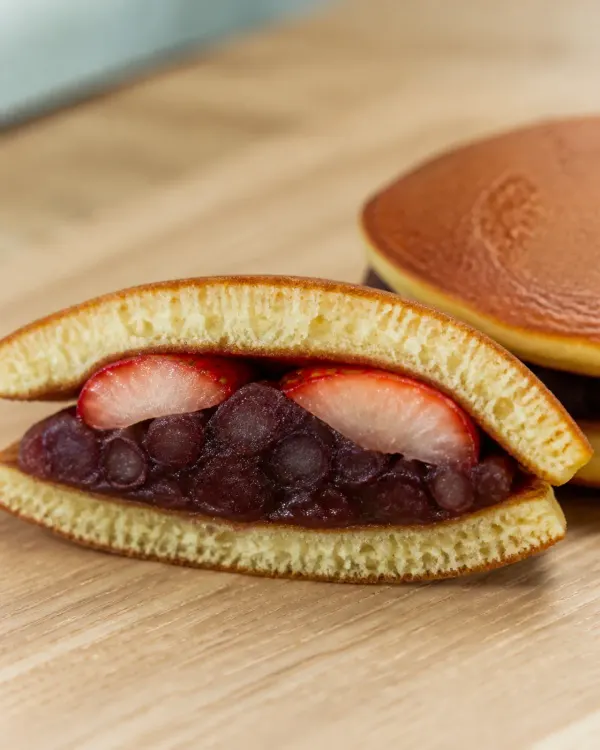
🥮 Balanced Dorayaki with Naturally Sweetened Anko
Soft honey pancakes filled with the same creamy adzuki beans, dates, and restrained sweetness.
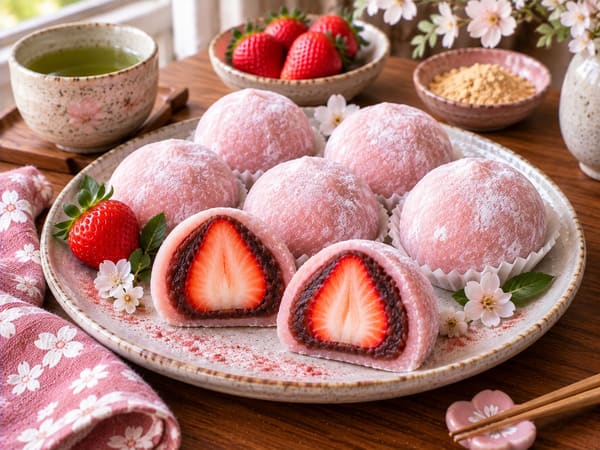
🍓 Balanced Ichigo Daifuku with Date-Sweetened Anko
Juicy whole strawberries wrapped in creamy adzuki paste and a tender pink mochi shell.
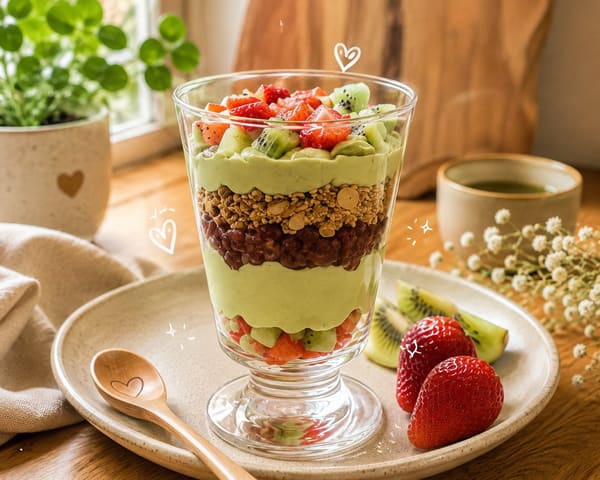
🍵 🍵 Matcha Parfait
A layered café dessert with vivid tea cream, fruit, crisp oat clusters, and soft rice dumplings.