
Balanced Japanese Cheesecake
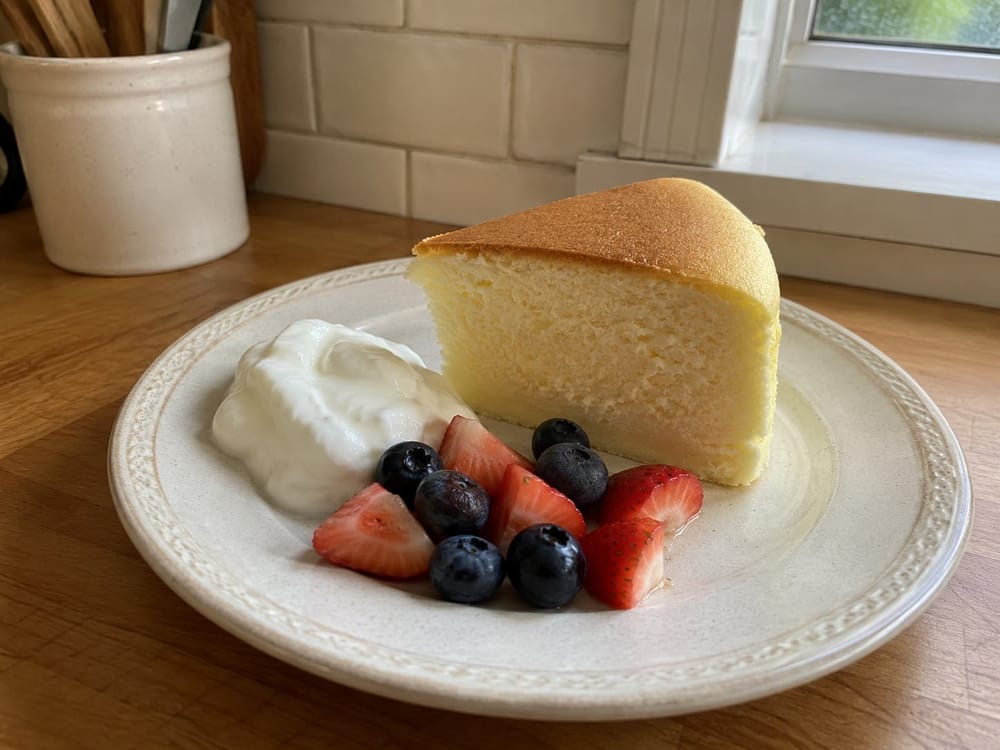
Japanese cheesecake is compelling because it seems to contradict itself. It tastes creamy, yet the slice feels light in the hand. It rises like a soufflé, cuts like a cake after chilling, and has a moist crumb rather than the dense body of many New York cheesecakes. A wobble makes it look luxurious without frosting, biscuit crust, or a pool of sauce.
This version protects those qualities while reconsidering proportion. Reduced-fat block cream cheese provides the flavor, but Greek yogurt shares the dairy base. Honey sweetens the yolk mixture; a small amount of superfine sugar remains in the egg whites because it helps stabilize their foam. Lemon zest and juice brighten the cake, and berries replace a sugary glaze.
The method rewards patience. Cheese must become smooth before flour enters, the meringue needs glossy medium peaks, folding must reach the bottom of the bowl, and the oven must stay gentle. The finished cake should be pale golden, lightly domed, creamy white inside, and springy enough to tremble when the plate moves.
Recipe Information
| Prep Time | 35 minutes |
| Cook Time | 70-80 minutes, plus 30 minutes gradual cooling |
| Total Time | About 5 hours, including chilling |
| Servings | 8 |
| Difficulty | Advanced |
| Calories | ~210 kcal per serving |
Quick Highlights
- ✅ Reduced-fat cream cheese shares the base with Greek yogurt
- ✅ Honey and a measured amount of sugar for controlled sweetness
- ✅ Glossy medium-peak meringue for the signature cotton-soft rise
- ✅ Water bath protects the delicate texture
- ✅ Fresh berries replace a sugary glaze
- ✅ Eight clearly defined portions
- ✅ Best made a day ahead and chilled overnight
Ingredients
Makes one tall 15 cm cake, 8 slices








Step-by-Step Instructions
Prepare the Tall Pan, Oven, and Water Bath
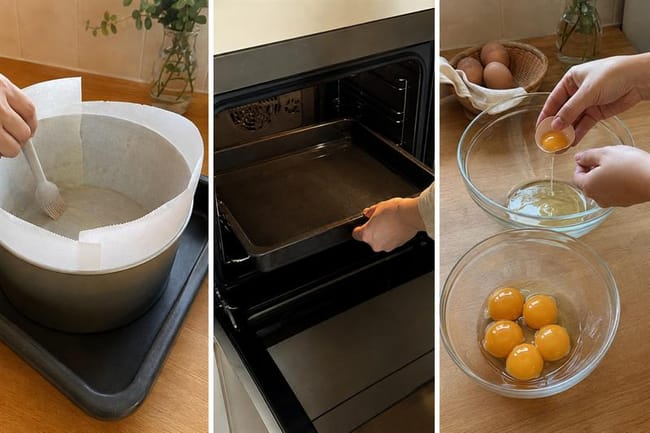
Set an oven rack in the lower-middle position and preheat to 150°C/300°F. Brush a tall 15 cm round pan with the measured oil, then line its base and sides with parchment extending 4 cm above the rim. Place it in a deep roasting tray. Separate the eggs while cold, then let them stand about 15 minutes.
Create a Smooth Lemon Cheese Base
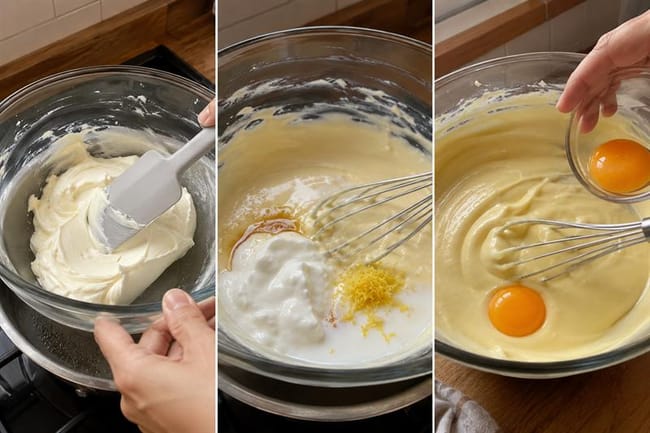
Place softened cream cheese in a heatproof bowl over barely simmering water. Stir gently until completely smooth. Add the 120 g yogurt, milk, honey, vanilla, lemon juice, and zest, mixing after each addition. Whisk in the five yolks one at a time. Remove when glossy.
Sift and Incorporate the Supporting Starches
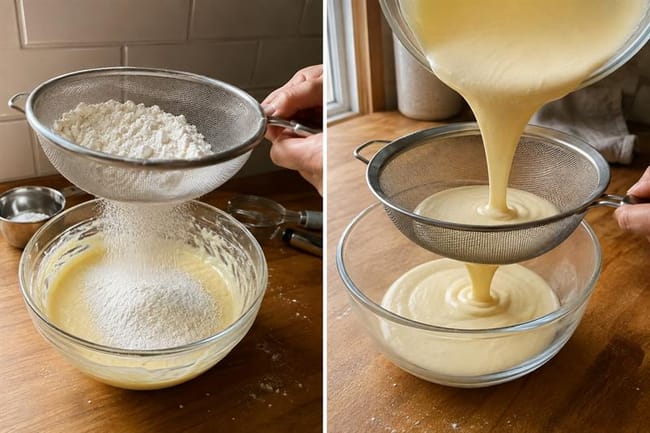
Sift cake flour, cornstarch, and salt together twice. Add to the dairy base in two batches, whisking from the center only until no dry pockets remain. Scrape the bottom and curved sides, then pass the batter through a sieve once more.
Whip a Flexible, Glossy Meringue
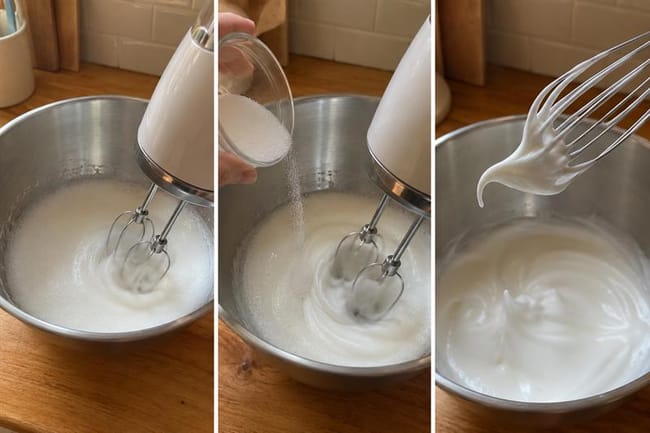
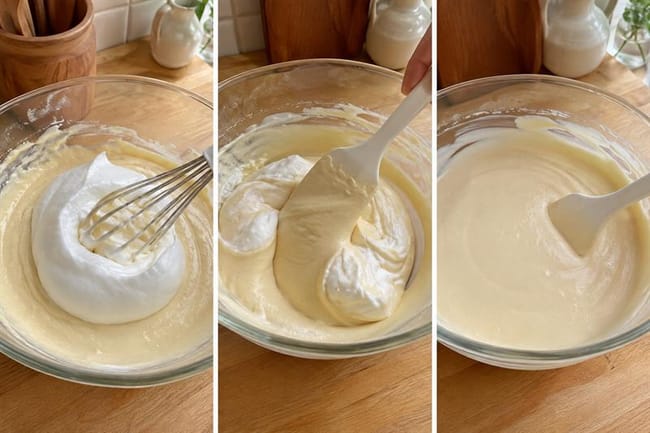
Beat the egg whites on low until foamy. Add cream of tartar and continue at medium-low until bubbles look small and uniform. Add sugar in three portions, waiting about 30 seconds between each. Increase to medium and stop at glossy medium peaks.
Fold the Two Mixtures Without Deflating Them
Whisk one-quarter of the meringue into the cheese base to lighten it. Add half of the remaining meringue, cutting through the center, following the bottom, lifting upward, and rotating the bowl. Repeat with the final portion.
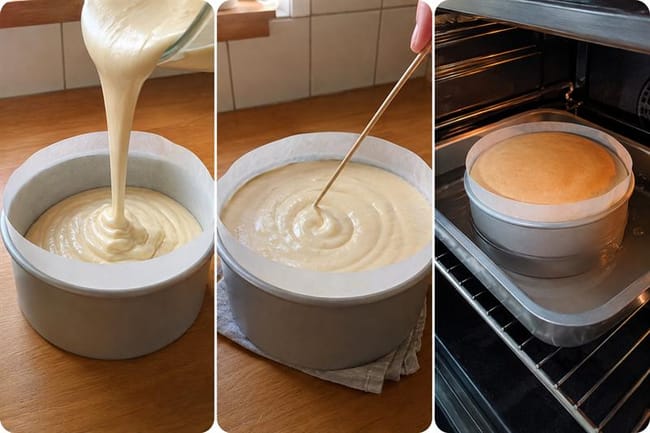
Fill the Pan and Bake in Two Temperature Stages
Pour batter from low height into the lined pan. Draw a thin skewer through it in a slow spiral, then tap the pan once. Pour hot water around the cake to a depth of 2 cm. Bake 20 minutes at 150°C, then reduce to 135°C/275°F and bake another 45 to 55 minutes.

Confirm Doneness and Cool in Stages
When the center shows a controlled wobble, switch off the oven and leave the door closed for 10 minutes. Open it about 5 cm and wait 20 minutes. Carefully remove the roasting tray, lift the cake pan from the water, and rest 15 minutes.
Release, Chill, Portion, and Garnish Lightly
Once barely warm, loosen any exposed edge with a thin spatula. Invert briefly onto a parchment-covered board, remove the pan and lining, then turn upright. Chill at least three hours, preferably overnight. Cut into eight wedges using a thin knife warmed in hot water.

Chef's Tips
Common Mistakes
Why This Recipe Was Designed This Way
This recipe is not medical treatment and cannot promise weight loss or reduced disease risk. It is a portion-conscious version of a beloved Japanese café dessert that shares its dairy base between reduced-fat cream cheese and Greek yogurt while keeping the defining cotton-soft rise intact. Its suitability depends on the complete diet and individual needs.
🧀 A Moderated Dairy Profile
Reduced-fat block cheese, 2% Greek yogurt, and lower-fat milk may lower saturated fat compared with versions based on full-fat cheese, butter, and cream.
🥚 Protein Within the Dessert
Eggs, Greek yogurt, and cream cheese provide protein alongside the carbohydrates and fat, though one slice remains dessert rather than a meal.
🍯 Sweetness With a Technical Purpose
Sugar remains in the meringue because it supports the defining foam, while lemon, vanilla, and cultured dairy build flavor without frosting or syrup.
🍓 Fruit as a Genuine Accompaniment
Fresh berries contribute acidity, color, fiber, and vitamin C without requiring sweetened jam or glaze.
📏 A Defined Café Portion
The six-inch cake is intentionally divided into eight wedges, making one slice with berries and yogurt feel complete on a plate.
Ingredient Swaps
Need to customize this Balanced Japanese Cheesecake? These substitutions preserve the cotton-soft character while adapting the recipe to different preferences.
| Instead of... | Try... |
|---|---|
| Reduced-fat cream cheese | Full-fat block cheese (richer, more saturated fat) |
| Cake flour | 43 g all-purpose flour plus 7 g cornstarch |
| Mild honey | Pure maple syrup, by weight |
| Lower-fat milk | Unsweetened soy milk |
| 2% Greek yogurt | Thick 0% Greek yogurt (less rounded mouthfeel) |
| Fresh strawberries and blueberries | Raspberries, mandarins, or sliced kiwi |
| Cream of tartar | 1 teaspoon fresh lemon juice |
What Research Says
The ingredients in this recipe were selected because they reflect common principles in balanced cheesecake patterns that combine moderated dairy fat, measured eggs, and fresh fruit. The information below summarizes current nutrition research and is intended for educational purposes only.
🧀 Dairy and Cheese
Reduced-fat cream cheese and Greek yogurt provide calcium and protein with less saturated fat than full-fat versions.
- Good source of calcium and complete protein.
- Lower in saturated fat than full-fat cheese and cream combinations.
- Sodium content varies by brand.
🥚 Eggs
Eggs provide complete protein and the emulsifying and foaming properties central to the cake's characteristic rise.
- Excellent source of complete, high-quality protein.
- Naturally rich in choline.
- Central to the technique of a properly whipped meringue.
🍯 Natural Sweeteners
Honey provides sweetness along with trace antioxidant compounds compared to refined sugar alone.
- Contributes antioxidant compounds in small amounts.
- Still counts as added sugar requiring portion awareness.
- Dissolves easily into warm dairy for even sweetness.
🍓 Fresh Fruit
Strawberries and blueberries contribute vitamin C, fiber, and antioxidant pigments while adding volume without significant calories.
- Good source of vitamin C and dietary fiber.
- Blueberries provide anthocyanin pigments studied for antioxidant properties.
- Adds color and acidity without a sweetened glaze.
Estimated Nutrition
Per serving
*Estimate for one-eighth of the cake with the specified yogurt and berries. Product labels, egg size, and slice size all change the result.
Storage & Reheating
Refrigerate the cooled cheesecake in an airtight shallow container within two hours. Cover cut surfaces so the delicate crumb does not dry out or absorb refrigerator odors.
Refrigerating
Keep berries separate until serving. Flavor and springiness are best during the first two days, and the cake may be kept up to three days at 4°C or colder.
Freezing
Freeze plain individual slices, tightly wrapped in a rigid container, for up to one month. Thaw overnight in the refrigerator while wrapped to reduce condensation.
Reheating
Room Temperature Only: Japanese cheesecake is intended for chilled or cool-room-temperature service. For a softer wobble, set one covered slice out for 10 to 15 minutes. Microwaving is not recommended, as it can toughen the proteins.
Meal Prep Tips
Bake the cake one day before serving because overnight chilling improves slicing and flavor. Line the pan and weigh dry ingredients earlier, but whip the whites only after the oven and cheese base are ready.
Serving Suggestions
This Balanced Japanese Cheesecake pairs beautifully with simple, fresh accompaniments.
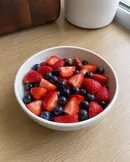
Fresh Strawberries and Blueberries: Mixed berries beside the cake add acidity, color, and a juicy contrast to the creamy crumb.
A Small Spoonful of Greek Yogurt: 10 g plain yogurt beside each slice adds tang without altering the cake itself.
Unsweetened Green Tea: A warm, unsweetened tea cuts through the sweetness and echoes the dessert's Japanese café origins.
Unsweetened Coffee: A simple black coffee balances the dessert's sweetness for an afternoon treat.
Sparkling Water with Lemon: A light, citrusy drink complements the cake's own lemon notes.
Frequently Asked Questions
How is Japanese cheesecake different from New York cheesecake?
Japanese cheesecake relies on whipped egg whites for a tall, airy, soufflé-like crumb and usually contains much less dense cheese filling per bite than a New York-style cheesecake baked as a custard over a crust.
Why did my cake rise beautifully and then collapse?
The meringue may have been too stiff, the oven hotter than indicated, the center underbaked, or the cooling too sudden. Use glossy medium peaks and cool in stages.
What causes a dense, rubbery bottom layer?
Heavy cheese batter may have remained beneath the foam, or the cake may be underbaked. Scrape the lowest curve during every fold and choose a solid pan.
Can I eliminate all added sugar?
Not through a simple omission. Sugar stabilizes the egg-white foam and supports controlled expansion, so removing it can produce a coarse, unstable cake.
Can I use full-fat or fat-free cream cheese?
Full-fat block cheese generally works and yields richer flavor and more saturated fat. Fat-free products often contain extra water and gums that can produce a gummy cake.
Why did the top crack or brown too much?
The actual oven temperature may be high, the cake may sit too close to the upper element, or the water bath may be shallow. A small hairline crack is harmless and authentically homemade.
Can I bake this cheesecake without a water bath?
It can bake, but edges set faster and the top cracks more easily. For the intended pale, moist, cotton-soft result, a direct bath is strongly recommended.
Does this lighter cheesecake guarantee weight loss or lower cholesterol?
No single dessert guarantees weight loss, cholesterol reduction, or glucose control. The recipe moderates certain ingredients, but it still contains sugar, dairy, eggs, and fat.
Related Recipes
If you enjoyed this Balanced Japanese Cheesecake, you may also like these recipes from our Japanese Café Desserts collection.
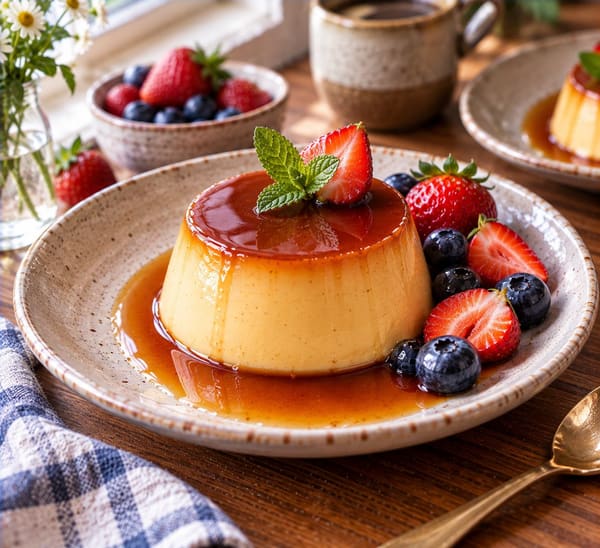
🍮 Balanced Japanese Purin with Light Caramel
A silky baked custard with a glossy amber sauce, restrained sweetness, and a fruit-bright café finish.
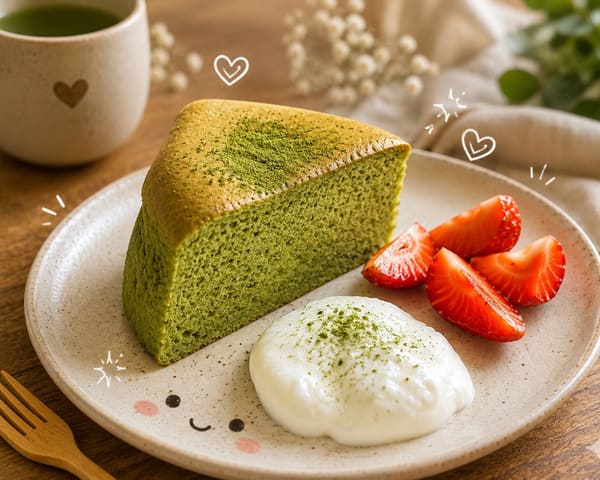
🍵 Balanced Matcha Soufflé Cake
A feather-light Japanese café dessert with matcha, Greek yogurt, and a signature cloudlike wobble.
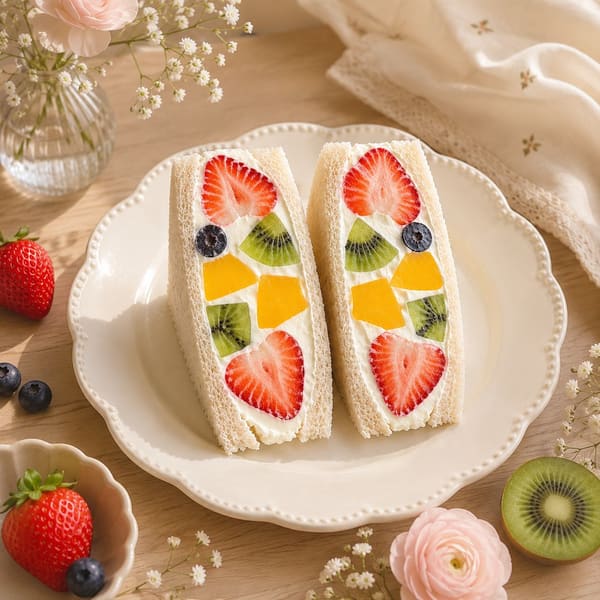
🍓 🍓 Strawberry-Kiwi Fruit Sando
A colorful Japanese café sandwich with soft whole-grain milk bread, fresh fruit, and a stable high-protein filling.