
Balanced Matcha Soufflé Cake
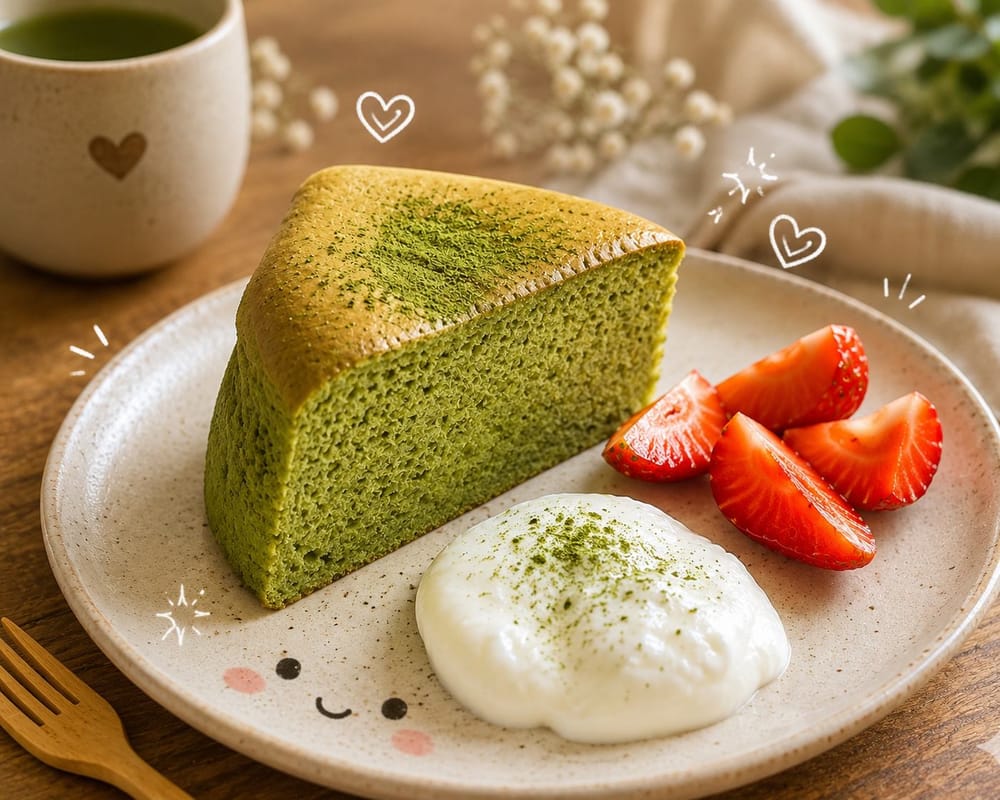
The graceful height, delicate green crumb, creamy center, and soft jiggle people love in a Japanese matcha soufflé cake come reworked here with reduced-fat cream cheese, protein-rich Greek yogurt, measured sweeteners, modest oil, and fresh berries.
The balanced version keeps that experience while making deliberate changes. Reduced-fat cream cheese and thick Greek yogurt replace a heavier full-fat base. Honey gives the yolk mixture rounded sweetness, while a smaller amount of real superfine sugar stabilizes the meringue where it performs a technical job. Cake flour and cornstarch are tightly measured, oil is used only for the pan, and berries provide a bright finish without a thick glaze.
Technique matters more than force. The cream cheese mixture must be smooth but not hot, matcha must be sifted, egg whites must reach glossy medium peaks rather than dry peaks, and folding must preserve air without leaving white streaks.
Recipe Information
| Prep Time | 35 minutes |
| Cook Time | 65-75 minutes, plus 30 minutes gradual cooling |
| Total Time | About 4 hours, including chilling |
| Servings | 8 |
| Difficulty | Advanced |
| Calories | ~180 kcal per serving |
Quick Highlights
- ✅ Reduced-fat cream cheese shares the base with Greek yogurt
- ✅ Honey and a measured amount of sugar for controlled sweetness
- ✅ Glossy medium-peak meringue for the signature cloudlike rise
- ✅ Sifted matcha for vivid color and clean bitterness
- ✅ Fresh strawberries replace a sugary glaze
- ✅ Eight clearly defined portions
- ✅ Best made a day ahead and chilled
Ingredients
Makes one tall 15 cm cake, 8 slices









Step-by-Step Instructions
Prepare the Pan, Oven, and Water Bath
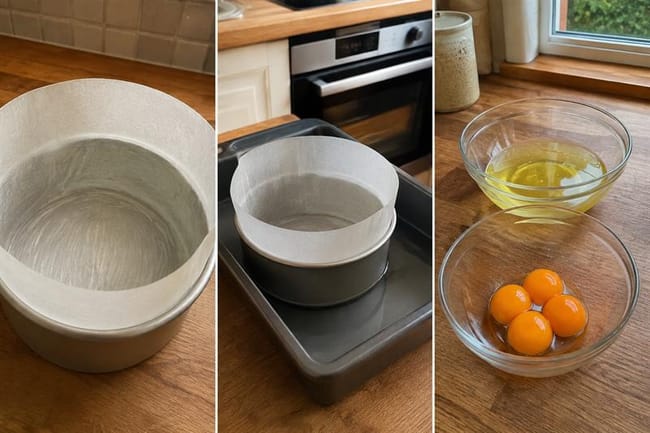
Position a rack in the lower-middle oven and preheat to 150°C/300°F. Lightly oil a tall 15 cm round pan. Line the bottom and sides with parchment, extending 4 cm above the rim. Set it inside a deep roasting tray. Separate the cold eggs carefully, then let both bowls stand about 15 minutes.
Make a Completely Smooth Dairy Base
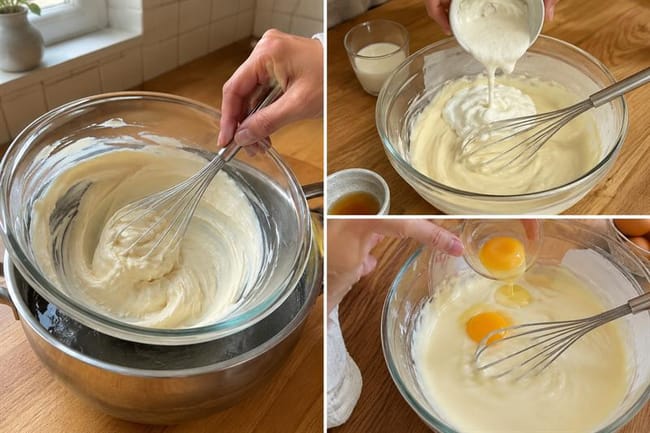
Place the softened cream cheese in a heatproof bowl over barely simmering water. Whisk gently until smooth, then blend in the 150 g yogurt, milk, honey, vanilla, and egg yolks one ingredient at a time. Remove from heat as soon as glossy.
Sift In Flour, Cornstarch, Matcha, and Salt
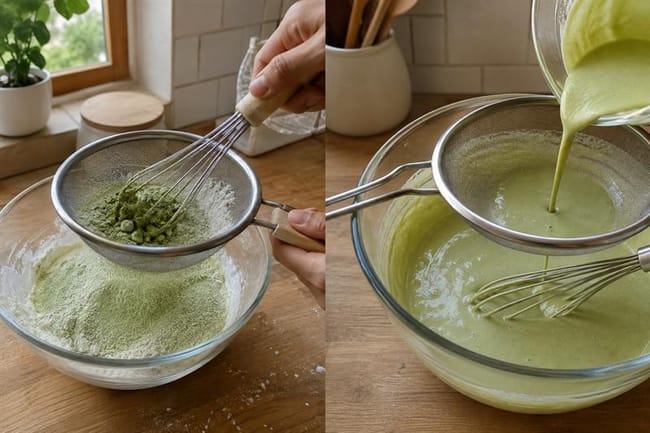
Sift the cake flour, cornstarch, matcha, and salt together twice, breaking every green lump. Add to the dairy base in two batches, whisking from the center outward only until uniformly green. Pass the finished base through the sieve once more.
Whip a Glossy Medium-Peak Meringue
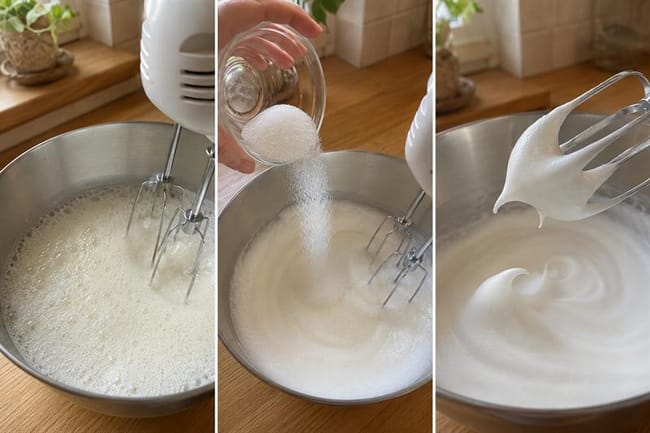
Beat the egg whites on low until loose foam covers the surface. Add lemon juice, then continue at medium-low until bubbles become fine and white. Add sugar in three equal additions, waiting about 30 seconds between each. Increase to medium and stop at glossy medium peaks.
Fold Without Sacrificing the Air
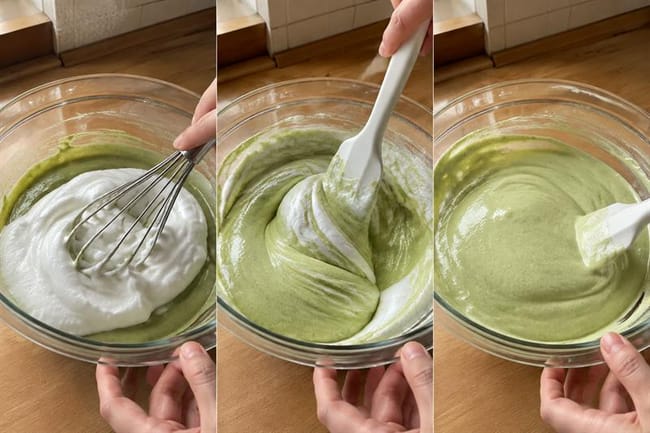
Whisk one-quarter of the meringue into the matcha base to lighten it. Add half the remaining meringue and fold with a wide spatula: cut through the center, sweep along the bottom, lift upward, and rotate the bowl. Repeat with the final portion.
Fill the Pan and Begin the Gentle Bake
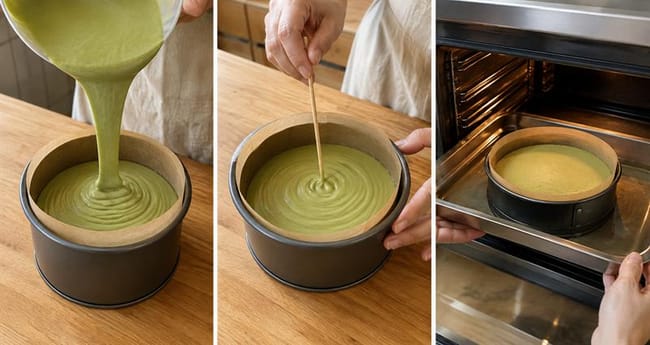
Pour batter from low height into the prepared pan. Run a thin skewer through it in a spiral to pop only large hidden pockets, then tap the pan once. Pour hot water around the pan to a depth of about 2 cm. Bake at 150°C for 20 minutes, then lower to 135°C/275°F and continue 40 to 50 minutes.
Test Doneness and Cool Gradually
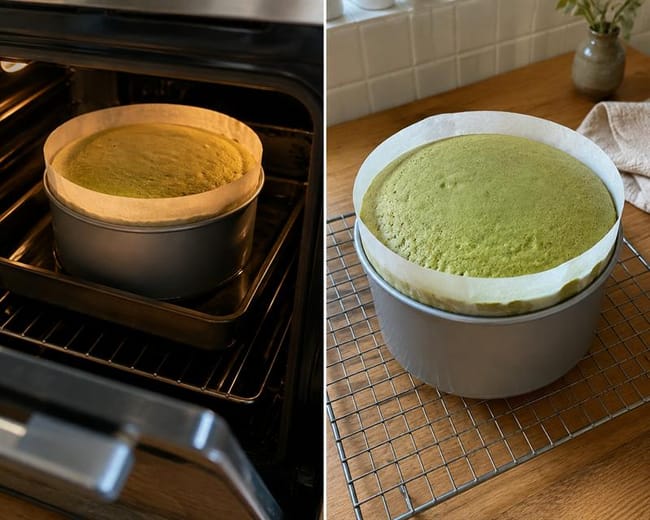
When the center has a controlled wobble, turn off the oven and leave the door closed for 10 minutes. Open it 5 cm and wait another 20 minutes. Remove the roasting tray carefully, lift the cake pan from the water, and let the cake stand in its pan 15 minutes.
Chill, Release, Portion, and Serve
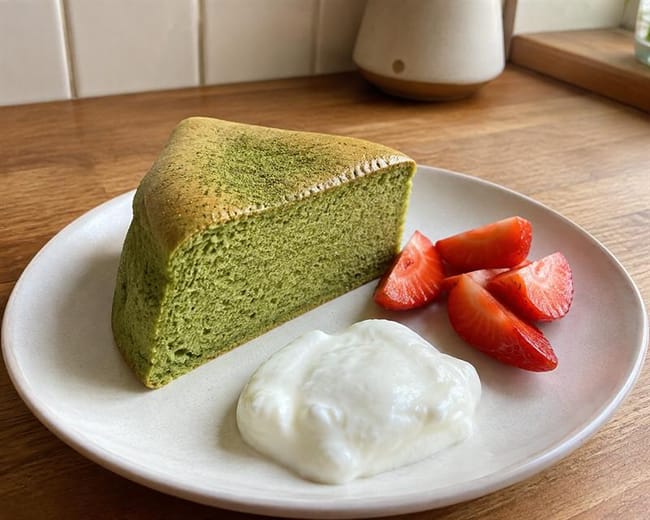
When barely warm, loosen the unlined top edge with a thin spatula. Invert briefly onto parchment-covered cardboard, remove the pan and paper, then turn upright onto a plate. Refrigerate at least two hours. Cut with a thin knife warmed in hot water.
Chef's Tips
Common Mistakes
Why This Recipe Was Designed This Way
This recipe is not medical treatment and cannot promise weight loss or reduced disease risk. It is a portion-conscious version of a beloved Japanese café dessert that shares its dairy base between reduced-fat cream cheese and Greek yogurt while keeping the defining cloudlike rise intact. Its suitability depends on the complete diet and individual needs.
🧀 A Moderated Saturated-Fat Profile
Reduced-fat cheese, 2% yogurt, and lower-fat milk can reduce saturated fat compared with recipes based on full-fat cream cheese, butter, and whipped cream.
🥚 More Protein From Dairy and Eggs
Greek yogurt, reduced-fat cream cheese, and eggs provide protein within the dessert itself, though a slice is not equivalent to a complete meal.
🍯 Deliberately Measured Sweetness
Honey and superfine sugar total 80 g for the entire cake. Sugar in the meringue performs a structural function, while matcha and vanilla create flavor without frosting.
🍵 Matcha Used Realistically
Matcha supplies tea flavor and naturally occurring plant compounds, though it also supplies caffeine — more powder is not automatically more beneficial.
📏 Portion Is Part of the Design
The tall six-inch cake divides into eight satisfying wedges, making the portion visible, repeatable, and easier to fit within an overall eating pattern.
Ingredient Swaps
Need to customize this Balanced Matcha Soufflé Cake? These substitutions preserve the cloudlike character while adapting the recipe to different preferences.
| Instead of... | Try... |
|---|---|
| Reduced-fat cream cheese | Full-fat block cheese (richer, more saturated fat) |
| Cake flour | 39 g all-purpose flour plus 6 g additional cornstarch |
| Mild honey | Pure maple syrup, by weight |
| Lower-fat milk | Unsweetened soy milk |
| 2% Greek yogurt | Thick 0% Greek yogurt (leaner crumb) |
| Fresh strawberries | Raspberries or orange segments |
| Fresh lemon juice | ¼ teaspoon cream of tartar |
What Research Says
The ingredients in this recipe were selected because they reflect common principles in balanced cake patterns that combine moderated dairy fat, measured eggs, and green tea. The information below summarizes current nutrition research and is intended for educational purposes only.
🧀 Dairy and Cheese
Reduced-fat cream cheese and Greek yogurt provide calcium and protein with less saturated fat than full-fat versions.
- Good source of calcium and complete protein.
- Lower in saturated fat than full-fat cheese and cream combinations.
- Sodium content varies by brand.
🍵 Green Tea and Matcha
Matcha is a concentrated form of green tea leaves that provides plant compounds along with caffeine.
- Contains catechins studied for antioxidant properties.
- Naturally contains caffeine, which varies by preparation.
- Contributes color and flavor without significant calories.
🥚 Eggs
Eggs provide complete protein and the foaming properties central to the cake's characteristic rise.
- Excellent source of complete, high-quality protein.
- Naturally rich in choline.
- Central to the technique of a properly whipped meringue.
🍓 Fresh Fruit
Strawberries contribute vitamin C, fiber, and antioxidant compounds while adding volume without significant calories.
- Excellent source of vitamin C.
- Contributes fiber uncommon in most frosted cakes.
- Adds color and acidity without a sweetened glaze.
Estimated Nutrition
Per serving
*Estimate for one-eighth of the cake with the stated plain yogurt and strawberries. Brands, egg size, and matcha concentration all change the result.
Storage & Reheating
Refrigerate the cooled cake in a shallow airtight container within two hours. Keep cut surfaces covered so the crumb does not absorb refrigerator odors or dry out.
Refrigerating
Store the strawberries separately and add them at service. The cake is best during the first two days and may be kept up to three days at 4°C or colder.
Freezing
Freeze unadorned individual slices tightly wrapped in a container for up to one month. Thaw overnight in the refrigerator without unwrapping to limit surface condensation.
Reheating
Room Temperature Only: This cake is designed for chilled or cool-room-temperature service. For a softer texture, place one slice on a covered plate at room temperature for 15 minutes. Microwaving is not recommended.
Meal Prep Tips
Bake the cake one day before serving, cool it gradually, and chill it in its pan or covered container. Weigh dry ingredients and line the pan several hours ahead, but whip meringue only when the base and oven are ready.
Serving Suggestions
This Balanced Matcha Soufflé Cake pairs beautifully with simple, fresh accompaniments.
Fresh Strawberries: Quartered strawberries beside the cake add acidity, color, and a juicy contrast to the soft green crumb.
A Small Spoonful of Greek Yogurt: 10 g plain yogurt beside each slice adds tang without altering the cake itself.
A Light Whisper of Sifted Matcha: A very light dusting just before serving adds visual appeal without tasting sharply bitter.
Unsweetened Green Tea: A warm, unsweetened tea echoes the cake's own matcha notes for a cohesive café experience.
Unsweetened Coffee: A simple black coffee balances the dessert's sweetness for an afternoon treat.
Frequently Asked Questions
Is this a soufflé, a sponge cake, or a cheesecake?
It combines features of all three. Egg-white foam gives soufflé-like lift, flour allows cake-style slicing, and cultured dairy creates a light cheesecake character.
Why did my cake rise dramatically and then collapse?
The meringue may have been whipped too stiffly, oven heat may have been excessive, or the cake may have cooled suddenly. Stop at glossy medium peaks and cool in stages.
Why is there a dense or gummy layer at the bottom?
The heavy matcha base probably was not fully incorporated into the meringue. Scrape the bottom during every folding stroke and use a solid pan when possible.
Can I remove all the sugar or use only honey?
Removing sugar from the meringue changes foam stability, expansion, browning, and moisture, so a direct replacement is unreliable.
Can I use full-fat or fat-free dairy?
Full-fat block cream cheese generally works and produces a richer cake with more saturated fat. Fat-free cream cheese can contain gums and more water, leading to rubbery results.
How do I keep the top from cracking?
Use moderate heat, hot water at the correct depth, flexible medium-peak meringue, and avoid opening the door during the rising phase.
Can I make it without caffeine?
True matcha naturally contains caffeine. For a caffeine-free version, omit matcha and add 8 g extra cake flour plus citrus zest, understanding it becomes a different yogurt soufflé cake.
Does the healthier ingredient choice make this cake suitable for weight loss or diabetes?
Not automatically. The recipe moderates saturated fat and added sugar, but it remains dessert and contains carbohydrates, dairy, eggs, and calories.
Related Recipes
If you enjoyed this Balanced Matcha Soufflé Cake, you may also like these recipes from our Japanese Café Desserts collection.
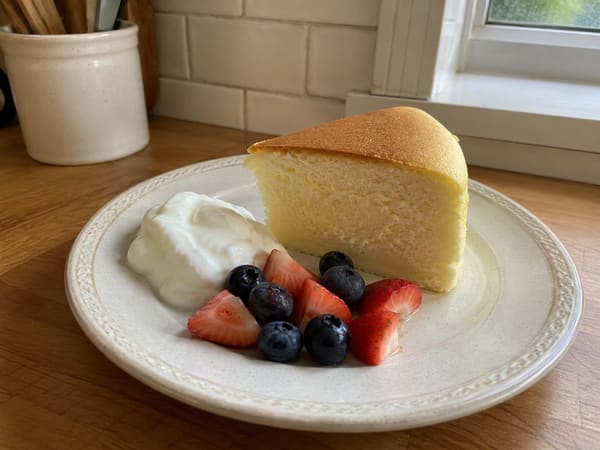
🍰 Balanced Japanese Cheesecake
A tall, cotton-soft cheesecake with lemon, Greek yogurt, and measured sweetness.
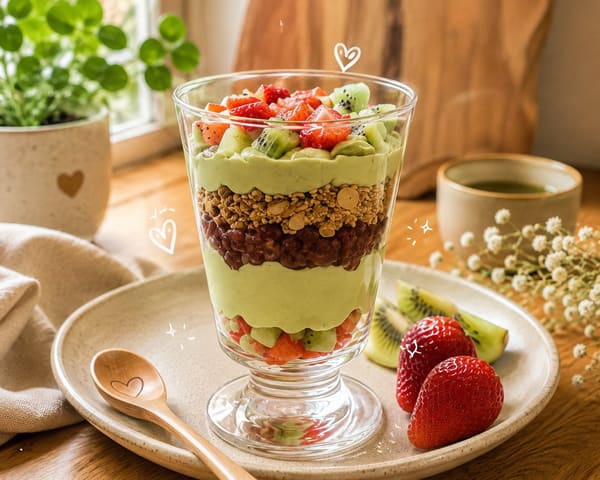
🍵 🍵 Matcha Parfait
A layered café dessert with vivid tea cream, fruit, crisp oat clusters, and soft rice dumplings.
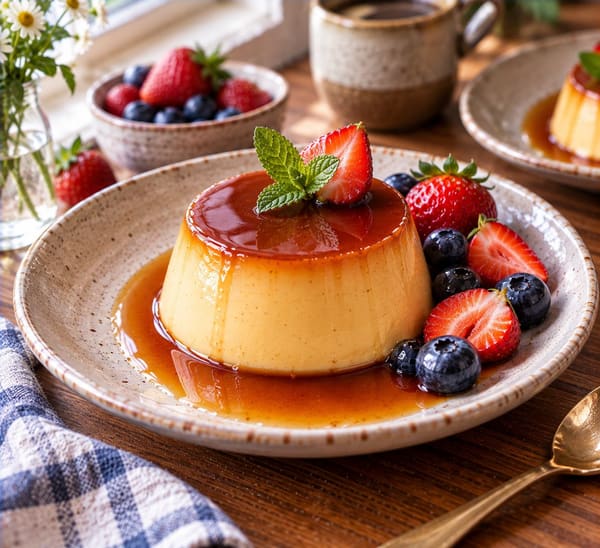
🍮 Balanced Japanese Purin with Light Caramel
A silky baked custard with a glossy amber sauce, restrained sweetness, and a fruit-bright café finish.