
Balanced Japanese Purin with Light Caramel
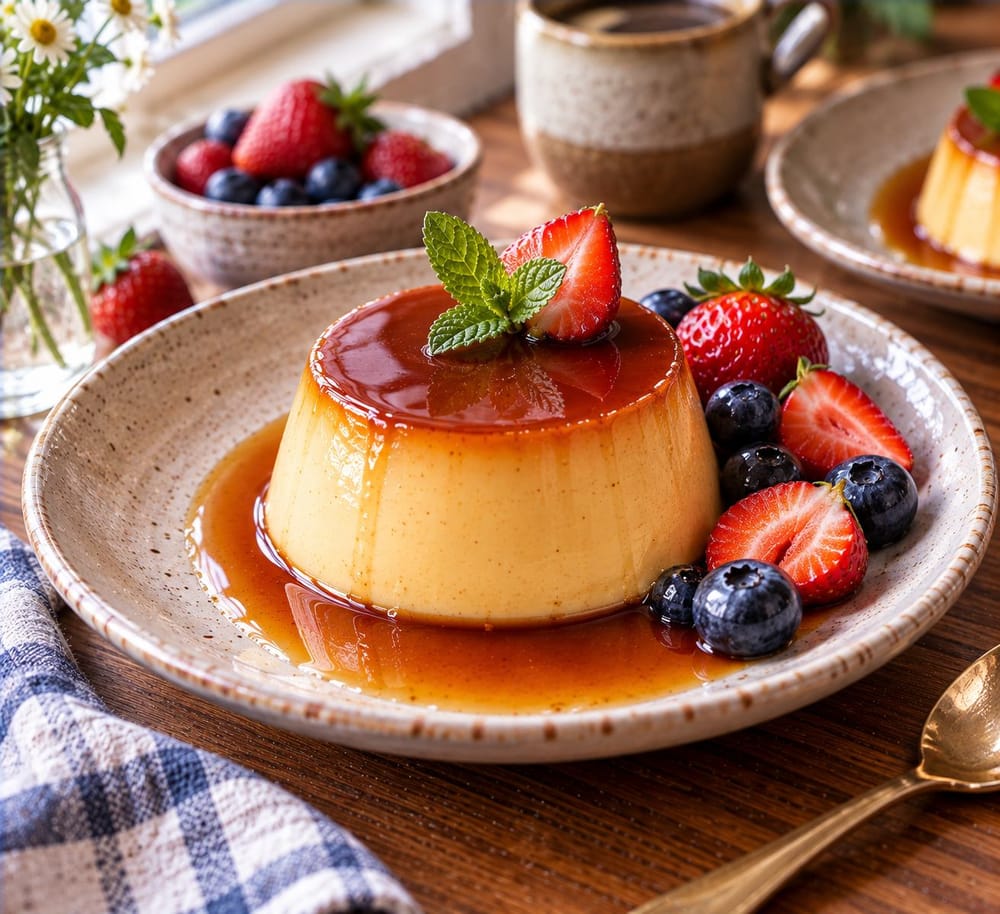
The classic café and convenience-store versions may contain generous sugar, richer dairy, or stabilizers designed for transport. This homemade interpretation keeps the identity of purin while making several measured adjustments. Lower-fat milk supplies most of the liquid, evaporated skim milk brings concentrated dairy flavor without cream, and skim milk powder reinforces body and protein.
Four whole eggs plus one yolk provide enough structure for clean unmolding while avoiding a yolk-heavy formula. The caramel remains real caramel because its bittersweet aroma is central to purin; the layer is simply thinner and the sugar is weighed carefully.
Honey is used in a modest amount inside the custard, where it rounds the vanilla and citrus notes. Fresh strawberries and blueberries bring acidity and color beside the chilled pudding. One purin should feel like a complete café dessert, not a "substitute" that asks the diner to overlook rubbery texture or weak flavor.
Recipe Information
| Prep Time | 30 minutes |
| Cook Time | 30-38 minutes baking, plus at least 4 hours chilling |
| Total Time | About 5 hours 15 minutes |
| Servings | 8 individual purin |
| Difficulty | Intermediate |
| Calories | ~180 kcal each |
Quick Highlights
- ✅ Real caramel, simply thinner and carefully weighed
- ✅ Lower-fat milk and evaporated skim milk for body
- ✅ Four eggs plus one yolk for clean unmolding
- ✅ Honey rounds the vanilla and citrus notes
- ✅ Fresh strawberries and blueberries served alongside
- ✅ Eight clearly defined individual portions
- ✅ Best made a day ahead and chilled overnight
Ingredients
Makes 8 individual purin (150 ml cups)









Step-by-Step Instructions
Prepare the Cups, Oven, and Water Bath
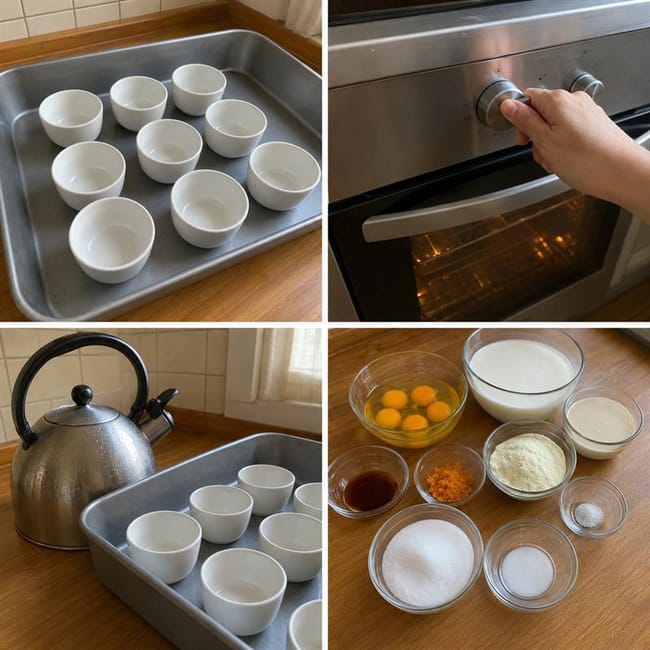
Arrange eight identical 150 ml cups in a deep roasting pan, making sure they stand level and do not touch. Preheat the oven to 150°C/300°F. Bring a kettle of water to a boil, then keep it covered. Separate the sugar portions and measure every custard ingredient.
Cook the Light Amber Caramel
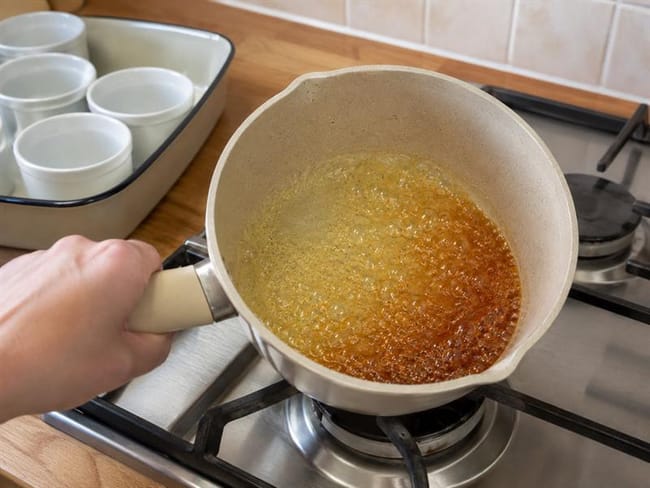
Put 45 g sugar, 30 ml water, and lemon juice in a small light-colored saucepan. Swirl gently before heat so every crystal is wet, then cook over medium heat without stirring. Watch the color progress from clear to straw and then medium amber, swirling the pan for evenness.
Divide and Set the Caramel
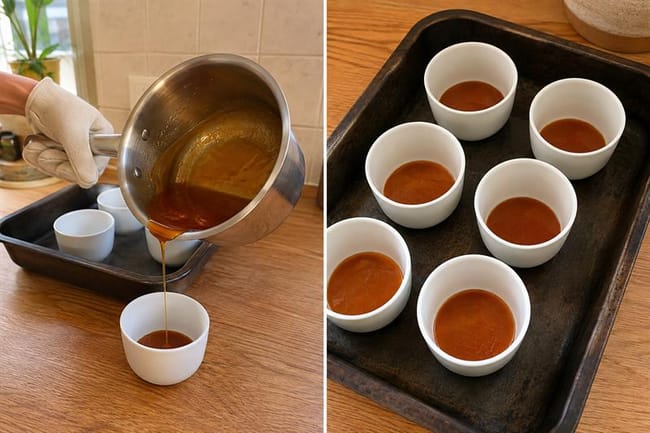
Working immediately, pour a thin, equal layer of caramel into each cup. Tilt each cup carefully with heatproof gloves so caramel coats most of the base. Return to the tray and leave untouched for 10 minutes.
Infuse the Dairy Mixture
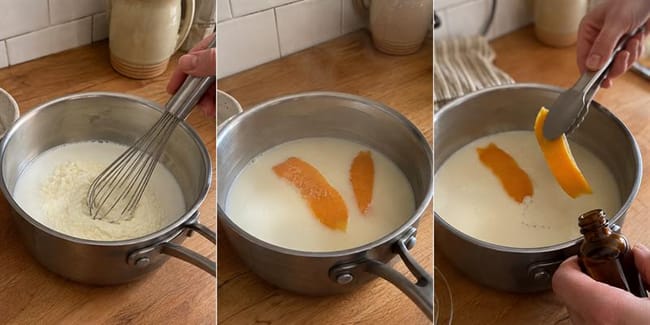
Whisk a small amount of the milk with the skim milk powder in a medium saucepan until smooth. Add the remaining milk, evaporated skim milk, honey, 25 g sugar, orange peel, and salt. Warm over medium-low heat until steam rises, about 65-70°C. Remove from heat, cover 5 minutes to infuse, then discard the peel and stir in vanilla.
Combine Eggs Without Creating Foam
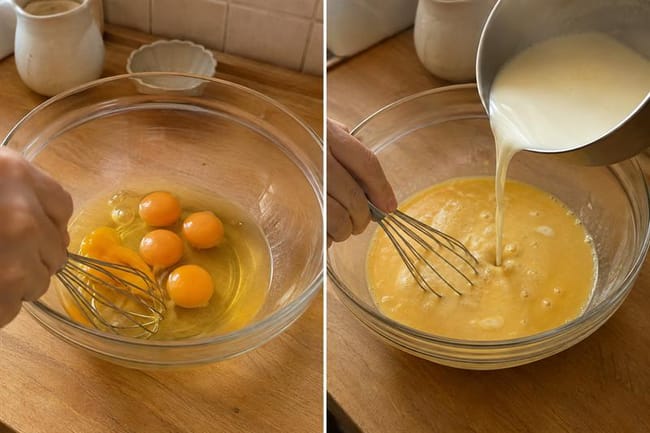
Place the four eggs and one yolk in a large bowl. Break the yolks with a whisk and stir slowly in one direction, keeping the whisk beneath the surface. Pour in about one-quarter of the warm dairy as a thin stream while stirring gently, then add the remainder in two more additions.
Strain, Fill, and Remove Bubbles
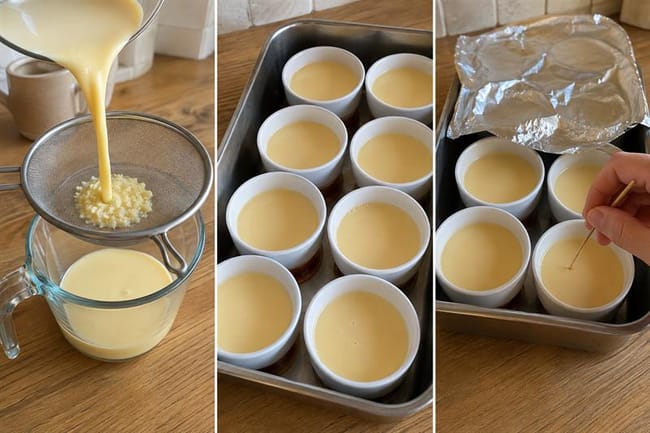
Pour the custard through a fine sieve into a jug, catching chalaza or coagulated egg. Divide the liquid equally among the caramel-lined cups, leaving at least 1 cm of headspace. Pop isolated bubbles with a skewer. Cover each cup loosely with foil.
Bake Gently in the Water Bath
Place the roasting pan on the oven rack, then pour hot kettle water around the cups until it reaches halfway up their sides. Bake 30 to 38 minutes. Begin checking at 30 minutes: the outer ring should look set, while the center wobbles as one soft unit when nudged.

Cool, Chill, Unmold, and Serve
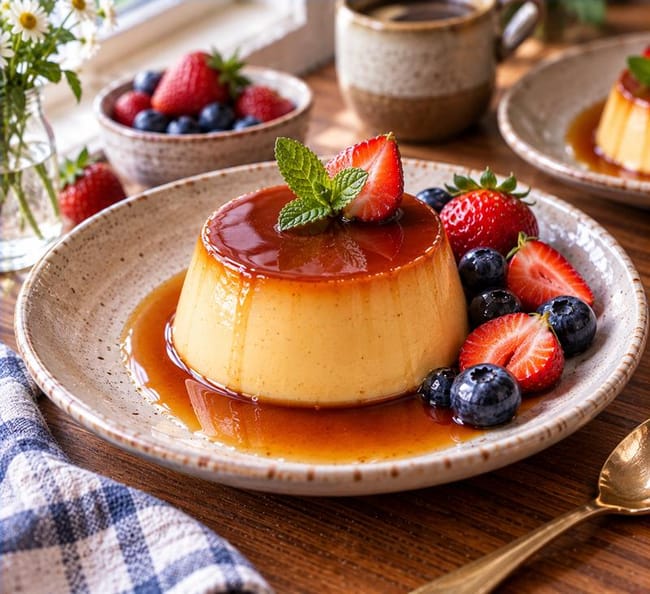
Place the cups on a rack for 30 minutes, then cover and refrigerate at least 4 hours, preferably overnight. To unmold, dip only the cup's base in warm water for 5 seconds. Run a thin knife around the edge, place a plate over the cup, and invert in one confident movement. Arrange strawberries, blueberries, and one mint leaf beside it.
Chef's Tips
Common Mistakes
Why This Recipe Was Designed This Way
This recipe is not medical treatment and cannot promise weight loss or reduced disease risk. It is a portion-conscious version of a beloved Japanese café dessert that uses concentrated dairy solids for richness instead of heavy cream, while keeping real caramel central to the experience. Its suitability depends on the complete diet and individual needs.
🥛 Dairy Solids Support Texture and Protein
Lower-fat milk, evaporated skim milk, and milk powder create a creamy structure without heavy cream, also contributing protein and calcium.
🍯 Caramel Remains Present but Measured
The characteristic sauce is not replaced by a flavor imitation — a thin layer supplies toasted complexity while precise weighing prevents a thick candy cap.
📏 An Individual Mold Defines the Serving
Eight equal cups provide a more consistent starting point than scooping from a large bowl, making intentional portion adjustment easier.
🥚 Eggs Provide Structure Without Excess Yolk
Four whole eggs plus one yolk give clean unmolding while avoiding a yolk-heavy, cholesterol-dense formula.
🍓 Fresh Fruit Adds Brightness Without Extra Sugar
Strawberries and blueberries bring acidity and color beside the custard rather than a sweetened sauce poured over it.
Ingredient Swaps
Need to customize this Balanced Japanese Purin? These substitutions preserve the silky character while adapting the recipe to different preferences.
| Instead of... | Try... |
|---|---|
| Evaporated skim milk | Additional 2% milk (texture will be lighter) |
| Lower-fat milk | Whole milk, for extra richness |
| Mild honey | Maple syrup, in a similar quantity |
| Fresh strawberries | Raspberries or sliced kiwi |
| Fresh blueberries | Pomegranate arils |
| Orange peel | Lemon peel, for a sharper citrus note |
| Skim milk powder | No direct substitute — omitting reduces body |
What Research Says
The ingredients in this recipe were selected because they reflect common principles in balanced custard patterns that combine concentrated dairy, measured eggs, and fresh fruit. The information below summarizes current nutrition research and is intended for educational purposes only.
🥛 Dairy Protein
Concentrated milk solids provide high-quality protein, calcium, and riboflavin without relying on heavy cream for richness.
- Good source of complete protein and calcium.
- Contributes riboflavin and iodine in meaningful amounts.
- Lower in saturated fat than cream-based custards.
🥚 Eggs
Eggs provide complete protein and the coagulating structure that allows custard to hold its shape after unmolding.
- Excellent source of complete, high-quality protein.
- Naturally rich in choline.
- Central to the technique of a properly set custard.
🍯 Natural Sweeteners
Honey provides sweetness along with trace antioxidant compounds compared to refined sugar alone.
- Contributes antioxidant compounds in small amounts.
- Still counts as added sugar requiring portion awareness.
- Dissolves easily into warm dairy for even sweetness.
🍓 Fresh Fruit
Strawberries and blueberries contribute vitamin C, fiber, and antioxidant pigments while adding volume without significant calories.
- Good source of vitamin C and dietary fiber.
- Blueberries provide anthocyanin pigments studied for antioxidant properties.
- Adds color and acidity without a sweetened sauce.
Estimated Nutrition
Per serving
*Estimate for one of eight purin, including caramel, custard, and approximately 20 g strawberries and 10 g blueberries. Dairy brands, egg size, and fruit portion all change the result.
Storage & Reheating
Keep purin covered in its cup in the refrigerator and unmold only before serving. It remains at its best for three days and may be kept for up to four days if continuously chilled at 4°C/40°F or below.
Refrigerating
Store berries separately, washed and thoroughly dry. Do not leave custard at room temperature for more than two hours.
Freezing
Freezing is not recommended. Ice crystals damage the delicate egg-and-milk network, often causing watery seepage and a grainy mouthfeel after thawing.
Reheating
Room Temperature Only: Japanese purin is designed to be served chilled and should not be reheated. If needed, place the sealed cup at room temperature for five minutes only, then unmold.
Meal Prep Tips
Bake purin one day before serving, cool promptly, cover each cup, and chill overnight. Wash berries the same day and slice strawberries just before plating.
Serving Suggestions
This Balanced Japanese Purin pairs beautifully with simple, fresh accompaniments.
Fresh Strawberries and Blueberries: Sliced strawberries and whole blueberries beside the custard add acidity, color, and a juicy contrast.
Unsweetened Green Tea: A warm, unsweetened tea cuts through the sweetness and echoes the dessert's Japanese café origins.
A Single Mint Leaf: A small fresh leaf adds fragrance and a clean green accent without altering the flavor.
Roasted Barley Tea: A nutty, caffeine-free tea pairs naturally with the caramel notes.
Unsweetened Coffee: A simple black coffee balances the dessert's sweetness for an afternoon treat.
Frequently Asked Questions
What is Japanese purin?
Purin is a Japanese custard dessert influenced by European caramel pudding. It is generally firmer than very delicate crème caramel so it can stand neatly after unmolding, yet remains silky and softly trembling.
Why did my caramel crystallize?
Undissolved sugar on the saucepan wall may have fallen into the syrup, or the mixture may have been stirred after boiling. Wet all sugar before heating and swirl the pan instead of stirring.
Why does my purin contain many holes?
Holes generally come from air in the mixture or excessive baking heat. Stir eggs slowly, strain the custard, remove surface bubbles, and maintain a gentle water bath.
Why did the custard fail to set?
It may have been removed while the center still moved as liquid. Bake until the outer area is set and the middle trembles as one unit, ideally reaching 78-80°C, then chill at least four hours.
Why did the purin break when unmolded?
The custard may be warm, underbaked, or shaken too vigorously. Chill it fully, run a thin knife around the edge, and dip only the bottom briefly in warm water.
Can I use only regular milk?
Yes, but texture and nutrition will change. Replace evaporated skim milk with the same amount of 2% milk and keep the milk powder.
Can I make this recipe dairy-free?
A direct swap is unreliable because three dairy ingredients contribute protein and solids that control the set. A separately tested dairy-free formula is safer than improvising substitutions.
Does balanced purin guarantee weight loss or better blood sugar?
No single dessert can guarantee those outcomes. This formula offers an individual serving, measured added sugar, and fruit, but it still contains carbohydrate, milk sugar, and eggs.
Related Recipes
If you enjoyed this Balanced Japanese Purin, you may also like these recipes from our Japanese Café Desserts collection.
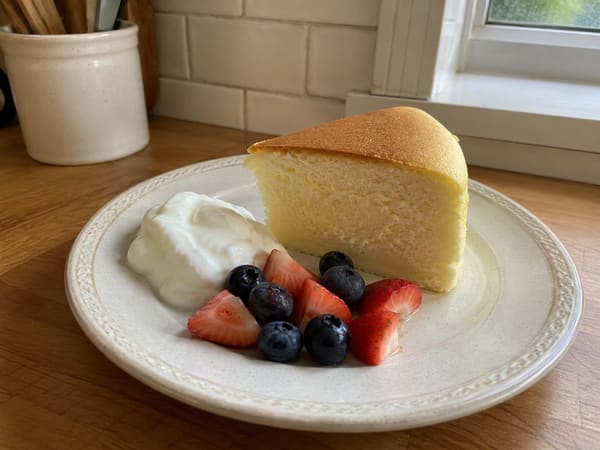
🍰 Balanced Japanese Cheesecake
A tall, cotton-soft cheesecake with lemon, Greek yogurt, and measured sweetness.
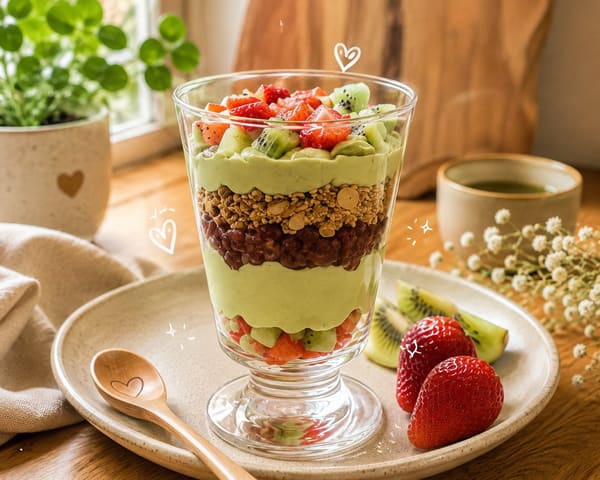
🍵 🍵 Matcha Parfait
A layered café dessert with vivid tea cream, fruit, crisp oat clusters, and soft rice dumplings.
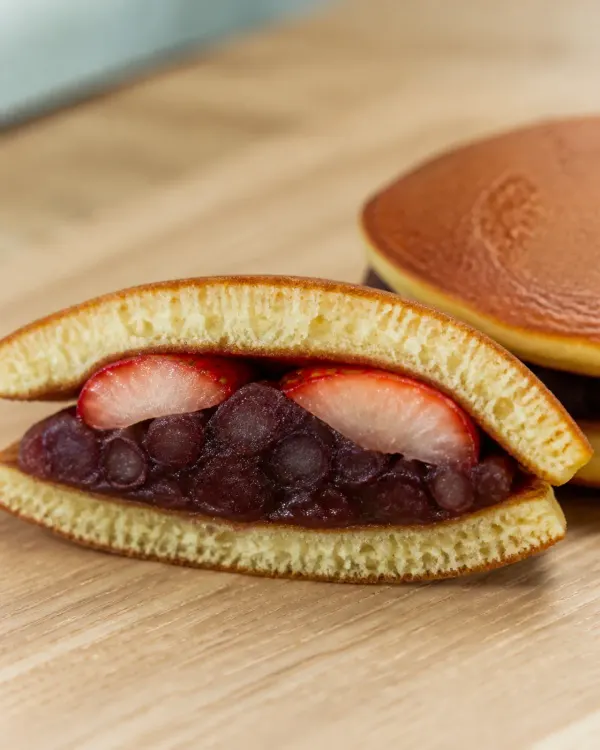
🥮 Balanced Dorayaki with Naturally Sweetened Anko
Soft honey pancakes filled with creamy adzuki beans, dates, and restrained sweetness.