
Balanced Moroccan Chermoula Fish Tagine

Reviews)
“Everything people love about a Moroccan fish tagine—firm white fish saturated with fresh chermoula, tender potatoes and carrots, jammy tomatoes, sweet peppers, briny olives and preserved lemon slowly braised in a vivid paprika-cumin sauce—prepared with measured olive oil, abundant vegetables and carefully controlled salt without losing the dish’s unmistakable coastal character.”
A colourful one-pot centrepiece where bright herbs, citrus, spices and tender fish meet a deeply savoury vegetable base.
Moroccan fish tagine with chermoula is one of the country’s most recognisable ways to cook fresh fish. A firm fish is first coated in a pungent mixture of cilantro, parsley, garlic, cumin, paprika, lemon and olive oil. It then cooks gently over layered potatoes, carrots, onions and tomatoes, with peppers, olives and preserved lemon completing the sauce.
The technique is as important as the ingredient list. Dense vegetables require a head start, while fish needs only a short, gentle finish. If everything enters the tagine at once, potatoes may remain hard or the fish can become dry before the base is tender. Layering solves that problem and allows the vegetable juices to form the cooking liquid.
Traditional versions may use a whole fish, a generous pour of oil, salty preserved lemon and a large handful of olives. Those choices create a beautiful communal dish, but fillets are more practical for consistent portions and easier eating. Measuring oil and salty garnishes lets the chermoula remain vivid rather than becoming heavy.
This adaptation keeps the cultural structure intact. It does not remove potatoes, tomatoes, chermoula, preserved lemon or olives. Instead, thick skinless fillets provide easy portions; vegetables occupy most of the tagine; olive oil is measured; lower-sodium liquid is used sparingly; and preserved lemon peel and rinsed olives deliver concentrated flavour in deliberate quantities.
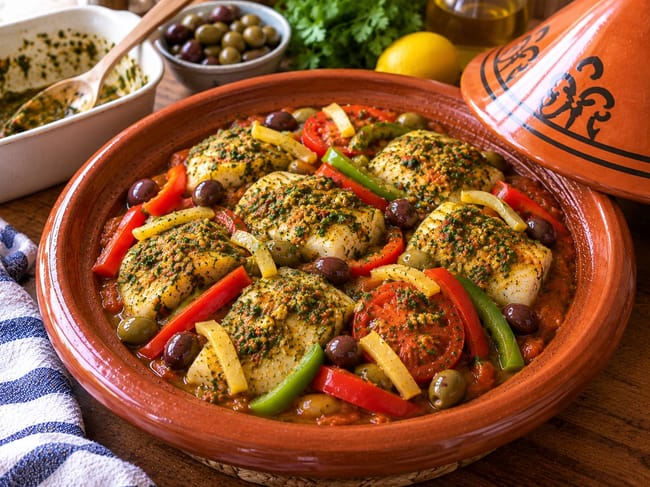
The finished tagine remains unmistakably Moroccan: tender fish beneath green herbs and red spices, vegetables arranged in visible layers, golden sauce, lemon strips and olives. Served as one carefully composed portion, it feels generous and festive without presenting a familiar dish as medicine.
The covered vessel also changes how flavour develops. Steam circulates beneath the lid, tomatoes release their juice and the chermoula moves downward through the vegetables rather than requiring constant stirring. That quiet method protects the fish and preserves the visual layers. The cook’s main responsibilities are accurate slicing, gradual heat and checking the densest ingredients at the right time, not repeatedly disturbing the food.
Recipe Information
| Prep Time | 35 minutes |
| Cook Time | 55 minutes |
| Total Time | 2 hours 15 minutes |
| Servings | 6 |
| Difficulty | Intermediate |
| Calories | ~390 kcal / serving* |
Quick Highlights
Ingredients
Makes one 30 cm tagine or deep covered skillet, serving 6.







Step-by-Step Instructions
Make the Fresh Chermoula
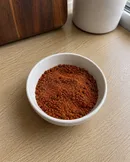
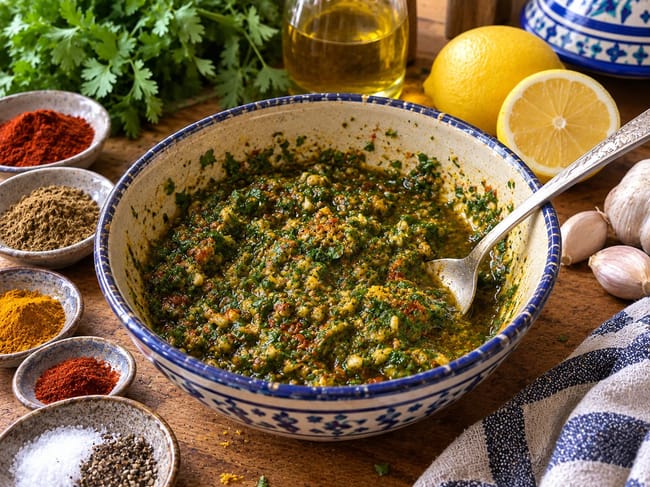
Combine cilantro, parsley, garlic, paprika, cumin, turmeric, cayenne, lemon zest, lemon juice, 2 tablespoons olive oil, black pepper and half the optional salt in a bowl.
Pound with a mortar or stir firmly until the herbs release moisture and the mixture becomes cohesive but remains visibly textured. It should smell bright, earthy and garlicky, with no dry pockets of spice.
Reserve one third of the chermoula for the vegetables and sauce. The remaining two thirds will season the fish. Use separate clean spoons once raw fish touches the marinade.
Marinate the Fish Briefly
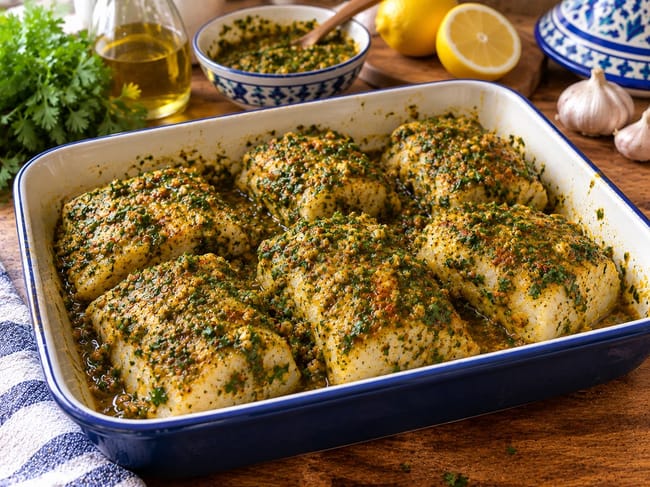
Pat the fish portions completely dry and check once more for pin bones. Spread two thirds of the chermoula over every surface and place the pieces in a single layer inside a non-reactive dish.
Cover and refrigerate for 45 minutes. This time allows herbs, cumin and paprika to perfume thick fish without leaving lemon acid against it for so long that the exterior changes texture.
Remove the fish from the refrigerator about 10 minutes before it enters the tagine. Do not leave it at room temperature for an extended period.
Prepare the Vegetable Layers
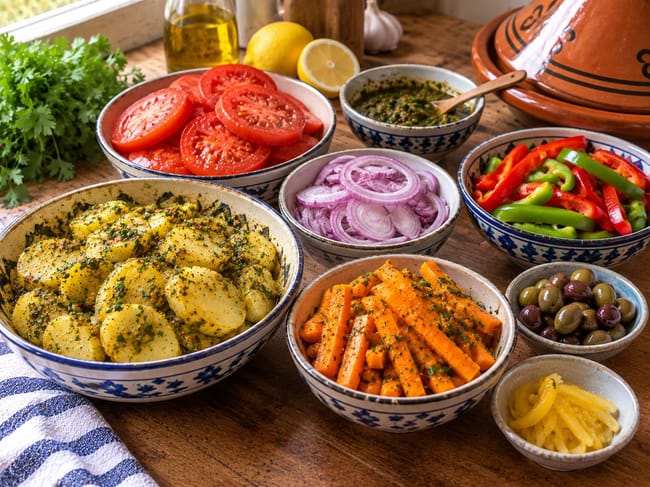
Slice potatoes to a consistent 5 mm thickness. Cut carrots into slender batons, onion into rings, tomatoes into slices and peppers into strips. Keep each vegetable separate because they enter at different times.
Toss potatoes and carrots with half the reserved chermoula and 1 teaspoon olive oil. Rub the seasoning gently across every surface rather than adding more oil.
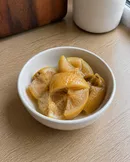
Rinse olives and preserved lemon peel, then drain well. Preheat a heat diffuser if using a clay tagine on the stove, or set a Dutch oven over low heat. Never expose unseasoned clay cookware to sudden high heat.
Build the Vegetable Base
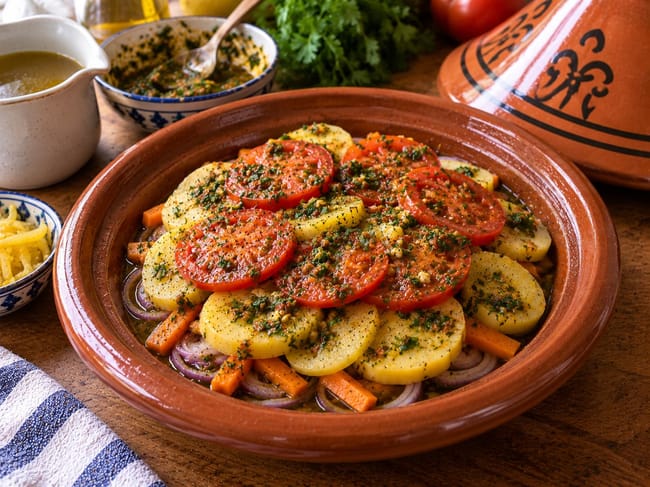
Brush the tagine base with the remaining oil. Arrange onion rings across the bottom, then cross the carrot batons through the centre to create a protective rack.
Layer potatoes in slightly overlapping circles. Place half the tomato slices over them and spoon the seasoned chermoula clinging to the vegetable bowl across the surface.
Add 160 ml hot stock or water around the edge, not directly over the spices. Cover the tagine and bring it slowly to a gentle simmer over low to medium-low heat.
Give Dense Vegetables a Head Start
Cook the covered vegetable base for 22–28 minutes. Maintain a quiet simmer; vigorous boiling can crack delicate clay and cause potatoes to stick or break.
At 18 minutes, insert the tip of a knife into a potato. It should meet resistance but no longer feel raw. Add part of the reserved hot liquid only if the base looks dry before the tomatoes release juice.
Spoon a little cooking sauce over exposed potatoes. Do not stir the layered base, which would break the slices and remove the stable platform needed for fish.

Add Fish, Peppers, Olives & Lemon
Arrange the marinated fish portions over the partly cooked vegetables in a single layer. Scrape any chermoula remaining in the fish dish over the top.
Place the remaining tomato slices and pepper strips around and over the fish without burying it completely. Scatter rinsed olives and preserved lemon strips evenly across the tagine.
Cover and return to the gentlest simmer. The cold fish may briefly stop bubbling; allow heat to recover gradually instead of increasing the burner sharply.
Cook Gently Until Fish Just Flakes
Cook covered for 14–20 minutes depending on thickness. Begin checking the thickest piece after 13 minutes. Fish should turn opaque, separate into moist flakes under light pressure and reach 63°C (145°F).
Check a central potato at the same time; it should be completely tender. If potatoes need longer but fish is ready, transfer fish carefully to a warm covered plate while vegetables finish.
Uncover for the last 3–5 minutes if the sauce is too thin. Spoon sauce around the fish rather than repeatedly over its delicate surface. Taste only the sauce before adjusting salt.

Rest, Garnish & Serve
Remove the tagine from heat and rest uncovered for 5 minutes. The sauce settles and thickens slightly while the fish finishes gently without aggressive heat.
Scatter the reserved fresh herbs over the vegetables. For six individual servings, lift one fish portion onto each plate and add balanced quantities of potato, carrots, tomato, peppers, olives and sauce.
Serve with lemon wedges if desired. A modest piece of whole-grain Moroccan bread can accompany the sauce, but account for it separately from the nutrition estimate.
Chef's Tips
Common Mistakes
Why This Recipe Was Designed This Way
Fish should be opaque and moist, separating into large flakes rather than crumbling into dry fibres. Chermoula remains visible as green herb flecks and red spice across the surface.
Potatoes and carrots are completely tender yet hold their shape. Tomatoes become jammy around the edges, onions soften into the sauce and pepper strips retain enough structure to be recognised.
The aroma moves from fresh herbs and garlic to cumin, paprika, warm tomato and preserved lemon. Olives bring briny depth, but the dish should not taste predominantly salty.
The sauce is glossy and spoonable, thickened by vegetables rather than flour. It gathers around the food without submerging the fish. A continuous orange oil layer indicates excessive fat or insufficient emulsification.
Colour should appear naturally varied: white fish, deep green herbs, red paprika, golden potato, orange carrot and colourful peppers. Uniform fluorescent tones suggest artificial colouring or excessive editing.
For plating, keep the fish centred and lean vegetable slices against it rather than stacking them in a tower. Leave several olive and lemon pieces visible. A few herb leaves add freshness without hiding the chermoula.
When a fork enters the thickest part, the fish should separate along broad moist flakes and release no raw translucent centre. Potato slices yield cleanly without dissolving, while carrots retain a gentle bite. The sauce tastes first of tomato and herbs, then cumin and preserved citrus, with olive salinity at the finish. If lemon dominates immediately, reduce the preserved peel rather than compensating with more salt or oil.
## 👨🍳 Chef’s Tips
### Choose Thick, Firm Fish
Thin delicate fillets cook before the potatoes finish and break during serving. Thick portions provide a wider margin for gentle braising.
### Pat Fish Dry
Surface water dilutes chermoula and prevents it from clinging. Dry fish also releases less excess liquid into the sauce.
### Marinate Briefly
Forty-five minutes seasons the fish without exposing its exterior to acid for many hours. Longer is not automatically better.
### Reserve Chermoula Before Marinating
Set aside the vegetable portion before raw fish touches the mixture. This prevents cross-contamination and preserves fresh flavour.
### Slice Potatoes Evenly
Consistent 5 mm slices cook together. Thick irregular pieces may remain raw when the fish is ready.
### Give Vegetables a Head Start
Potatoes and carrots are dense; fish is delicate. Cooking the base first is the key timing decision in this tagine.
### Use Low Heat with Clay
Sudden high heat can crack a tagine and scorch onions. A diffuser and gradual warming protect both cookware and food.
### Add Liquid Conservatively
Tomatoes and fish release water. Begin with less stock and add more only when the base genuinely looks dry.
### Rinse Salty Garnishes
Rinsing olives and preserved lemon peel removes surface brine while retaining their concentrated flavour.
### Keep Preserved Lemon Peel
The peel carries the prized aromatic character. Discarding seeds and most pulp prevents harshness and excessive salinity.
### Do Not Stir the Layers
Layering protects vegetables and fish. Stirring breaks potatoes, damages fillets and creates a muddy sauce.
### Check the Thickest Piece
Fish portions vary. Temperature and flaking at the thickest centre are more reliable than a fixed minute count.
### Remove Fish If Necessary
When fish is ready before potatoes, transfer it temporarily. Protecting texture is better than overcooking everything together.
### Reduce Sauce Uncovered
A few uncovered minutes concentrate watery sauce. Avoid a hard boil, which dries fish and can split the oil.
### Rest Before Serving
Five minutes allow bubbling to settle and make delicate portions easier to lift without breaking.
### Photograph a Single Complete Portion
The hero must show fish and every major vegetable in one plate, with authentic sauce and slight natural irregularity.
This is not a medical recipe and cannot lower cholesterol, treat inflammation or guarantee weight change. It is a vegetable-rich adaptation that preserves the culinary structure of Moroccan fish tagine while moderating visible oil and sodium.
🐟 Firm White Fish
Fish provides complete protein, vitamin B12 and selenium, with fat and micronutrients varying by species. Some varieties provide more omega-3 fat than others, so generic white fish should not be assigned one identical nutrient profile. Protein can contribute to meal satisfaction, but no single food determines fullness or health outcomes. Species, portion and the entire dietary pattern matter.
🥕 Potatoes, Carrots, Tomatoes & Peppers
The vegetables supply carbohydrates, fibre, potassium, vitamin C and varied plant compounds. Their large volume creates a generous plate without requiring cream, flour or a large amount of oil. Potatoes are not nutritionally empty, but portions still matter. Layering them with fish and vegetables creates context rather than describing them as unlimited.
🌿 Chermoula Herbs & Spices
Cilantro, parsley, garlic, cumin, paprika, turmeric and lemon build intense flavour with moderate salt. They contain naturally occurring plant compounds, but ordinary culinary quantities are not treatment.
🫒 Olive Oil
Three measured tablespoons serve six people and provide mostly unsaturated fat. Oil helps carry spice aromas and produces a rounded sauce. It remains energy-dense. Measuring is the meaningful adaptation; calling olive oil does not make unrestricted quantities irrelevant.
🍋 Olives & Preserved Lemon
These ingredients preserve the briny, fermented notes expected in the dish. Rinsing and measuring them moderates sodium while keeping their flavour concentrated. Sodium still varies substantially by curing method and brand. Anyone following a strict sodium limit should use exact label information and personalised advice.
🔥 Cooking Method
Gentle covered braising cooks fish and vegetables with their own moisture. It avoids deep-frying and allows a relatively small amount of oil to flavour the complete tagine.
🍽️ A Complete Portion
One serving combines fish, several vegetables, potatoes, herbs and sauce. A small piece of bread may be enjoyable, but it changes the carbohydrate and calorie estimate and should be counted separately when relevant.
🧠 Cultural Context & Honest Claims
Chermoula and the layered tagine method are preserved rather than replaced by an unrelated “diet” sauce. Balance comes from portioning, vegetables, measured fat and controlled salt. Enjoyment, family service and cultural familiarity are legitimate qualities of food. This adaptation should support informed choice without labelling the traditional dish morally good or bad.
Ingredient Swaps
| Instead of... | Try... |
|---|
What Research Says
Building the tagine’s sauce around tomatoes, olive oil, and a spice-forward chermoula rather than a cream or butter base keeps saturated fat low while the white fish contributes lean protein and omega-3s, a combination reflected in the Mediterranean-style eating patterns nutrition research most consistently associates with heart health.
Estimated Nutrition
Per Serving
This keeps every serving balanced, attractive and easier to compare while preserving relaxed family-style hospitality.
Storage & Reheating
Refrigerating
Cool leftovers within two hours and refrigerate in a shallow airtight container for up to 2 days. Keep fish portions in a single layer when possible so they do not break.
Store extra bread separately. The sauce may thicken in the refrigerator as potato starch settles.
Reheat gently in a covered skillet over low heat with one or two tablespoons water for 6–10 minutes, until hot throughout. Avoid vigorous boiling.
An oven at 160°C (320°F) also works for 12–15 minutes in a covered dish. Microwave only at reduced power and in short intervals because fish dries quickly.
Freezing
Freezing the complete tagine is not ideal: potatoes become grainy and fish loses delicacy. If necessary, freeze fish and sauce without potatoes for up to 1 month.
Thaw overnight in the refrigerator and reheat gently. Fresh herbs, lemon garnish and olives are better added after reheating.
Reheating
Meal Prep Tips
Prepare chermoula up to 2 days ahead and refrigerate it in a sealed glass container. Reserve portions before using any on raw fish.
Slice vegetables several hours ahead and refrigerate them separately. Keep potatoes submerged in cold water, then drain and dry thoroughly before seasoning.
Rinse olives and preserved lemon, measure spices and prepare the cooking vessel in advance. Marinate fish only 45 minutes before it is needed.
For entertaining, cook the vegetable base ahead by about twenty minutes, pause off heat, then add fish and finish close to serving.
Serving Suggestions
Serve directly from the tagine or a shallow dish with whole-grain bread or couscous on the side to soak up the sauce, and a wedge of fresh lemon for anyone who wants extra brightness.
Frequently Asked Questions
Which fish works best?
Choose a thick, firm white fish such as cod, hake, sea bass or sea bream. Local sustainable availability should guide the final choice.
Can I use frozen fish?
Yes. Thaw completely in the refrigerator, drain and pat very dry before marinating.
Can I omit preserved lemon?
Yes, although the fermented citrus note will be reduced. Add extra fresh zest rather than excessive juice.
Can I omit olives?
Yes. Taste the final sauce because the overall salt and briny character will change.
Can I use sweet potatoes?
Yes, but they soften faster and make the sauce sweeter. Slice slightly thicker and monitor closely.
Do I need a clay tagine?
No. A wide Dutch oven or deep covered skillet works well. Use low heat and preserve the same layers.
Why are my potatoes still hard?
They were sliced too thickly, the vegetable head start was shortened or the simmer was too weak.
Why is my fish dry?
It cooked too long, was too thin or remained in acidic marinade for many hours.
Is this recipe gluten-free?
The tagine itself can be gluten-free when stock, spices and preserved ingredients are certified. Bread is optional and separate.
Does this tagine lower cholesterol?
No. It is not a treatment. Anyone managing cholesterol should consider their complete dietary pattern and personalised medical advice.
Related Recipes
If you enjoyed this Moroccan fish tagine, here are a few more recipes worth trying.
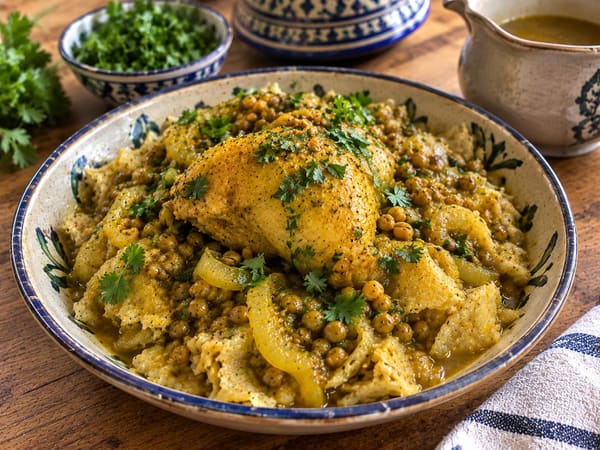
🍲 Rfissa
A fragrant Moroccan celebration dish of slow-cooked chicken and lentils over trid.
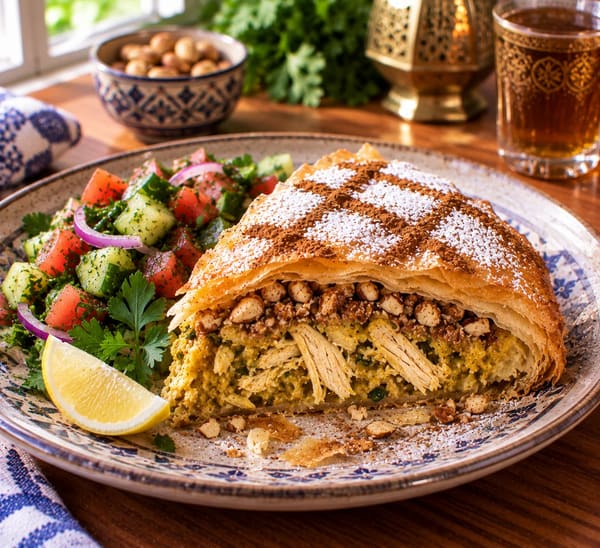
🥧 Chicken Pastilla
Morocco’s celebrated sweet-and-savoury pie, with spiced chicken, almonds and crisp pastry.
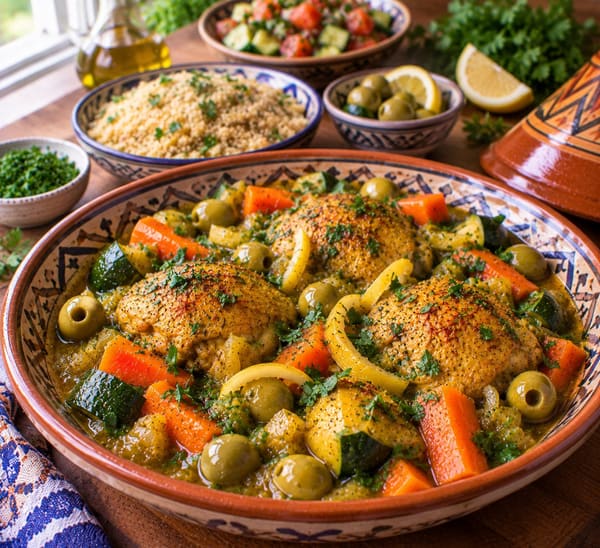
🍋 Healthy Chicken Tagine with Preserved Lemon & Olives
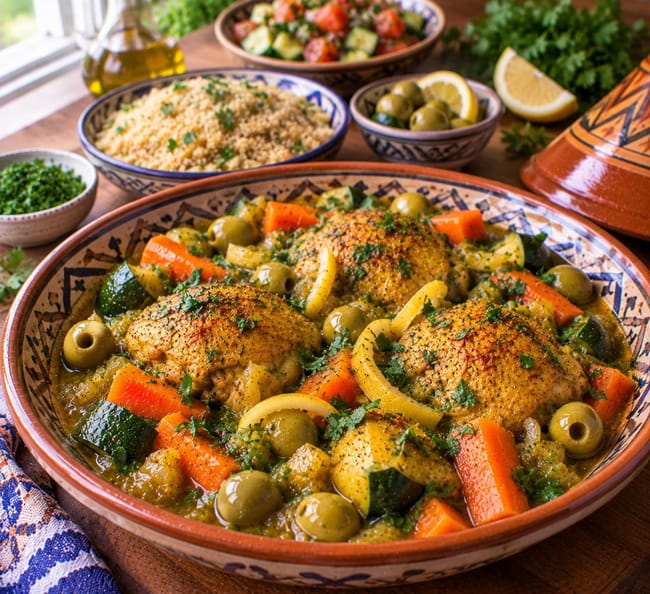
Tender chicken in a golden saffron sauce with preserved lemon and olives.