
Balanced Moroccan Chicken Pastilla
Reviews)
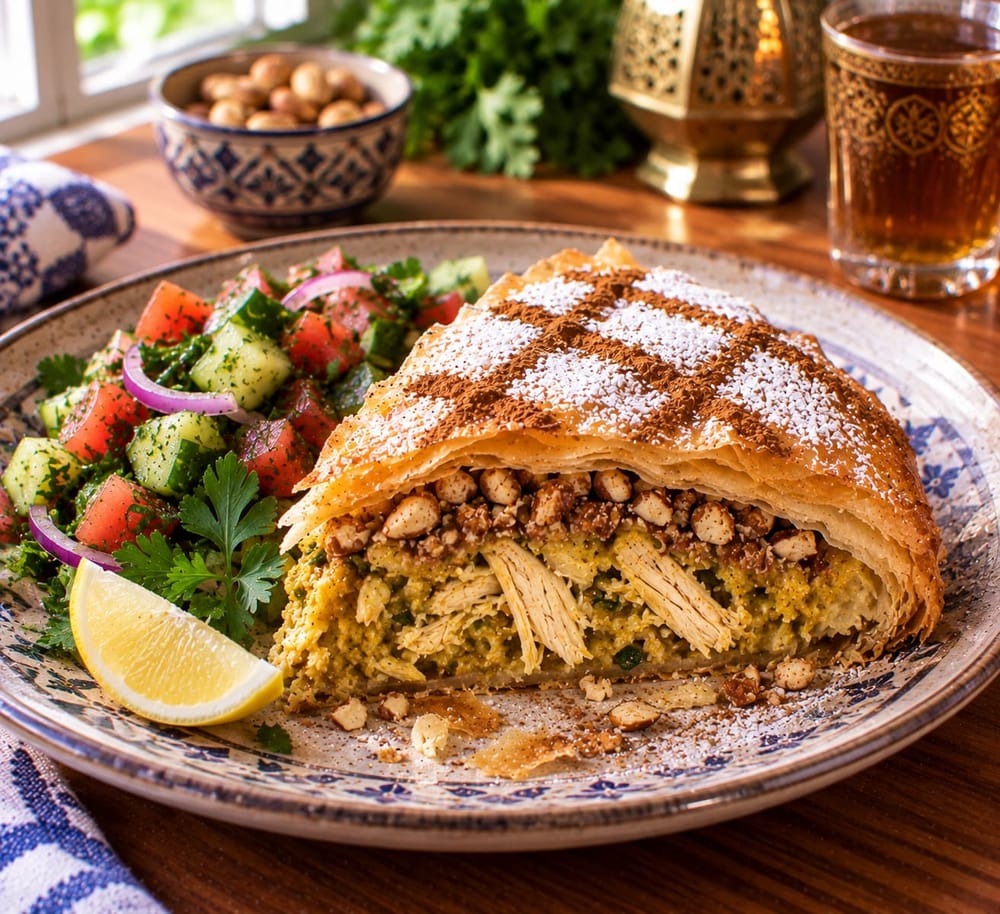
“Everything people love about a magnificent Moroccan chicken pastilla—shatteringly crisp pastry, tender saffron chicken, silky egg-enriched onion sauce, toasted almonds, cinnamon, orange blossom and the surprising final veil of powdered sugar—carefully rebuilt with skinless chicken, toasted rather than fried nuts, measured olive oil, a light pastry coating and just enough sweetness to preserve the dish’s unforgettable identity.”
A festive Moroccan masterpiece where crisp, tender, savoury and sweet meet in a single slice.
Chicken pastilla, also written bastilla or b’stilla, is one of Morocco’s most distinctive celebration dishes. Beneath a fragile golden shell are carefully prepared layers: chicken slowly cooked with onions, saffron, ginger and herbs; eggs folded into the reduced cooking sauce; and almonds perfumed with cinnamon and orange blossom. The finished pie is dusted with powdered sugar and cinnamon, creating the sweet-savoury contrast that makes the first bite so surprising.
Pastilla is not simply chicken wrapped in pastry. Its character depends on separation and control. The chicken must remain juicy without making the crust wet. The onion-and-egg layer must become concentrated and almost jam-like. The almonds need enough texture to contrast with the soft filling. Finally, the pastry should bake into many crisp, delicate layers.
Traditional versions can use a whole chicken with skin, almonds fried in oil, generous melted butter between every pastry sheet and a substantial quantity of sugar. Those choices create a luxurious feast, but they may also make one portion heavier in saturated fat, added sugar and calories than many readers want for a regular home meal.
This adaptation does not remove the almonds, eggs, cinnamon or powdered-sugar finish, because doing so would erase the architecture of pastilla. Instead, each element is used intentionally. Skinless chicken thighs and breast create a balance of tenderness and leanness. Almonds are dry-toasted rather than deep-fried. Olive oil is brushed or sprayed lightly over filo sheets, and sweetness is reduced to a refined accent rather than a thick coating.
The result remains recognisably Moroccan: a crisp bronzed top, fragrant chicken, a rich but dry egg layer, crunchy cinnamon almonds and a delicate sweet finish. Served with a large tomato, cucumber and herb salad, it feels festive, abundant and beautifully balanced without pretending to be medical food.
Recipe Information
| Prep Time | 45 minutes |
| Cook Time | 1 hour 20 minutes |
| Total Time | 2 hours 30 minutes |
| Servings | 8 |
| Difficulty | Intermediate |
| Calories | ~430 kcal / serving* |
Quick Highlights
Ingredients
Makes one 24 cm pastilla, serving 8.


Step-by-Step Instructions
Build the Saffron Onion Base
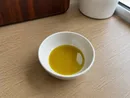
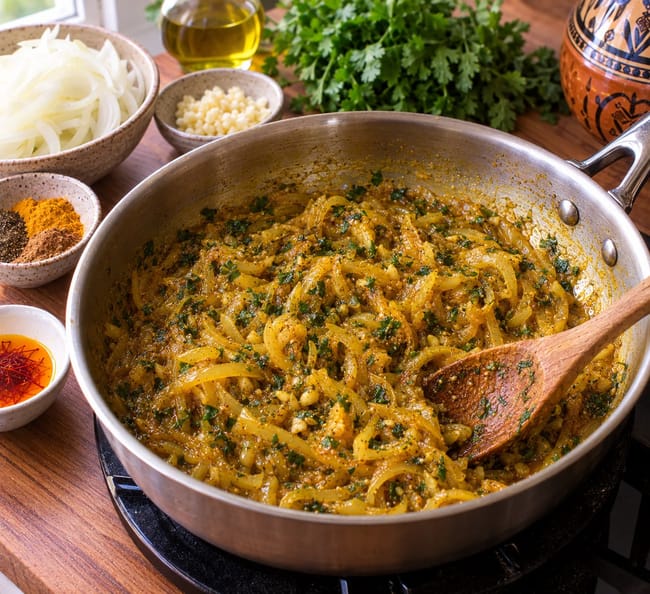
Warm 1 tablespoon olive oil in a wide heavy pan over medium heat. Add the sliced onions and cook for 10–12 minutes, stirring regularly, until soft, glossy and beginning to turn golden. They should collapse gradually rather than brown quickly.
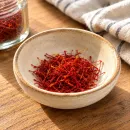
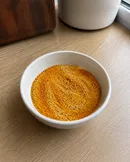
Add garlic, ginger, turmeric, ¼ teaspoon cinnamon and black pepper. Stir for 30 seconds. Pour the bloomed saffron and its liquid into the pan, then add parsley and cilantro.
The base should smell floral, warm and savoury, with no scorched garlic or dry spice remaining on the pan.
Braise the Chicken Until Tender
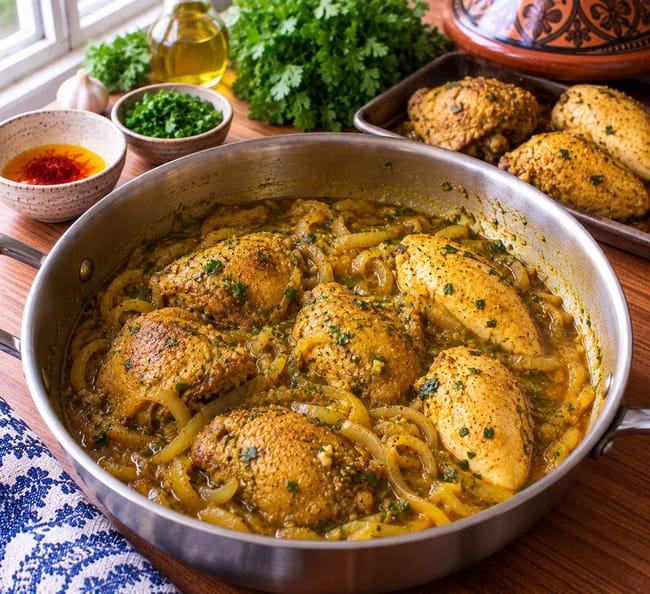
Nestle the chicken into the onion mixture in a single layer. Pour the lower-sodium stock around the pieces and bring to a gentle simmer. Cover, reduce heat to low and cook for 25–30 minutes, turning once.
Check breast pieces slightly earlier than thighs. Every piece must reach 74°C (165°F), but breast should be removed promptly so it remains juicy. Transfer cooked chicken to a tray and cool until comfortable to handle.
Leave the onion cooking liquid in the pan. It contains the saffron, herbs and chicken juices needed for the egg layer.
Shred the Chicken & Reduce the Sauce
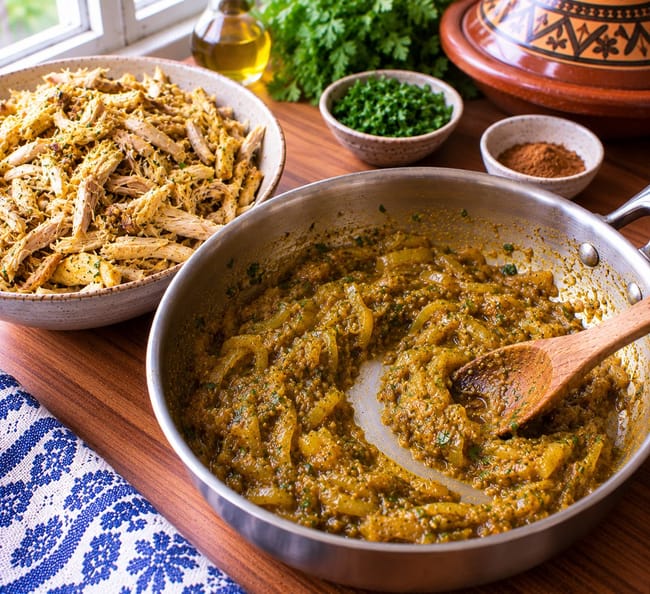
Shred the cooled chicken into medium strands using clean fingers or two forks. Avoid cutting it into tiny cubes or processing it into paste; distinct fibres make the filling feel generous.
Return the uncovered onion sauce to medium heat and simmer for 8–12 minutes, stirring often, until most free liquid has evaporated. Drag a spatula across the pan: the trail should remain visible briefly before the onions flow back.
This reduction is essential. Wet sauce will soak through the pastry and prevent the bottom from crisping.
Create the Egg-Enriched Filling
Lower the heat. Beat the five eggs just until blended, then pour them gradually into the reduced onions while stirring continuously with a silicone spatula.
Cook slowly for 5–8 minutes. The eggs should absorb the sauce and form soft, small curds. Continue until the mixture is moist but no liquid collects when pushed to one side.
Remove from heat and spread the egg-onion mixture on a wide tray to cool quickly. Keep it separate from the shredded chicken until assembly. Both fillings must be completely cool before touching pastry.

Prepare the Cinnamon Almond Layer
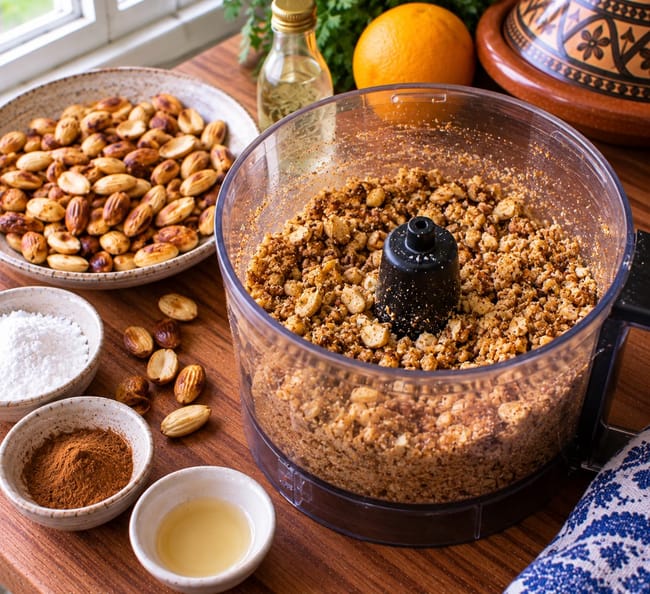
Toast the almonds in a dry skillet over medium-low heat for 5–7 minutes, shaking frequently, until fragrant and unevenly golden. Transfer immediately to a cool plate.
Once completely cool, pulse in a food processor with 1 tablespoon powdered sugar, ¾ teaspoon cinnamon and orange blossom water. Stop while coarse pieces remain. A fine almond paste would lose the characteristic crunch.
Taste should be nutty, fragrant and gently sweet, with orange blossom appearing as aroma rather than perfume.
Layer & Fold the Pastilla
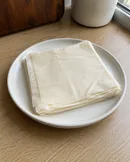
Preheat the oven to 190°C (375°F). Lightly coat a 24 cm round baking dish. Keep filo covered under a barely damp towel.
Arrange 6 sheets around the dish, rotating each sheet so a generous portion hangs over the edge. Brush or mist each sheet with the thinnest possible coating of olive oil. Add 2 sheets across the centre to strengthen the base.
Spread the cooled egg-onion mixture evenly over the pastry. Add shredded chicken, keeping the layer level and gently compact. Finish with the cinnamon-almond mixture.
Fold the overhanging pastry toward the centre one sheet at a time, maintaining soft overlapping pleats. Cover with 2–3 final sheets, tuck the edges underneath and lightly oil the surface.

Bake Until Deeply Golden & Crisp
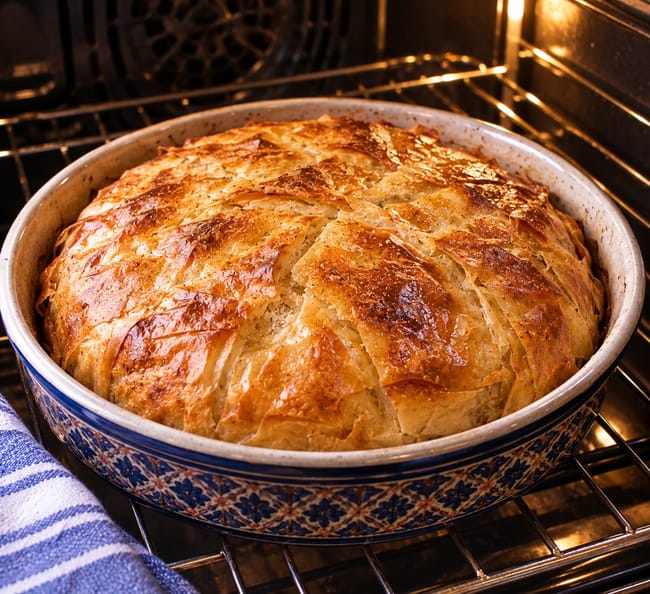
Bake on the centre rack for 30–35 minutes, rotating once, until the top is evenly deep golden and crisp. If a pale area remains, brush it with a trace of oil rather than pouring oil over the entire pie.
The centre should feel hot and stable, while the pastry makes a dry, delicate crackle when lightly touched. If the top colours too quickly, cover loosely with foil for the final minutes.
Rest the baked pastilla in its dish for 10 minutes, then carefully transfer it to a wire rack or serving plate. Rest another 10 minutes before cutting so the layers settle without steaming the base.
Decorate, Slice & Serve
Place the pastilla on a simple ceramic platter. Sift the remaining powdered sugar in a very light, even veil. Use the remaining cinnamon to create restrained diagonal lines or a small traditional diamond pattern.
Cut into eight wedges with a sharp serrated knife, using gentle sawing movements so the crust cracks cleanly without compressing the layers.
Serve one wedge with a generous Moroccan tomato, cucumber and herb salad. The cut edge should reveal crisp pastry, golden egg-onion filling, distinct chicken fibres and a coarse almond layer.

Chef's Tips
Common Mistakes
Why This Recipe Was Designed This Way
The pastry should be deep golden with natural blisters and irregular folds. When cut, it should release fine crisp flakes without collapsing. The bottom must be dry and firm enough to lift with a cake server.
Inside, the chicken remains moist and visibly shredded. The egg-onion layer is soft and cohesive but never wet. Almond pieces create clear crunch rather than disappearing into a paste.
The aroma moves from saffron, ginger and savoury chicken to toasted almond, cinnamon and orange blossom. The first bite is savoury and warmly spiced; sweetness arrives delicately at the finish.
The balance of moisture is as important as flavour. A properly reduced filling remains tender after baking but does not release liquid onto the plate. The crust underneath should produce a clean crack when cut and remain capable of supporting the wedge.
Colour should move naturally from deep gold on the exterior to saffron yellow and warm brown within. A completely pale shell is underbaked; an evenly orange surface may indicate artificial styling. Almonds should show real toasted variation.
For plating, place the wedge slightly off-centre and arrange salad loosely beside it. Do not pour dressing over the pastry. A lemon wedge may sit near the salad, while a few mint or parsley leaves add freshness without hiding the cinnamon design.
## 👨🍳 Chef’s Tips
### Keep Every Filling Completely Cool
Warm chicken or eggs release steam against the pastry and make it soft before baking. Spread both fillings on wide trays to accelerate cooling.
### Reduce the Onion Sauce Patiently
Do not thicken it with flour. Slow evaporation concentrates the saffron chicken juices and creates the proper texture without masking flavour.
### Toast Almonds, Do Not Fry Them
Dry-toasting gives strong nutty flavour and natural golden variation without adding frying oil. Move them constantly because blanched almonds colour quickly.
### Preserve Coarse Almond Texture
Pulse in short bursts and stop while visible pieces remain. Almond powder absorbs moisture and loses the contrast that defines a good slice.
### Protect Filo from Air
Remove only one sheet at a time and immediately cover the remaining stack. A barely damp towel keeps it flexible; a wet towel makes it sticky.
### Use Oil as a Fine Film
Heavy brushing can make the base dense. A pastry brush with very little oil or a fine spray creates crisp layers more efficiently.
### Build Distinct, Level Layers
Spread egg, chicken and almonds evenly to the edge, but do not mix them together. The visible separation is part of pastilla’s architecture.
### Bake to Colour, Not Only Time
Ovens vary. Look for a deep, even gold and dry crackle. Pale pastry often remains leathery, while very dark edges taste bitter.
### Rest Before Cutting
Twenty minutes total allows steam to escape and the filling to stabilise. Cutting immediately crushes the shell and releases moisture.
### Use a Serrated Knife
Gentle sawing breaks the top neatly without pressing the filling out of the sides.
### Keep the Sugar Veil Light
The finish should signal sweet-and-savoury contrast without turning the pie into dessert. Much of the golden pastry should remain visible.
### Photograph the Cut Edge
For the hero image, expose all layers and leave a few genuine flakes on the plate. Natural breakage looks more convincing than a perfectly smooth artificial cut.
### Work with Two Pastry Sheets When Necessary
If very thin filo tears while lifting, support it with a second sheet rather than stretching it. Overlapping minor tears is traditional practical work, not a failure.
### Keep the Base Stronger Than the Top
The bottom supports three fillings and needs extra overlapping sheets. The top can remain lighter and more delicate, provided every gap is covered.
### Transfer from the Hot Dish
Leaving the baked pie in a hot dish traps steam beneath it. After the initial rest, move it carefully to a rack or platter so the base remains crisp.
### Taste Components Separately
Before assembly, taste chicken, cooled egg mixture and almonds. Each should be balanced alone because the sealed pie cannot be adjusted later.
This is not a medical recipe and cannot treat cholesterol, balance hormones or guarantee weight change. It is a thoughtful adaptation of a festive dish, preserving its cultural structure while moderating visible fat, added sugar and portion size.
🍗 Skinless Chicken
Chicken provides complete protein, vitamin B12, niacin, selenium and phosphorus. Removing skin reduces saturated fat compared with using the same pieces skin-on. Combining thigh and breast protects tenderness while avoiding the need for a heavy butter-based filling. Protein can contribute to meal satisfaction, but no single nutrient determines fullness for every person. The complete plate and individual appetite still matter.
🧅 Onion & Egg Layer
Slow-cooked onions create natural sweetness and body. Eggs capture the reduced cooking juices instead of allowing that flavour to be discarded, while contributing additional protein, choline and selenium. The key improvement is technical rather than restrictive: reducing moisture thoroughly makes a crisp crust possible without adding flour or excessive pastry.
🌰 Toasted Almonds
Almonds supply crunch, plant protein, fibre, vitamin E, magnesium and predominantly unsaturated fat. Dry-toasting preserves their role while avoiding the oil used for deep-frying. They remain energy-dense, which is why the layer is measured and distributed across eight slices.
🫒 Olive Oil & Pastry
Using a thin coating of olive oil between selected sheets produces flakiness with less total fat than generously buttering every layer. Olive oil is predominantly unsaturated, but the amount still counts. Filo is refined pastry and should not be described as a whole-grain health food. Its advantage here is thinness: multiple crisp layers can be created from a relatively modest weight of dough.
🌿 Saffron, Ginger, Cinnamon & Herbs
These aromatics create complexity without relying on large amounts of salt or sugar. They contain naturally occurring plant compounds, but culinary quantities are not treatments. Cinnamon deliberately connects the savoury chicken, nut layer and final sugar veil, preserving the cultural logic of the recipe.
🍬 Added Sugar
Sugar is not eliminated because the sweet finish is fundamental to pastilla. Instead, two measured tablespoons serve the whole pie. This creates contrast without a thick dessert-style coating.
🥗 Moroccan Salad Accompaniment
Tomatoes, cucumber, herbs and lemon add water, fibre, potassium, vitamin C and freshness. Serving a generous salad beside one wedge creates a more varied meal without altering what cooks inside the pastilla.
🧠 Understanding the Sweet-Savoury Structure
Reducing sugar to zero may appear healthier, but it also removes a defining sensory element and can encourage compensating with more fat or filling. A measured amount preserves satisfaction and makes the adaptation honest about what the dish is. The same principle applies to almonds and eggs. They are not decorative extras to discard; they form essential layers. Balance is achieved through measured portions, cooking method and the complete plate rather than stripping the recipe of its identity.
🍽️ A Note on Portion Context
One eighth of the pie is a practical reference, not a universal prescription. Appetite, activity, age and the rest of the meal differ. A large salad and leisurely serving can make one wedge feel generous, while a festive multi-course table may call for a smaller slice. Pastilla is traditionally associated with hospitality and celebration. Enjoyment and cultural meaning are legitimate parts of food. Nutritional information should support informed decisions without labelling a beloved dish as morally good or bad.
Ingredient Swaps
| Instead of... | Try... |
|---|
What Research Says
Pastilla’s traditional sweet-savory combination of spiced chicken, almonds, and a light dusting of sugar and cinnamon provides a source of lean protein and unsaturated fat from the almonds, while using thin pastry sheets rather than a heavier pastry crust keeps the overall fat content more moderate than many other filled pastries.
Estimated Nutrition
Per Serving
Nutrition is only one part of the recipe’s value. Cultural authenticity, enjoyment, texture and sharing a festive dish also matter. This adaptation offers practical choices without presenting pastilla as a therapeutic food.
Storage & Reheating
Refrigerating
Cool leftover wedges within two hours. Store them in a single layer in an airtight container in the refrigerator for up to 3 days. Place parchment between layers if stacking is unavoidable.
Store salad separately. Moist vegetables will quickly soften the pastry.
Reheat in a 180°C (350°F) oven for 10–14 minutes or in an air fryer at 165°C (330°F) for 5–7 minutes, until the centre is hot and pastry crisp. Avoid the microwave when possible because it softens filo.
Add powdered sugar and cinnamon only after reheating.
Freezing
Freeze the assembled unbaked pastilla, tightly wrapped, for up to 1 month. Bake from frozen, adding approximately 15–20 minutes and checking that the centre is thoroughly hot.
Cooked wedges may also be frozen, although the pastry will be slightly less delicate after reheating. Fresh garnish and salad should never be frozen with them.
Reheating
Meal Prep Tips
Cook and shred chicken up to 2 days ahead. Prepare the egg-onion filling separately and refrigerate only once completely cool. Toast and pulse almonds one day ahead.
Assemble shortly before baking for the crispest result. If assembling several hours early, keep the covered pie refrigerated and add the final oil coating immediately before it enters the oven.
For stress-free entertaining, complete all three fillings the previous day and store them in separate shallow containers. Bring them out only when the pastry station is ready. This keeps assembly organised and limits the time filo spends exposed to air.
Prepare the salad while the pie bakes, but add salt and lemon shortly before serving so the vegetables remain crisp and do not release excessive water.
Serving Suggestions
Slice into wedges while still warm so the layers hold together, and finish with a light dusting of powdered sugar and cinnamon at the table for the traditional presentation.
Frequently Asked Questions
Can I use only chicken breast?
Yes, but monitor it carefully and remove at 74°C. The filling will be leaner but less succulent.
Can I use only thighs?
Yes. Trim them well; the texture will be richer and the nutrition estimate will change.
What if I cannot find warqa?
Use good-quality filo. Do not substitute puff pastry if you want the characteristic thin, shattering layers.
Can I omit the powdered sugar?
You can, but the classic sweet-savoury contrast will be reduced. A very light measured veil is the more faithful compromise.
Can I make individual pastillas?
Yes. Divide the fillings evenly and shorten baking time. Small shapes are attractive but require slightly more pastry and oil proportionally.
Why is my bottom crust soggy?
The egg-onion mixture was too wet, the fillings were warm, or the pie rested in its baking dish too long after cooking.
Can I prepare it the day before?
Prepare all fillings ahead, but assemble and bake closer to serving for the best crust.
Is this recipe halal?
Yes, when chicken, stock, pastry and all flavourings are halal-compliant.
Is it suitable for weight management?
No recipe guarantees weight change. This version offers a defined wedge, skinless chicken, measured nuts and fats, and salad as part of a broader pattern.
Does it lower cholesterol?
No. It is not a treatment. Anyone managing high cholesterol should consider their entire dietary pattern and personalised medical advice.
Related Recipes
If you enjoyed this Moroccan pastilla, here are a few more recipes worth trying.
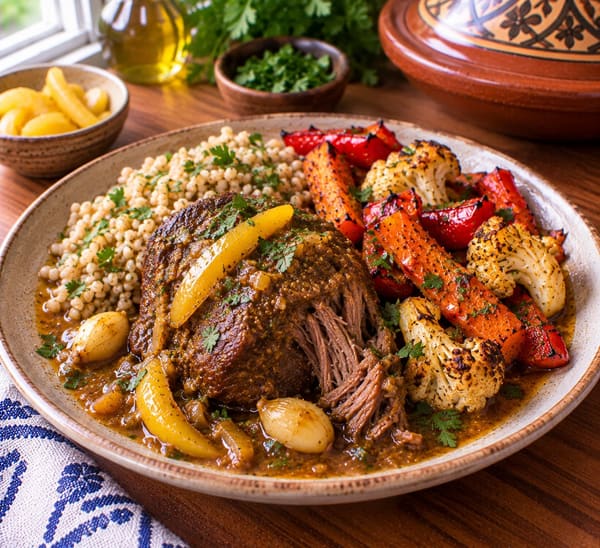
🍯 Beef Tangia
Marrakech’s legendary slow-cooked beef with garlic, cumin, saffron and preserved lemon.
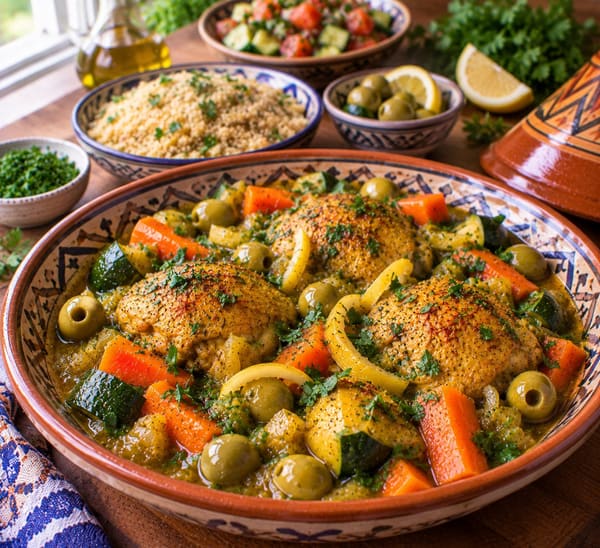
🍋 Healthy Chicken Tagine with Preserved Lemon & Olives
Tender chicken in a golden saffron sauce with preserved lemon and olives.
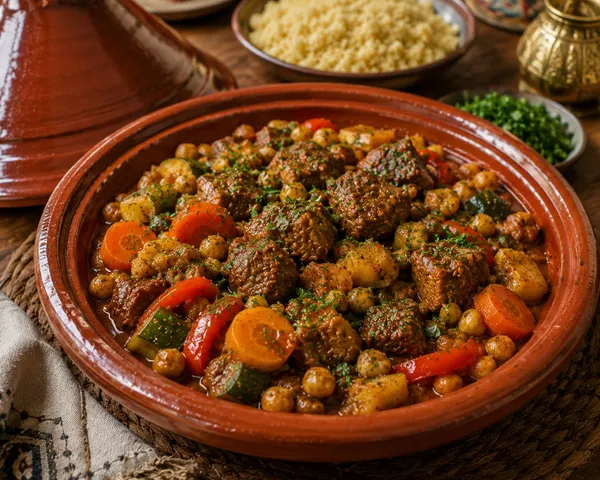
🐑 Moroccan Lamb & Chickpea Tagine
Tender lamb, chickpeas and warm spices in a rich, satisfying Moroccan tagine.