
Chicken Tagine with Preserved Lemon & Olives
Reviews)
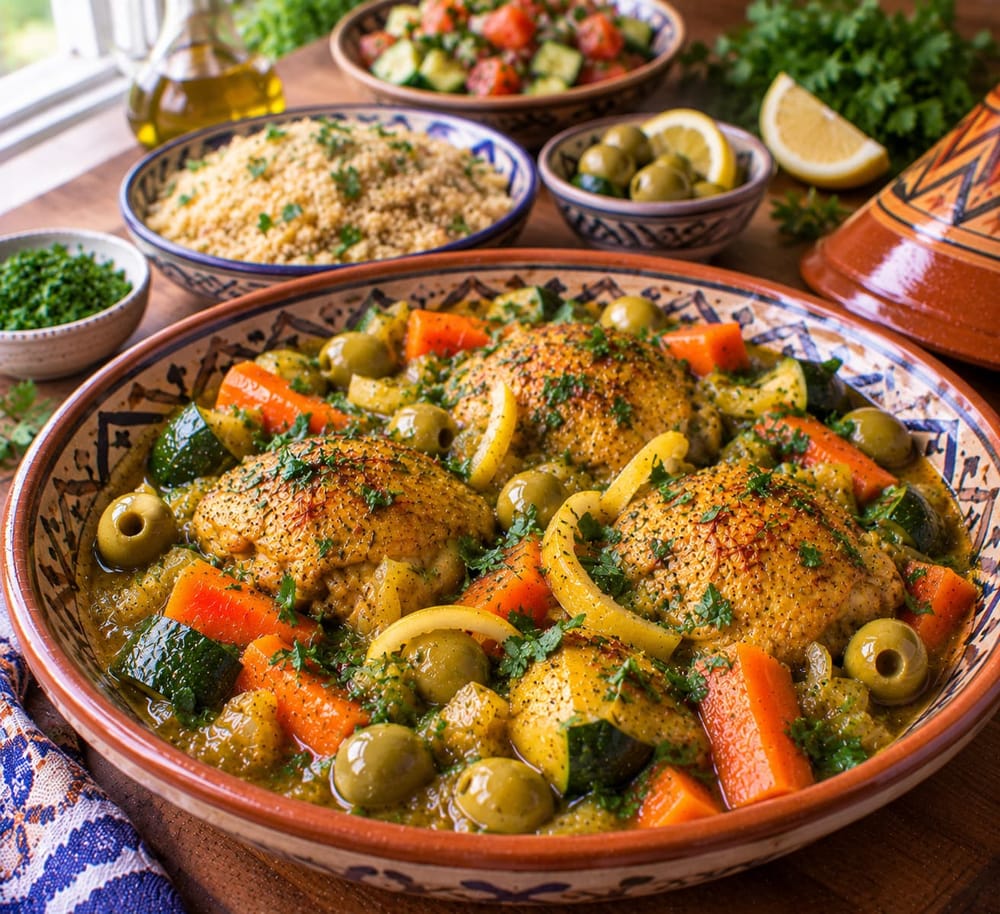
“Everything people love about a traditional Moroccan chicken tagine—succulent slow-braised chicken, sweet golden onions, fragrant saffron, warming ginger, briny green olives, vivid preserved lemon and a glossy golden sauce—thoughtfully reimagined with skinless chicken, colourful vegetables, a measured amount of olive oil and flavour-led seasoning. It remains a deeply comforting Moroccan meal, made with ingredients that support a varied, balanced way of eating.”
A Moroccan table classic that makes the whole kitchen smell unforgettable.
Chicken tagine with preserved lemon and olives is one of Morocco’s most recognisable dishes. Across family kitchens and special-occasion tables, the lid is lifted to reveal tender chicken bathed in a bright golden sauce, with the unmistakable perfume of saffron, ginger, cilantro and lemon. It is not a dish that needs heavy sauces or complicated techniques: its beauty comes from patience, good spices and the gentle way all the ingredients cook together.
Some traditional versions use chicken with the skin, a generous pool of oil and salty preserved lemon and olives. Those elements are delicious, but they can make the finished dish richer and higher in sodium than many people want for an everyday meal. This version preserves the character of the original rather than trying to turn it into something unrecognisable.
Skinless chicken thighs stay exceptionally juicy during the slow braise. Carrots and zucchini bring colour, fibre and satisfying volume, while a carefully measured amount of olive oil carries the spices. Rinsed olives and preserved lemon still deliver their iconic flavour, but with less surface salt. The result is an abundant, aromatic tagine that looks and tastes genuinely Moroccan.
Whether served for a family Friday lunch, a relaxed dinner with guests or a special weekend meal, this recipe proves that comfort food can be generous, elegant and thoughtfully balanced at the same time.
Recipe Information
| Prep Time | 25 minutes |
| Cook Time | 55 minutes |
| Total Time | 1 hour 30 minutes |
| Servings | 6 |
| Difficulty | Easy |
| Calories | ~390 kcal / serving* |
Quick Highlights
Ingredients
Makes 6 generous servings of Healthy Chicken Tagine with Preserved Lemon & Olives.










Step-by-Step Instructions
Season the Chicken
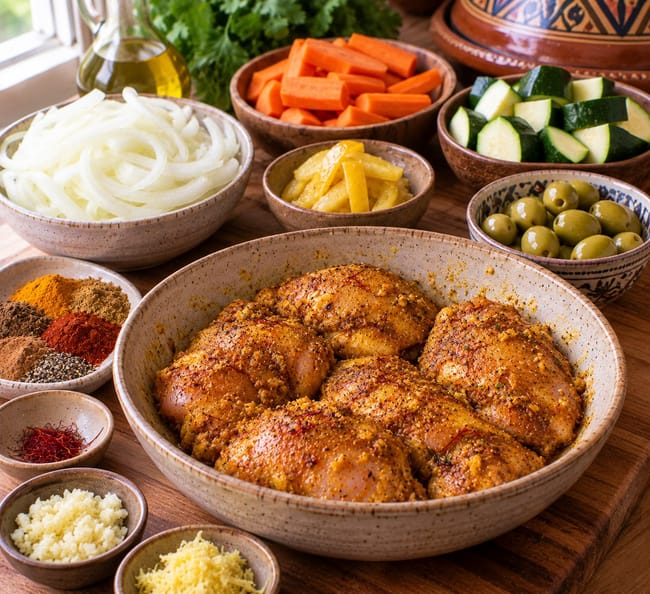
Pat the chicken dry with paper towel. In a large bowl, combine turmeric, cumin, paprika, crushed saffron, cinnamon, black pepper, grated ginger and half of the minced garlic. Rub the mixture over every piece of chicken until evenly coated in a vivid golden paste.
Let the chicken stand for 10 minutes while you slice the onions and prepare the vegetables. This short rest gives the spices time to cling to the chicken and creates a more aromatic sauce later.
The chicken should look evenly golden and fragrantly spiced, never wet or swimming in marinade.
Build the Golden Onion Base
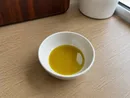
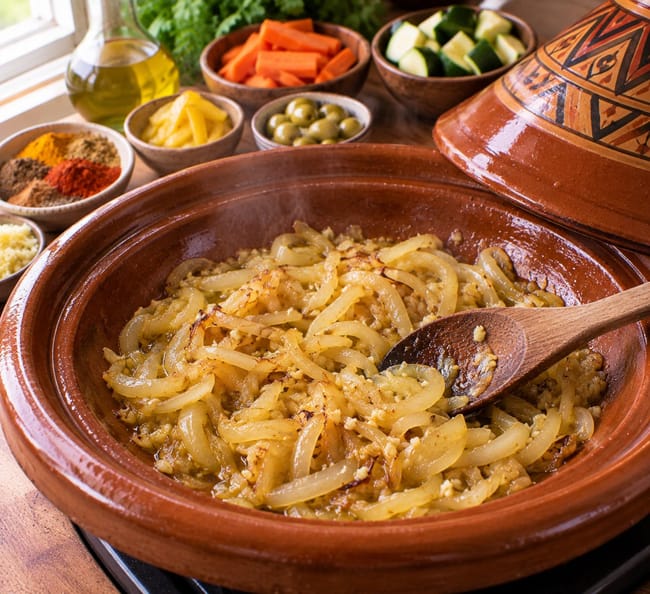
Place a tagine base or wide heavy pot over medium heat. Add olive oil, then the sliced onions. Cook slowly for 8–10 minutes, stirring often, until the onions are soft, glossy and lightly golden around the edges. Do not rush this stage: the onions should soften without browning aggressively.
Add the remaining garlic and cook for just 30 seconds, until fragrant. Garlic burns easily, so it should perfume the oil without turning dark.
The finished base should smell sweet and aromatic, with onions soft enough to collapse when pressed with a spoon.
Arrange the Chicken & Start the Sauce
Arrange the seasoned chicken over the onions in a single layer. Pour the low-sodium stock around—not directly over—the chicken to avoid washing away the spice coating. Bring the liquid to a very gentle simmer.
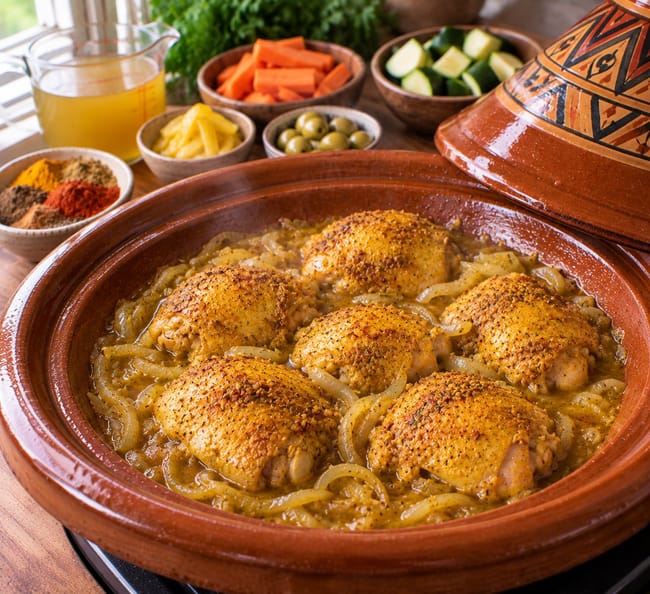
Braise Slowly Until Tender
Cover with the tagine lid or a tight-fitting pot lid. Reduce the heat to low and cook for 30 minutes. Turn the chicken once halfway through so both sides absorb the saffron-infused sauce. The liquid should barely bubble; a strong boil may toughen the chicken and make the sauce cloudy.
At this stage, the chicken should be partly cooked and the sauce should be golden, aromatic and beginning to take on body from the onions.
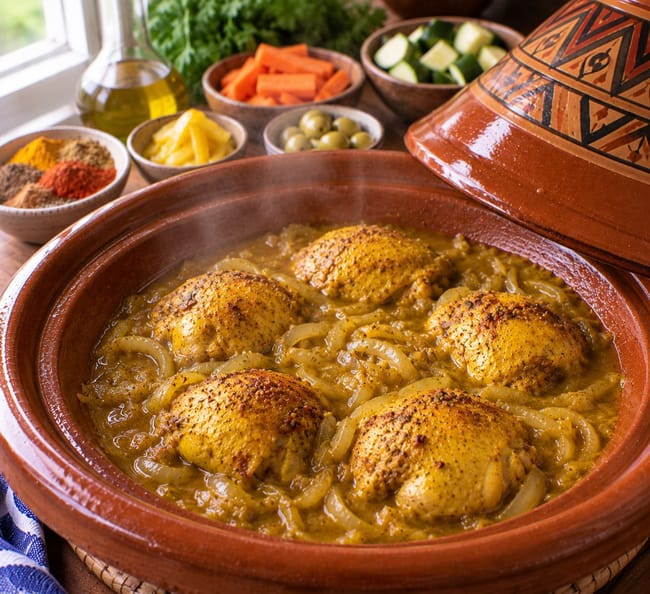
Add the Carrots First
Nestle the carrots around the chicken, placing the thickest pieces closest to the liquid. Cover and cook for 12 minutes. Then add the zucchini in large pieces, arranging them on top so they steam gently rather than disappear into the sauce.
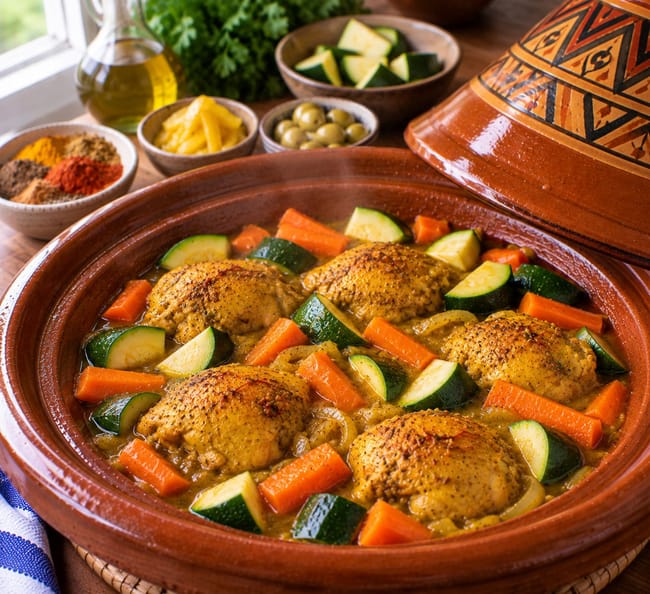
Add the Zucchini & Complete Cooking
Continue cooking for 10–12 minutes, or until the carrots are tender, the zucchini are soft but still intact and the thickest chicken piece reaches 74°C (165°F). If the sauce becomes too dry, add a small splash of hot stock or water; it should remain saucy, not soupy.
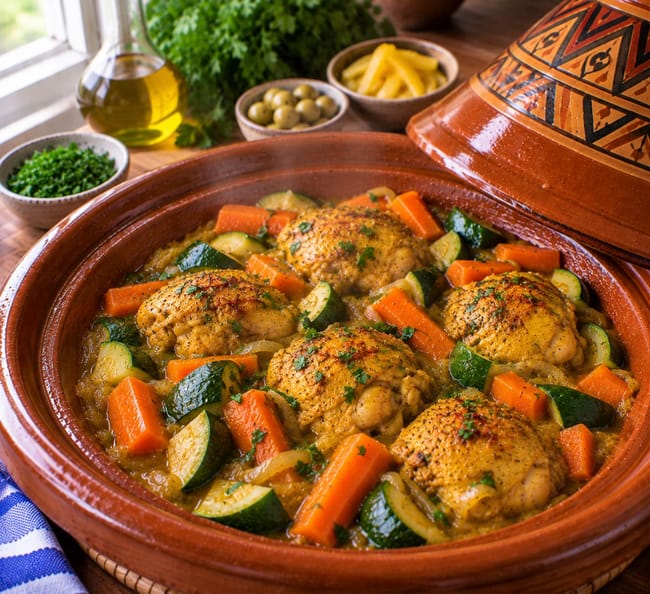
Finish with Preserved Lemon, Olives & Herbs
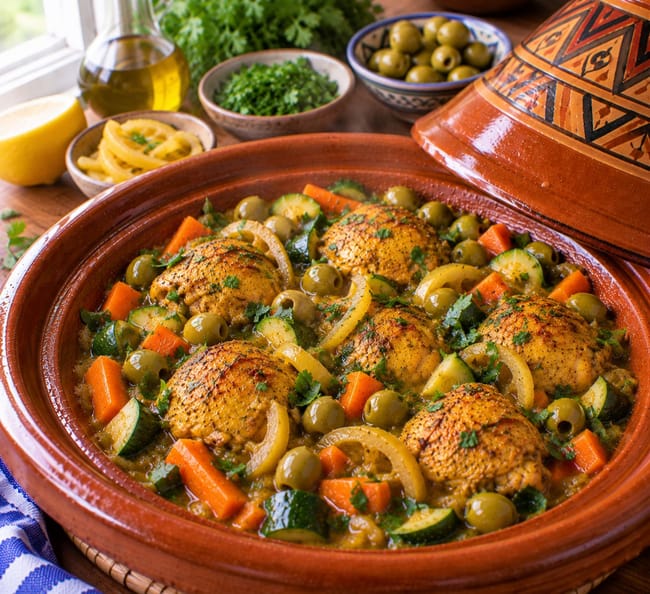
Add the sliced preserved lemon, rinsed olives and half of the chopped cilantro-parsley mixture. Leave the tagine uncovered for 3–5 minutes. This allows the sauce to reduce slightly and lets the lemon and olives perfume everything without becoming overly soft.
Taste the sauce now. Add the optional salt only if needed. The ideal flavour is warmly spiced, bright with lemon and pleasantly briny—not sharply salty.
Rest, Garnish & Serve
Turn off the heat, cover the tagine and let it rest for 10 minutes. Resting allows the chicken to reabsorb some juices and gives the sauce a more rounded flavour. Scatter with the remaining fresh herbs immediately before bringing it to the table.
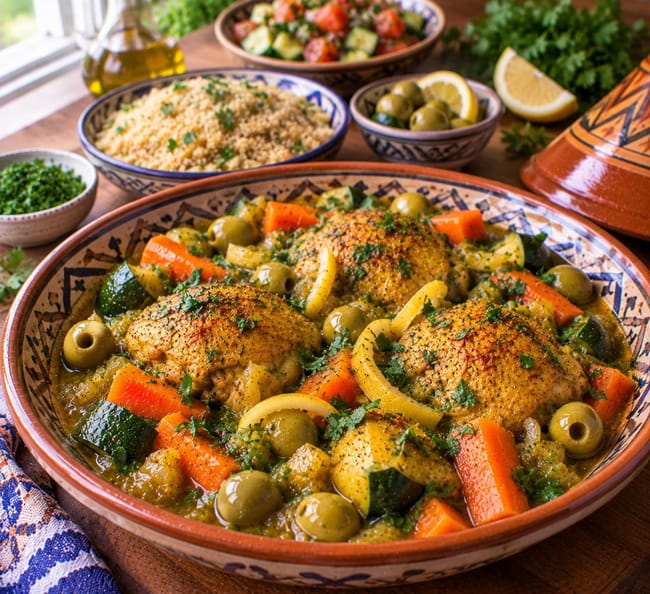
Serve one generous portion in a shallow ceramic bowl with a modest scoop of whole-wheat couscous, barley, whole-grain bread or a crisp Moroccan salad. Spoon the golden onion sauce over the chicken and vegetables.
Every serving should show tender chicken, intact colourful vegetables, bright lemon, olives and a generous shine of herb-speckled sauce.
Chef's Tips
Common Mistakes
Why This Recipe Was Designed This Way
The sauce should be a saturated golden yellow with a natural sheen from chicken juices and a measured amount of olive oil. It should cling lightly to the back of a spoon while remaining loose enough to pool around the ingredients. A thick, flour-like gravy would be incorrect, but a thin watery broth would also indicate that the final reduction was too short.
The chicken should separate easily with a fork while remaining moist. Carrots should be tender all the way through, and zucchini should yield under gentle pressure without collapsing. Olives should remain plump. Preserved-lemon strips should be soft and intensely aromatic, distributing small flashes of citrus rather than overwhelming every bite.
The first aroma should be saffron, ginger and warm onion, followed by fresh herbs and lemon. On the palate, the dish should move from savoury chicken and sweet onion to gentle spice, briny olive and a clean citrus finish. It should taste generous and celebratory, never bland, greasy or sharply salty.
For a polished but believable plate, place one chicken thigh slightly off-centre, spoon vegetables and olives around it and let several preserved-lemon strips remain visible on top. Finish with irregularly scattered herbs. The presentation should feel like a beautiful portion served from a family tagine, not a geometrically arranged restaurant composition.
This is not a medical meal or a promise of a specific health outcome. It is a thoughtful adaptation of a classic tagine that emphasizes leaner protein, vegetables, aromatic spices and a modest amount of olive oil while keeping the deeply satisfying flavours that make Moroccan food special.
🍗 Skinless Chicken
Chicken provides complete protein, vitamin B12, niacin, selenium and phosphorus. Choosing skinless pieces lowers the amount of saturated fat compared with leaving the skin on, while thighs still deliver a tender, satisfying texture.
🧅 Slowly Cooked Onions
Onions are responsible for much more than background flavour in this recipe. As they cook slowly beneath the chicken, their structure softens and their natural sugars become more noticeable. They eventually blend with the stock and spices, giving the sauce body without flour, cream or a large amount of added fat. This is one of the quiet techniques that makes traditional tagine cooking so effective: ordinary ingredients become luxurious through time and gentle heat. Onions naturally provide small amounts of dietary fibre, vitamin C and several sulfur-containing plant compounds. Their greatest contribution here, however, is culinary. A sauce built on properly softened onions tastes rounded and complete, which can reduce the temptation to compensate with excessive salt.
🥕 Colourful Vegetables
Carrots and zucchini contribute fibre, water, potassium and a range of naturally occurring vitamins. Their volume helps make the meal feel abundant without relying only on meat or refined starches.
🫒 Olive Oil & Olives
Olive oil and olives provide flavour and predominantly unsaturated fats. Portions still matter, which is why this recipe uses enough oil for aroma and texture rather than an excessive amount. Green olives bring the briny contrast expected in this tagine. Their firm texture remains satisfying after a brief simmer, and their flavour cuts through the richness of the chicken. Adding them during the final minutes is intentional: long cooking can make olives too soft and may distribute more salt throughout the sauce than desired. Olives naturally contain predominantly monounsaturated fat along with vitamin E and plant compounds. They are still a concentrated, salty ingredient, so this recipe treats them as a flavour accent rather than an unlimited vegetable serving.
🌿 Herbs, Spices, Lemon & Garlic
Garlic and ginger create two different layers of aroma. Garlic contributes savoury depth, while fresh ginger gives the sauce a clean warmth that is characteristic of many Moroccan chicken dishes. Fresh ginger is preferred over a large quantity of dried ginger because it brings brightness as well as heat. Neither ingredient should dominate; they should merge with saffron, turmeric and the chicken juices. Both are widely used in balanced cuisines around the world because they create intense flavour with minimal calories. Although they contain naturally occurring plant compounds that have been studied in nutrition research, this recipe does not present either ingredient as a treatment or therapeutic dose. The spice combination is what turns a simple chicken braise into a recognisable Moroccan tagine. Saffron gives floral complexity, turmeric supplies a saturated golden colour, cumin provides an earthy base and sweet paprika rounds the blend with gentle warmth. A tiny touch of cinnamon connects the savoury ingredients without making the sauce taste sweet. Spices contribute aroma, colour and naturally occurring polyphenols. More importantly for everyday cooking, they allow food to taste generous and memorable without requiring large quantities of butter, cream, sugar or salt. No individual spice should be described as curing inflammation, balancing hormones or treating disease; its role in this recipe is primarily culinary. Moroccan cooking often uses cilantro and flat-leaf parsley together because they contribute complementary flavours. Cilantro is vivid and citrus-like, while parsley is clean and grassy. Cooking half of the mixture integrates its aroma into the sauce; reserving the other half preserves colour and freshness for serving. Fresh herbs contribute small amounts of vitamins and plant compounds, but their main advantage here is the intensity they add without extra sodium or saturated fat. They make the final spoonful of sauce feel lighter and more aromatic.
🍋 Preserved Lemon
Preserved lemon is produced by curing lemons with salt until the rind becomes tender, intensely fragrant and pleasantly complex. Its flavour is deeper and more savoury than that of fresh lemon juice. Only a modest amount is necessary: thin strips distributed throughout the sauce ensure that each portion receives brightness without becoming bitter or aggressively salty. Because preserved lemon is a salted product, quantity and preparation matter. Rinsing the rind and removing excess pulp can lower some surface salt while retaining the aromatic peel. The exact sodium content varies greatly between homemade and commercial products, so the nutrition table remains an estimate.
🌾 Thoughtful Accompaniments
The nutritional character of the complete meal also depends on what accompanies the tagine. A mountain of refined couscous or bread can change the balance considerably, while a moderate serving of whole-wheat couscous, barley or whole-grain bread adds carbohydrates and additional fibre without overshadowing the chicken and vegetables. A large Moroccan salad is another refreshing option. There is no single universally correct accompaniment. Appetite, activity level, health needs and cultural preference all matter. The serving suggestions are flexible rather than prescriptive.
⚠️ A note on sodium
Olives, preserved lemon and stock can contain substantial sodium. Rinsing them and choosing lower-sodium stock can help, but anyone following a medically prescribed sodium restriction should adapt the recipe with a qualified professional.
Ingredient Swaps
| Instead of... | Try... |
|---|
What Research Says
Preserved lemon and olives are used here in measured amounts precisely because of their high sodium content, letting the dish keep its distinctive tangy Moroccan flavor while staying more moderate in sodium than versions that use them generously throughout.
Estimated Nutrition
Per Serving
*Based on six servings and excludes an accompaniment. †Actual sodium varies considerably by stock, olive and preserved-lemon brand.
Storage & Reheating
Refrigerating
Cool the tagine for no longer than two hours, then transfer to airtight containers. Refrigerate for up to 3 days. Reheat gently in a covered pan over medium-low heat with a splash of water or stock, until thoroughly hot. Add fresh herbs after reheating.
For the best texture, store any couscous or bread separately. Keeping the accompaniment away from the sauce prevents it from absorbing all the liquid and becoming overly soft. Divide the tagine into shallow individual containers if you plan to use it for lunches; smaller portions cool more quickly and are easier to reheat evenly.
Freezing
For the best texture, freeze the chicken, carrots and sauce without zucchini. Freeze individual portions for up to 2 months. Thaw overnight in the refrigerator, reheat gently and add freshly cooked zucchini if desired.
Do not thaw the container at room temperature for several hours. Once thawed, reheat only the amount you intend to eat and avoid repeatedly cooling and reheating the same portion. The preserved lemon and olives may taste slightly stronger after freezing, so taste the sauce before adding any additional seasoning.
Reheating
Meal Prep Tips
Slice onions, chop vegetables and mix the spices one day ahead. The finished tagine often tastes even more rounded the next day. Keep any couscous, bread or salad separate until serving.
Store the spice mixture in a small covered bowl and keep the chopped herbs wrapped separately so they remain fresh. Carrots can be cut in advance, but zucchini is best cut closer to cooking so its edges remain firm. If preparing full portions for the week, place the chicken and vegetables over a small scoop of cooked whole grain and pack fresh herbs in a separate miniature container.
Serving Suggestions
Serve over whole-grain couscous or with warm whole-grain bread, and finish with a scattering of fresh cilantro and parsley for color and freshness.
Frequently Asked Questions
Can I use chicken breast?
Yes. Add it after the onions have cooked and reduce the braising time; remove as soon as it reaches 74°C (165°F).
Can I omit olives?
Yes. Add a little more fresh herb and a few extra strips of rinsed preserved lemon, then taste carefully.
Can I make this without a tagine?
Absolutely. A Dutch oven, wide braising pan or heavy pot with a lid works beautifully.
What if I cannot find preserved lemon?
The most authentic solution is to make preserved lemons ahead of time or purchase them from a Moroccan or Middle Eastern grocer. In an emergency, use fresh lemon zest at the end with a tiny pinch of salt, understanding that the flavour will be brighter and less complex.
Can I prepare the entire dish one day ahead?
Yes. In fact, the sauce often tastes more integrated the following day. Cook the zucchini slightly less than usual, cool the dish safely and reheat it gently. Add a new handful of herbs immediately before serving.
How do I stop the vegetables becoming mushy?
Cut them into large, even pieces and add them in stages. Carrots need more time than zucchini. Keep the simmer gentle and check the vegetables a few minutes before the stated cooking time, since tagines and stovetops vary.
Is this a low-sodium recipe?
It is designed to moderate sodium through rinsed olives, rinsed preserved lemon and lower-sodium stock, but it is not guaranteed to meet a clinical low-sodium definition. Product brands and portion sizes make a major difference.
Can I make it vegetarian?
You can use chickpeas and firm vegetables, but the cooking time and nutrition will change substantially. That version is better treated as a separate Moroccan vegetable-and-chickpea tagine rather than a direct chicken substitution.
Is this recipe halal?
It is halal when prepared with halal-certified chicken and stock.
What is the best accompaniment?
Whole-wheat couscous, barley, Moroccan salad or a modest piece of whole-grain bread all work well.
Related Recipes
If you enjoyed this Moroccan-inspired tagine, here are a few more recipes worth trying.
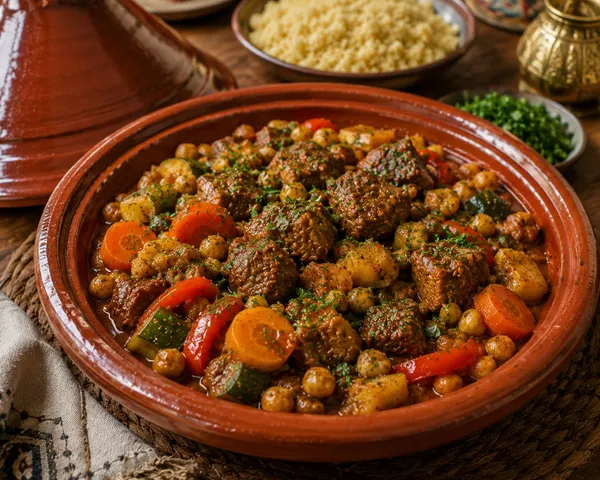
🐑 Moroccan Lamb & Chickpea Tagine
Another Moroccan classic reimagined — tender lamb, chickpeas and warm spices in a rich, satisfying tagine.
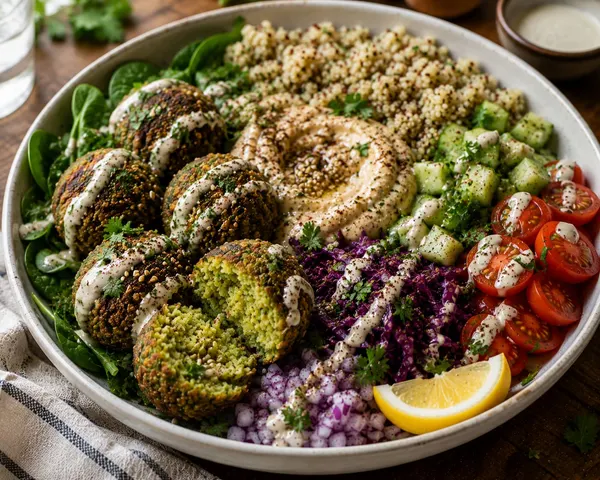
🧆 Baked Falafel Mezze Bowl
A Mediterranean mezze bowl with oven-baked falafel, quinoa, and a light Greek yogurt tahini dressing.
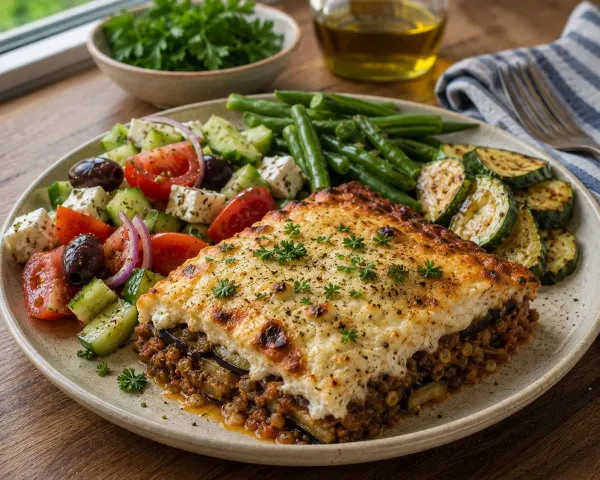
🍆 Greek Moussaka
Layers of eggplant, spiced meat and a light bechamel — a Mediterranean comfort classic, lightened up.