
Balanced Moroccan Couscous Royale
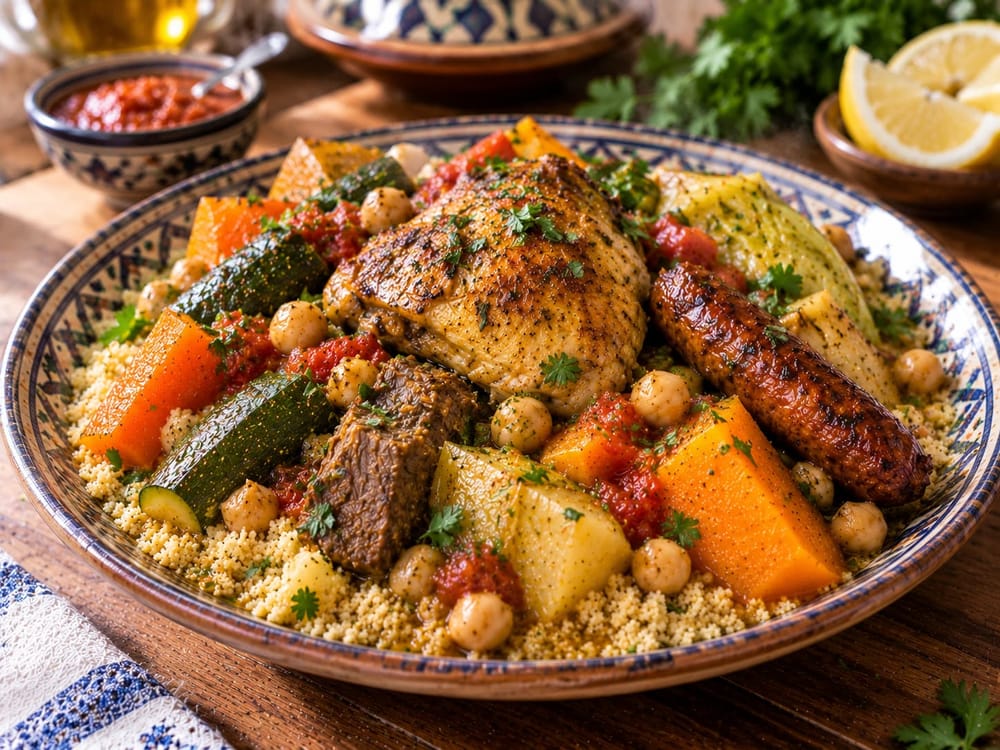
Couscous royale is a generous Moroccan-inspired celebration served as one composed plate, with enough broth to perfume every grain without turning it into soup. The expression "couscous royale" often describes an abundant restaurant or celebratory presentation that brings several meats to one couscous platter. Households and regions do not follow one universal formula, so this recipe treats "royale" as the familiar name of a festive mixed-meat version rather than one single national standard.
The balanced approach comes from proportion, not from removing the elements people expect. Lamb remains present, chicken stays juicy, and merguez contributes its unmistakable spice, but none occupies half the plate. Whole-wheat couscous forms a measured base, vegetables create height and volume, chickpeas add substance, and the broth is aromatic rather than oily.
Timing is the main challenge. Lamb needs the longest simmer, chicken requires less, carrots and turnips need a head start, pumpkin and zucchini cook quickly, and merguez is best cooked separately so excess fat does not enter the broth. Couscous must be hydrated and fluffed without becoming wet, compressed, or clumped.
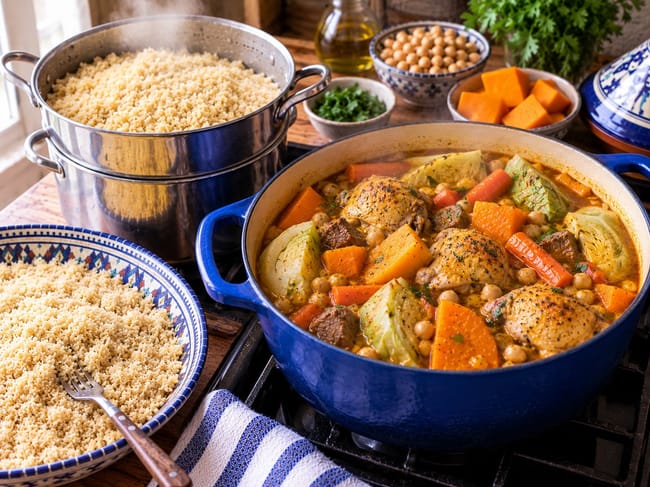
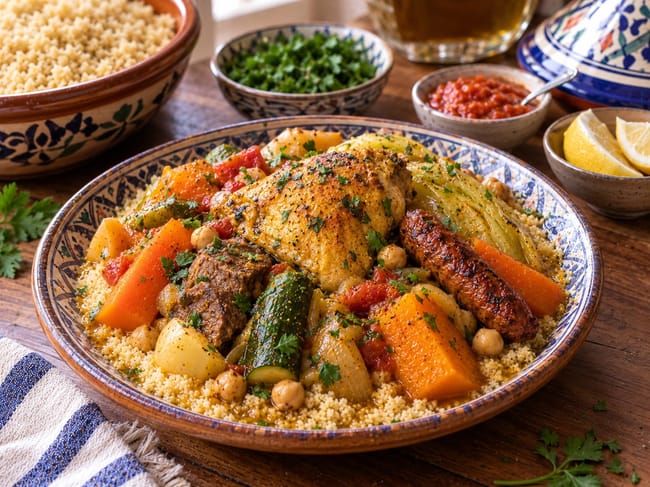
The finished plate should look celebratory but plausible: a loose mound of couscous, colorful vegetables arranged in a low crown, one piece of chicken, several small lamb pieces, one modest merguez portion, chickpeas, and glossy broth.
Recipe Information
| Prep Time | 45 minutes |
| Cook Time | 1 hour 40 minutes |
| Total Time | About 2 hours 35 minutes |
| Servings | 8 |
| Difficulty | Advanced |
| Calories | ~640 kcal per serving |
Quick Highlights
- ✅ Three meats in measured, deliberate portions
- ✅ Whole-wheat couscous for extra fiber
- ✅ Abundant vegetables and chickpeas
- ✅ Merguez cooked separately to control fat
- ✅ Aromatic saffron and ras el hanout broth
- ✅ Festive plate for family gatherings
- ✅ Sodium adjusted through lower-sodium stock
Ingredients
Makes 8 composed servings












Step-by-Step Instructions
Prepare the Couscous, Meats, Vegetables, and Saffron
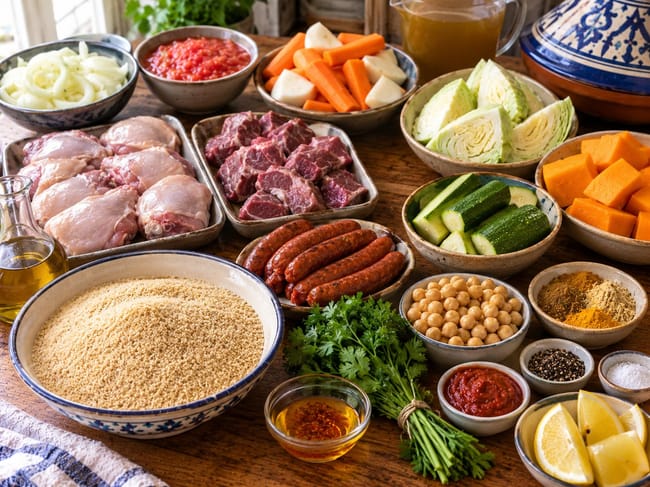
Trim the lamb and chicken, pat them dry, and keep them on separate trays.
Cut all vegetables according to their cooking groups: dense carrots and turnips, medium-speed cabbage, and quick pumpkin and zucchini.
Rinse the chickpeas and tie the herb bouquet.
Steep saffron in 60 ml warm broth.
Place dry couscous in a wide dish, sprinkle with 250 ml cool water and a pinch of salt, rub gently between the palms, and let stand 10 minutes. Break every clump before steaming.
Brown the Lamb and Chicken Lightly
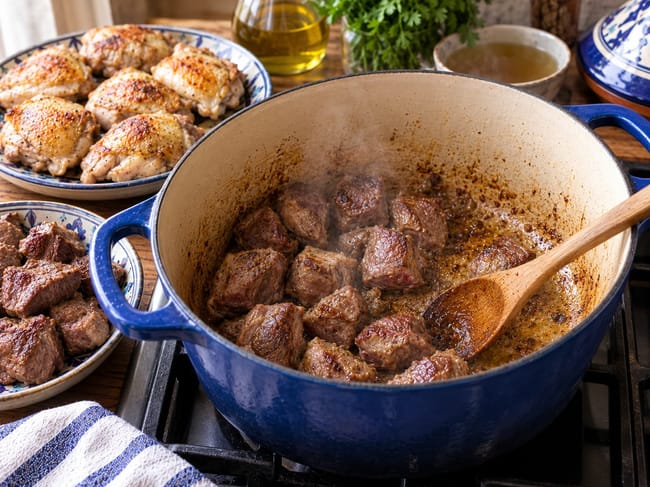
Heat a large heavy stockpot or couscoussier base over medium heat and add two tablespoons olive oil.
Brown the lamb for 5 to 6 minutes in uncrowded batches, then transfer it to a plate.
Add the chicken thighs and color them for about 3 minutes per side without cooking through, then remove them.
Pour in 120 ml water and scrape the browned film so it dissolves rather than burns.
Build the Aromatic Broth
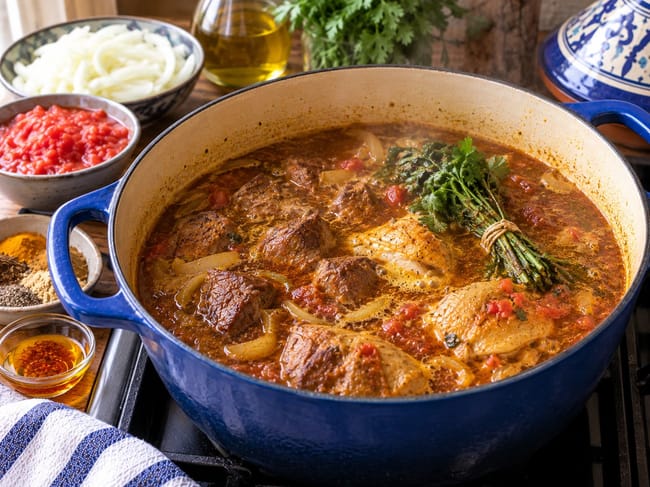
Add the remaining tablespoon of oil and the sliced onions. Cook 6 to 8 minutes until softened but not deeply caramelized.
Stir in the ras el hanout, ginger, turmeric, black pepper, half the salt, and the tomato. Cook 3 minutes, then return the lamb.
Add the stock, water, saffron infusion, and herb bouquet.
Bring gradually to a gentle boil, skim the surface foam, lower the heat, and simmer partially covered for 35 minutes.
Add Dense Vegetables and Begin Steaming the Couscous
Add the carrots, turnips, and any dried soaked chickpeas that still require cooking. Simmer 20 minutes.
Meanwhile, spread the moistened couscous in the steamer basket without pressing it.
Steam uncovered over the actively simmering broth for 20 minutes once steam rises through the grains.
Turn it into the wide dish, sprinkle with 180 ml water, and carefully separate the grains with a fork until cool enough to rub by hand. Rest 10 minutes.

Add Chicken, Cabbage, Pumpkin, and Chickpeas
Return the chicken thighs to the broth and add the cabbage wedges. Simmer 12 minutes.
Add the pumpkin and the fully cooked chickpeas. Taste a spoonful of broth before adding more salt.
Steam the couscous a second time for 15 to 20 minutes, then turn it into the dish. Sprinkle with another 120 ml water and separate every clump.
Cook the Zucchini and Merguez Without Overcooking Either
Add the zucchini to the broth and simmer 8 to 12 minutes, checking the pumpkin at the same time. Remove any vegetable as soon as a knife enters easily while the piece still holds.
Chicken should reach 74°C in the thickest part and the lamb should be tender.
In a separate ridged pan, cook the poultry merguez over medium heat for 10 to 12 minutes, turning until safely cooked. Drain the rendered fat and keep the sausages warm.

Finish the Couscous and Balance the Broth
For the lightest texture, steam the couscous a final 10 minutes, then spread it immediately in the wide dish and fluff thoroughly.
Remove the herb bouquet.
Skim excess surface fat from the broth, taste, and adjust the pepper, salt, and water. The liquid should be fragrant and lightly seasoned, never sharply salty.
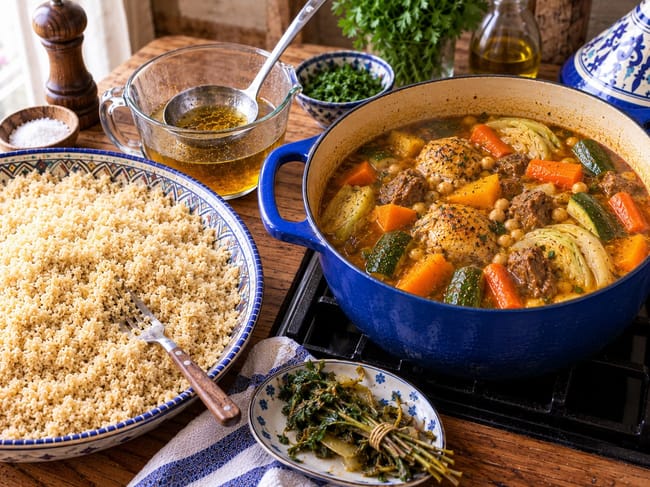
Rest, Portion, Arrange, and Serve
Rest the meats and vegetables 5 minutes.
For each serving, spread one-eighth of the couscous in a low mound.
Place one chicken thigh, about 75 g cooked lamb, one small merguez, chickpeas, and a balanced selection of every vegetable over and around it.
Ladle 120 to 180 ml hot broth around the couscous so it absorbs flavor without floating. Finish with chopped herbs.
Serve diluted harissa, lemon, and additional broth separately, allowing each person to adjust the plate.
Chef's Tips
Common Mistakes
Why This Recipe Was Designed This Way
This recipe is not medical treatment and cannot promise lower cholesterol, weight loss, improved blood sugar, or prevention of disease. It is a portion-conscious festive meal that combines whole grain, legumes, abundant vegetables, and measured amounts of three meats while controlling visible oil and sodium. Its suitability depends on the complete diet and individual needs.
🌾 Whole-Wheat Couscous
Whole-wheat couscous provides carbohydrate, some protein, and more fiber than many refined equivalents. A measured base supports the traditional eating experience without turning grain into an unlimited background.
🥕 Vegetables and Chickpeas
Carrots, turnips, cabbage, pumpkin, zucchini, onion, tomato, and chickpeas provide volume, fiber, potassium, vitamin C, beta-carotene, folate, and varied plant compounds. Their colors and textures make the plate abundant with less reliance on meat.
🍗 Chicken, Lamb, and Poultry Merguez
The three meats create the royale character and provide complete protein, vitamin B12, iron, and zinc in different proportions. Skinless chicken and trimmed lamb moderate visible fat, while a small poultry merguez portion supplies concentrated spice. Poultry sausage is not automatically low in sodium or saturated fat, so the label, portion, and separate cooking method remain important.
🫒 Measured Olive Oil
Three tablespoons serve eight plates and provide mainly unsaturated fat. Measuring the oil and discarding sausage drippings keeps the broth aromatic without a thick, greasy surface.
🍲 Cooking Method
Gentle simmering tenderizes meat and vegetables without deep frying. Staged additions protect texture, while steaming keeps the couscous separate without added butter. 🇲🇦 Cultural Context and Honest Adaptation The recipe respects the celebratory mixed-meat idea attached to "royale" while acknowledging that Moroccan couscous has many regional and household forms. Balance comes from proportion and technique, not from presenting one restaurant-style formula as the only authentic version.
Ingredient Swaps
Need to customize this Balanced Moroccan Couscous Royale? These substitutions preserve the festive character while adapting the recipe to different preferences.
| Instead of... | Try... |
|---|---|
| Whole-wheat couscous | Regular couscous or quinoa |
| Lamb shoulder | Extra skinless chicken thighs |
| Poultry merguez | Lean turkey sausage |
| Chicken stock | Vegetable stock |
| Fresh saffron | A smaller pinch, steeped longer |
| Pumpkin | Butternut squash |
| Green cabbage | Savoy cabbage |
| Chickpeas | White beans |
| Ras el hanout | Curry powder blend, in a pinch |
| Harissa | Sriracha or chili paste, in a pinch |
What Research Says
The ingredients in this recipe were selected because they reflect common principles in balanced, portion-conscious meal patterns that combine whole grains, legumes, lean protein, and abundant vegetables. The information below summarizes current nutrition research and is intended for educational purposes only.
🌾 Whole Grains
Whole-wheat couscous provides more fiber and micronutrients than refined grain products when used as a measured base.
- Associated with improved digestive health.
- Contributes to steadier post-meal energy.
- Useful as a moderate-portion carbohydrate base.
🫘 Chickpeas and Legumes
Chickpeas contribute plant protein, fiber, and micronutrients such as folate and potassium.
- Good source of plant-based protein and fiber.
- Supports satiety within a balanced plate.
- Commonly used in Mediterranean and North African diets.
🥩 Lean Meat Portions
Trimmed lamb and skinless chicken provide complete protein, iron, zinc, and vitamin B12 while moderating visible fat.
- Complete protein source supporting muscle maintenance.
- Skinless preparation reduces saturated fat content.
- Portioning meat across a mixed plate limits total intake.
🥕 Vegetable Variety
A wide range of vegetables cooked together provides fiber, potassium, vitamin C, and beta-carotene across different colors and textures.
- Diverse vegetables contribute a broader range of micronutrients.
- Adds volume and fiber without significant calories.
- Supports a more plant-forward composed plate.
Estimated Nutrition
Per serving
*Estimate for one-eighth of the measured recipe with skinless chicken, trimmed lamb, poultry merguez, lower-sodium stock, and 150 ml broth. Actual sodium varies substantially by sausage, stock, chickpeas, salt, harissa, and broth portion.
Storage & Reheating
Cool components promptly and do not leave them at room temperature for more than two hours.
Refrigerating
Refrigerate couscous, broth, vegetables, and meats in separate airtight containers for up to three days. Separation prevents the grains from absorbing every drop of broth and makes safe reheating easier.
Freezing
Cooked lamb, chicken, chickpeas, and broth freeze well for up to three months. Couscous can be frozen in loose portions, though freshly steamed grains have a better texture. Thaw overnight in the refrigerator and reheat thoroughly.
Reheating
Couscous: Sprinkle with one or two tablespoons of water and steam or microwave it covered until hot and fluffy.
Broth, Vegetables, and Meat: Reheat gently in a saucepan until steaming, verifying that poultry is hot through the center.
Merguez: Warm separately from the broth so it does not overcook.
Meal Prep Tips
Trim the meats, cut the dense vegetables, tie the herbs, and measure the spices one day ahead. Keep chicken and lamb in separate sealed containers below ready-to-eat foods. Cut the zucchini and pumpkin closer to cooking time so their surfaces remain fresh.
Serving Suggestions
This Balanced Moroccan Couscous Royale pairs beautifully with simple, traditional accompaniments.
Diluted Harissa: Offering harissa mixed with warm broth lets each guest control the heat individually.
Fresh Lemon Wedges: A squeeze of lemon brightens the meats and vegetables without needing extra salt.
Mint Tea: Sweet mint tea is the traditional finish to a Moroccan family meal.
Crusty Bread: A small piece of bread is useful for scooping the last of the broth and vegetables.
Extra Broth: A small warm jug of broth at the table lets guests refresh their portion as needed.
Frequently Asked Questions
Is couscous royale an everyday traditional Moroccan dish?
The name commonly refers to a festive mixed-meat presentation, particularly in restaurants and outside Morocco, while Moroccan households prepare many couscous styles. This recipe uses the familiar "royale" label transparently rather than claiming one universal national formula.
Can I use only one type of meat?
Yes. Chicken alone, lamb alone, or a meatless chickpea version can produce an excellent couscous. Adjust the timing and nutrition accordingly, and taste the broth before adding salt if merguez is omitted.
Can I use regular couscous instead of whole-wheat?
Yes. Refined couscous hydrates quickly and may need slightly less water. Follow the package instructions while preserving gradual moistening and thorough fluffing. The fiber estimate will be lower.
Do I need a couscoussier?
No, although steaming above the broth produces especially aromatic, separate grains. A steamer basket that seals safely over a pot can work, followed by measured broth and a covered rest according to the package.
Why is my couscous clumpy?
It may have been moistened too quickly, compressed in the steamer, or left without fluffing between rounds. Spread it in a wide dish, sprinkle small amounts of water, and separate clumps while warm.
Why did the zucchini and pumpkin fall apart?
They entered too early, boiled too strongly, or were cut too small. Add them late in large pieces and remove each one as soon as a knife slides in easily.
Can I make the dish vegetarian?
Yes. Use vegetable stock, increase the chickpeas, and add firm vegetables or mushrooms for savory depth. It will be a vegetable couscous rather than royale, but the balanced plate structure remains satisfying.
How can I reduce sodium further?
Choose no-salt chickpeas, a genuinely lower-sodium stock, and a lower-sodium sausage or omit the merguez entirely. Build flavor with herbs, saffron, spices, tomato, and lemon, then season individual portions at the table.
Related Recipes
If you enjoyed this Balanced Moroccan Couscous Royale, you may also like these recipes from our Moroccan Favorites collection.
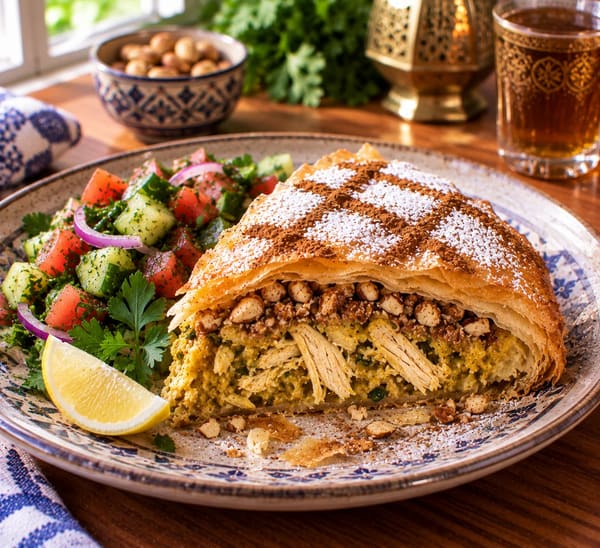
🥟 Balanced Moroccan Chicken Pastilla
A festive sweet-and-savory pastry of spiced shredded chicken, almonds, and warm cinnamon sugar wrapped in crisp pastry.
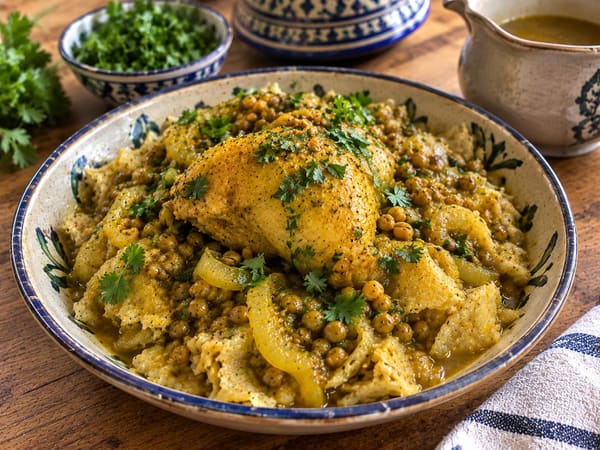
🍲 Balanced Moroccan Chicken Rfissa
Shredded chicken and lentils served over torn flatbread, simmered in a fenugreek and ras el hanout broth.
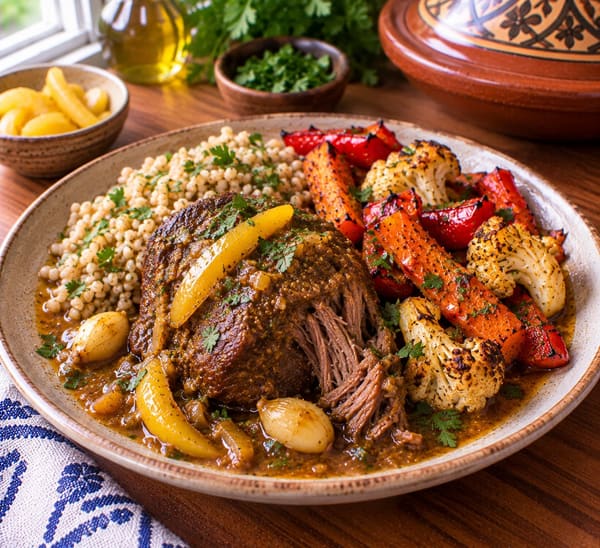
🥘 Healthy Marrakech Beef Tangia
Slow-cooked beef in a clay urn with preserved lemon, garlic, and warm Moroccan spices until fall-apart tender.