
Balanced Moroccan Harira
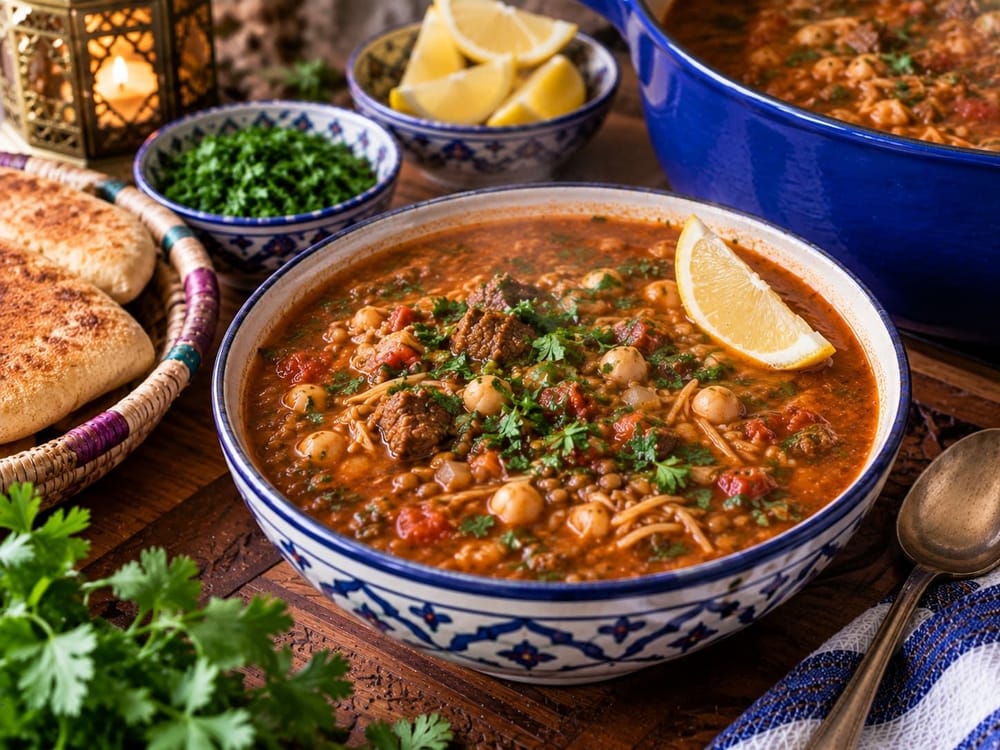
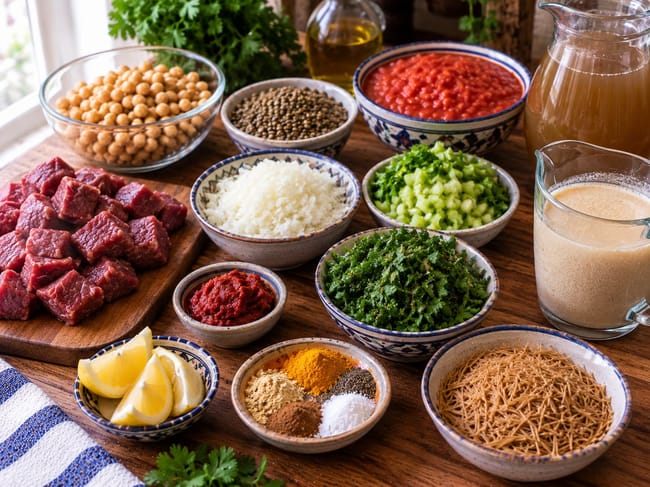
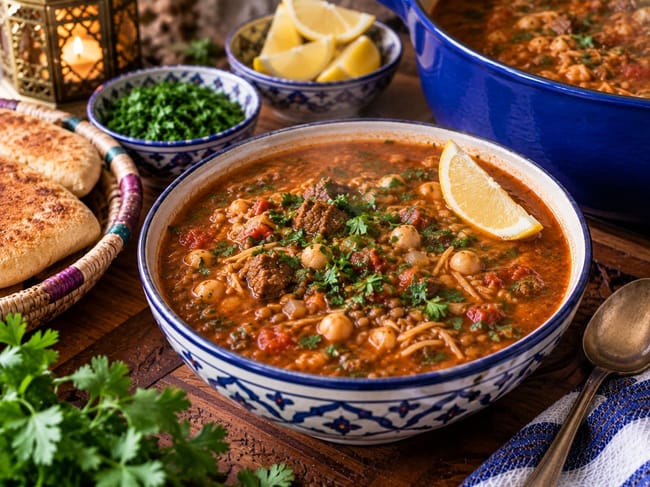
Harira is a warming, deeply aromatic one-bowl meal with the familiar richness people love, a satisfying body, and a bright squeeze of lemon at the table. Everything that makes a generous bowl of Moroccan harira irresistible is here: slow-cooked tomato, tender chickpeas and lentils, delicate pieces of beef, fresh cilantro, parsley, celery, ginger, turmeric, cinnamon, and fine vermicelli in a silky broth.
Some versions contain a generous amount of meat and oil, a salty stock cube, refined vermicelli, and a thick flour slurry. None of those choices makes traditional harira morally wrong. This adaptation simply uses lean beef in a supporting role, emphasizes chickpeas and lentils, measures the oil, chooses lower-sodium stock, and thickens the soup gradually with a modest whole-wheat tedouira.
It remains recognizably harira. The recipe does not replace the tomato base with vegetable purée, remove the legumes, or turn the broth into an unrelated diet soup. The familiar balance of tomato, celery, herbs, ginger, turmeric, cinnamon, chickpeas, lentils, meat, and noodles is preserved. The changes concern proportion, technique, and transparency.
Whether served as a hearty Ramadan opener or a comforting family dinner, this Balanced Moroccan Harira brings warmth, tradition, and a lighter ingredient profile together in one satisfying bowl.
Recipe Information
| Prep Time | 35 minutes |
| Cook Time | 1 hour 20 minutes |
| Total Time | About 2 hours, plus optional soaking |
| Servings | 8 |
| Difficulty | Intermediate |
| Calories | ~330 kcal per serving |
Quick Highlights
- ✅ Lean beef used in a supporting role
- ✅ Rich in chickpeas and lentils
- ✅ Whole-wheat vermicelli and tedouira
- ✅ Lower-sodium stock and tomatoes
- ✅ Bright fresh herbs and lemon at the table
- ✅ Warming, comforting, and family-style
- ✅ Sodium adjusted through measured seasoning
Ingredients
Makes 8 balanced bowls











Step-by-Step Instructions
Organize the Legumes, Aromatics, and Tedouira
If using dried chickpeas, soak them overnight in plenty of water, drain, and rinse. Cook them separately until nearly tender if they are old or especially firm.
Rinse and sort the lentils.
Finely grate or dice the onion, chop the celery with its leaves, and chop the cilantro and parsley.
Whisk the whole-wheat flour with 240 ml cool water until no dry pockets remain, then strain the tedouira into a jug and refrigerate while the soup begins.
Lightly Brown the Lean Beef
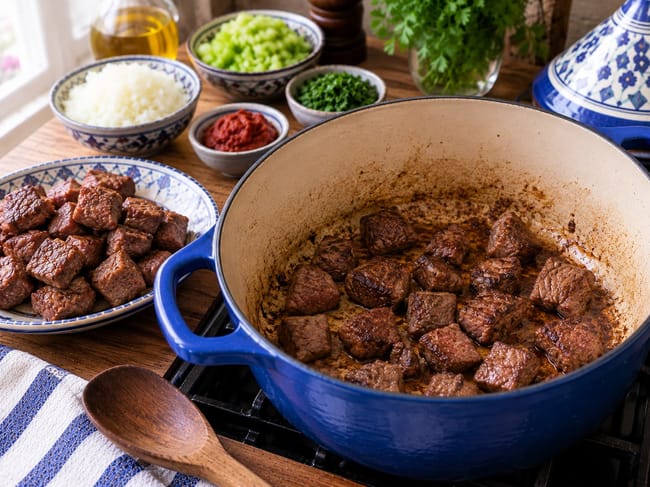
Heat a large heavy soup pot over medium heat and add the measured olive oil.
Pat the beef dry, add it in one uncrowded layer, and cook for 4 to 5 minutes, turning until several surfaces have light brown color.
If the pot is narrow, work in two batches. Transfer the beef briefly to a plate.
Leave the flavorful brown film in the pot, but reduce the heat if anything threatens to burn.
Build the Onion, Celery, Herb, and Spice Base
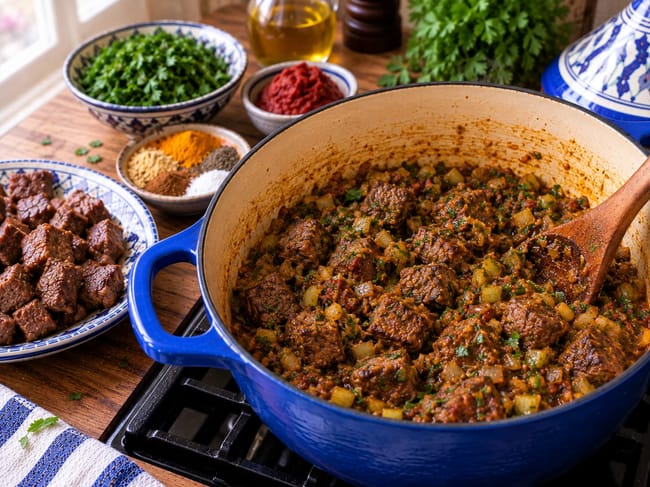
Add the onion and celery to the same pot with two tablespoons of water. Cook over medium-low heat for 6 to 8 minutes, scraping up the browned film, until the onion is translucent.
Add three-quarters of the chopped herbs, tomato paste, ginger, turmeric, cinnamon, black pepper, and one-quarter teaspoon salt. Stir for 60 to 90 seconds.
Return the beef and any juices to the pot.
Add Tomato, Legumes, Stock, and Water
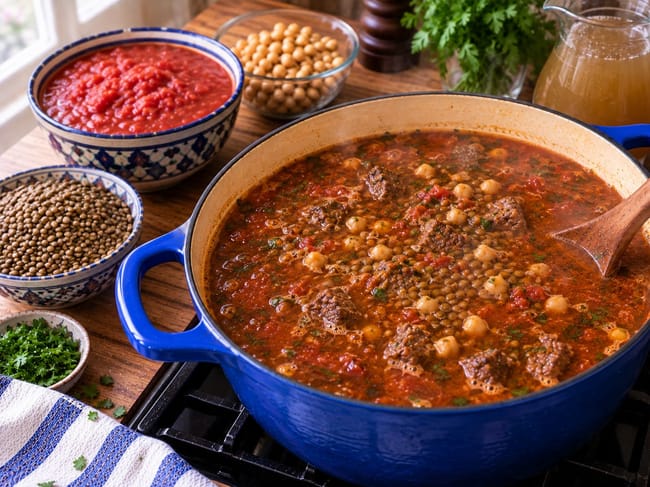
Pour in the crushed tomatoes, stirring to release everything from the bottom.
Add the rinsed lentils and the dried soaked chickpeas if they still need cooking.
Pour in the stock and water. If using canned or fully cooked chickpeas, reserve them until the lentils are halfway tender.
Bring the pot gradually to a gentle boil, skim any grey foam from the surface, then lower the heat.
Simmer Until the Beef and Legumes Are Tender
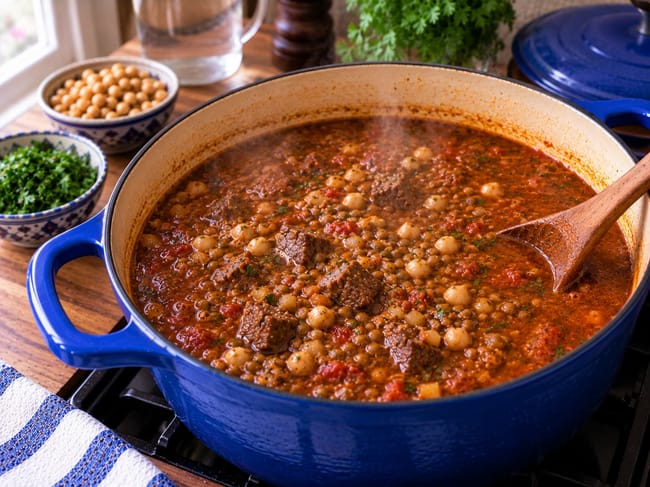
Partially cover and simmer gently for 40 to 55 minutes. Stir every 10 minutes, reaching the bottom where lentils may settle.
Add fully cooked or canned chickpeas after about 25 minutes.
Add hot water in 120 ml portions if the level drops too quickly. Do not reduce to final thickness yet.
Cook the Fine Vermicelli
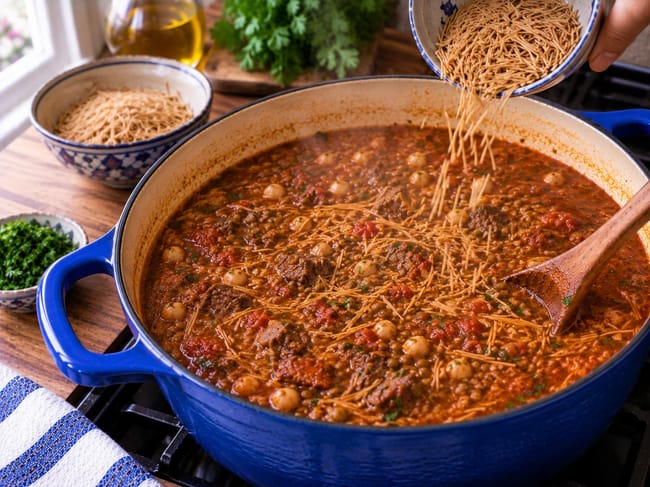
Break the vermicelli into short lengths and scatter it gradually over the moving soup while stirring.
Simmer uncovered according to package timing, usually 5 to 8 minutes, stirring every minute so strands do not settle.
Stop when the noodles are almost tender; they will continue cooking during thickening and rest.
Stream in the Tedouira and Finish the Body
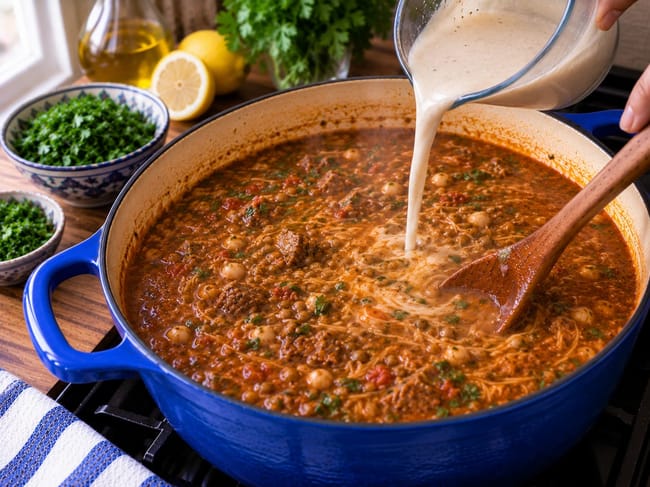
Whisk the chilled tedouira again because flour settles. Bring the soup to a lively simmer.
Pour the slurry in a thin, steady stream with one hand while stirring continuously with the other. Begin with three-quarters and simmer 8 to 12 minutes before deciding whether the remainder is needed.
Stir in most of the reserved herbs and adjust salt only after the final consistency is reached.
Rest, Brighten, Portion, and Serve
Turn off the heat and let harira rest uncovered for 8 minutes, stirring twice. It will thicken slightly as the noodles and lentils settle.
Add hot water if it no longer flows easily from the ladle.
Ladle one-eighth of the soup into each deep bowl, ensuring every serving receives beef, chickpeas, lentils, and noodles.
Finish with reserved herbs and a lemon wedge.
Common Mistakes
Why This Recipe Was Designed This Way
This soup is not medical treatment and cannot promise lower cholesterol, weight loss, improved blood sugar, or protection from illness. It is a balanced adaptation that combines legumes, vegetables, herbs, whole-grain vermicelli, and a moderate amount of lean meat while measuring oil and managing sodium. Its value depends on the complete eating pattern and the person eating it.
🫘 Chickpeas and Lentils
Legumes provide fiber, plant protein, folate, iron, potassium, and slowly digested carbohydrate. Using both preserves the familiar harira texture and makes meat a supporting ingredient rather than the entire substance of the bowl.
🥩 Lean Beef
The measured beef supplies complete protein, vitamin B12, iron, and zinc. Trimming visible fat and distributing 400 g across eight servings moderates saturated fat while preserving the savory character many families expect.
🍅 Tomato, Onion, Celery, and Herbs
These ingredients create volume, moisture, vitamin C, potassium, and varied plant compounds. More importantly for cooking, they build a complex broth that does not require cream, butter, or a large amount of oil.
🍜 Whole-Wheat Vermicelli and Tedouira
Whole-wheat noodles and flour retain more of the grain than refined versions and contribute some additional fiber. Their measured quantities preserve the recognizable noodle-and-silky-broth experience without allowing starch to dominate the pot.
🫒 Measured Olive Oil
Two tablespoons serve eight bowls and provide mainly unsaturated fat while helping spices bloom. Olive oil remains concentrated in energy even when it fits comfortably into a balanced pattern.
🧂 Sodium Awareness
Lower-sodium stock, rinsed chickpeas, no-salt-added tomato products, and delayed seasoning make sodium easier to control. The exact result still depends on brands, serving size, and accompaniments. 🇲🇦 Cultural Continuity The recipe keeps tomato, legumes, celery, herbs, warm spices, noodles, and tedouira in their recognizable roles. It changes proportions without claiming that a family recipe needs moral correction.
Ingredient Swaps
Need to customize this Balanced Moroccan Harira? These substitutions preserve the comforting character while adapting the recipe to different preferences.
| Instead of... | Try... |
|---|---|
| Lean beef | Lean lamb or extra chickpeas |
| Brown or green lentils | Split red lentils (shorter cooking time) |
| Whole-wheat vermicelli | Small gluten-free noodles or rice |
| Whole-wheat flour (tedouira) | Rice flour, in smaller amount |
| Beef stock | Lower-sodium vegetable stock |
| Crushed tomatoes | Very ripe tomatoes, blended and strained |
| Fresh cilantro | Extra parsley, for a milder flavor |
| Ground cinnamon | A smaller pinch, added at the end |
| Canned chickpeas | Dried chickpeas, soaked overnight |
| Fresh lemon | Lime, in a pinch |
What Research Says
The ingredients in this recipe were selected because they reflect common principles in balanced soup patterns that combine legumes, lean protein, and moderate portions of whole grains. The information below summarizes current nutrition research and is intended for educational purposes only.
🫘 Legumes
Chickpeas and lentils contribute plant protein, fiber, and micronutrients such as folate and potassium.
- Good source of plant-based protein and fiber.
- Supports satiety within a balanced meal.
- Commonly used in Mediterranean and North African diets.
🥩 Lean Beef
Trimmed beef provides complete protein, iron, zinc, and vitamin B12 while moderating visible fat.
- Complete protein source supporting muscle maintenance.
- Good source of heme iron.
- Portioning meat within a mixed bowl limits total intake.
🍅 Tomatoes
Tomatoes contribute vitamin C, potassium, and plant compounds while forming the aromatic base of the soup.
- Good source of vitamin C and potassium.
- Provides color and acidity without added sugar.
- Commonly used as a base for soups and stews.
🌾 Whole Grains
Whole-wheat vermicelli and flour retain more of the grain than refined versions.
- Contributes more fiber than refined alternatives.
- Useful as a measured portion within a soup.
- Supports steadier post-meal energy.
Estimated Nutrition
Per serving
*Estimate for one-eighth of the recipe using lean beef, lower-sodium stock, no-salt-added tomatoes and chickpeas, and all measured tedouira. Actual sodium varies substantially by stock, canned products, salt, and accompaniments.
Storage & Reheating
Cool harira promptly and do not leave it at room temperature for more than two hours.
Refrigerating
Transfer to shallow airtight containers and refrigerate for up to four days. Divide portions before cooling to avoid repeatedly warming the full batch.
Freezing
Harira can be frozen for up to three months, but noodles soften during thawing. For the best texture, freeze the soup after the legumes and beef are tender but before adding vermicelli and tedouira. Thaw overnight in the refrigerator.
Reheating
Stovetop: Warm in a saucepan with 60 to 120 ml water over medium-low heat, stirring frequently, until steaming hot throughout.
Microwave: Cover loosely and heat in short intervals, stirring between them. Add lemon and fresh herbs only after reheating.
Meal Prep Tips
Soak dried chickpeas the night before. Onion, celery, and herbs may be chopped one day ahead and refrigerated in separate airtight containers. The spice blend can be measured into a small jar. Whisk the tedouira on cooking day, since flour settles and needs vigorous re-whisking even after a short rest.
Serving Suggestions
This Balanced Moroccan Harira pairs beautifully with simple, traditional accompaniments.
Fresh Lemon Wedges: A squeeze of lemon brightens the tomato, herbs, and beef without needing extra salt.
Dates: A few dates on the side are a traditional touch, especially when harira is served to break a fast.
Whole-Grain Bread: A small piece of bread is useful for scooping the last of the broth and legumes.
Hard-Boiled Egg: A halved boiled egg is a traditional addition that adds extra protein to the meal.
Fresh Herb Garnish: An extra sprinkle of cilantro or parsley just before serving keeps the aroma bright.
Frequently Asked Questions
Can I make harira without meat?
Yes. Omit the beef, use lower-sodium vegetable stock, and add another 240 g cooked chickpeas or 150 g finely chopped mushrooms for body.
Can I use canned chickpeas?
Yes. Drain and rinse them thoroughly, then add them about halfway through the lentil simmer since they are already cooked and may split if boiled from the beginning.
Do I have to soak lentils?
No. Brown and green lentils only need sorting and rinsing. Very old lentils may require extra cooking and liquid.
What is tedouira, and can I skip it?
Tedouira is the flour-and-water mixture streamed into harira near the end to create its characteristic cohesion. You may omit it for a thinner soup, but the result will not have the same silky body.
How can I make the recipe gluten-free?
Use certified gluten-free noodles or a small amount of rice, verify the stock and spices, and replace the wheat tedouira with a carefully tested gluten-free slurry.
Why did my harira become too thick?
The pot may contain too much flour or vermicelli, or it may have reduced too aggressively. Whisk in hot water gradually until the soup flows again, then taste since dilution changes seasoning.
Why are there flour lumps?
The slurry was probably not whisked, strained, or poured slowly enough. Press small lumps through a fine sieve if practical, then simmer thoroughly.
Can I use rice instead of vermicelli?
Yes. Add a small measured quantity of rice early enough to cook completely, accounting for the liquid it absorbs.
Is harira suitable for meal prep?
Yes, with a texture adjustment. It keeps well, but vermicelli and lentils thicken the broth, so add water while reheating.
Related Recipes
If you enjoyed this Balanced Moroccan Harira, you may also like these recipes from our Moroccan Favorites collection.
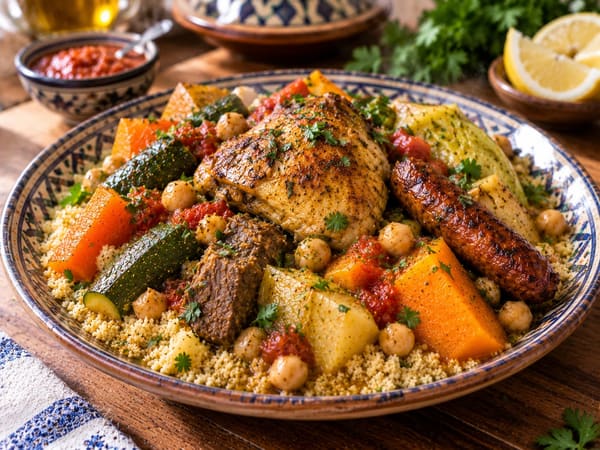
🥘 Balanced Moroccan Couscous Royale
A celebratory platter of fluffy whole-wheat couscous, tender meats, chickpeas, vegetables, and fragrant broth.
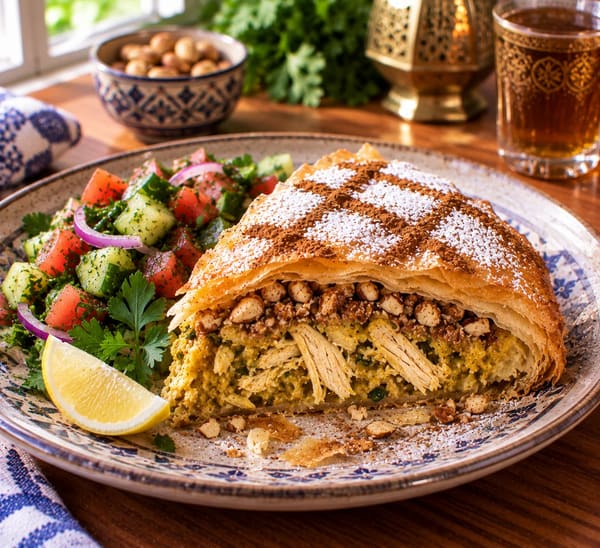
🥟 Balanced Moroccan Chicken Pastilla
A festive sweet-and-savory pastry of spiced shredded chicken, almonds, and warm cinnamon sugar wrapped in crisp pastry.
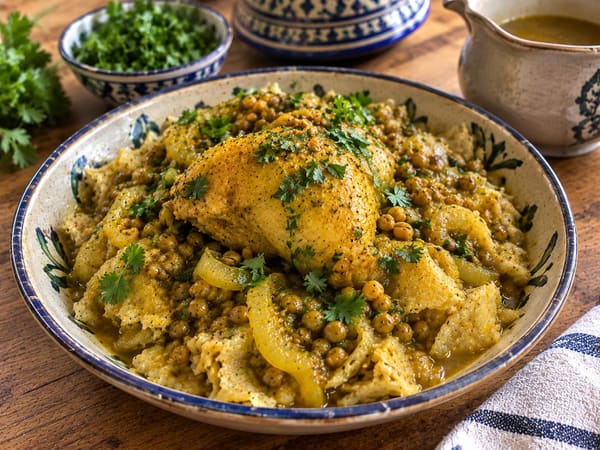
🍲 Balanced Moroccan Chicken Rfissa
Shredded chicken and lentils served over torn flatbread, simmered in a fenugreek and ras el hanout broth.